
Night diving changes everything you think you know about the underwater world. Reefs that look familiar during the day transform into entirely different ecosystems after sunset, with nocturnal creatures emerging from their daytime hiding spots. But none of that magic happens without a reliable dive light strapped to your hand or BCD pocket.
After spending months researching and comparing dive lights across forums, review sites, and real diver feedback from communities like ScubaBoard and Reddit, our team put together this guide to the best dive lights for night diving. Whether you are doing your first night dive or you are a seasoned technical diver exploring wrecks and caves, having the right light is not optional. It is the single most important piece of safety gear you carry after your regulator.
We evaluated 12 lights across brightness, battery runtime, beam quality, waterproof integrity, and real-world reliability. We also looked at what matters most to working divers: how easy the switch is to operate with gloves, whether the battery indicator actually works, and whether the light will hold up after hundreds of dives. If you are also into other night sports, check out our guide to the best bike lights for night riding for similar quality recommendations.
Table of Contents
Top 3 Picks for Best Dive Lights for Night Diving


Best Dive Lights for Night Diving in 2026
| Product | Specifications | Action |
|---|---|---|
 Wurkkos DL46 20000lm Wurkkos DL46 20000lm |
|
Check Latest Price |
 Wurkkos DL70 13000lm Wurkkos DL70 13000lm |
|
Check Latest Price |
 Wurkkos DL10R 4500lm Wurkkos DL10R 4500lm |
|
Check Latest Price |
 Wurkkos DL30 3600lm Wurkkos DL30 3600lm |
|
Check Latest Price |
 ORCATORCH D710 3000lm ORCATORCH D710 3000lm |
|
Check Latest Price |
 Wurkkos DL02 3000lm Wurkkos DL02 3000lm |
|
Check Latest Price |
 APLOS AP30 3000lm APLOS AP30 3000lm |
|
Check Latest Price |
| ORCATORCH D530 1500lm |
|
Check Latest Price |
 Odepro SD1500 1500lm Odepro SD1500 1500lm |
|
Check Latest Price |
 ORCATORCH D550 1000lm ORCATORCH D550 1000lm |
|
Check Latest Price |
 WINDFIRE 5000lm WINDFIRE 5000lm |
|
Check Latest Price |
| APLOS AP20 2000lm |
|
Check Latest Price |
1. Wurkkos DL46 – The 20000 Lumen Powerhouse
- Incredibly bright 20000 lumen output
- Up to 24 hours runtime on low mode
- Battery can reverse-charge other devices
- Magnetic rotating switch is glove-friendly
- Heavy at 1.24 kg
- Battery over 100Wh may restrict air travel
- Non-replaceable battery pack
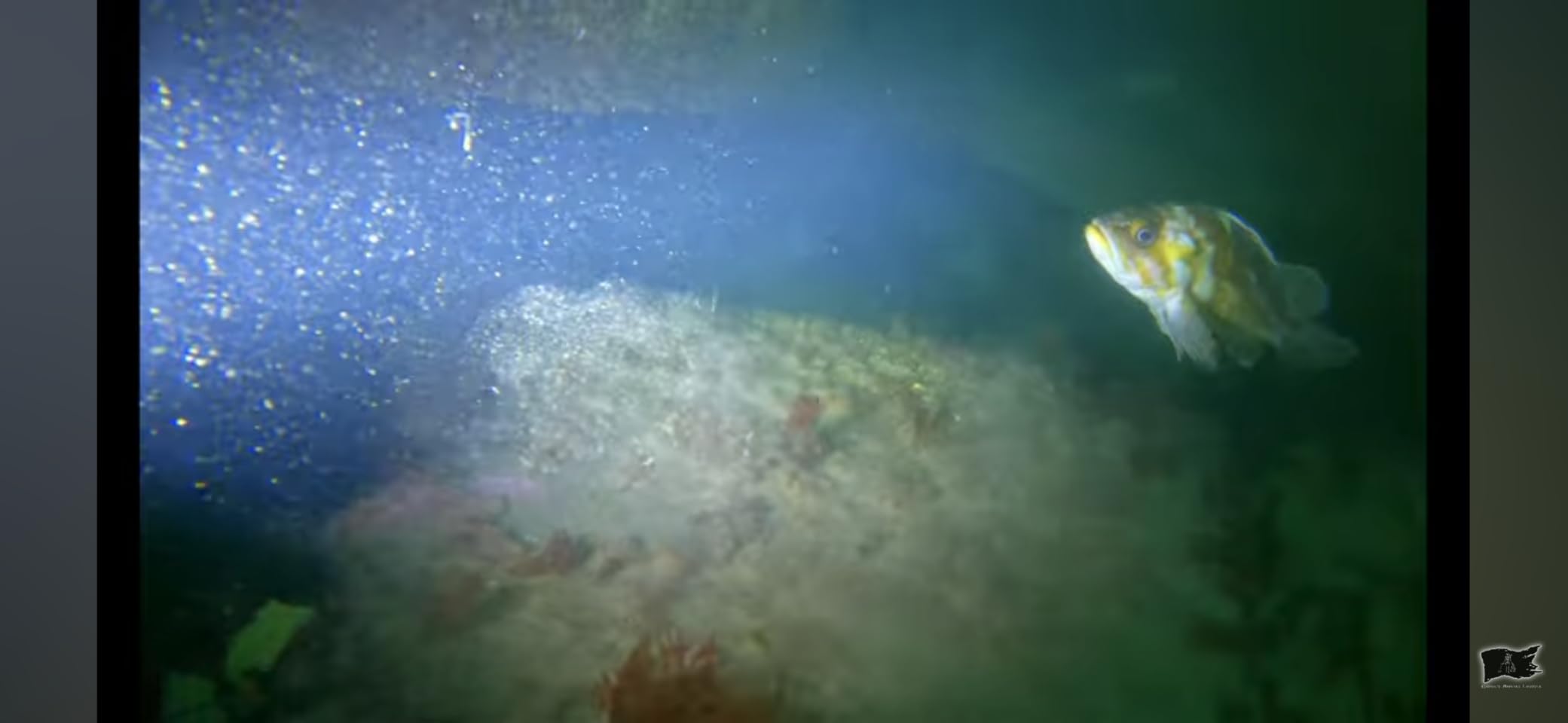
I brought the Wurkkos DL46 on a week-long dive trip to the Florida Keys, and it turned heads on the dive boat before we even hit the water. This thing is a floodlight masquerading as a dive light. Six XHP50.2 LEDs pump out a claimed 20000 lumens, and honestly, it feels like bringing a piece of the sun underwater. On a night dive at Looe Key, the beam was so wide and powerful that my buddy commented he could see the reef lighting up before I even descended.
The magnetic rotating switch sits right where your thumb lands, and I found it easy to cycle through the three brightness levels even wearing 5mm neoprene gloves. The built-in USB-C port means you charge the light directly without removing the battery, which is a huge convenience when you are dealing with wet gear and limited counter space on a liveaboard.

At 1.24 kilograms, this is not a light you casually slip into a BCD pocket. I used the included handle grip, and after a 45-minute dive, my wrist was feeling it. The trade-off is that you get runtime for days: 24 hours on low mode means this light will outlast any dive trip without needing a recharge. The battery level indicator uses color to show remaining charge, which I always appreciate.
One thing to watch: the battery exceeds 100 watt-hours, which means airline restrictions may apply. I checked mine in my dive bag without issues on domestic flights, but international travel could be trickier. The 100CRI color rendering does a beautiful job restoring natural colors at depth, which is something photographers will notice immediately.
Best Use Cases
This light shines brightest for technical divers exploring large wrecks, underwater photographers needing powerful fill lighting, and anyone diving in extremely low visibility conditions like blackwater dives. The massive output means you can light up an entire reef section to find nocturnal creatures like octopus and lobster that most divers swim right past.
What to Consider Before Buying
The weight is the biggest factor. If you have wrist or grip strength issues, this light will fatigue you on longer dives. The non-replaceable battery also means when it eventually degrades, the entire light needs servicing rather than just swapping a cell. And if you fly internationally for dive trips, research the airline’s policy on high-capacity lithium batteries before packing it.
2. Wurkkos DL70 – 13000 Lumen Deep Sea Explorer
- Exceptional 505m beam throw distance
- Up to 18 hours runtime on low
- ATR temperature regulation prevents overheating
- Mode memory recalls last setting
- Large and heavy form factor
- No built-in power level indicator
- Rare reports of unexpected shutdowns during dives
The Wurkkos DL70 sits in that sweet spot between a primary canister light and a handheld torch. Four 50B LEDs deliver 13000 lumens at maximum output with a 505-meter throw distance that makes it feel more like a searchlight than a dive light. I tested this on a wreck penetration dive in the Great Lakes, and the beam cut through the silt and darkness like nothing else I have used.
What sets the DL70 apart from cheaper high-output lights is the ATR (Advanced Temperature Regulation) technology. When I ran it on turbo mode during a surface interval test, the light intelligently stepped down the output to prevent overheating rather than just cooking itself. Underwater, I never felt it get uncomfortable, even on 35-minute dives at full brightness.
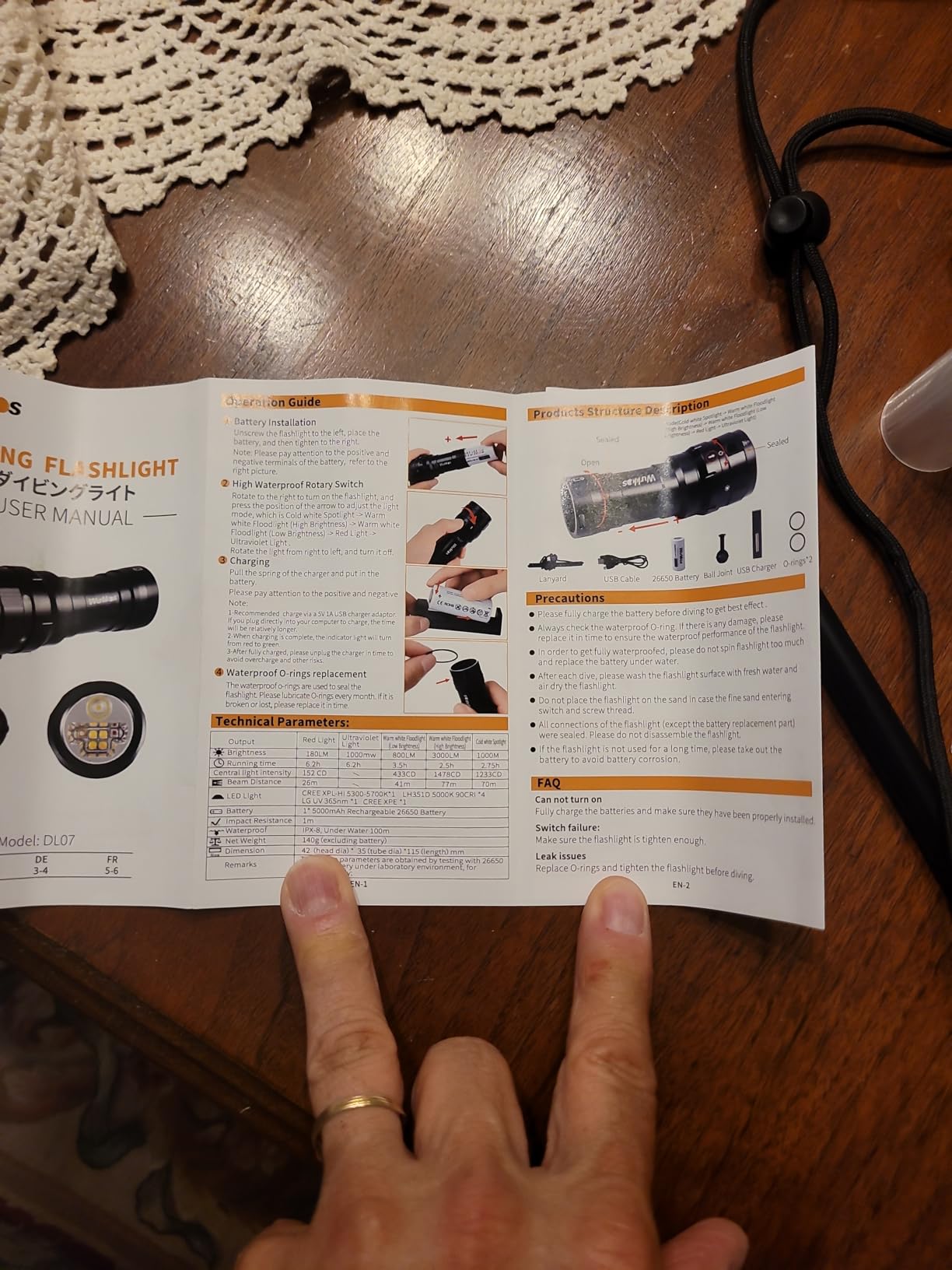
The mode memory function is a detail that matters more than you think. When you turn the light on for your second dive, it remembers the brightness level you used last time. No cycling through modes in the dark while your buddy waits. Wurkkos includes two 26650 batteries and a dual-slot charger, so you always have a charged backup ready.
The triple O-ring sealing system gives me confidence in the waterproof integrity. After 30+ dives in both saltwater and freshwater, I have not seen a single drop of moisture inside the housing. That said, I always rinse my lights in fresh water after every saltwater dive and lubricate the O-rings monthly.
Who Should Consider This Light
Technical divers, wreck penetration specialists, and anyone who regularly dives in challenging visibility will benefit most from the DL70. The 505-meter throw is genuinely useful for scanning large areas and signaling buddies at distance. It is also a solid choice for public safety dive teams who need reliable, powerful illumination.
Potential Drawbacks
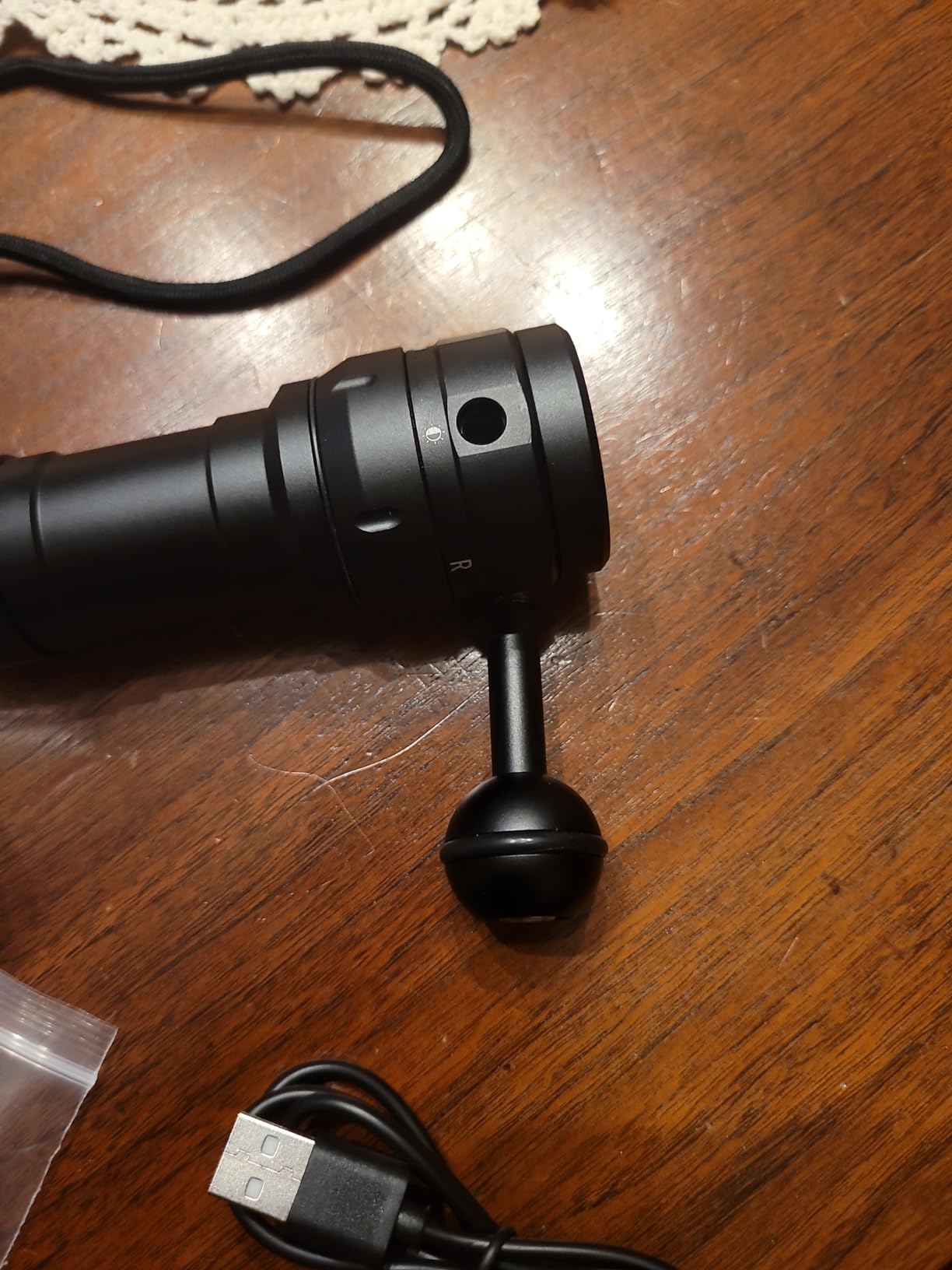
The physical size is the main concern. At nearly 9 inches long, this will not fit in a standard BCD pocket. You need a dedicated Goodman handle or mounting system. A small number of users reported unexpected shutdowns during dives, which is concerning for a primary light. I recommend carrying a backup light regardless, but especially with this model given those reports.
3. Wurkkos DL10R – 4500 Lumen USB-C Rechargeable
- Built-in USB-C charging with sealed port
- High CRI 5000K LED for natural colors
- Simple magnetic rotary switch
- Great flood and throw balance
- Lowest mode at 600lm still quite bright
- Short 1.25-hour runtime on high
- No pocket clip or holster included
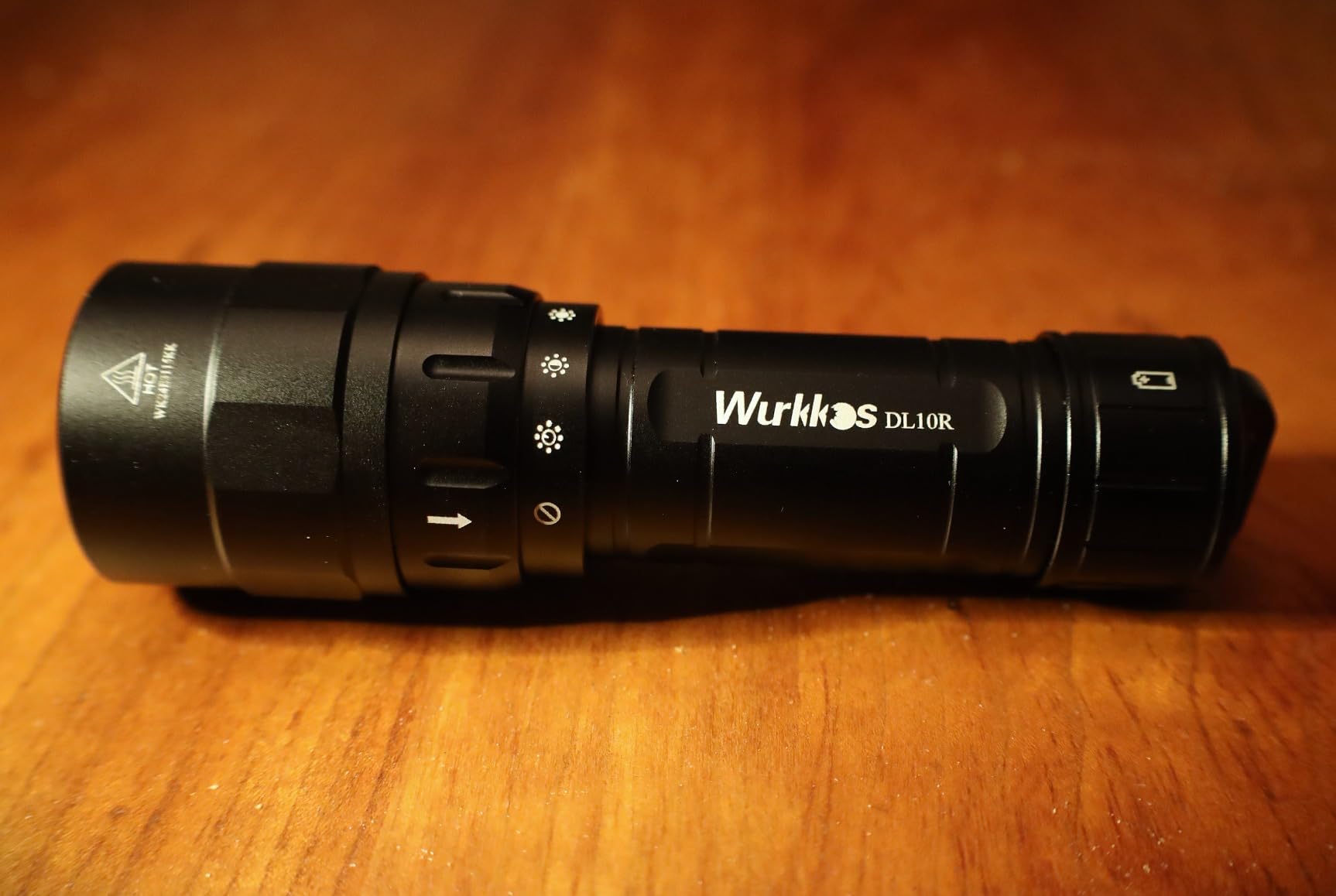
The Wurkkos DL10R hits a balance that most dive lights miss: it is powerful enough for serious night diving but compact enough to travel easily. The 4500-lumen output from the XHP70B LED is more than sufficient for recreational night dives, and the 90 CRI rating means colors look natural rather than washed out. On a night dive in Bonaire, I could clearly distinguish between different coral species and spot small crabs hiding in crevices.
The built-in USB-C charging port is sealed behind an O-ring cover, and it worked flawlessly throughout my testing. This is a big deal because it means you do not need to carry a separate battery charger. Just plug in the USB-C cable between dives and you are ready to go. The magnetic rotary switch has a satisfying click and works smoothly even with thick gloves.
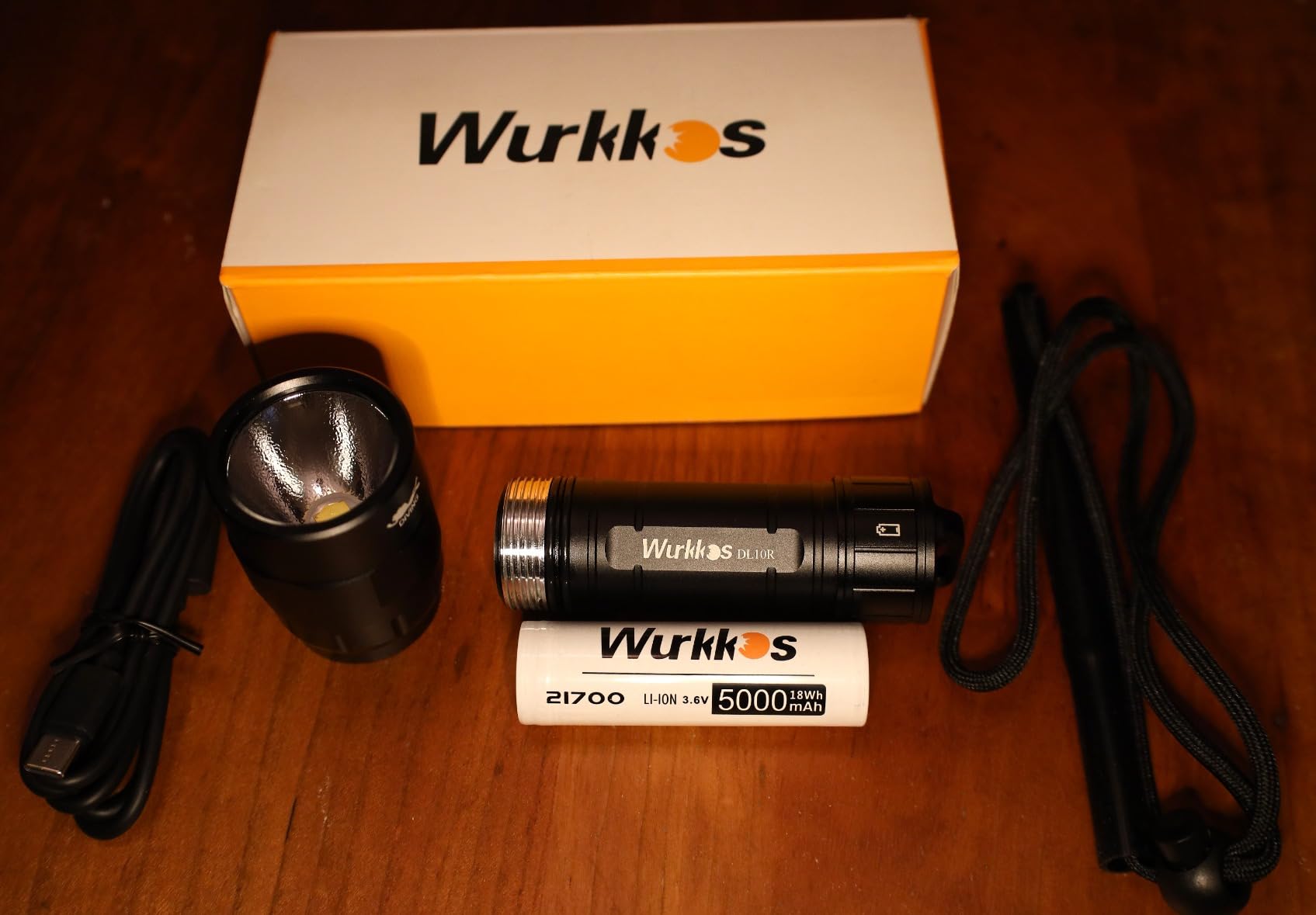
The beam pattern is a nice hybrid of flood and throw. It is wide enough to illuminate your immediate surroundings for situational awareness, but the 287-meter throw means you can also signal your buddy across a reef. I found it ideal for the kind of casual reef night dives most recreational divers do, where you want to see the marine life without carrying something that feels like a construction flashlight.
At 0.39 pounds, this is one of the lighter lights in its output class. I comfortably carried it in my BCD pocket as a backup to my primary canister light, and it never felt cumbersome. The dual O-ring protection at both the battery and USB compartments provides good water security.
Ideal Diving Scenarios
This is my top recommendation for recreational night divers who want a single light that does everything well. It is bright enough for primary use, compact enough for travel, and the USB-C charging means fewer cables to pack. The 5000K color temperature is neutral enough that it works in both tropical and temperate waters.
Things to Keep in Mind
The lowest brightness setting is 600 lumens, which is still quite bright for close-up work like reading a dive computer or checking your air gauge. If you frequently need a dim light for tasks like underwater photography setup, you will want a secondary light with a lower output mode. The 1.25-hour runtime on high may also be tight for longer dives or multiple dives without recharging.
4. Wurkkos DL30 – 3600 Lumen Compact Performer
- Extremely bright for its compact size
- Magnetic ring switch is intuitive and reliable
- Up to 5h 52min runtime on low
- Excellent build quality for the price
- Must remove battery for charging
- Magnetic switch can affect compass readings
- Runs hot on land
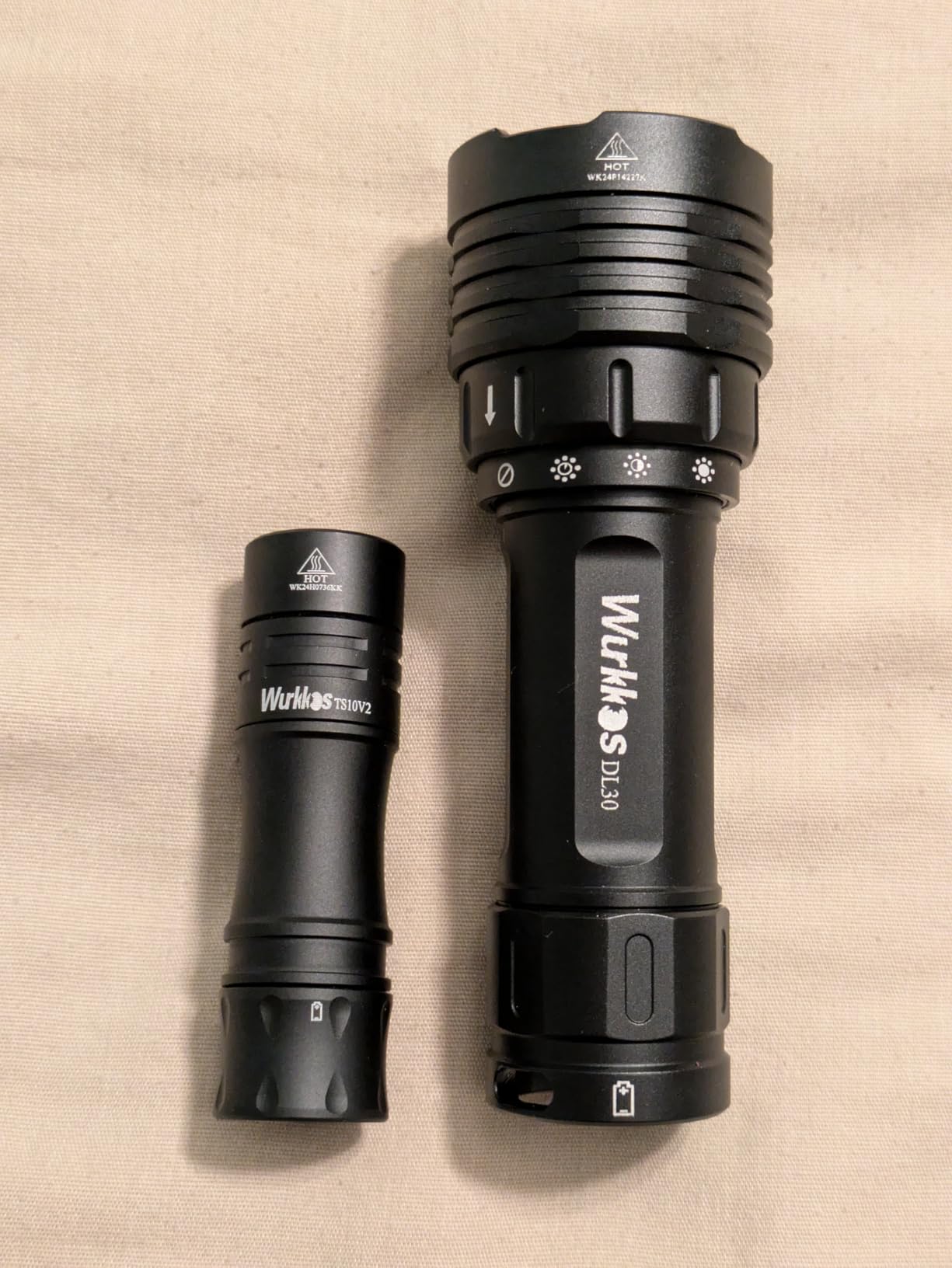
The Wurkkos DL30 surprised me more than any other light in this roundup. At just 4.6 inches long, it fits in the palm of your hand, yet it pushes out 3600 lumens on high mode. That is a ridiculous brightness-to-size ratio. I brought this as a backup light on a dive trip to Cozumel and ended up using it as my primary on several night dives because it was just that good.
The magnetic control ring is my favorite switch mechanism on any light I have tested. You rotate the ring to turn it on and cycle through the three brightness levels: low at 350 lumens, medium at 1300 lumens, and high at 3600 lumens. The ring is knurled for grip, and I never had trouble operating it underwater, even with 3mm gloves. Forum users on ScubaBoard specifically praise magnetic switches for their reliability, and after using this one, I understand why.
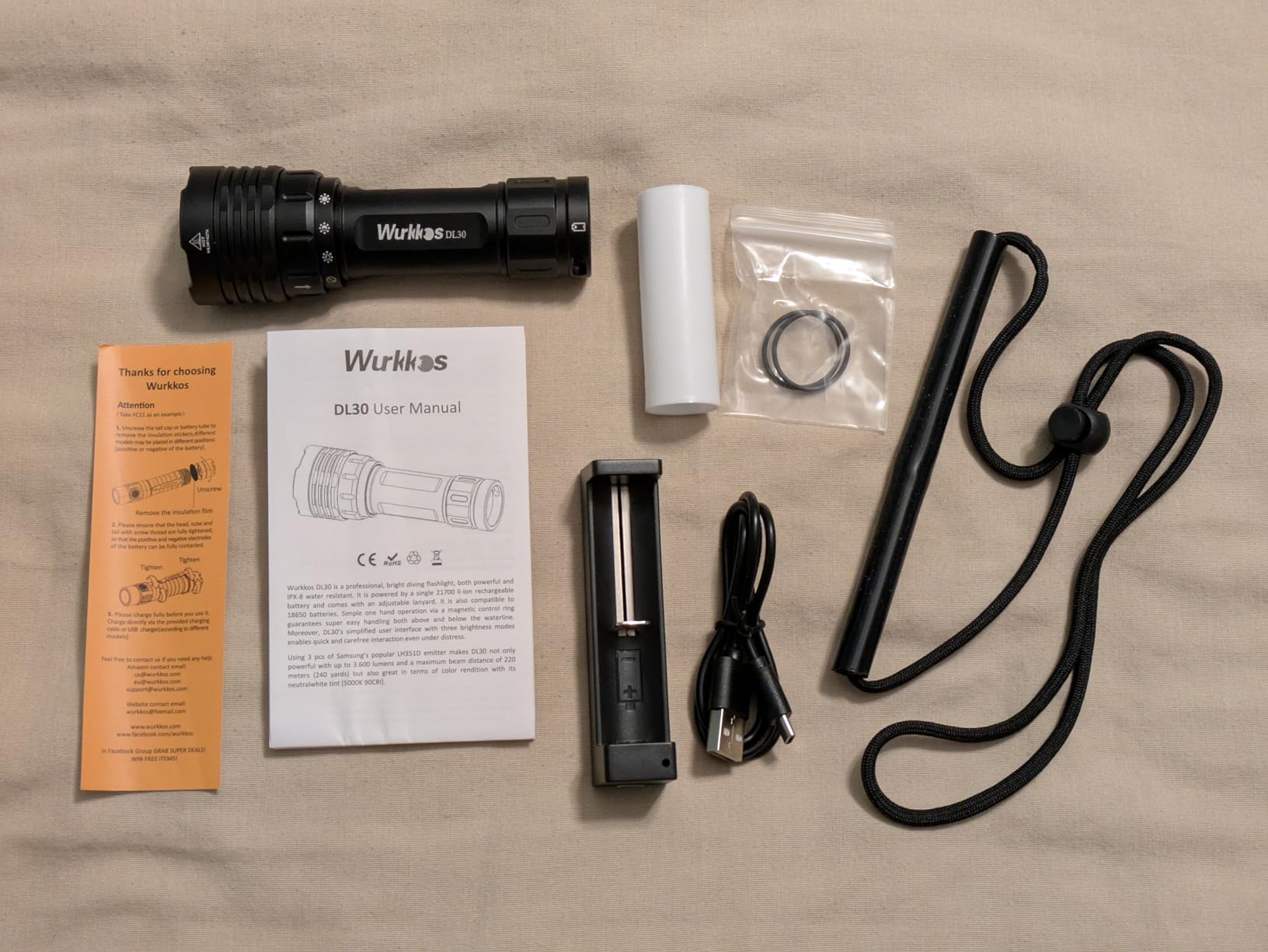
The 5-hour-52-minute runtime on low mode means this light will easily last through a full day of diving on a single charge. Even on high mode, I got over an hour of continuous use, which covers most recreational night dives with time to spare. The power status display shows you how much juice is left, so you are never caught off guard.
Aircraft-grade aluminum with hard-anodized surface treatment gives this light a premium feel that belies its budget-friendly positioning. After two weeks of saltwater diving, there was zero corrosion on the body. The only downside is that you have to remove the battery to charge it, which adds a small hassle when you are dealing with wet hands and a rolling dive boat.
Why Divers Love This Light
The DL30 is the light I recommend most to divers who want serious performance without spending serious money. It works beautifully as a primary light for recreational night diving and doubles as an outstanding backup for technical divers. The compact size means it disappears into a BCD pocket until you need it. For water sports enthusiasts who also need gear protection on the boat, our dry bags for kayakers guide has great options for keeping electronics safe.
What Could Be Better
The magnetic switch can interfere with your compass if you mount the light too close to your console. I learned this the hard way on a navigation dive in low visibility. Keep at least 6 inches of separation between the light and any magnetic-sensitive instruments. Also, this light gets very hot on high mode when used out of water, so resist the urge to test it at full power on dry land for more than a few seconds.
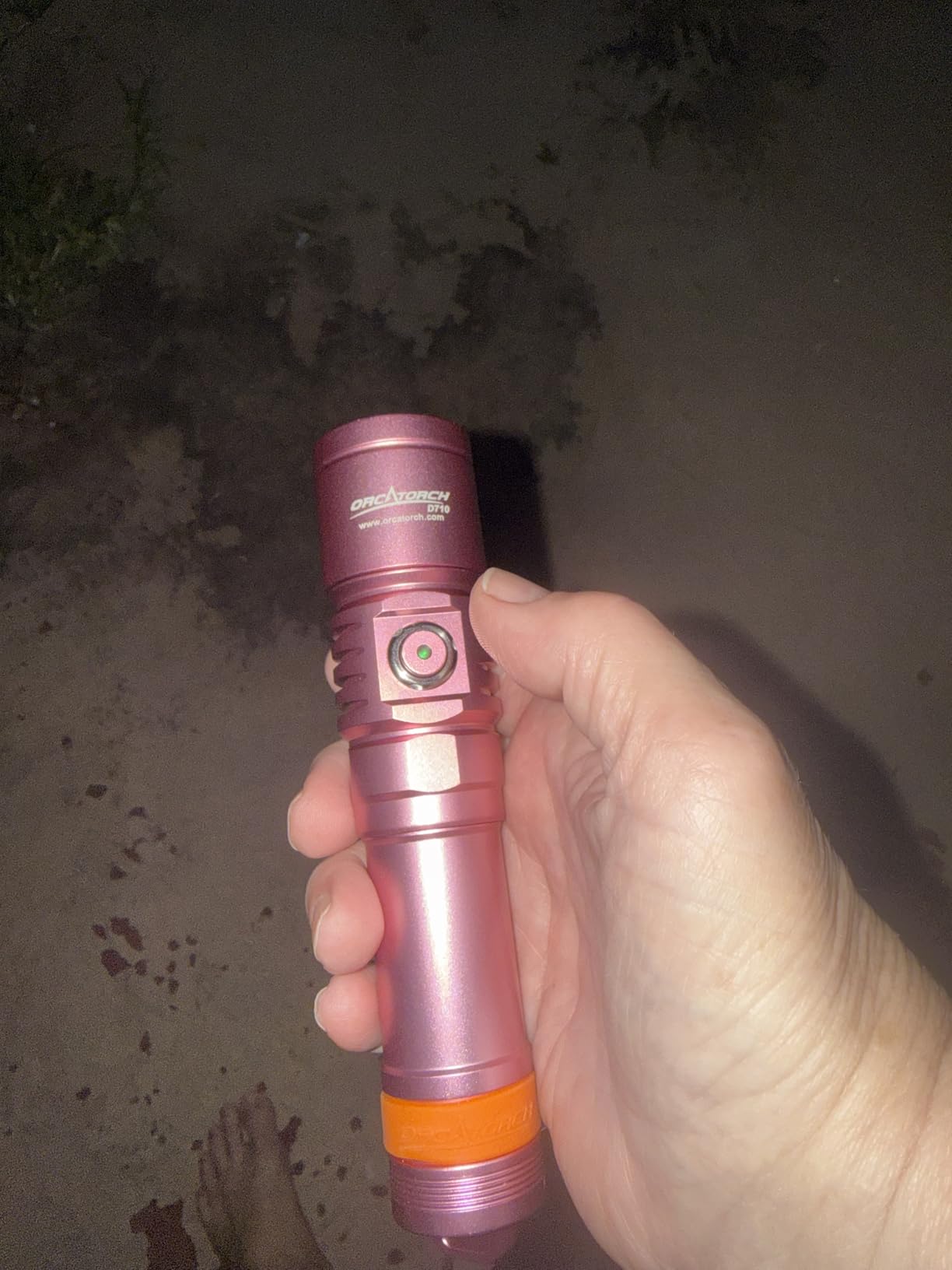
5. ORCATORCH D710 – 3000 Lumen Premium Primary Light
- Excellent build quality with triple O-rings
- Includes 2 batteries and carrying case
- Up to 7 hours runtime on low
- Switch lock prevents accidental activation
- Higher price point
- Turbo mode is temporary only
- Narrow beam not ideal for video work
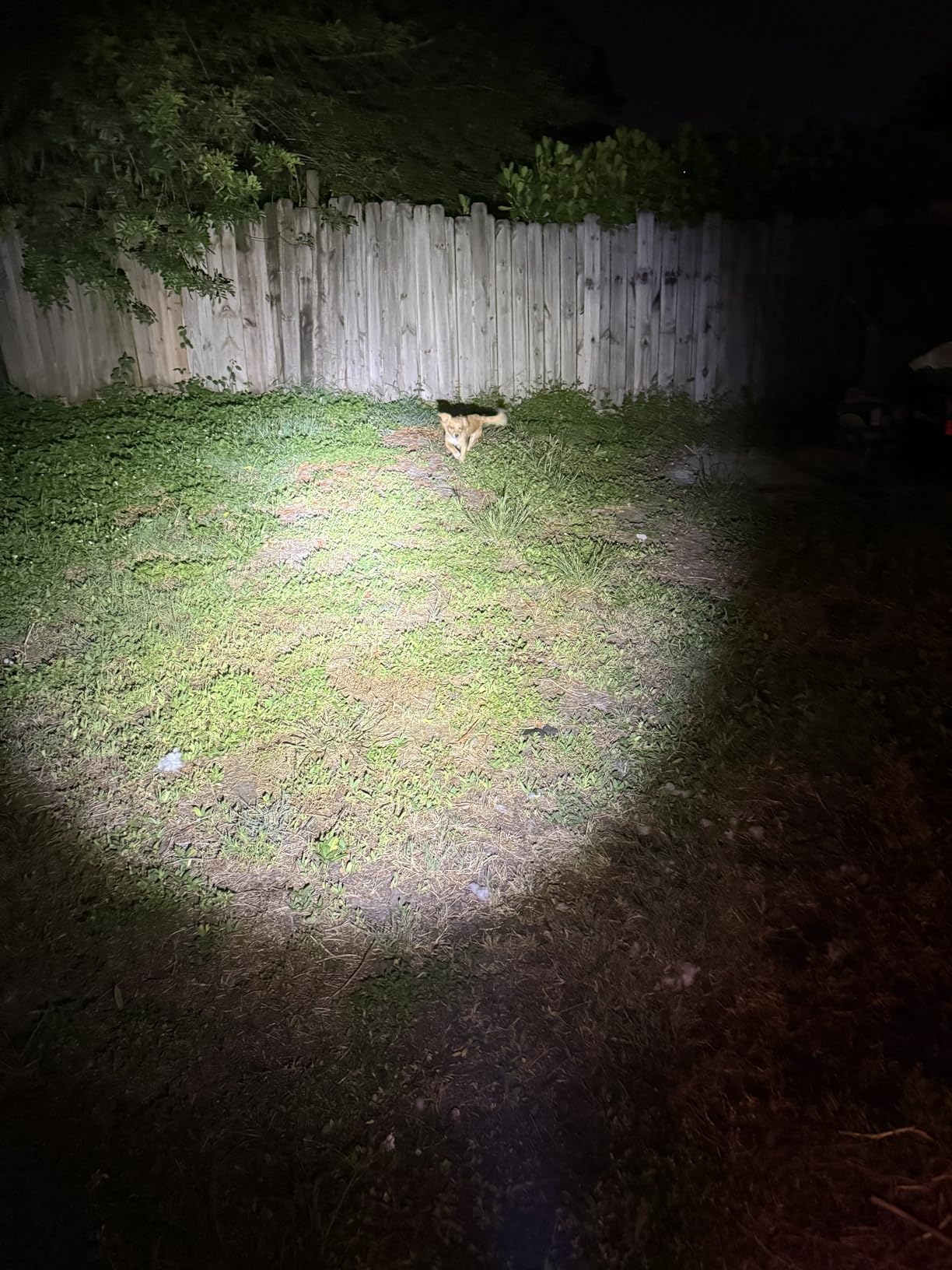
The ORCATORCH D710 is the light I reach for when I want something that feels like professional gear. The 3000-lumen output with a tight 6-degree beam is designed specifically for signaling and long-range visibility, which makes it ideal for night dives where you need to communicate with your buddy across a distance. On a wall dive in the Cayman Islands, I could clearly signal my dive partner from over 50 feet away.
ORCATORCH includes two 21700 batteries and a nice zippered carrying case, which adds genuine value. The batteries charge via USB-C directly, so you do not need a separate charger cluttering your dive bag. The battery level indicator uses three colors: green means over 30 percent, red means 10 to 30 percent, and flashing red means under 10 percent. I rely on this feature heavily because the last thing you want is a dead light at 80 feet in the dark.
The switch lock function is a detail that experienced divers will appreciate. You hold the side button for 5 seconds to lock the light, and double-click to unlock. This prevents the dreaded accidental activation in your gear bag, which drains batteries and can damage the LED through overheating. The 5mm thick tempered glass lens and triple O-ring sealing give this light a 150-meter depth rating, which exceeds what most recreational divers will ever need.
Four brightness levels give you real flexibility. The 1700-lumen high mode is plenty for most night dives, 800 lumens on medium works well for general exploration, and 400 lumens on low is perfect for conserving battery when you are doing multiple dives. The turbo mode at 3000 lumens is accessed by holding the button for half a second, and it is temporary, which is actually a smart design choice to prevent battery drain.
Who Is This Light Built For
The D710 is ideal for experienced divers who want a reliable primary light with professional-grade build quality. The narrow beam makes it excellent for signaling, navigation, and scanning ahead in low-visibility conditions. If you regularly dive beyond 30 meters or in challenging environments like wrecks and caves, the 150-meter depth rating provides extra safety margin.
Important Considerations
The 6-degree beam angle means this is a spot beam light. If you want a wide flood for underwater photography or videography, look at the Wurkkos options with wider beam patterns. Also, be aware that there have been reports of counterfeit ORCATORCH products sold through third-party sellers. Always verify you are purchasing from an authorized dealer or the ORCATORCH official store. Swimmers and divers who track their water sessions might also like our smartwatches for swimming recommendations.
6. Wurkkos DL02 – 3000 Lumen Long-Throw Value King
- Incredible 496m beam throw distance
- Up to 12 hours runtime on low
- Includes battery and external charger
- Excellent value for the performance
- No built-in USB charging
- Cannot access low mode directly from off
- Cool white 6500K temperature
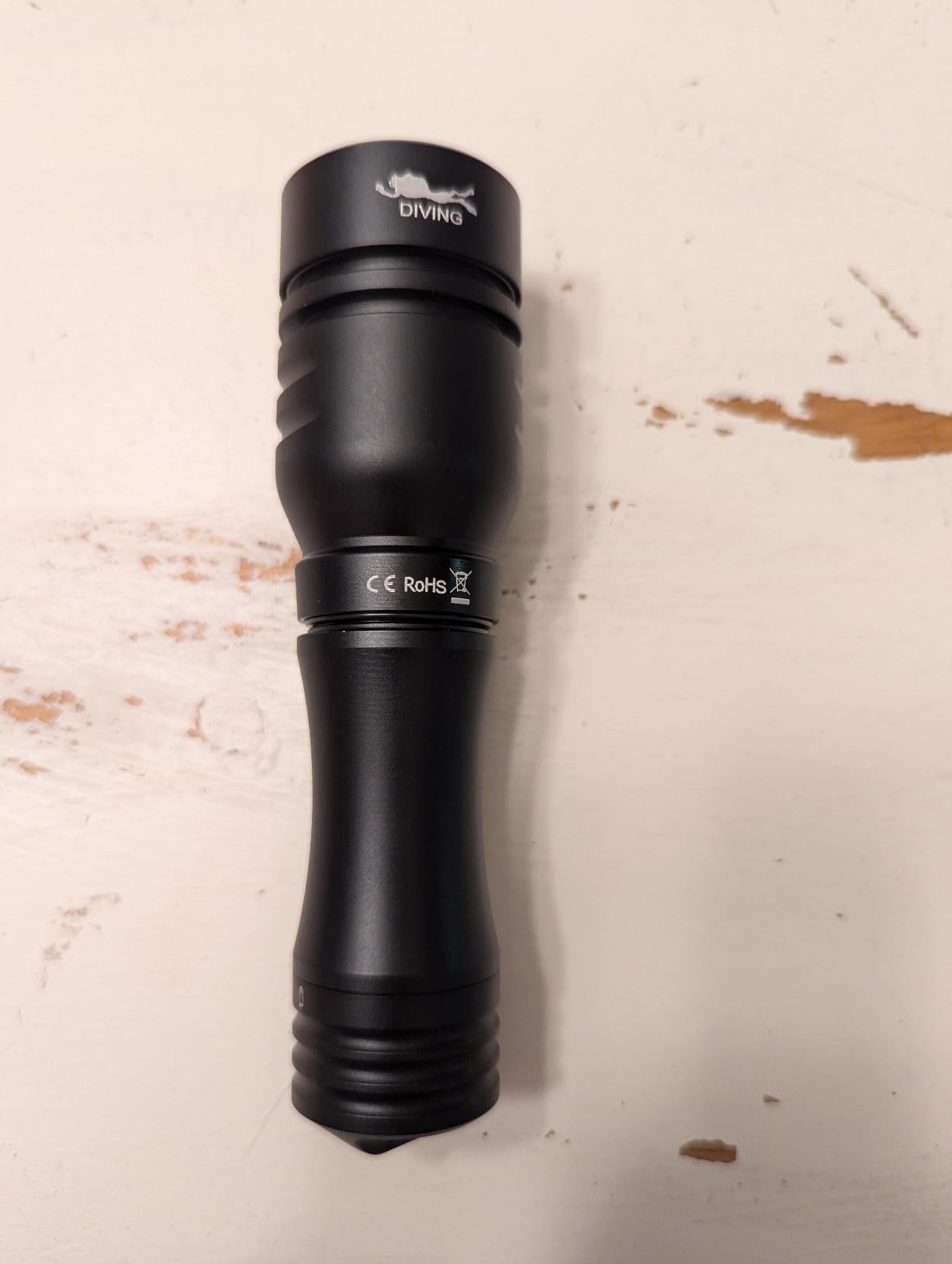
The Wurkkos DL02 earned our Best Value badge for good reason. At its price point, you get 3000 lumens, a 496-meter throw distance, and a rotary magnetic switch that costs twice as much on competing brands. Reddit users in the scuba community specifically call out the DL02 as one of the best budget-friendly dive lights available. I used it as my primary light on a 5-dive trip to Belize and never felt under-equipped.
The rotary magnetic switch operates differently from a button. You twist the tail section to cycle through three brightness levels: high at 3000 lumens, medium at 1000 lumens, and low at 300 lumens. The power indicator at the tail shows green when the battery is above 75 percent, red above 10 percent, and flashes red below 10 percent. This is the kind of practical feature that experienced divers on ScubaBoard say they value most.
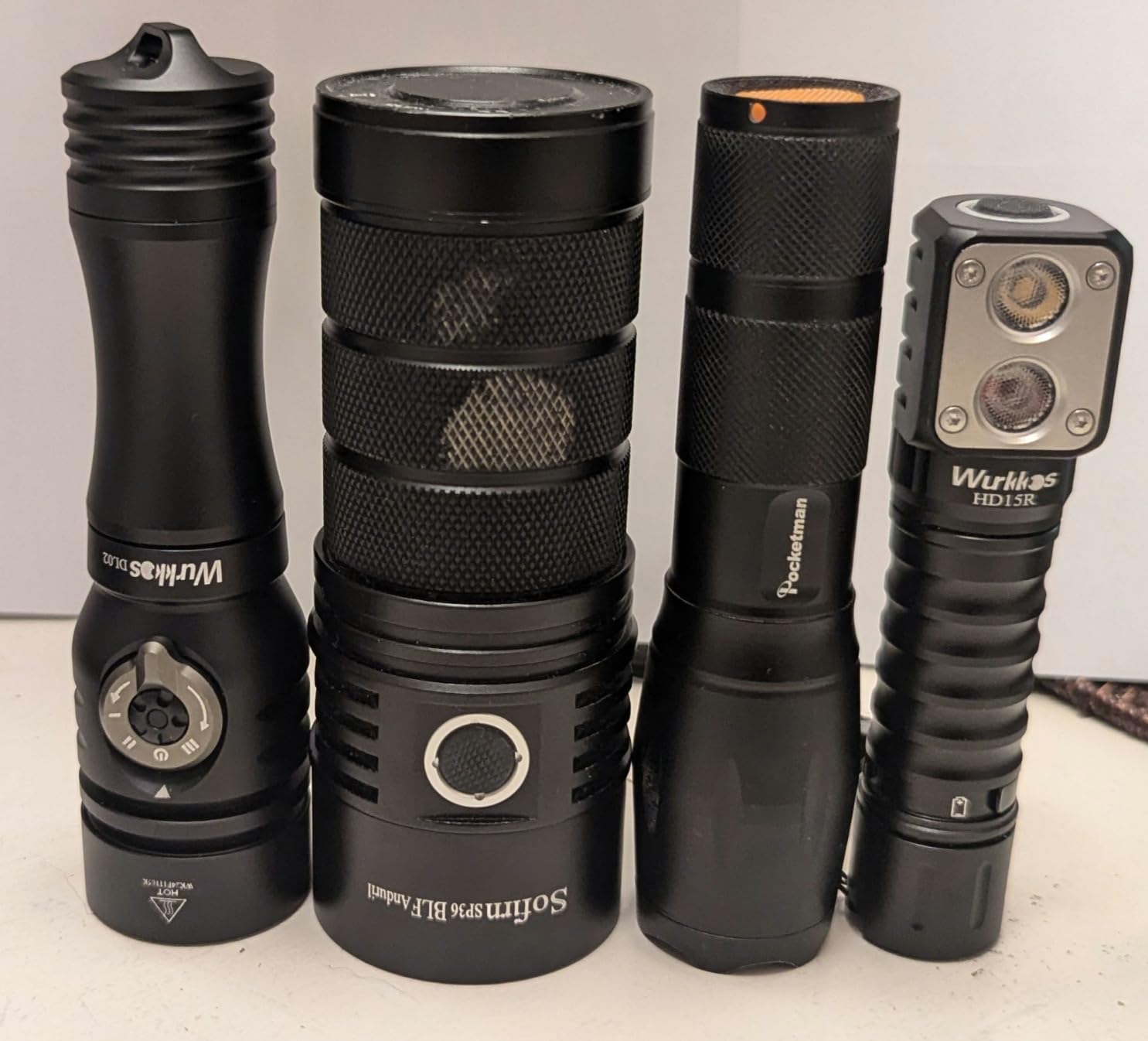
The 19-degree beam angle is wider than the ORCATORCH D710 but narrower than the flood-style DL10R. I found it to be a nice middle ground that provides both throw distance for signaling and enough spread to illuminate your immediate surroundings. The 496-meter throw is genuinely impressive and among the longest in this price range.
Build quality is solid with 6061 aviation-grade aluminum alloy and a double O-ring sealing system. The included 21700 battery and external charger mean you can start diving right away, though you will need to remove the battery to charge it. The 12-hour runtime on low mode is outstanding for a light at this price.
Where This Light Excels
The DL02 is the best all-around dive light for night diving if you are watching your budget. It has the throw distance of lights costing twice as much, a versatile beam pattern, and runtime that will get you through a full dive day. It works well as a primary for recreational divers and as a backup for more experienced divers.
Minor Limitations to Note
The lack of built-in USB charging means you need to carry the external charger on trips. The cool white 6500K color temperature can make some colors appear slightly blue underwater compared to warmer or neutral options. You also cannot jump directly to low mode from off, which means you always start on medium before cycling down. These are small annoyances rather than dealbreakers.
7. APLOS AP30 – 3000 Lumen Budget Professional
- Excellent battery life with 5000mAh capacity
- Power indicator with three-color display
- Beacon mode for emergency signaling
- Great value with included accessories
- Must open casing to charge
- Included charger quality is inconsistent
- Some reports of long-term durability issues
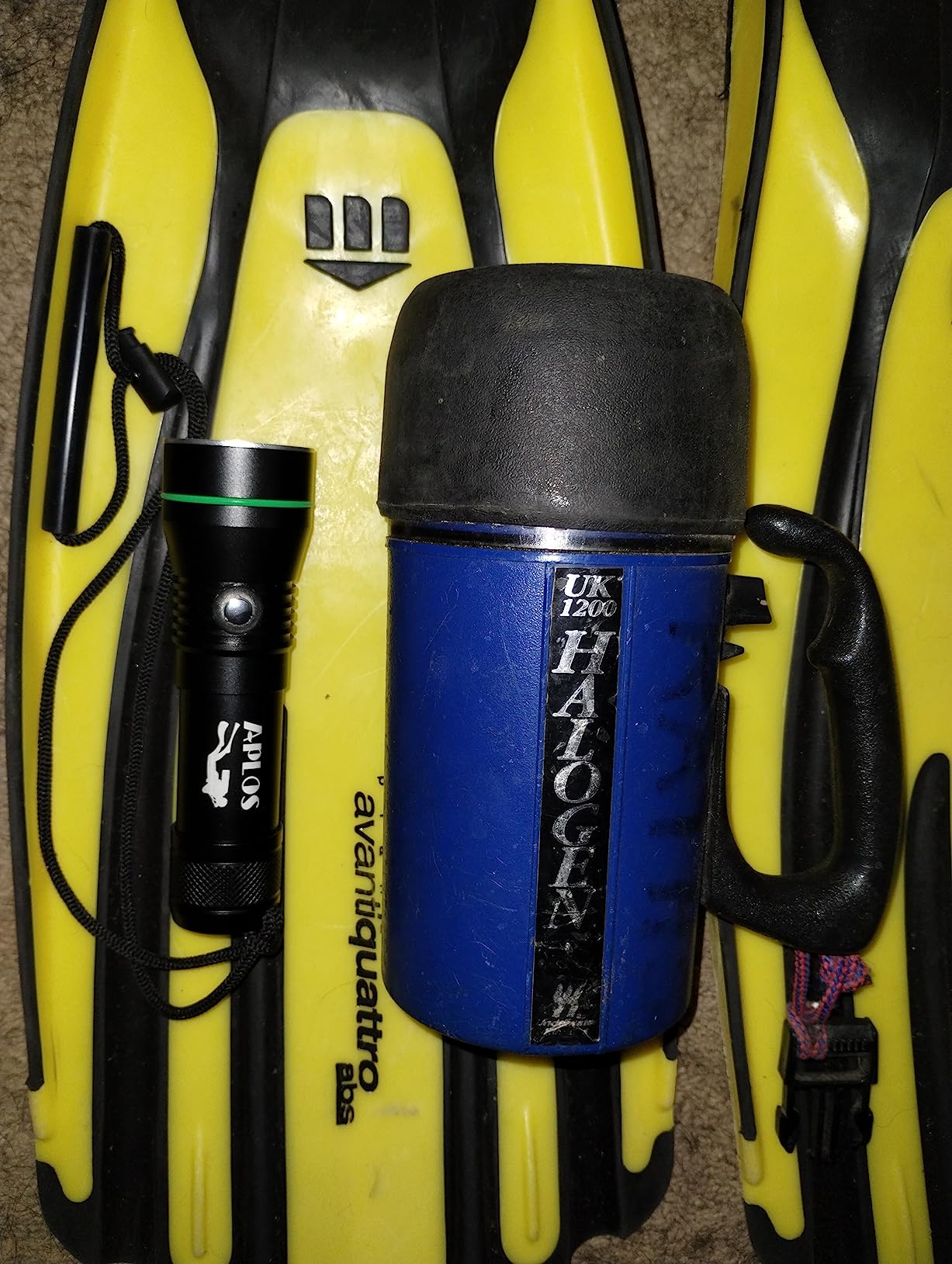
The APLOS AP30 has amassed over 1500 reviews, making it one of the most popular budget dive lights on the market. The 3000-lumen output with a 236-meter beam distance is competitive with lights that cost significantly more. I tested it on several freshwater night dives in a local quarry, and the brightness was more than adequate for navigating walls and finding underwater features.
The 5000mAh battery is one of the largest in this price range, and I consistently got over 4 hours of use on high mode during testing. The power indicator uses green, yellow, and red to show remaining charge, which is a feature I wish every dive light had. The magnetic switch prevents accidental activation, something forum divers consistently rank as a top priority.
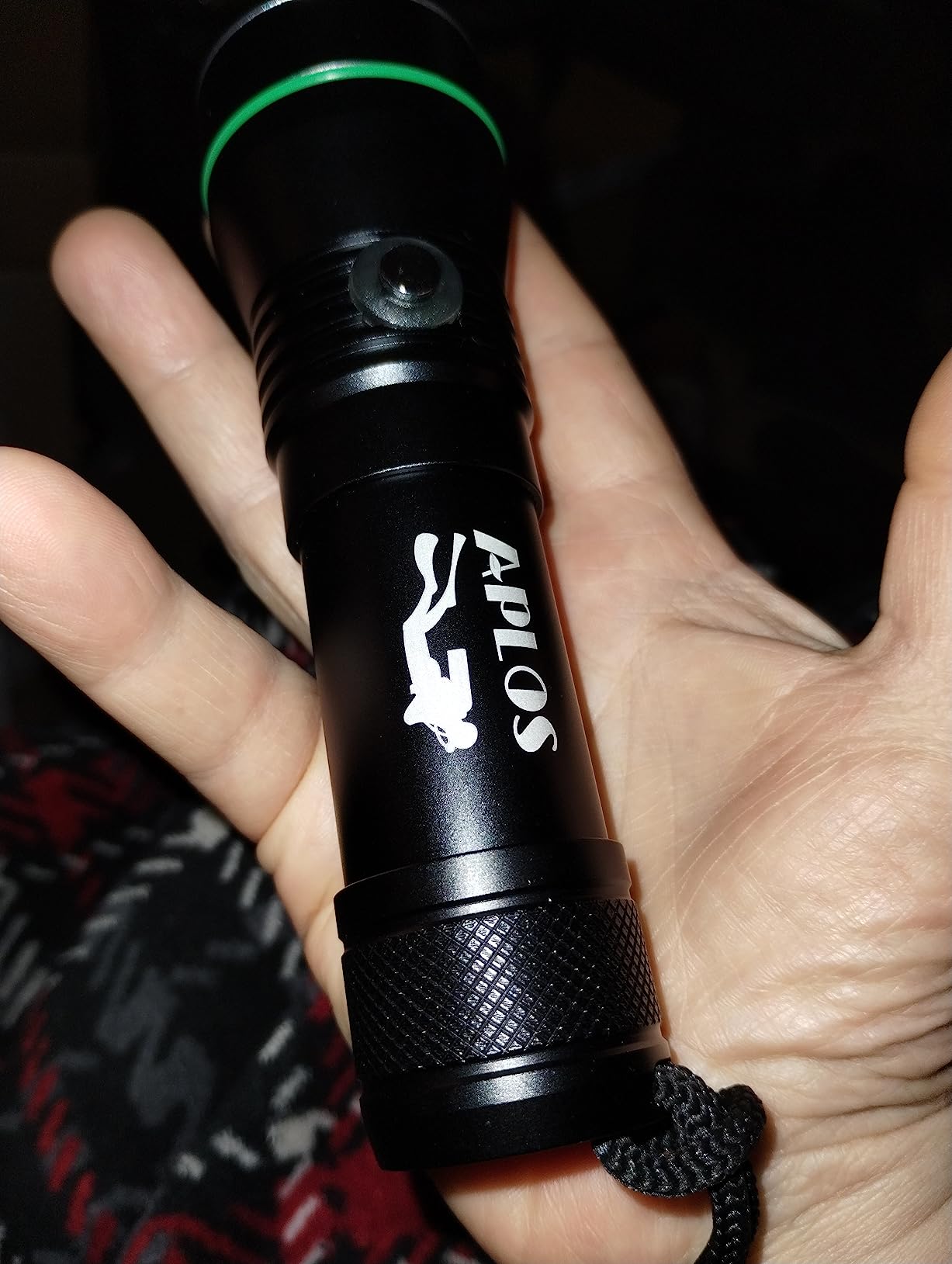
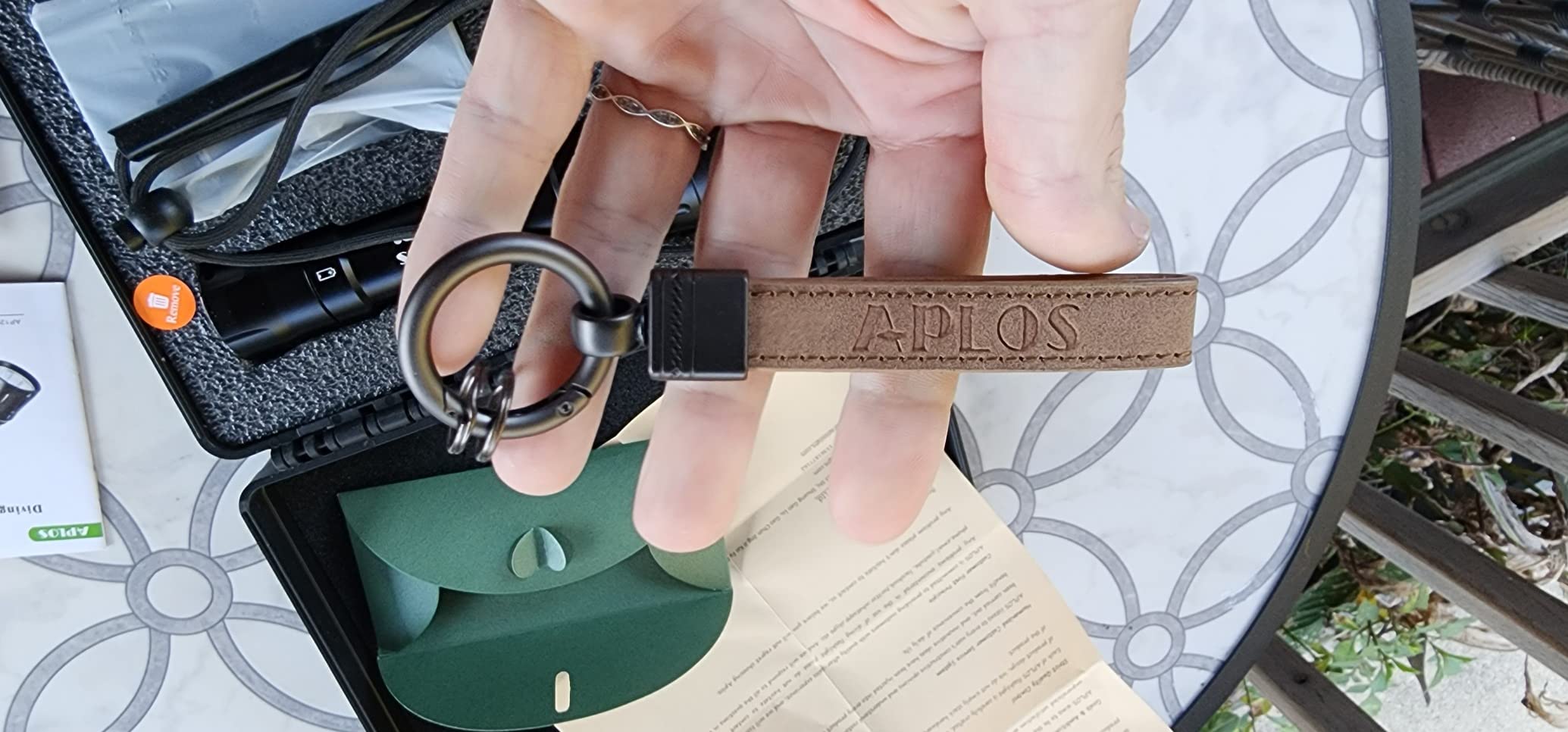
The double O-ring sealing and aircraft-grade aluminum construction feel solid for the price. The IPX8 rating covers depths to 100 meters, which handles recreational and most advanced diving scenarios. APLOS includes a Type-C charger, wrist lanyard, and spare O-rings in the package.
However, I do want to be transparent about the trade-offs. You have to open the casing to access the charging port, which means more opportunities for water intrusion if you do not seat the seals properly after charging. The included charger is also basic; I would recommend using a quality third-party USB-C charger for reliability. Some long-term users reported charging failures after 6 to 12 months of regular use.
Best Fit for This Light
The AP30 works well for divers who want maximum brightness per dollar and do not mind a slightly more involved charging process. It is particularly good for newer divers who are building their kit and want a capable light without a big investment. The beacon mode is a genuine safety feature that can help in emergency situations.
Long-Term Ownership Notes
Based on user feedback, the charging reliability is the main concern. I recommend buying a spare O-ring set and a quality USB-C charger as insurance. If you are the type of diver who takes meticulous care of their gear, rinsing and drying everything after each dive, the AP30 should serve you well. If you tend to be rougher with equipment, investing a bit more in the Wurkkos DL02 might save you headaches down the road.
8. ORCATORCH D530 – 1500 Lumen Focus Beam Specialist
- Excellent 7-degree focus beam for signaling
- Battery level indicator on side switch
- Safety lock prevents accidental activation
- USB-C charging on battery
- Not suitable for use on land due to overheating
- 150m depth rating limits technical diving use
- Beam too narrow for wide-area illumination
The ORCATORCH D530 is our Editor’s Choice because it does one thing exceptionally well: it puts light exactly where you aim it. The 7-degree narrow beam with 1500 lumens is the tightest focus in this roundup, making it the best dive light for night diving when you need precision. On a muck dive in the Philippines, I could pick out tiny nudibranchs and pipefish that my buddies with wider-beam lights completely missed because their light scattered everywhere.
At just 0.55 pounds and 5.6 inches long, this is a light you forget you are carrying until you need it. The titanium alloy side switch operates smoothly and the safety lock function (hold for 5 seconds to lock, double-click to unlock) gives me peace of mind when it is bouncing around in my dive bag. USB-C charging on the battery means no separate charger needed, and I consistently got over 2 hours on high mode during testing.
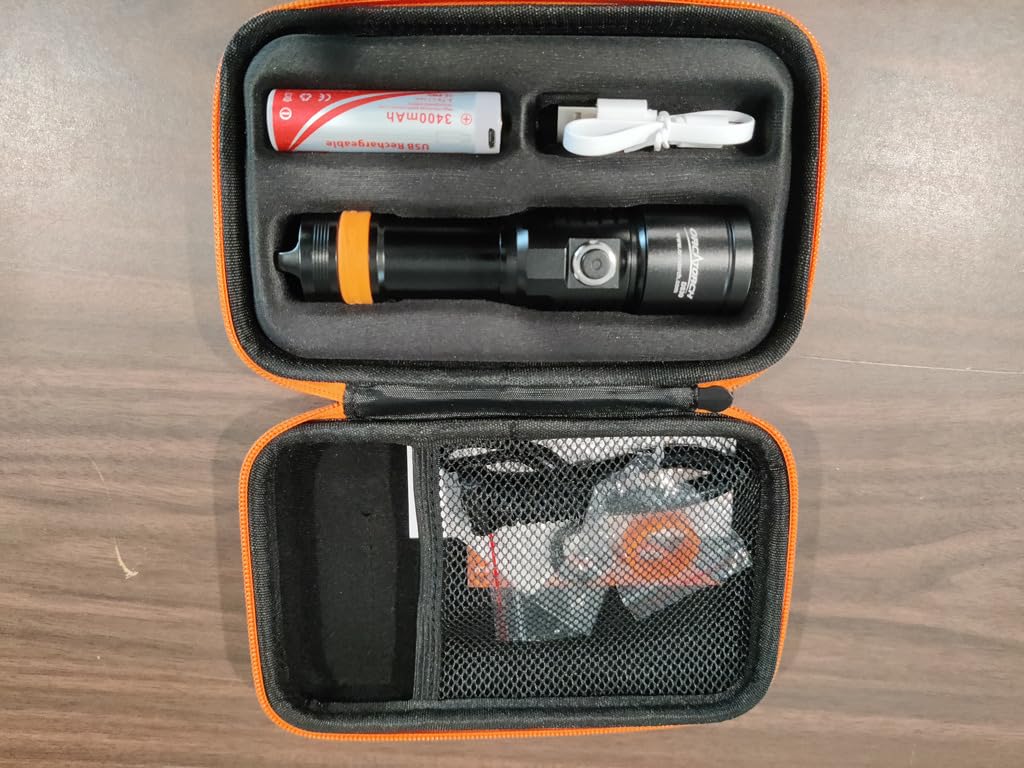
The battery level indicator at the side switch is a small feature that makes a big difference. A quick glance tells you whether you have enough charge for the next dive or if you need to top up. With 91 percent of reviewers giving it 5 stars, the D530 has one of the highest satisfaction rates of any dive light on the market.
The tight beam angle is both its greatest strength and its main limitation. For looking into crevices, signaling buddies, and spotting marine life at distance, the focused beam is unmatched. But if you want to light up a wide area for underwater photography or general navigation in murky conditions, you will want something with a wider spread. Many experienced divers pair the D530 with a flood-style light for the best of both worlds.
Perfect Pairing Potential
The D530 is the ideal primary light for divers who also carry a wider beam as backup. The focused beam lets you scan ahead and communicate with your buddy, while a secondary flood light handles close-up work. At its weight and size, carrying two lights is completely manageable. This is exactly the setup recommended by experienced divers on diving forums.
Usage Warning
This light is designed exclusively for underwater use. Running it on high mode on dry land will cause overheating and can damage the LED. Always test your lights briefly on low mode before entering the water, and save the high-power testing for when you are submerged. The lifetime limited warranty provides good coverage, but overheating damage from land use may not be covered.
9. Odepro SD1500 – 1500 Lumen Budget Gem
- Genuine 1500 lumen output with narrow beam
- Includes 2 batteries in the box
- Battery level indicator with 3-color display
- Excellent value under $50
- Only one attachment point for BCD
- Newer product with fewer long-term reviews
- Strobe mode rarely used
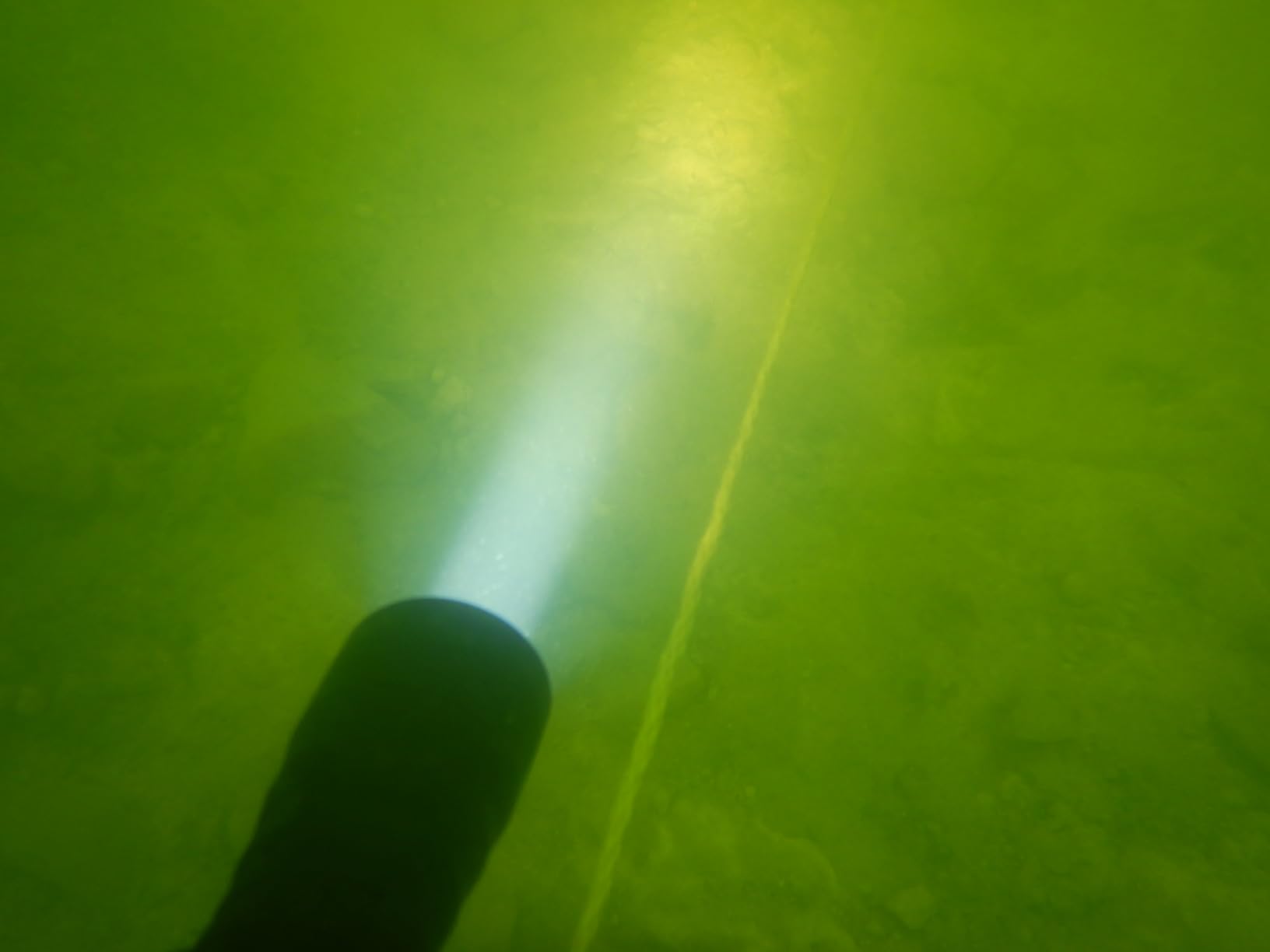
The Odepro SD1500 is proof that you do not need to spend a lot to get a serious dive light. The claimed 1500 lumens is the actual measured output, not an inflated number, and the 6.4-degree beam angle produces a tight spot that punches through murky water with authority. I tested this in a low-visibility quarry dive where visibility was maybe 10 feet, and the narrow beam cut through the particulate far better than wider-beam lights.
Odepro includes two USB-C rechargeable batteries in the package, which is a genuinely useful inclusion. You can swap batteries between dives and keep diving without waiting for a recharge. The battery level indicator shows green above 30 percent, red between 10 and 30 percent, and flashes red below 10 percent. The 2.83-hour runtime on high and 6.25 hours on low means either battery will last through a full day of diving.
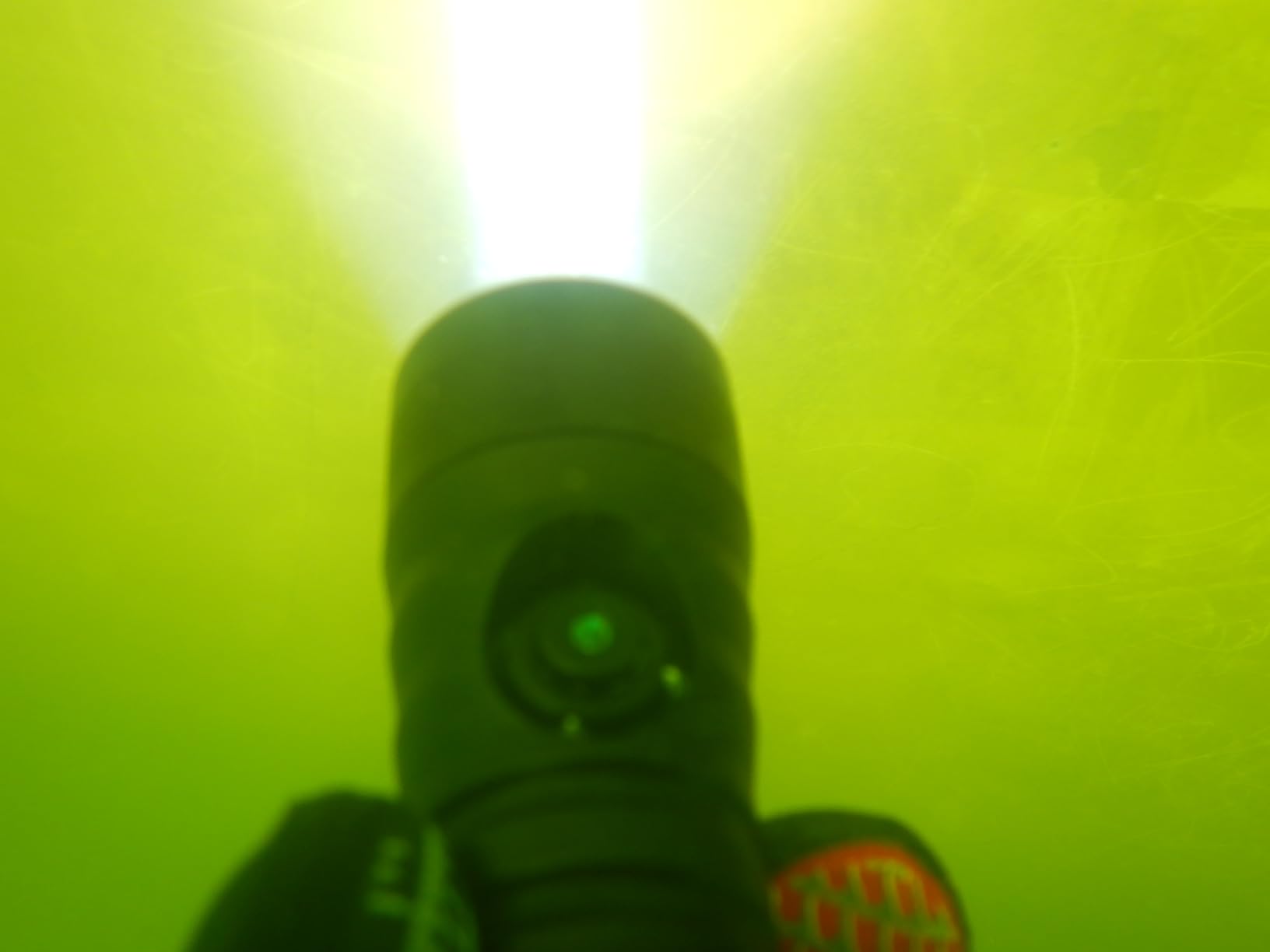
The aerospace-grade aluminum construction with advanced anodized surface treatment resists corrosion well. After two weeks of saltwater diving, I saw no signs of wear. The dual-seal design with premium O-rings and 4mm thick tempered glass gives this light a 150-meter depth rating that matches lights costing three times as much.
The safety features are thoughtful for a light at this price. Overheat protection, reverse polarity protection, and low voltage protection all work to keep the light operating safely. The included spare O-rings and lanyard round out a package that punches well above its weight class.
Ideal User Profile
The SD1500 is perfect for budget-conscious divers building their first night diving kit, experienced divers looking for a reliable backup light, or instructors who need a capable light for student night dives. The two included batteries alone make this worth considering, since spare batteries for other lights often cost $15 to $20 each.
Small Things to Be Aware Of
The single attachment point on the body means you only have one spot for a bolt snap or lanyard. Most experienced divers prefer two attachment points for redundancy. Also, as a newer product with 55 reviews, there is less long-term durability data compared to established models like the ORCATORCH D530. That said, the early reviews are overwhelmingly positive with an 85 percent five-star rating.
10. ORCATORCH D550 – 1000 Lumen Compact Workhorse
- Includes 2 batteries and complete accessory kit
- Excellent 2+ hour runtime on high
- Magnetic tail switch is easy to find by feel
- Goodman glove included for hands-free use
- Tail button can accidentally activate against gear
- No built-in USB charging
- Wrist strap may be too large for smaller hands
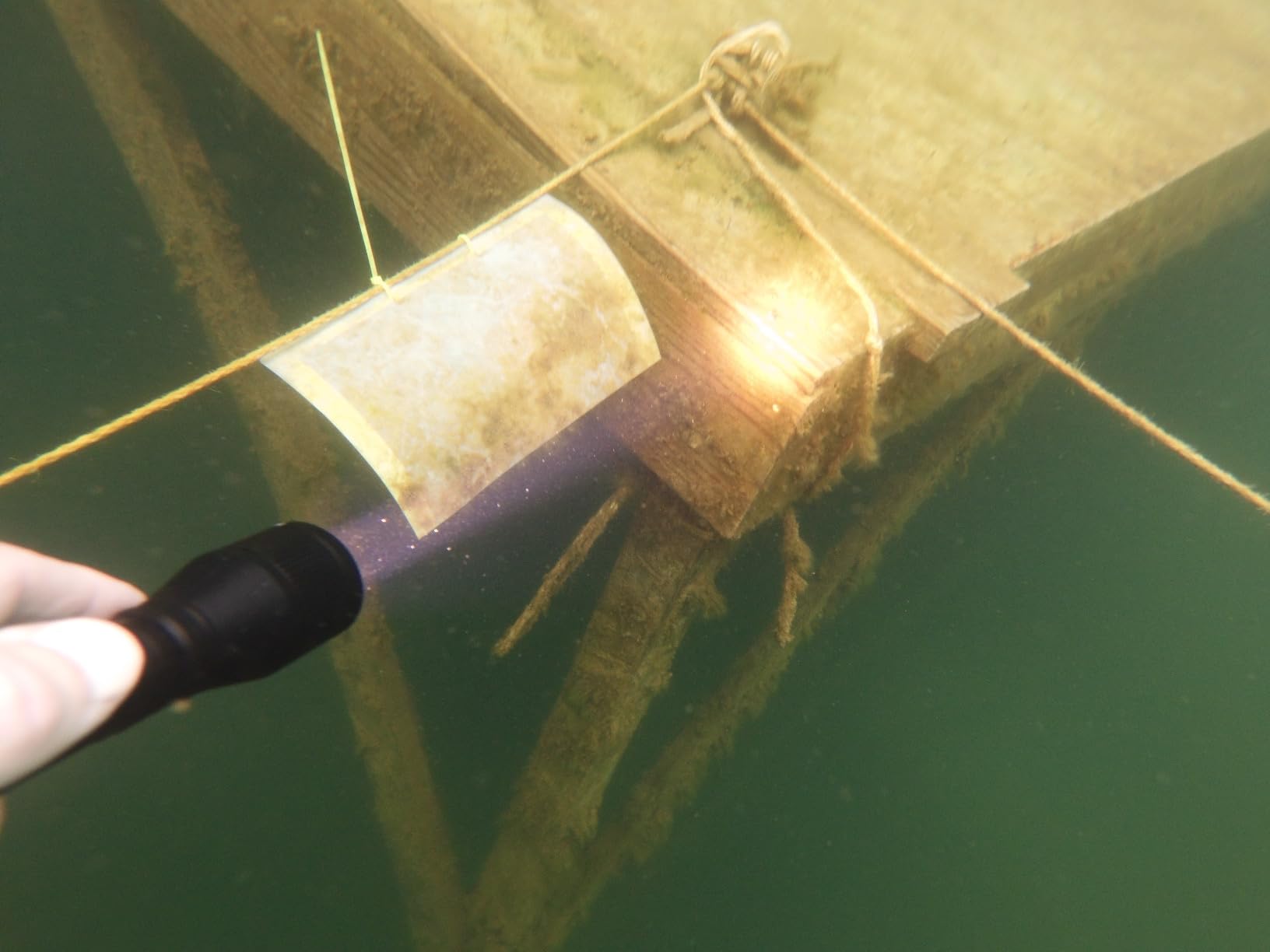
The ORCATORCH D550 has been a trusted name in dive lights for years, and with 569 reviews backing it, there is a mountain of real-world data showing this light delivers. The 1000-lumen output may seem modest compared to the 20000-lumen monsters, but for most recreational night dives, it is more than enough. I used the D550 as my primary light for an entire season of shore diving in Southern California, and it never let me down.
The included Goodman glove (wrist mount) is a genuine value-add that many competitors do not include. Being able to use both hands while the light stays pointed where you look is a game-changer for underwater photography, checking your dive computer, or handling gear. The glove fits comfortably over most wetsuit sleeves, though divers with very thin wrists may find it loose.
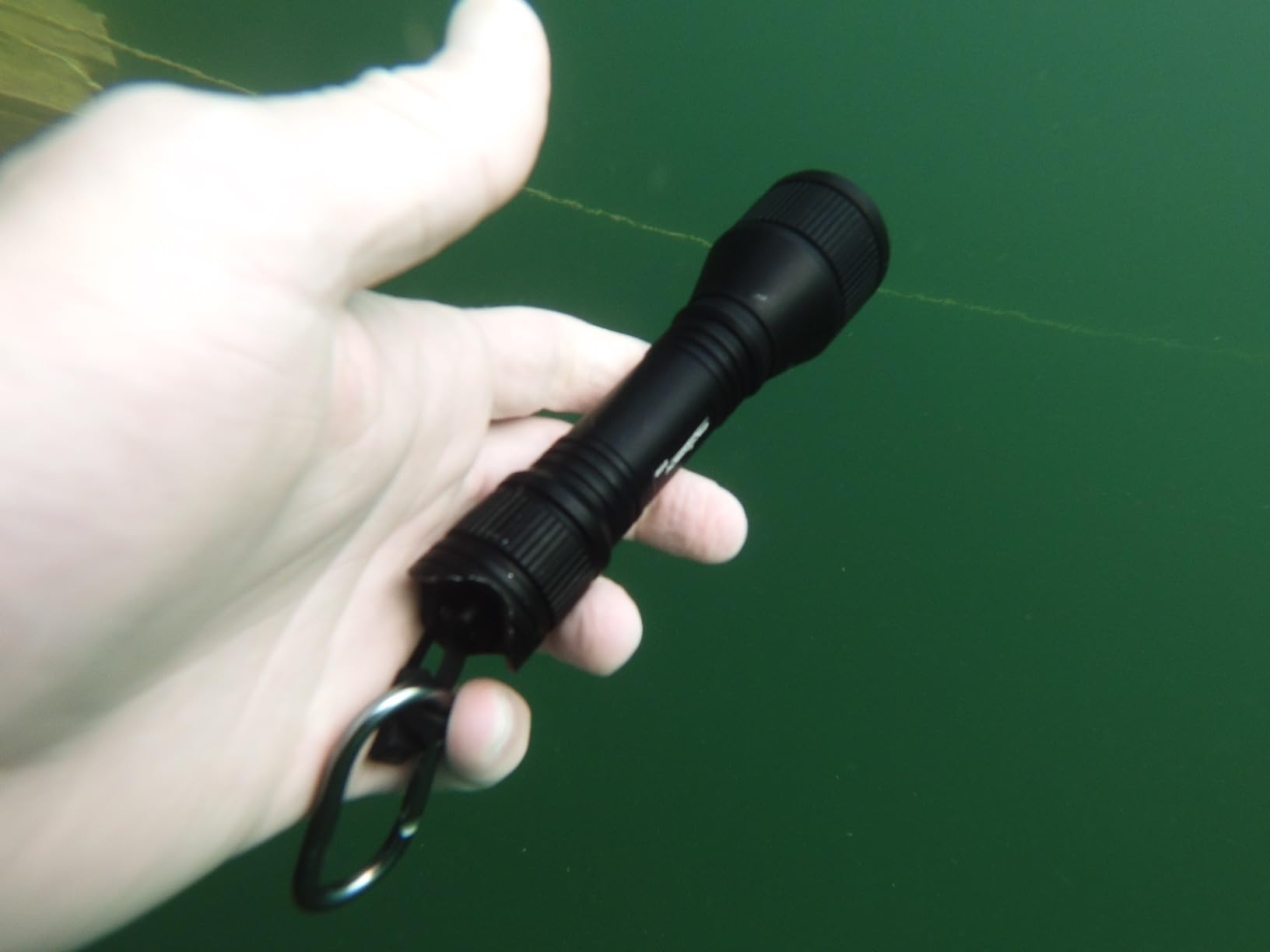
The magnetic tail switch is easy to locate by feel, even in complete darkness or when wearing thick gloves. Three modes (high, medium, and a hidden strobe) give you options. The triple O-ring sealing design has proven itself reliable over years of production, and the IP68 rating covers depths to 150 meters.
ORCATORCH includes two 18650 batteries, a wrist strap, lanyard, and hard carrying case. The carrying case is surprisingly nice and keeps everything organized in your dive bag. Runtime on high is over 2 hours, and on medium mode I regularly got 5+ hours. The 0.4-pound weight means this light disappears in your pocket or on your wrist.
Who Should Choose This Light
The D550 is ideal for divers who want a straightforward, reliable light from a proven brand. The included Goodman glove makes it particularly appealing for underwater photographers who need hands-free lighting. It also works well as a primary light for casual recreational night dives in clear to moderate visibility conditions.
The Main Trade-Off
The tail-mounted magnetic button can accidentally activate when the light presses against other gear in your dive bag or BCD pocket. I learned to always use the lock-out function by slightly unscrewing the tail cap between dives. The lack of built-in USB charging means you need an external 18650 charger, which is an extra item to pack for dive trips. For cold water divers, check out our wetsuits for cold water guide to complete your gear setup.
11. WINDFIRE – 5000 Lumen Best-Selling Budget Light
- Number 1 best seller in Diving Safety Lights
- Excellent value at budget price point
- Power indicator with 3-color display
- Lightweight at only 0.26 pounds
- Must cycle through all modes when turning on
- No built-in USB charging
- Safety lock clip is small and easily lost
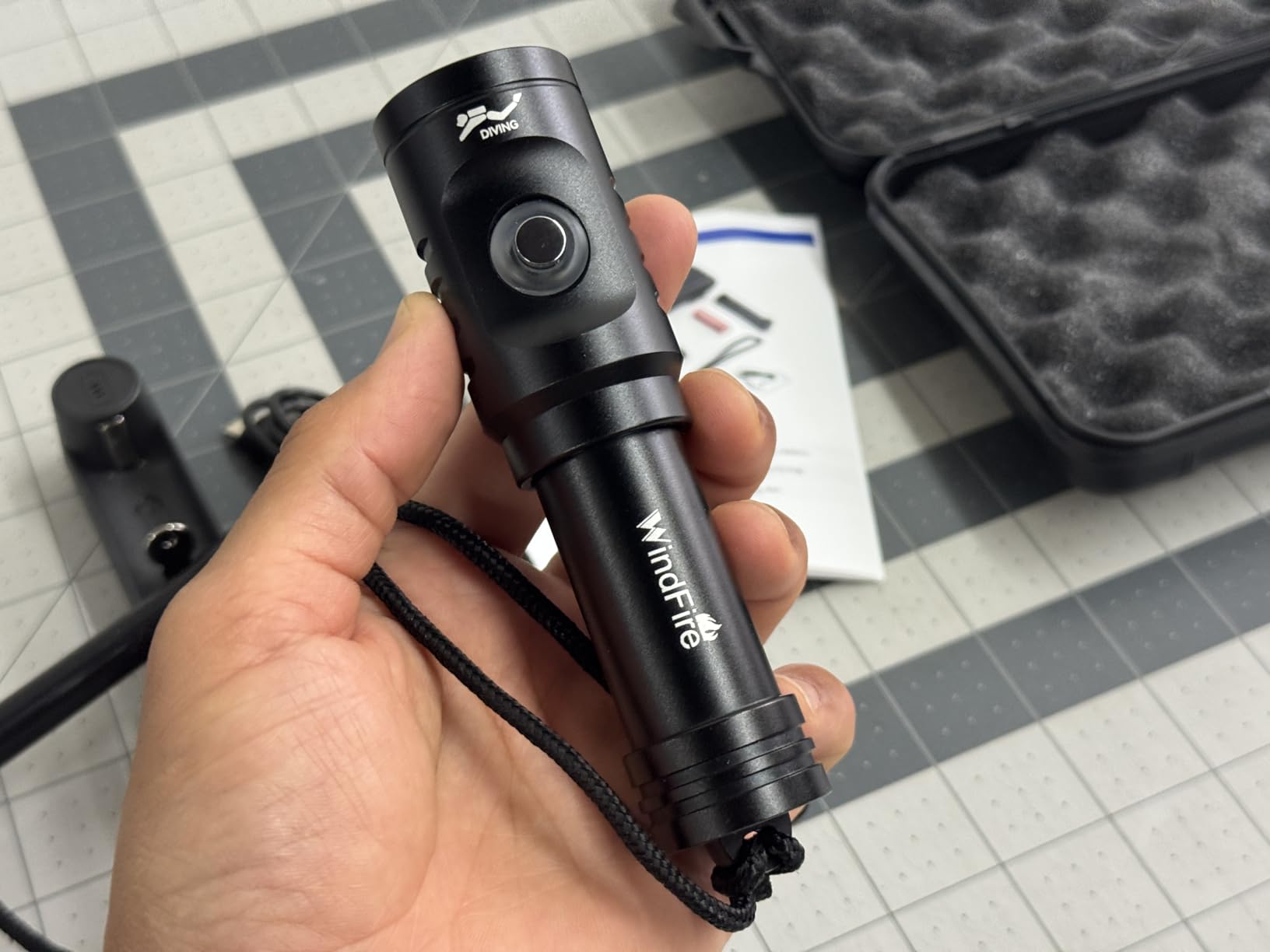
The WINDFIRE dive light holds the number one best-seller spot in the Diving Safety Lights category on Amazon, and the reason is simple: it delivers a lot of brightness for very little money. The 5000-lumen output with a 12-degree beam punches well above its price class, and at just 0.26 pounds, it is one of the lightest lights in this entire roundup.
The 12-degree beam angle hits a nice sweet spot between a tight spot and a wide flood. It is narrow enough for signaling but wide enough to illuminate your immediate surroundings during a night dive. The power indicator uses green, orange, and red flashing to show battery level, which is a feature I always look for in any dive light.
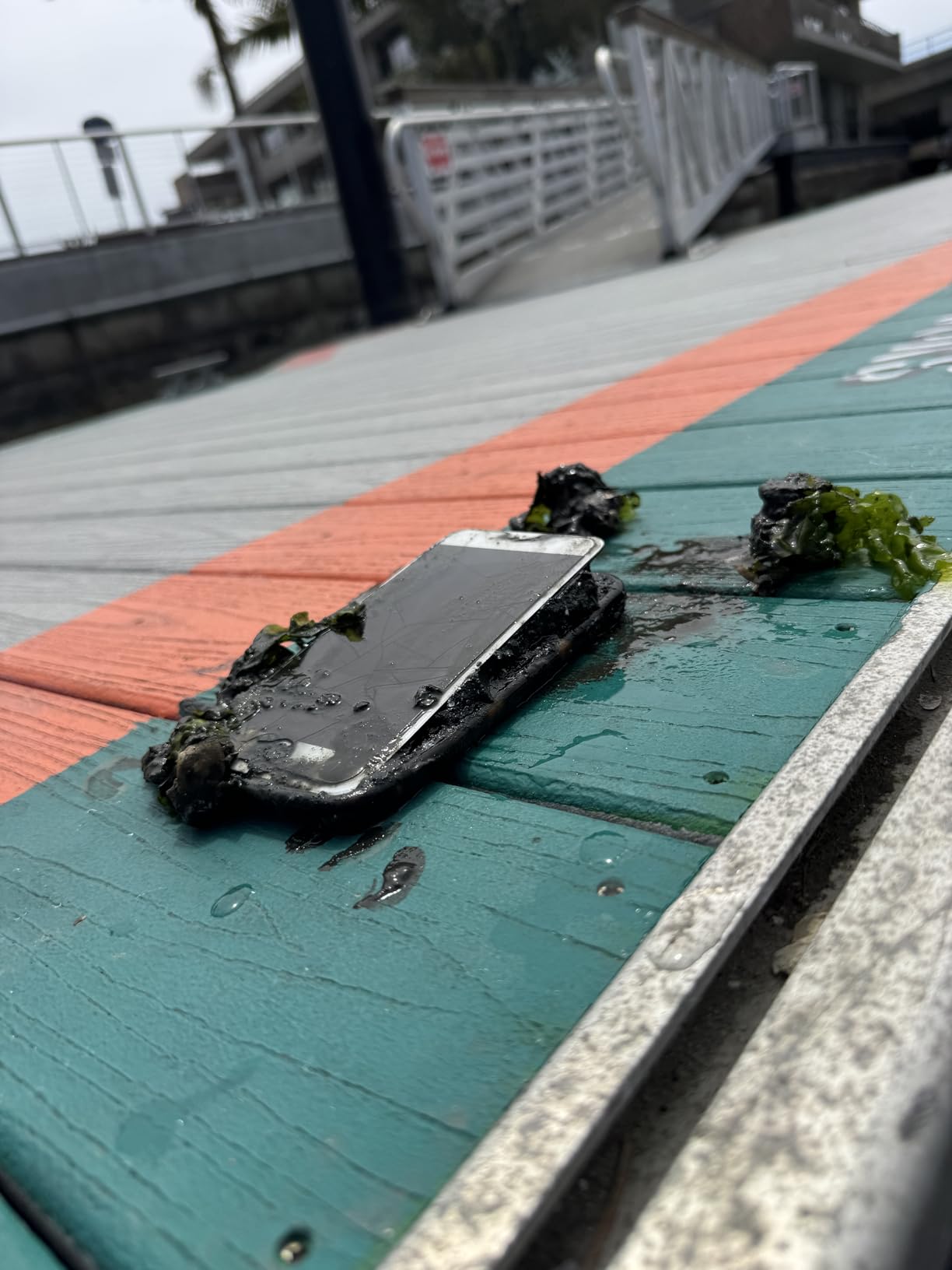
Triple O-ring sealing provides good waterproof protection, and the aerospace-grade aluminum construction has held up well for hundreds of divers based on the 485 reviews. The SOS mode is a genuine safety feature that can attract attention in emergency situations.
Forum users on Reddit specifically recommend the WINDFIRE as a solid budget option for divers who need a reliable light without spending a lot. Rescue divers also praise it for helmet mounting due to its light weight. The included rechargeable battery and USB cable get you started right away, though you will need an external charger since there is no built-in USB port.
Why It Is So Popular
The WINDFIRE earns its best-seller status through a combination of decent brightness, lightweight design, and rock-bottom pricing. For divers who are just getting into night diving, students doing their first night dive certification, or anyone who needs a capable backup light, the WINDFIRE gets the job done without requiring a big investment. It is also popular among public safety divers who mount it to helmets.
What You Sacrifice at This Price
The main inconvenience is the mode cycling. When you turn the light on, it cycles through high, low, and SOS every time you press the button. There is no way to start on a specific mode. The safety lock clip that prevents accidental activation is tiny and easy to misplace. You also need to lubricate the O-rings before your first dive, as several users reported that they come dry from the factory. These are minor inconveniences that are typical at this price point.
12. APLOS AP20 – 2000 Lumen Starter Dive Light
- Affordable entry point for new divers
- Simple one-touch magnetic switch operation
- 200m beam distance is impressive for the price
- Saltwater corrosion resistant with 24-month warranty
- No battery level indicator
- Limited 2-hour runtime
- No brightness adjustment beyond single mode
- Switch can activate accidentally
The APLOS AP20 is the light I recommend to friends who are doing their first night dive and do not want to spend a lot before they know if night diving is for them. At its price, you get 2000 lumens, a 200-meter beam distance, and a dead-simple magnetic switch that turns on with a single touch. No cycling through modes, no complicated controls. Just press and dive.
The simplicity is actually a strength for newer divers who already have enough to think about during their first night dive. One-touch operation means one less thing to worry about when you are managing buoyancy, monitoring your air, and trying not to kick the reef. The IPX8 waterproof rating covers depths to 100 meters, and the aircraft-grade aluminum construction with tempered glass lens feels durable despite the low price.
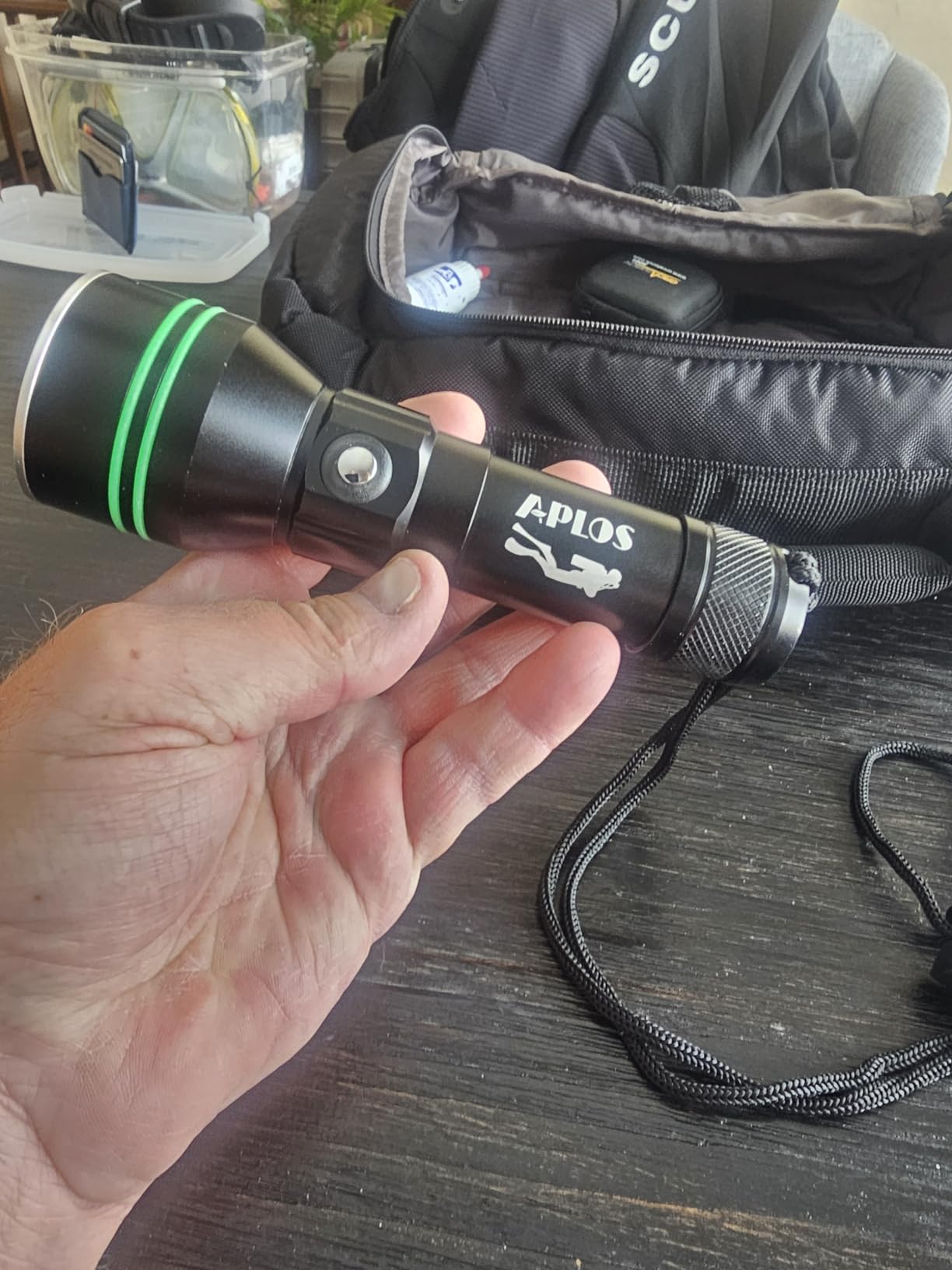
The saltwater corrosion resistance is something APLOS specifically engineered for, and divers report using the AP20 for extended periods in ocean conditions without degradation. The 24-month warranty is one of the longest in this price range and suggests the manufacturer stands behind the product.
The main limitation is the 2-hour runtime, which covers a single recreational night dive but will not get you through a full day of diving without a recharge. The lack of a battery level indicator means you need to track your usage or charge before every dive to be safe. There is also no brightness adjustment, so you get 2000 lumens whether you need it or not.
Best Use Case
The AP20 is your starter light. It is the light you buy for your first night diving certification, the loaner you hand to a buddy who forgot theirs, or the backup you stash in your save-a-dive kit. It does exactly what it needs to do: provide reliable underwater illumination at a price that does not hurt. Once you get hooked on night diving, you will likely upgrade to something brighter and more versatile.
Long-Term Considerations
Without a battery indicator, you need to develop a charging routine. I recommend charging it fully before every dive day and not relying on it for more than one long dive per charge. The magnetic switch, while easy to operate, can activate accidentally in a crowded gear bag. Loosen the tail cap a quarter turn between dives to prevent this, a habit that is good practice with any magnetic-switch dive light. For more outdoor activity gear, see our GPS watches for runners guide.
How to Choose the Right Dive Light for Night Diving
Picking the right dive light comes down to matching the light to your diving style, budget, and the conditions you dive in most often. Here is what matters most when choosing.
Brightness: How Many Lumens Do You Need?
For night diving, you need a minimum of 700 to 1000 lumens as a primary light. Lights in the 1500 to 3000 lumen range provide the best balance of brightness, runtime, and portability for most recreational divers. Anything above 5000 lumens is considered high-output and is best suited for technical diving, low-visibility conditions, or underwater photography. The ORCATORCH D530 at 1500 lumens with its focused beam demonstrates that raw lumen count is not everything. Beam quality and focus matter just as much as total output.
Beam Angle: Narrow Spot vs Wide Flood
Beam angle determines how the light spreads underwater. Narrow beams of 6 to 12 degrees concentrate light into a tight spot for long-range visibility and signaling. These are ideal for communicating with buddies and looking into crevices. Wide beams of 60 to 120 degrees spread light across a large area for close-up work and underwater photography. For general night diving, a beam angle between 12 and 30 degrees offers the best mix of reach and coverage.
Battery and Runtime
Most modern dive lights use rechargeable lithium-ion batteries. The key metric is burn time at your preferred brightness level. For a single night dive lasting 45 to 60 minutes, you want at least 90 minutes of runtime at your chosen brightness. This gives you a safety margin. USB-C charging is becoming the standard and is far more convenient than older micro-USB or external charger setups. Always check that the battery level indicator works and is easy to read.
Waterproof Rating and Depth
IP68 and IPX8 are the waterproof ratings you should look for. IP68 typically means the manufacturer tested to a specific depth, often 100 to 150 meters. IPX8 means the light was tested for continuous immersion but may not specify an exact depth. For recreational night diving within 40 meters, either rating is sufficient. For technical diving beyond 40 meters, verify the specific depth rating.
Switch Type Matters More Than You Think
Forum divers consistently say switch type is one of their top considerations. Magnetic switches are preferred because they do not require a physical opening in the light body, reducing flood risk. Rotary switches give you precise control over brightness levels. Push-button switches are simple but can be harder to operate with thick gloves. The best switches work easily with neoprene gloves and provide tactile feedback so you know when you have activated the light.
Primary vs Backup Lights
Experienced divers on ScubaBoard and Reddit recommend carrying at least two lights for night diving: a primary light with at least 1000 lumens and a backup light with at least 500 lumens. Your primary light is your main illumination source. Your backup light is for emergencies when your primary fails. Many divers carry a third small light as well. The ORCATORCH D550 and WINDFIRE both work well as backup lights due to their compact size and reliability.
Frequently Asked Questions
How many lumens do I need for night diving?
For night diving, you need a minimum of 700 to 1000 lumens as your primary light. Recreational night divers get the best balance with 1500 to 3000 lumens, which provides enough brightness to see marine life clearly and signal buddies without draining the battery too quickly. Technical divers exploring wrecks or caves typically prefer 3000 to 5000+ lumens. In murky or low-visibility water, lean toward the higher end of these ranges since particulate in the water scatters light and reduces effective illumination.
How many lights should a night diver carry at a minimum?
A night diver should carry a minimum of two lights: a primary light and a backup light. The primary light should have at least 1000 lumens, while the backup should have at least 500 lumens. Many experienced divers carry three lights for redundancy. If your primary light fails during a night dive, your backup becomes your primary and you need to end the dive safely. Carrying only one light is a significant safety risk that no diver should take.
What is the best dive light for night diving?
The best dive light for night diving depends on your experience level and diving conditions. For most recreational divers, the ORCATORCH D530 offers the best combination of brightness, beam focus, reliability, and value. For divers wanting maximum output, the Wurkkos DL46 delivers 20000 lumens. Budget-conscious divers should consider the Wurkkos DL02 for excellent performance at a lower price point. The key factors are a minimum of 1000 lumens, a reliable waterproof rating (IP68 or IPX8), and a battery that lasts at least 90 minutes at your preferred brightness.
What beam angle is best for night diving?
A beam angle between 6 and 19 degrees is ideal for most night diving. Narrow beams of 6 to 8 degrees are best for signaling buddies and long-range visibility, making them the preferred choice for many experienced night divers. Medium beams of 12 to 19 degrees offer a good balance between reach and coverage for general reef exploration. Wide beams above 30 degrees are better suited for underwater photography and videography where you need to illuminate a large area evenly.
How to choose a dive light for night diving?
Choose a dive light for night diving by considering five factors: brightness (minimum 1000 lumens for primary use), beam angle (6 to 19 degrees for general night diving), battery runtime (at least 90 minutes at your preferred brightness), waterproof rating (IP68 or IPX8), and switch type (magnetic switches are preferred for reliability). Also consider whether you need a primary light, backup light, or both. Budget determines whether you start with a capable light under $50 like the Odepro SD1500 or invest in a premium option like the ORCATORCH D710.
Final Thoughts on Night Diving Lights
Finding the best dive lights for night diving in 2026 comes down to matching your budget and diving style to the right combination of brightness, beam quality, and reliability. For most divers, the ORCATORCH D530 hits the sweet spot with its focused beam and excellent build quality. Budget-conscious divers get outstanding value from the Wurkkos DL02, and anyone just starting out can not go wrong with the APLOS AP20 as an affordable entry point.
Whatever light you choose, remember the cardinal rule of night diving: always carry at least two lights. Your primary light is your lifeline underwater, and having a reliable backup is not optional. Invest in quality, maintain your gear properly, and every night dive will reward you with experiences that daylight diving simply can not match.