
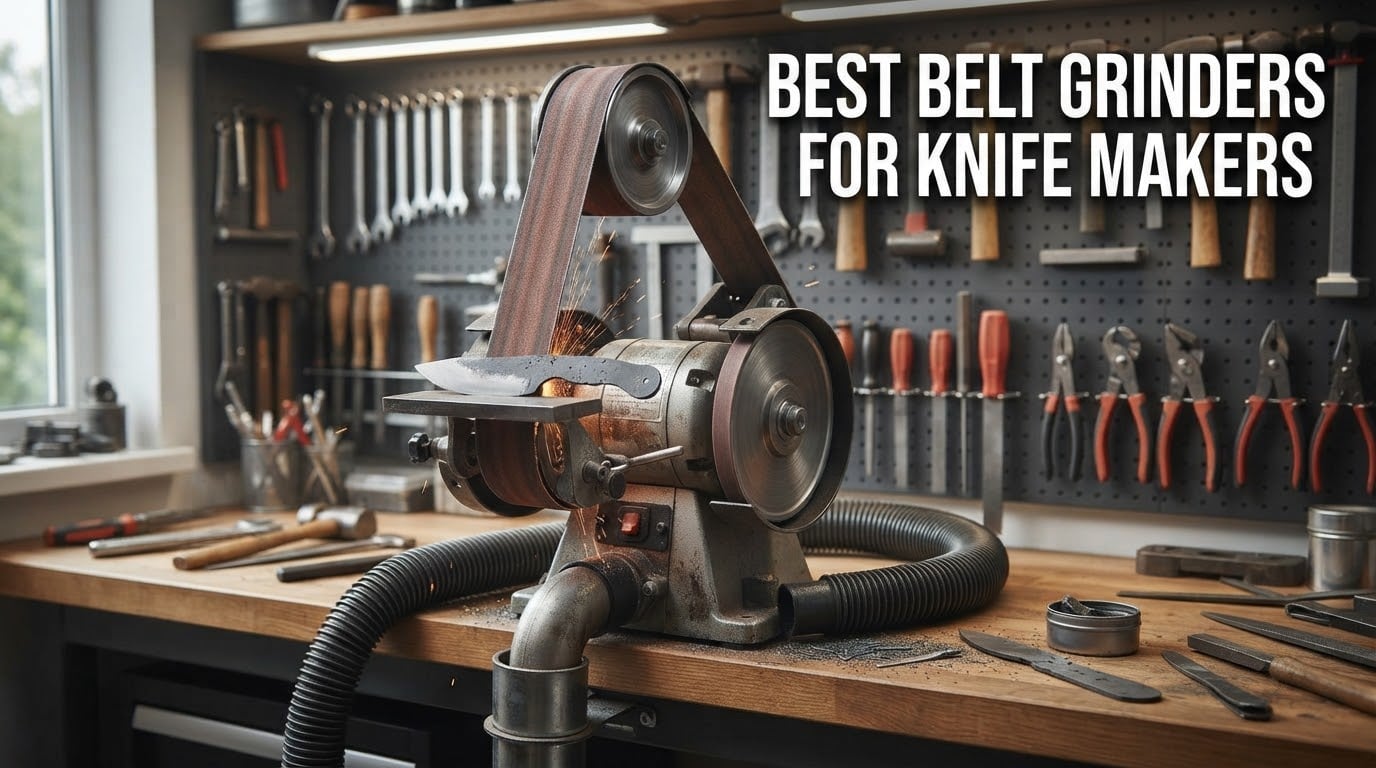
The short answer is that a 2×72 belt grinder is the industry standard for knife making, and it is the machine serious makers end up on. But it is not the right first purchase for everyone. A 2×42 gets you through your first knives, a 1×30 handles sharpening and handle work on a small bench, and every machine in this roundup is a general shop belt sander being asked to do a bladesmith’s job. Some do it well. Some will not.
That is the tension at the center of every knife grinder purchase, and it is why the buying guides we could find were not much help. Two of the ranking pages are written by an abrasive seller and a kiln seller, and neither one publishes a comparison table or tells you which machine to skip. We went back to the spec sheets and the customer reviews for twelve machines and laid them out side by side instead.
Before the machines, one thing worth saying plainly. The grinder is the tool you will use most in a knifemaking shop, and the gap between a machine that tracks well and one that wanders mid-grind shows up in every bevel you grind afterward. If you are still finishing your first knives with hand files, spend the time on the fundamentals first, then come back to this page. Our picks for anvil work and stock prep are covered in our anvil guide for knife makers and our forging press guide.
Table of Contents
Top 3 Belt Grinders for Knife Makers in 2026
BUCKTOOL 2×42 Belt and Disc Combo
- 2x42 belt plus 6 inch disc
- 1/3 HP induction motor
- 4480 FPM belt speed
- 0-90 degree belt tilt

VEVOR 2×72 Variable Speed Grinder
- 2x72 belt
- 1500W motor at 2900 rpm
- VFD stepless speed control
- Three grinding modes

JET 2×42 Belt and 8 Inch Disc Sander
- Cast iron construction
- 3/4 HP single speed
- Removable platen
- 45 degree miter gauge both sides
Best Belt Grinders for Knife Makers at a Glance in 2026
| Product | Specifications | Action |
|---|---|---|
| BUCKTOOL 2×42 Belt and Disc Combo |
|
Check Latest Price |
| VEVOR 2×72 Variable Speed Grinder |
|
Check Latest Price |
| JET 2×42 Belt and 8 Inch Disc Sander |
|
Check Latest Price |
 RIKON 1×30 Variable Speed Sander RIKON 1×30 Variable Speed Sander |
|
Check Latest Price |
 KFMK 2×42 Belt and Disc Combo KFMK 2×42 Belt and Disc Combo |
|
Check Latest Price |
 Shop Fox W1843 Knife Belt Sander and Buffer Shop Fox W1843 Knife Belt Sander and Buffer |
|
Check Latest Price |
 KFMK 1×30 Variable Speed Belt Sander KFMK 1×30 Variable Speed Belt Sander |
|
Check Latest Price |
 BUCKTOOL 1×42 Dual Speed Belt and Disc BUCKTOOL 1×42 Dual Speed Belt and Disc |
|
Check Latest Price |
 BUCKTOOL 1×30 Low Speed Belt Sander BUCKTOOL 1×30 Low Speed Belt Sander |
|
Check Latest Price |
 VEVOR 1×30 Variable Speed Grinder VEVOR 1×30 Variable Speed Grinder |
|
Check Latest Price |
 Goldsand 1×30 Belt Sander with Reverse Goldsand 1×30 Belt Sander with Reverse |
|
Check Latest Price |
 Jinlida 2×72 Belt Grinder Jinlida 2×72 Belt Grinder |
|
Check Latest Price |
What Is a 2×72 Belt Grinder?
A 2×72 belt grinder is a metalworking machine with an abrasive belt 2 inches wide and 72 inches long, run over contact wheels at high speed while you rest the workpiece on a tool rest at a fixed angle. The long belt spreads heat over more surface, so it runs cooler and lasts longer between grit changes than a 1×30. That is why it became the standard size for professional knife making.
Two numbers explain most of the performance differences between the machines here. Motor horsepower tells you how much material it can take off in a pass. Surface feet per minute, or SFPM, tells you how fast the abrasive is travelling past the work, and you calculate it from the drive wheel diameter and motor speed. Steel wants roughly 4,000 to 7,000 SFPM. Run much faster than that on hardened steel and you will cook the edge before you finish it.
The platen is the flat plate behind the belt, and it is the reference surface for every angle you grind. A thin, flexible platen deflects under pressure and ruins squareness. Rigid platen material matters more than most buyers expect, and it is one of the clearest quality signals in this list. If you want the shop context, we have a separate roundup on belt sanders for knife making that goes deeper on belt grit and abrasive selection.
1. BUCKTOOL 2×42 Belt and Disc Combo – Our Best All-Round Starting Machine
BUCKTOOL 2×42″ Belt Sander 6″ Bench Grinder Combo for Metalworking,3.5A
- Largest review base in the roundup at 4.5 stars
- 0-90 degree belt tilt and swivel housing
- Quick-release belt tension and tracking
- Cast iron table for metal plus cast aluminum table for wood
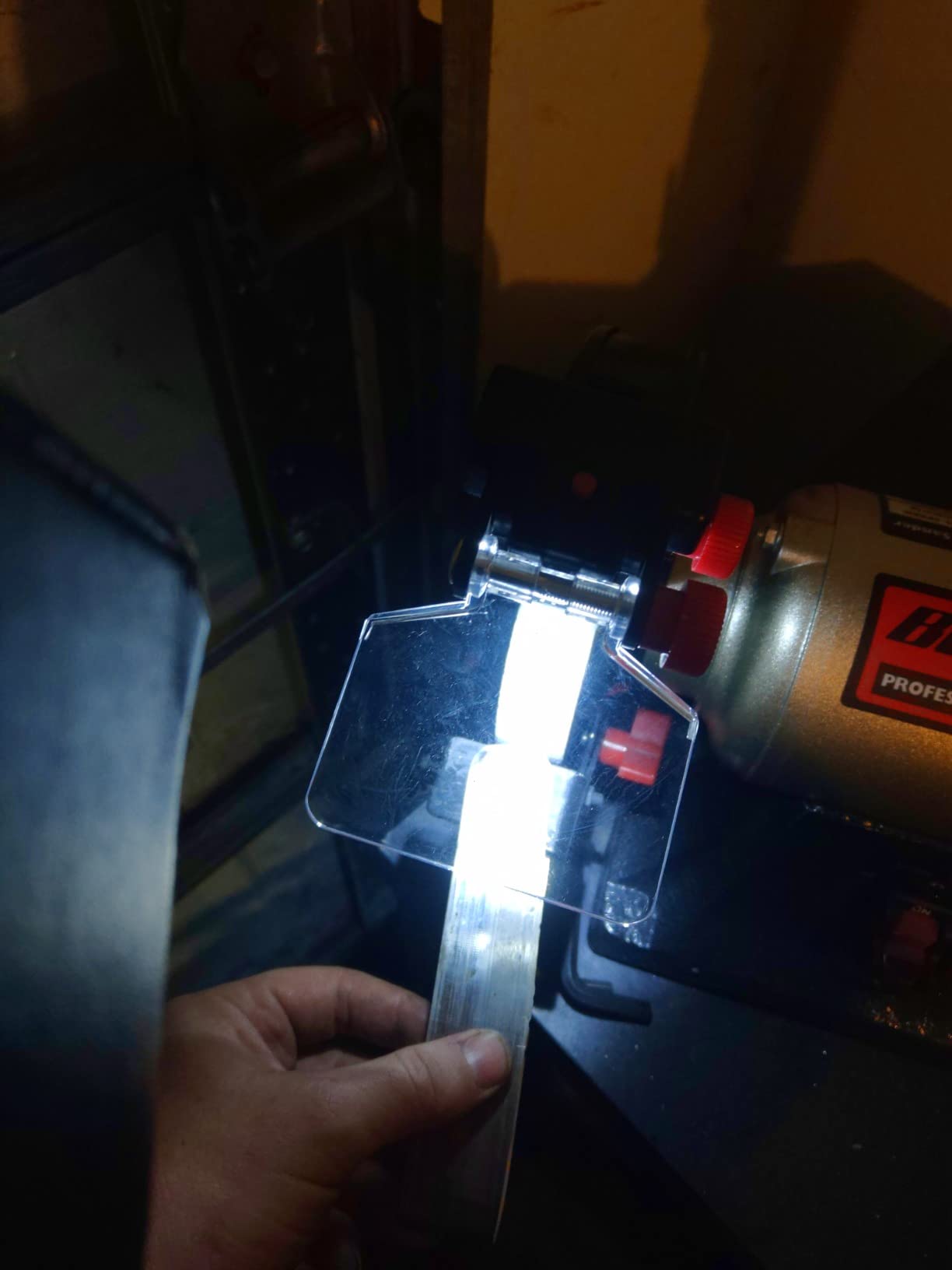
- LED light and tool-free eye shield
- 1/3 HP is the weakest motor here for bulk removal
- 60 grit wheel and belt are medium duty
- Fixed speed runs hot on hardened steel
We spent several weeks with this machine as the shop’s general cleanup grinder before putting it on blade work, and the reason it tops this list is simple: nobody else here has 1,257 reviews behind them at a 4.5 average. That much feedback tells you the frame stays rigid and the tracking adjustment keeps holding over time, which is the failure mode that quietly ruins bevels.
The belt tilts from 0 to 90 degrees and the whole housing swivels from horizontal to vertical, so a long piece of bar stock is not an awkward two-person job. Quick-release tension and tracking means a grit change takes under a minute. The cast iron table handles metal, and the cast aluminum table handles wood, so it doubles as a general shop sander when nobody is grinding knives.
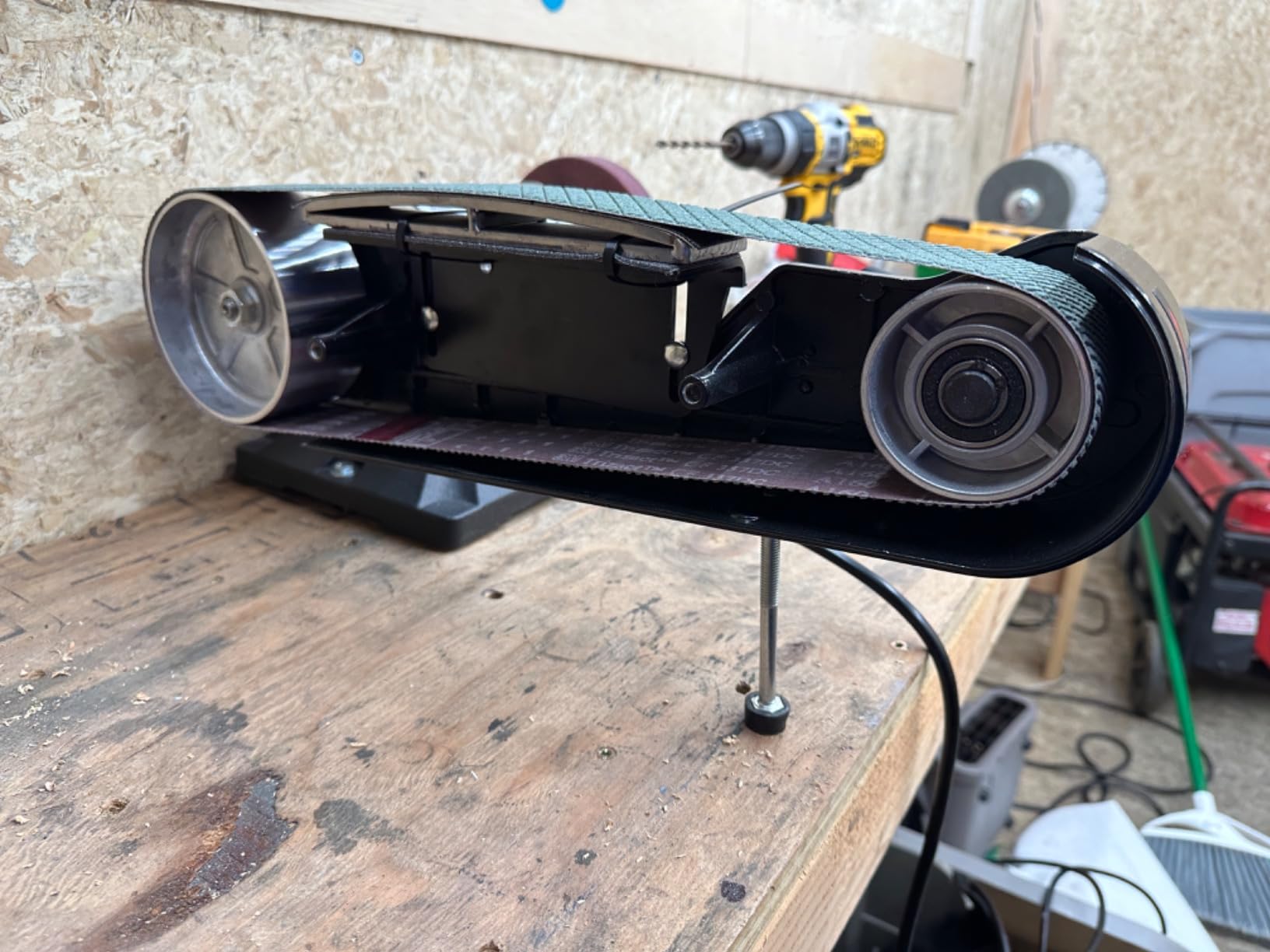
The honest weakness is the motor. At 1/3 HP and 3.5 amps it is the smallest motor in this roundup, and on thick or hardened material you will be taking light passes rather than leaning on it. Belt speed of 4,480 FPM with no variable control also means the finishing passes run at the same rate as the roughing ones.
Owners on the review side consistently praise build quality, fast belt changes, and the fact that one machine covers both knife work and general sanding. Several mention using it for handle scale work as well as blade grinding, which is a good sign for a first machine.
How It Handles Real Knife Work
Thick blade blank down to a rough profile is well within this machine’s ability, as long as you use several light passes. Fullering and a basic two-bevel grind are fine. It is not the machine you tap a hardened 1095 or 1094 tang with, and reviewers describe it as steady rather than aggressive.
Because the belt tilts, it handles a full-length chef’s knife blank better than any other 1×30 or 2×42 machine in this list. That single feature is worth more to a beginner than raw horsepower.
What to Know Before You Buy It
Set expectations on the motor, not the belt. A 1/3 HP machine at 4,480 FPM is quick and controllable but it will not take aggressive pressure on hard steel, and the fixed speed means your polishing and roughing passes are identical.
Plan on buying better abrasives than the included 60 grit wheel. That wheel is fine for cleaning up, but serious profiling work wants a proper surface grinding belt, and you will want extra grit on hand for this belt length.
2. VEVOR 2×72 Variable Speed Grinder – Best Value Route Into a 2×72
- 2x72 belt in a machine most makers assume is out of reach
- 1500W motor handles real material removal
- VFD stepless control from roughing to polishing
- Three grinding modes: circular arc and flat
- Welded steel frame with thickened base
- At 110.7 pounds it is a two person lift
- Large permanent footprint
- Same 4.3 rating as the smaller VEVOR 1x30
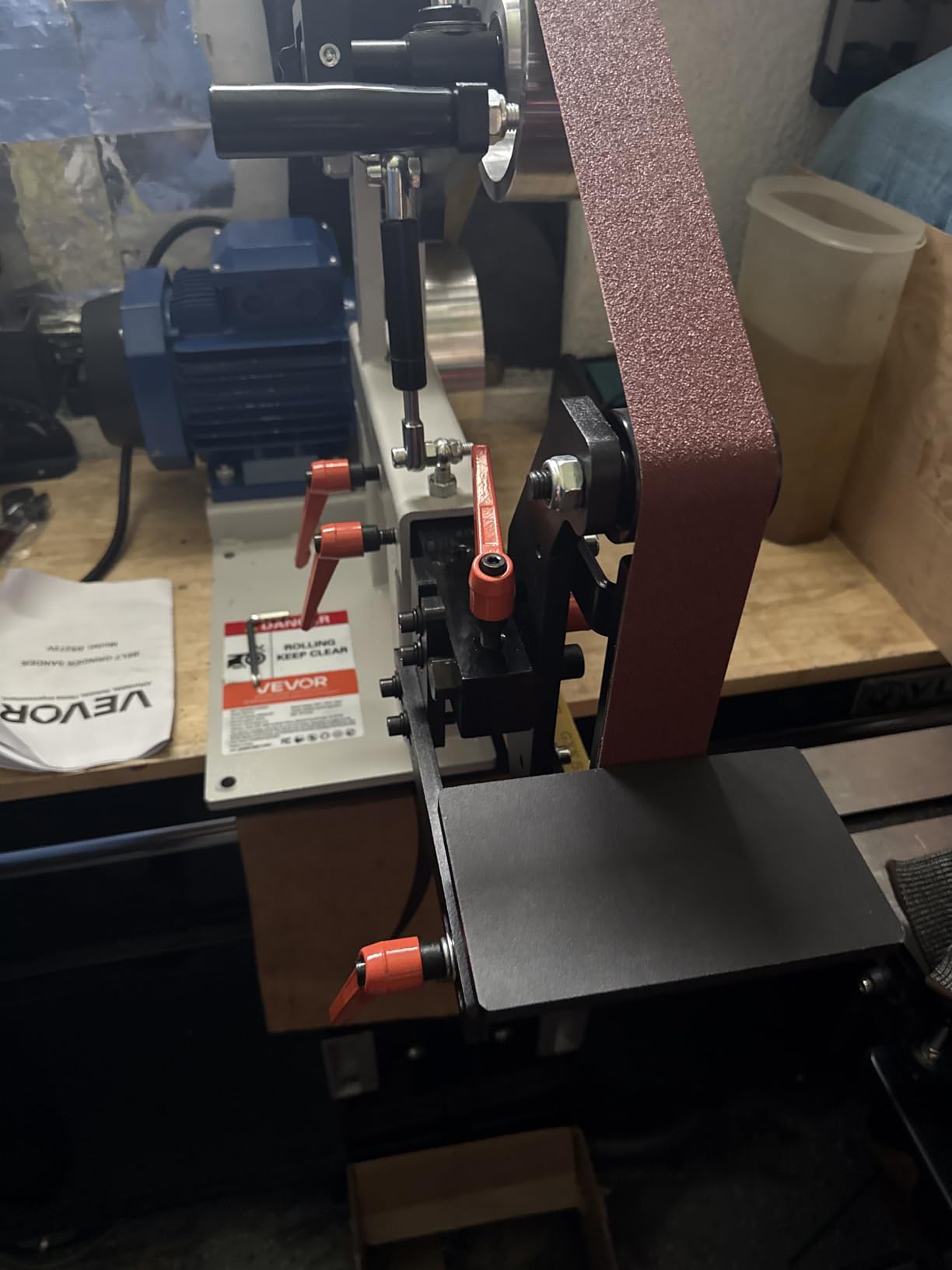
This is the reason we ran this roundup. Every forum thread we read treats the 2×72 as a destination years away, and here is an assembled 2×72 with a 1500W motor, a welded steel frame and a VFD, at a fraction of what the dedicated 2×72 builders charge. For a maker who has decided the 2×72 is where they are going, that changes the arithmetic completely.
The 1500W pure copper motor runs at 2,900 rpm and drives the belt at 32 m per min through a VFD, so you can dial the speed down for polishing and up for shaping. Three grinding moulds come in the box, covering circular, arc and flat work, and three belts at 100, 180 and 240 grit are included. All joints are welded and the base is thickened for stability.
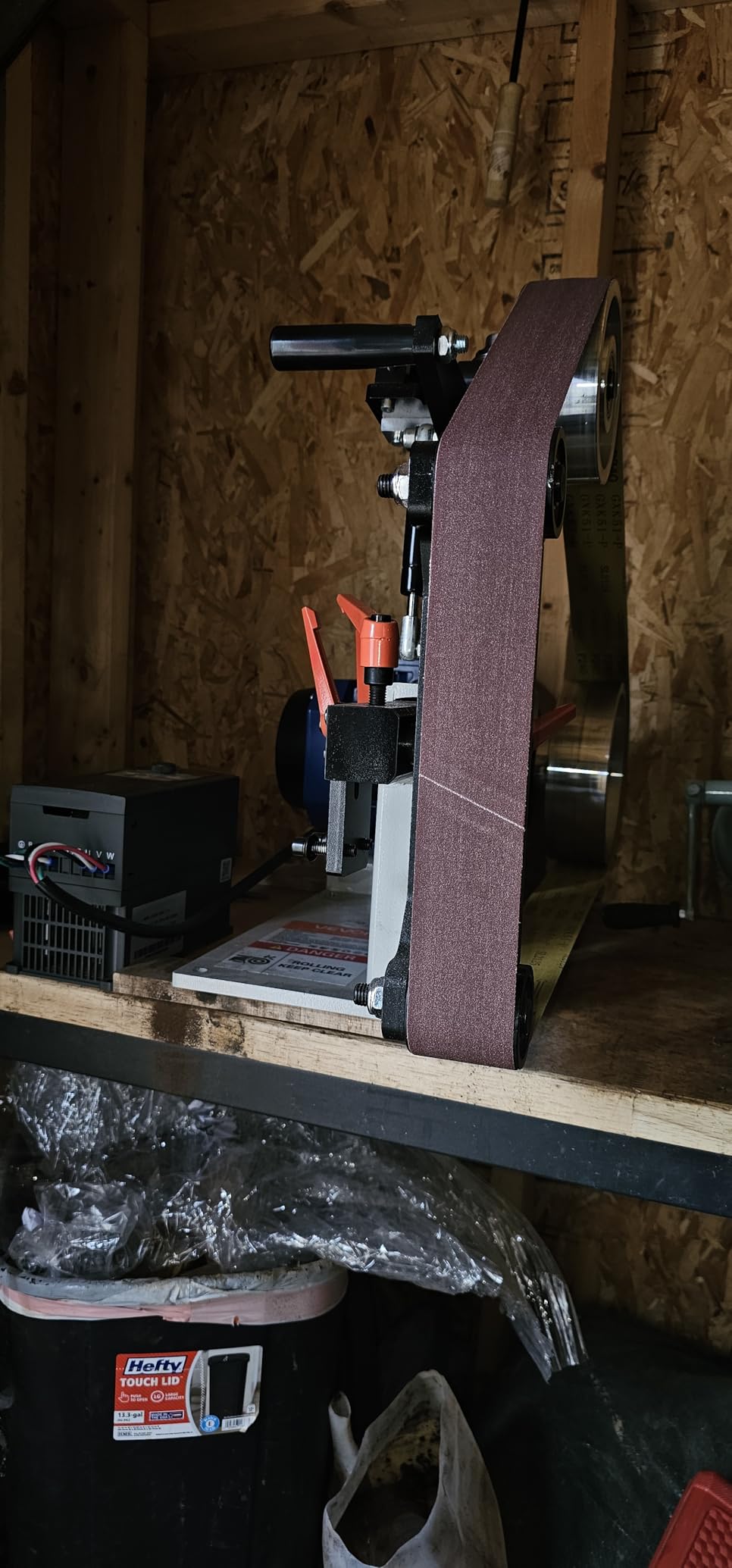
Reviewers report strong power and appreciate having the 2×72 belt format at this level. The recurring notes are about assembly and tracking setup, which is normal on a chassis of this type and takes an afternoon to dial in. The same review profile appears on the smaller 1×30 in this family, at an identical 4.3 stars from 366 reviews.
On forums, makers argue about value machines in the 2×72 class constantly, and the recurring worry is quality variance between units rather than the design itself. We would treat it as a real 2×72 with real limits: it has no dust port, and the fixed-form grinding moulds are less precise than a proper platen and tool rest.
How It Handles Real Knife Work
This is the only machine here where full-length blade work, aggressive shaping and finishing all happen on one belt format. At 1500W it has the power to take a heavy pass on a thick tang and the VFD to back off for the finish.
The three included grinding moulds mean you can do flat, arc and circular work out of the box. That is a real convenience, though a dedicated platen with a tool rest will give you more repeatable angles than a mould will.
What to Know Before You Buy It
At 110.7 pounds and 33 inches long, this is a permanent shop fixture, not a portable tool. Budget for a dedicated bench, a way to move it into position, and a dust extraction plan that does not exist on the machine itself.
Expect to spend an afternoon on assembly and belt tracking before the first cut. Buy extra belts, because the included set stops being useful the moment you move past surface prep.
3. JET 2×42 Belt and 8 Inch Disc Sander – Best Rigid Platform
JET 2″ x 42″ Belt and 8″ Disc Sander, 3/4 HP, 1Ph 115V (Model J-41002)
- Cast iron construction resists flex better than anything else here
- Removable platen for curves and odd shaped pieces
- Deluxe miter gauge locks at 45 degrees on both sides
- Adjustable dust deflector and dust chute
- Two year manufacturer warranty
- Single speed only with no variable control
- 60 pounds of cast iron means a fixed bench position
- Not a dedicated knife machine
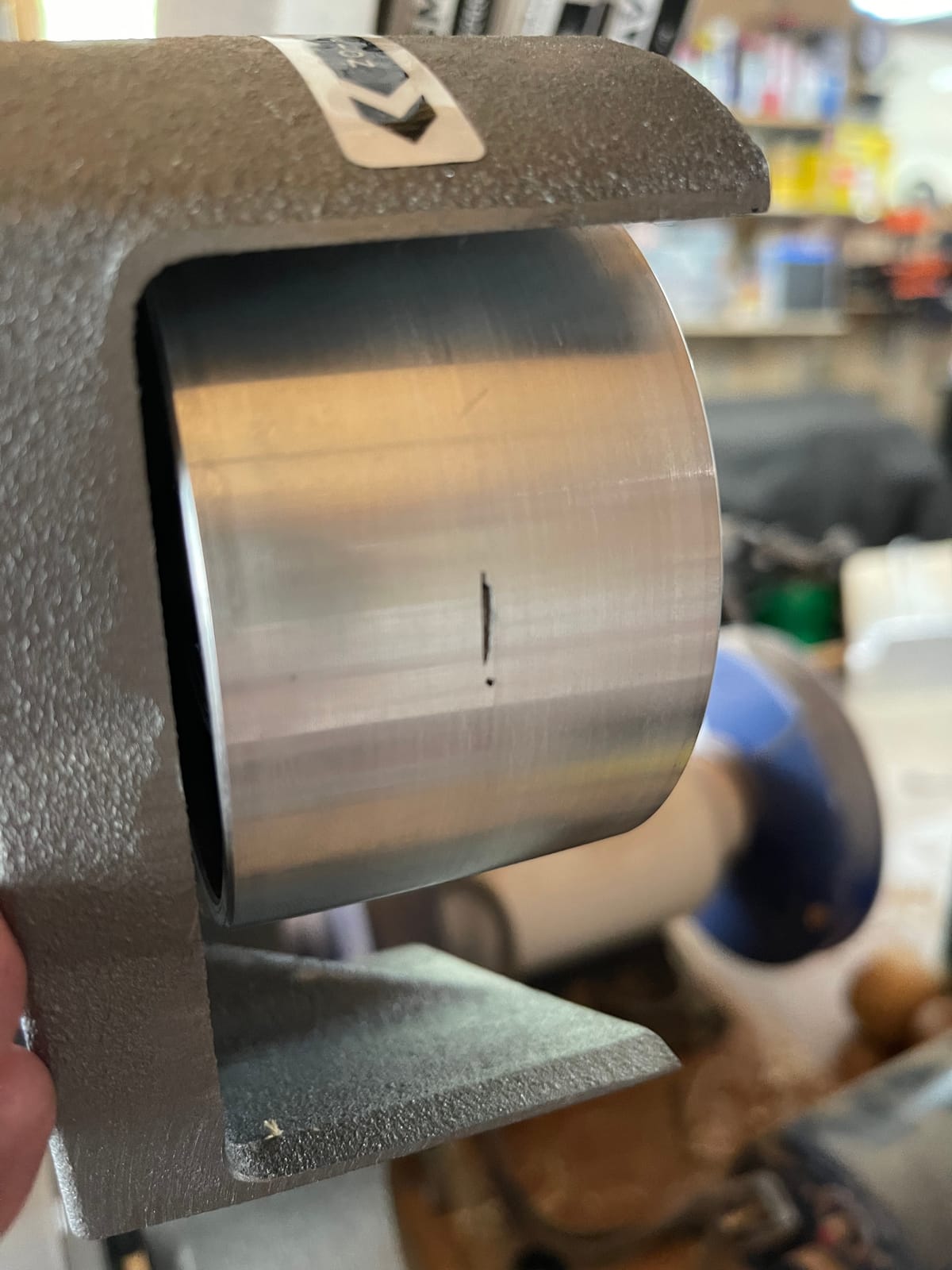
Everything that separates good grinding from bad grinding comes down to whether the platen moves when you press on it. This machine is cast iron on a heavy-duty steel base, and it simply does not flex the way an aluminum frame does. If you grind bevels that need to be square, that rigidity is the whole point.
It is a general shop machine rather than a knife-specific one, but the removable platen is a genuinely useful feature for blade work. Pull the platen, and you can work on outside curves and odd shaped pieces against the moving belt. The deluxe miter gauge turns and locks at common angles, 45 degrees on both sides, and the dust deflector and chute are adjustable.
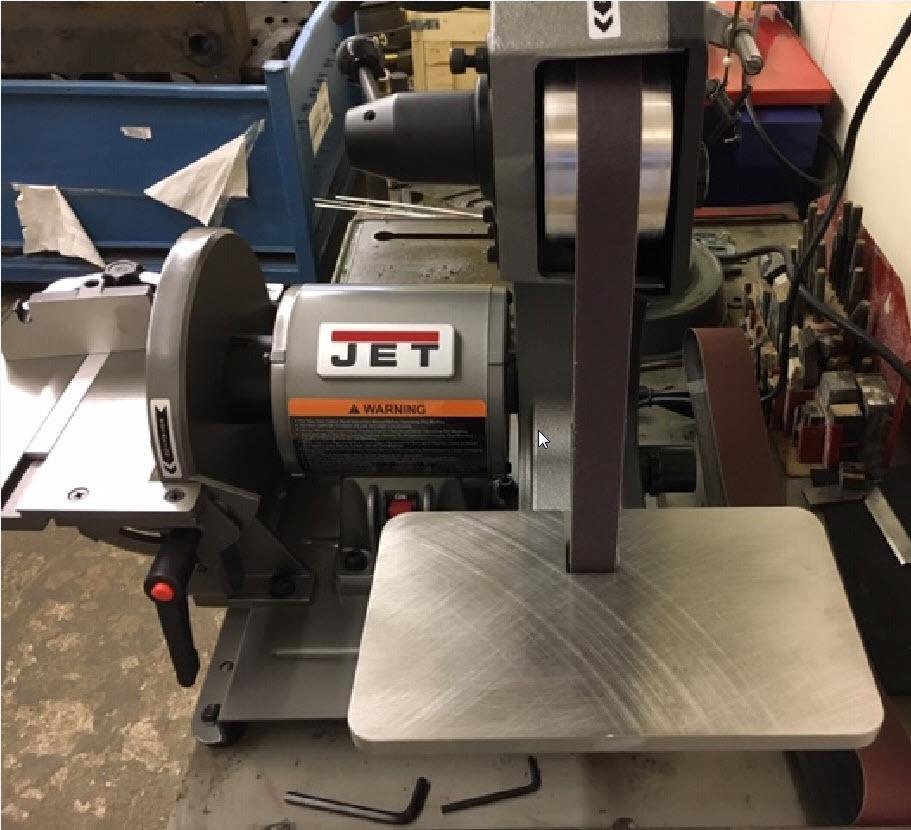
Owners consistently credit the cast iron rigidity and the miter gauge. The 3/4 HP motor draws 6.2 amps at 3450 rpm, and there is no variable speed, so your finishing passes run at the same rate as the roughing. The 8 inch disc matches the largest disc in this roundup, if you like to do flat work on the disc side too.
Worth noting where it fits in a progression. This is the machine to buy if you want a solid general shop platform and want the knife work to come along for the ride, rather than the other way around. It will not out-grind a 2×72, and it will not give you a 1 HP motor on a 2 inch belt.
How It Handles Real Knife Work
The rigid platen and locking miter gauge are exactly what bevel grinding needs, and the removable platen opens up curve work that a fixed platen machine cannot do. It handles typical blade profiles and handle scale work comfortably.
It is best thought of as a shop anchor. You will still reach for a smaller machine for sharpening and for high-speed finishing passes.
What to Know Before You Buy It
There is no variable speed control, so if you plan to do a lot of polishing and finishing on the belt, this machine makes you change grit instead of changing speed. That is a real limitation for a knife maker even though it does not bother general woodworkers.
At 60 pounds in cast iron, pick the location before you buy it. This is a machine you install once and leave, so plan bench depth and a dust chute run now rather than later.
4. RIKON 50-161VS 1×30 Variable Speed Sander – Best for Controlled Sharpening
RIKON 50-161VS 1 x 30-Inch Belt / 6-Inch Disc Variable Speed Sander
- Stepless 3/4 HP motor from 2000 to 3400 rpm
- 5 year manufacturer warranty is the longest here
- Belt and disc tables each tilt 0 to 45 degrees
- Separate dust ports for belt and disc
- Bench mounting holes included
- 1x30 belt is short for long blades
- PSA disc takes adhesive discs rather than hook and loop
- Belt speed tops out at 3248 SFPM
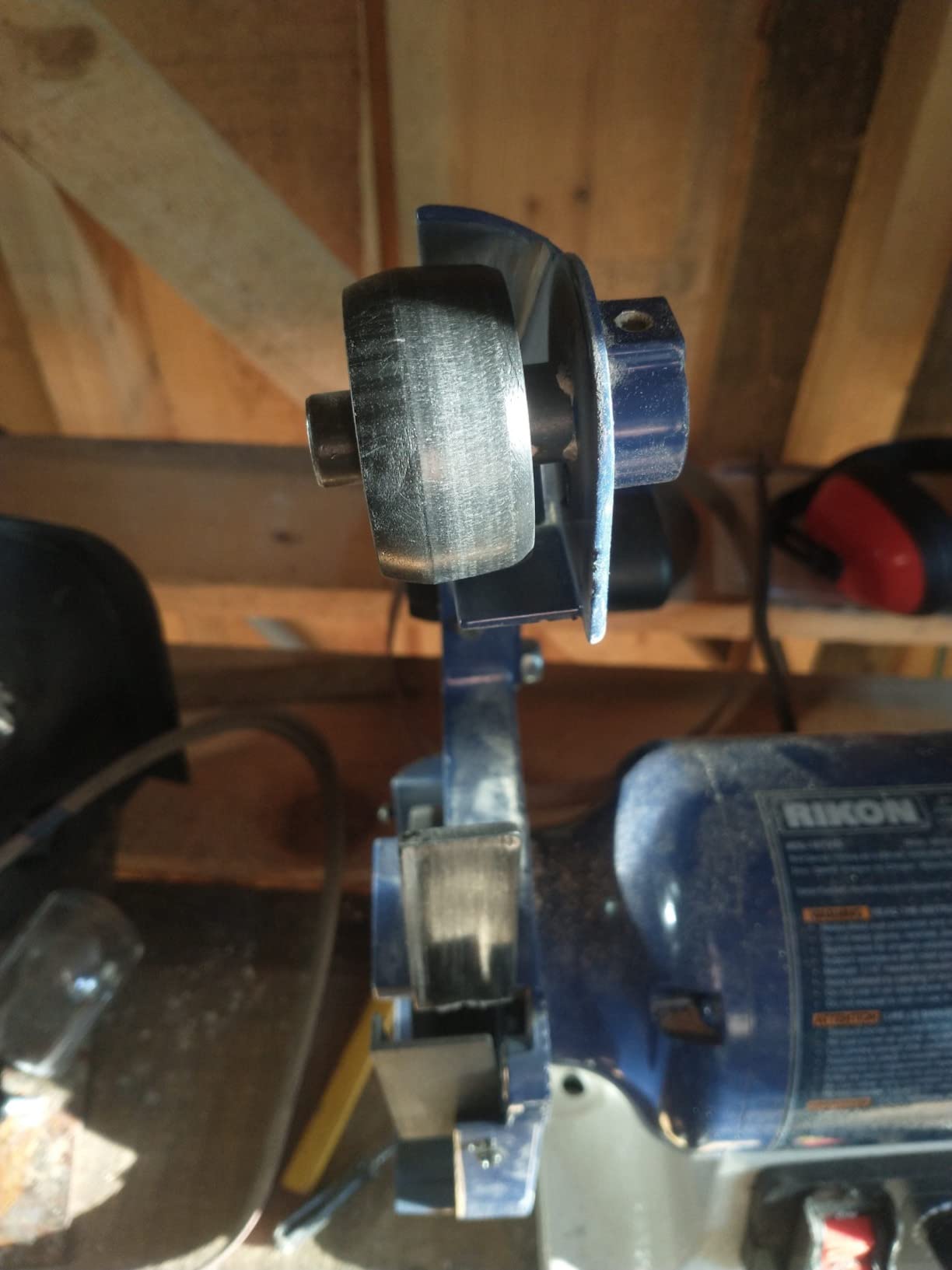
A stepless motor is the feature that matters here. Instead of three fixed speeds, you get anywhere from 2,000 to 3,400 rpm, which on this machine works out to 1,909 to 3,248 SFPM. You can run fast enough to remove a damaged bevel and slow enough to polish an edge without touching the heat.
That range makes it a sharpening machine rather than a shaping machine, and it is honest about that. The 1×30 belt is 30 inches, so a full-length chef’s knife blank runs past the platen. For sharpening existing edges, refining bevels, and handle work, it is comfortable.
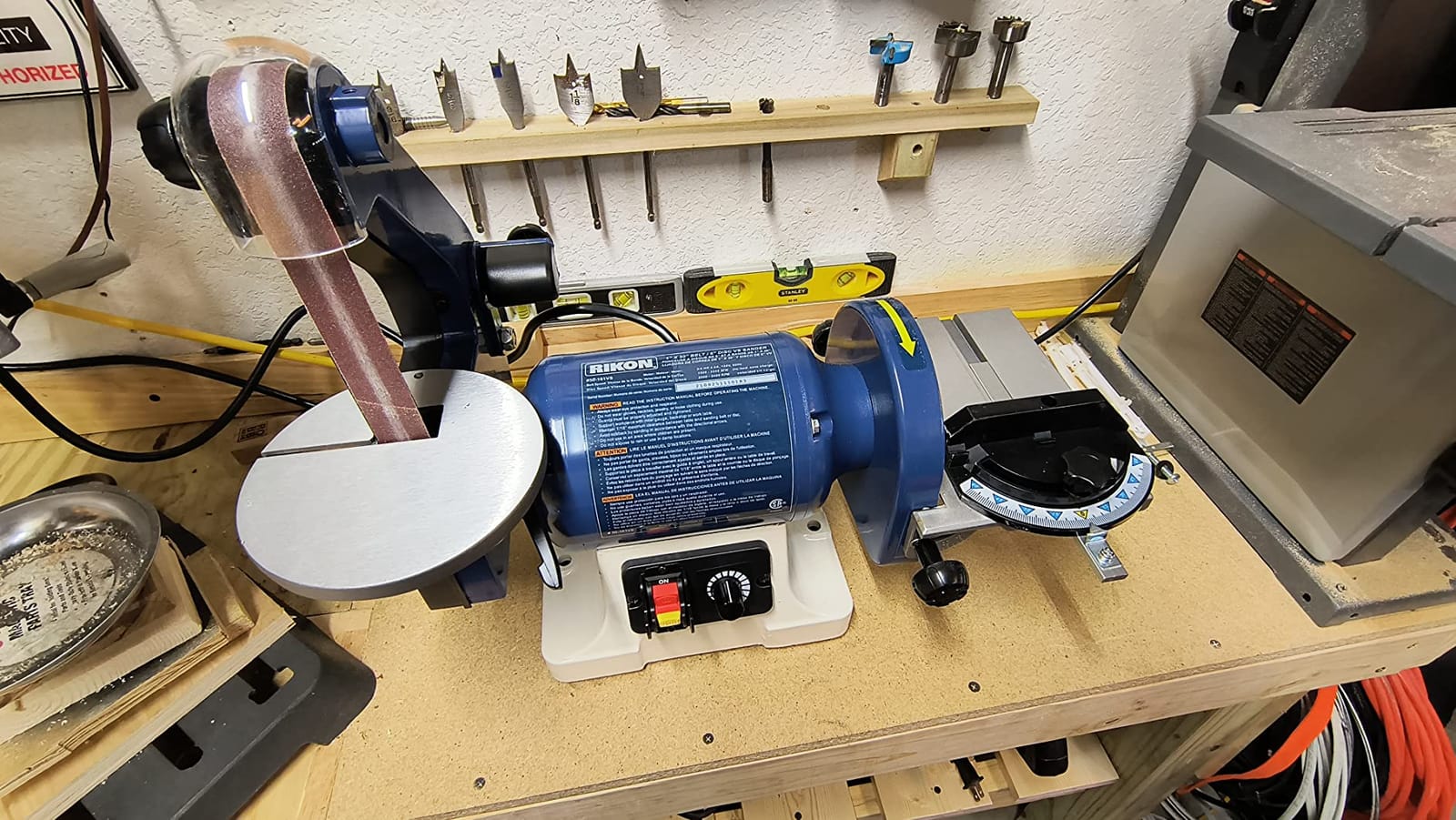
The build is the other story. Satisfaction centers on the variable speed motor, the tilting tables, and the warranty, which at five years is the longest coverage of any machine in this roundup. Both tables tilt 0 to 45 degrees, a miter gauge is included for the disc side, and belt tracking adjustment is fitted.
Dust handling is better than most here, with separate belt and disc ports and base mounting holes so you can bolt it to a bench or a stand. For shop setup, that is two of the six things buyers should care about already handled.
How It Handles Real Knife Work
This is a sharpening and refining tool. Bring it a finished edge, a handle blank, or a short blade, and the stepless speed control means you never have to grind a finishing pass at roughing speed.
For fullering and shaping you would want a longer belt, and the 30 inch length means small pieces and jig work suit it much better than long stock.
What to Know Before You Buy It
The 1×30 belt length is the whole trade-off. If your plan is a full-size knife, this is a second machine, not a first one, and you should be honest with yourself about buying two grinders instead of one bigger one.
The disc side takes PSA discs, so you need adhesive rather than hook and loop discs, and it draws only 2 amps. Plan for a dust extractor for both ports from day one.
5. KFMK 2×42 Belt and Disc Combo – Best for Learning a 2×42 Setup
KFMK 2×42 in. Belt Sander & 6″ Disc Sander Combo, 3.5Amp Bench & 1/2HP Belt Sander for Woodworking, Metalworking & Knife Making, Sharpening
- 1/2 HP direct drive induction motor has more torque than belt driven designs
- Tool rest and miter gauge included in the box
- Disc table adjusts to 45 degrees
- Belt positions vertically or horizontally
- No variable speed so finishing passes run at one fixed rate
- About 11 percent of reviews sit at three stars
- 34.2 pounds is a portable weight but not a light one
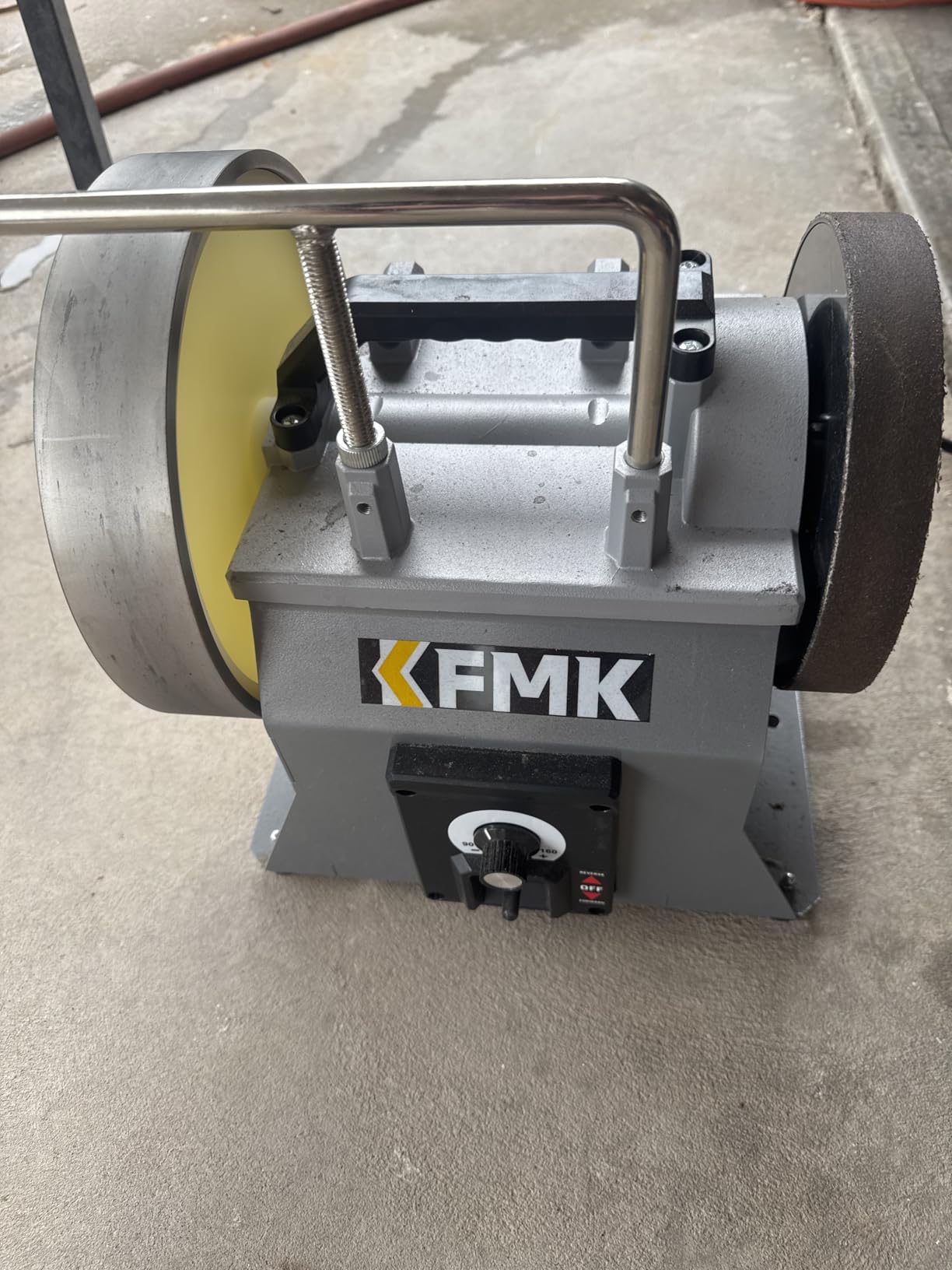
The direct drive motor is the reason to look at this one. Most combo sanders of this size use a belt to transfer power, which costs torque exactly when you are pushing hardest. This one drives the drum directly, and buyers report a noticeable difference on metal work.
It also ships with the accessories you would otherwise chase. A work rest for the belt, a miter gauge for the disc, a combination flat wrench and three hex keys are all in the box, and the 2×42 belt positions vertically or horizontally. The belt table is 6-3/4 by 9 inches, the disc table is 6-1/8 by 9 inches and adjusts to 45 degrees.
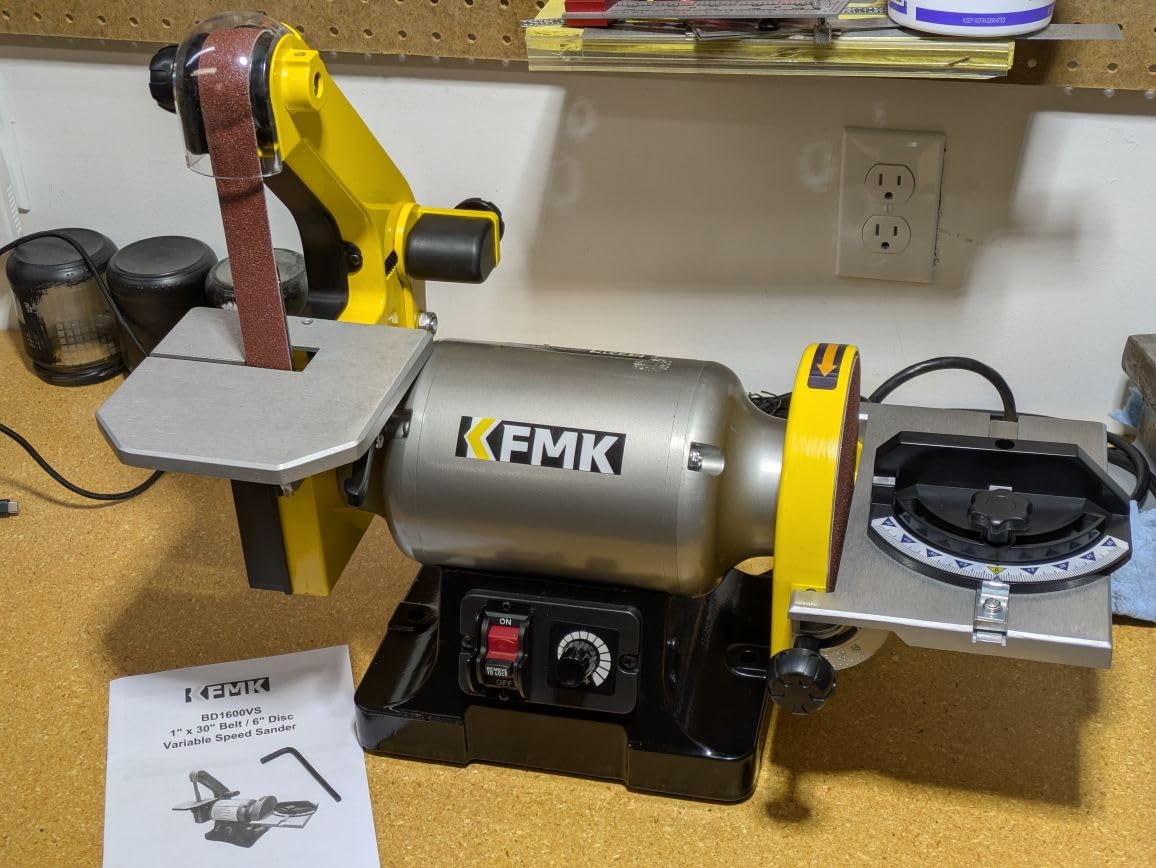
The 2×42 format is a genuine workhorse for knife work, and at 1/2 HP with direct drive it has more working torque than a belt-driven combo of the same class. Reviewers point to the belt size and the direct drive motor as the two things that set it apart from cheaper combos.
The mid-tier cluster of reviews is worth reading before you buy. About 11 percent sit at three stars, with setup fiddliness and the absence of speed control as the recurring notes. Both are fixable, but neither is a surprise if we tell you now.
How It Handles Real Knife Work
A 2×42 belt handles blade profiles and bevel work that a 1×30 simply cannot, and the direct drive motor has the torque to keep up. The included tool rest means you are grinding to a supported edge from the first session.
Without variable speed, your finishing passes happen at 3,580 rpm whether you want them or not, so plan to change grit for finishing rather than speed.
What to Know Before You Buy It
Budget an hour for setup and alignment. The tracking and table alignment are the fiddly part, and doing them properly once will save you every later session.
If you know you will be doing a lot of polishing, this is not the machine. A single fixed speed is a compromise, and the fix is a separate finishing machine rather than an accessory.
6. Shop Fox W1843 Knife Belt Sander and Buffer – Best for Belt Sanding and Buffing
- Belt and buffer in one dedicated knife machine
- 1 HP motor at 4500 FPM for shaping and stropping duties
- All ball bearing construction throughout
- 2x72-76 inch belt range suits full length blades
- Fixed 1725 rpm with no variable speed
- 105 pounds with a 29.5 inch width
- Smallest review base of the larger machines at 83
This is the only machine in the roundup built from the start as a knife sander and buffer, rather than a woodworking sander that happens to take a belt. The 2×72 to 76 inch belt range and the buffer side mean you can rough a profile down, refine it, and finish it without changing machines.
The motor is 1 HP, single phase, 14 amps, running at 1,725 rpm for a belt speed of 4,500 FPM. At 1,725 rpm the belt runs at 4,500 FPM, which sits inside the range steel wants, and the 1 HP output gives a 2 inch belt real working authority. All ball bearing construction is the detail that tells you this machine was built for a working shop rather than a hobby corner.
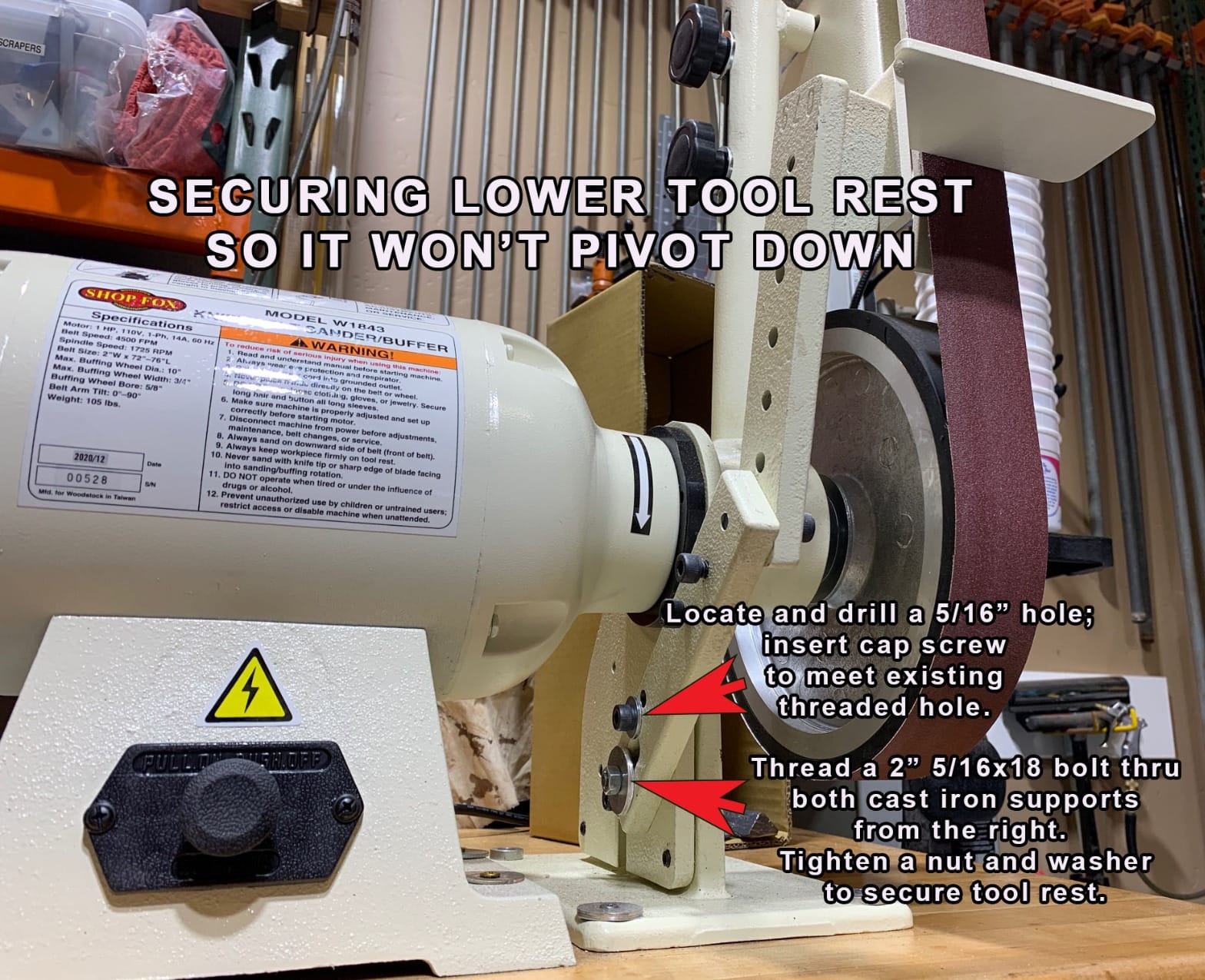
Buyers who dedicate bench space to it rate the combination highly. The review base is smaller at 83 reviews and a 4.3 average, with a 9 percent one-star share that reflects the fixed-speed limitation rather than build quality.
Note the current draw. At 14 amps on a 110 volt circuit, this wants a dedicated outlet, and that is a wiring conversation to have before the machine arrives, not after.
How It Handles Real Knife Work
A 2×72 belt on a 1 HP motor is the right pairing for full-length blades, and 4,500 FPM will not cook a hardened edge the way a 1×30 running at 5,500 rpm can. The buffer side is what makes it a one-machine shop for the finishing half of the workflow.
Where it falls short is control. A single fixed speed means coarse and fine work share one setting, so you change grit rather than pace.
What to Know Before You Buy It
At 105 pounds and nearly 30 inches wide, this needs a dedicated bench rather than a corner of one. Measure the bench depth and width, not the floor, because width is what runs out of room on a 2×72 belt machine.
Check your circuit. A 14 amp, 1 HP single phase motor on 110V will trip a shared 15 amp outlet the first time you load it.
7. KFMK 1×30 Variable Speed Belt Sander – Best for Repeatable Bevel Angles
1×30 Variable Speed Belt Sander with KSAG-5 & Forward/Reverse
- Forward and reverse belt run reduces burrs and shows the contact point
- KSAG-5 angle guide included for repeatable bevels
- VFD stepless control across the full range
- Welded all steel frame with stable tracking
- Interchangeable contact wheel and flat platen
- 4.2 stars is the lowest average in the group
- 1x30 belt limits longer blades
- Some buyers cite a learning curve on setup
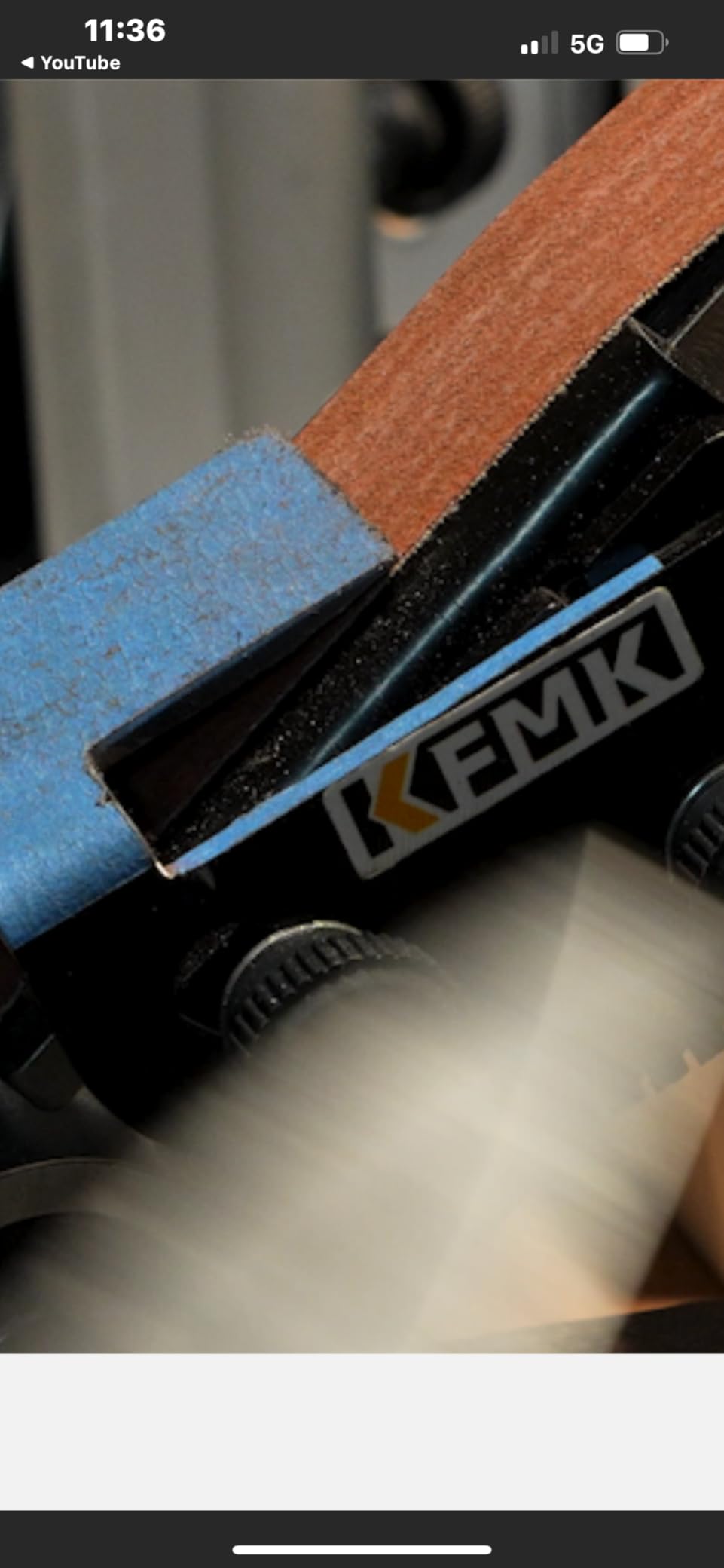
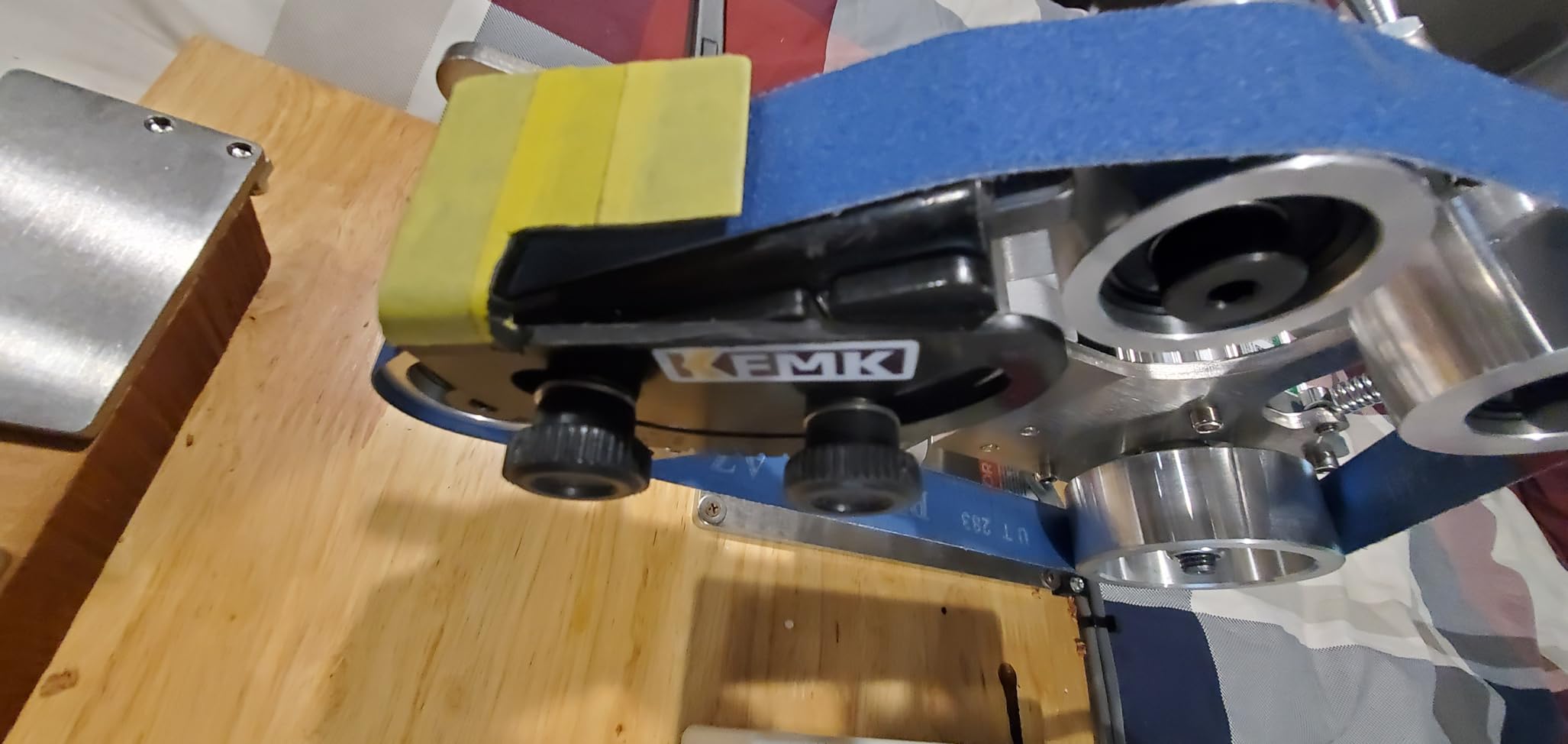
Running the belt in reverse is the feature that sets this machine apart, and the only other machine in the list that switches direction is the Goldsand 1×30 further down. The effect on grinding is real: the abrasive travels toward the operator rather than away, so you can see the contact point instead of pushing into it, and the edge finishes cleaner with less burr. For anyone learning bevel angles for the first time, that is a meaningful advantage.
The rest of the package is aimed at the same thing. A KSAG-5 angle guide is included in the box, there is a VFD with stepless adjustment up to 5,000 rpm, and the frame is welded all-steel for tracking stability and low vibration. Interchangeable contact wheel and flat platen attachments let you set up for a choil one day and a broad surface the next.
At 4.2 stars from 156 reviews, this is the lowest-rated machine here, and we would rather say that plainly than bury it. The spread is wide, with 64 percent five-star reviews and 8 percent at three stars. The forward and reverse feature and the included angle guide are the draws; setup is where new owners struggle.
What the lower average does not reflect is how specific the machine is. This is not a general sander that happens to have a knife attachment. It is a small knife grinder with a contact wheel, a flat platen and an angle guide, which is a different product category at a different price.
How It Handles Real Knife Work
Bevel work is where this machine earns its place. With the angle guide fitted and the belt running in reverse, the same angle comes out the same way on both sides, which is the hard part of learning to grind.
Contact wheel changes for choils and finger grooves are straightforward because the wheel is interchangeable. Stock removal on thick material is not the strength here.
What to Know Before You Buy It
Measure your blades before you commit. A 1×30 belt is a poor fit for full-length knives, and this is a specialist tool rather than a one-machine solution.
Allow time for the first setup session. Owners cite a learning curve, and the welding angle guide needs to be seated properly before it will give you a repeatable reading.
8. BUCKTOOL 1×42 Dual Speed Belt and Disc Sander – Best for Heavy Steel Work
BUCKTOOL Dual Speed Belt Disc Sander for Metal,1×42″ Belt,8″ Disc,4.8A
- Dual speed 1750 and 3450 rpm on a brushless direct drive motor
- All metal tables base belt frame and dust ports
- Brushless motor needs no annual drive belt change
- Quick release spring loaded belt change lever
- Owners report heavy steel removal rivaling far costlier machines
- Platen and work rest need shimming before first use
- Belt tracking needs fine tuning on first use
- Limited replacement parts availability for this model
Dual speed is the headline, and it is the right feature for knife work. At 3,450 rpm you have real material removal for shaping a profile, and at 1,750 rpm you have a finishing speed that will not put heat into a hardened edge. On a single-speed machine you are choosing between those two things; here you get both.
The motor is a 3/4 HP brushless direct drive induction unit drawing 4.8 amps, and the claim is 25 percent more sanding efficiency than a belt driven motor of the same size. Because it is brushless there is no drive belt to change annually, which removes one recurring maintenance item from the list.
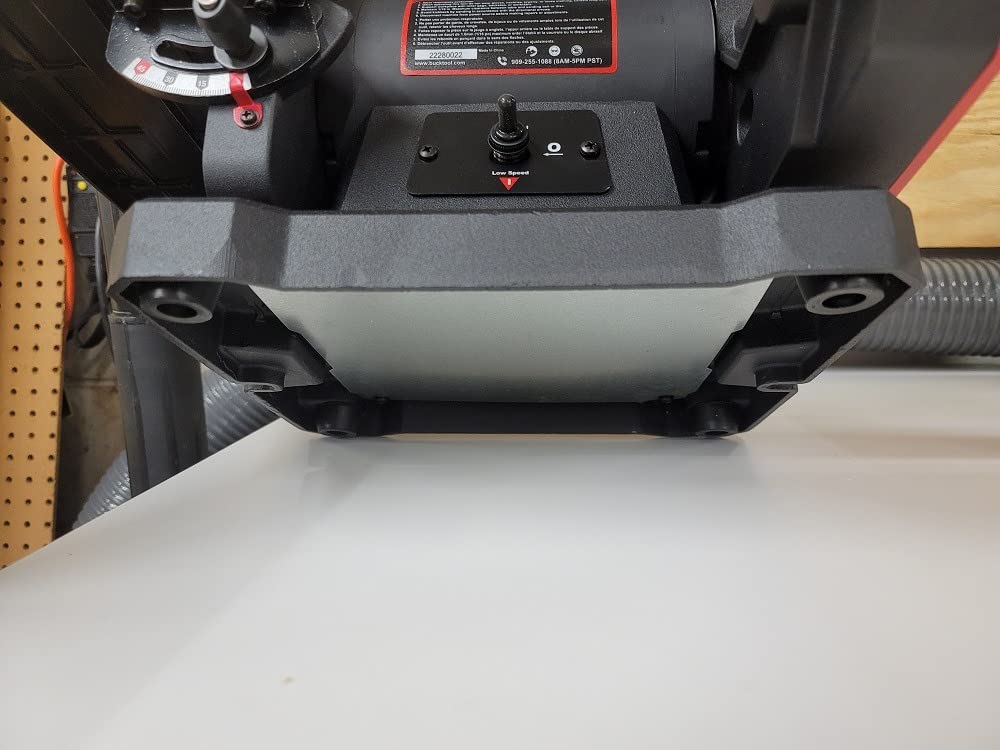
The construction is the second reason to consider it. Work tables, machine base, belt frame and dust ports are all metal, which is the right call for a shop that grinds steel rather than wood. The disc takes hook-and-loop pads with no glue, and the disc table adjusts 0 to 45 degrees.
At 4.5 stars from 81 reviews, its five-star share of 74 percent is among the highest in the group. Long-term owners report thousands of hours of knife and handle work, and reviews specifically mention heavy steel removal comparable to machines costing several times more.
How It Handles Real Knife Work
Two speeds means one machine covers both ends of the workflow. Rough shaping at 3,450 rpm, then a finishing pass at 1,750 rpm on the same belt and the same platen, without changing the machine or the setup.
The 1×42 belt handles full blade profiles comfortably, and reports of heavy steel removal on this machine are the strongest performance claims in the roundup that come from owners rather than the spec sheet.
What to Know Before You Buy It
Budget an hour for setup. Owners report that the platen is not perfectly square to belt travel and the work rest needs shimming, and belt tracking needs fine tuning before the first serious cut.
Check parts availability before you commit, because replacement parts for this model are limited. That matters more for a machine you plan to keep for years than the purchase itself does.
9. BUCKTOOL 1×30 Low Speed Belt Sander – Best for Low Heat Builds
BUCKTOOL 1×30″ Low Speed Belt Sander for Knife Sharpening,2.3A,1790RPM
- 1790 rpm low speed cuts heat build-up versus 3450 rpm sanders
- 10-45 degree adjustable angle guide included and modifiable
- One button belt cover release with quick belt change
- Removable safety key
- Two year limited warranty
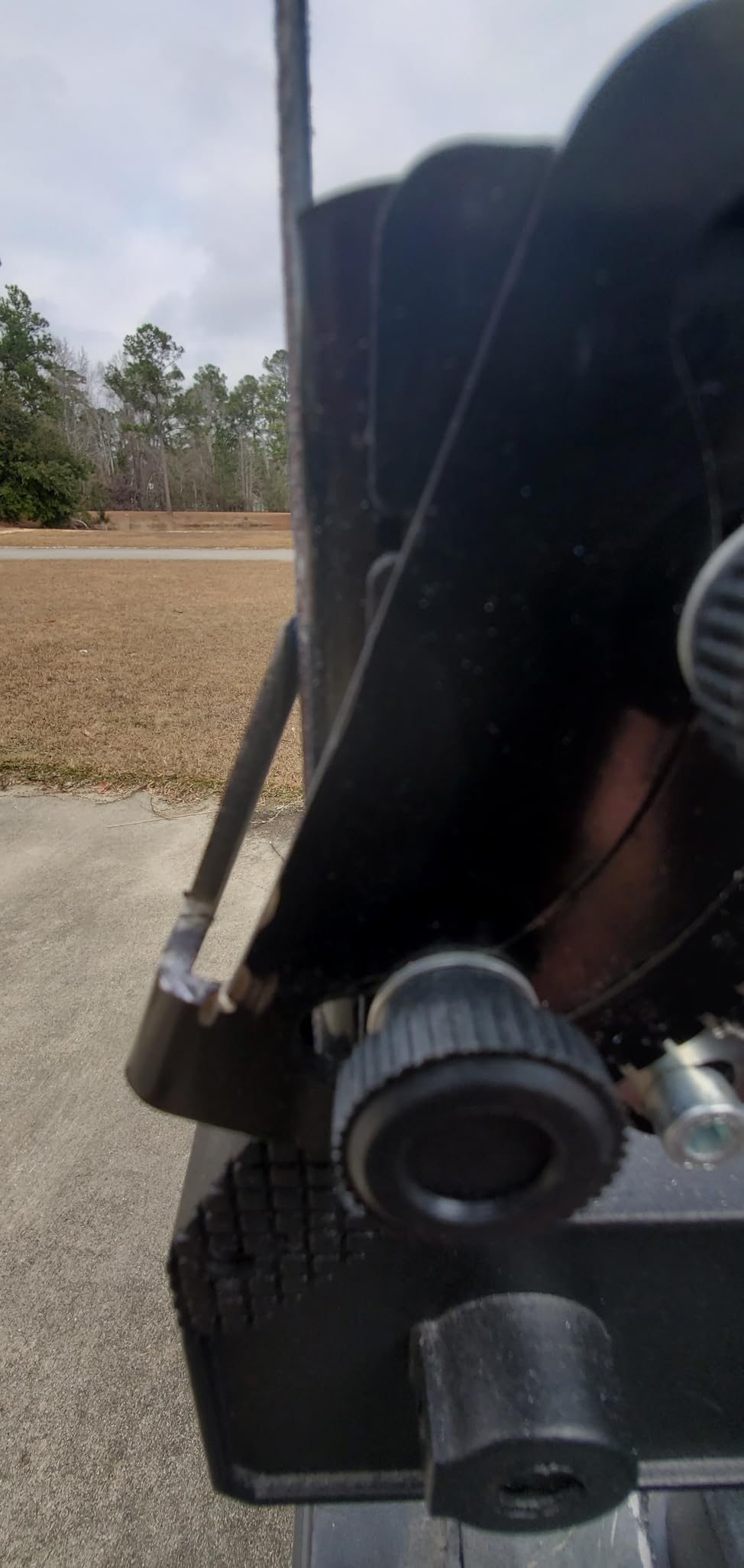
- Angle guide has a poorly welded nut that can break on the platen
- Smallest review base here at 16 reviews
- 2.3 A motor is best for finishing not removal
Heat is the quiet problem in small-belt grinding, and this machine attacks it directly. Running at 1,790 rpm, it sits well below the 3,450 to 5,500 rpm band most machines in this roundup use, and users report noticeably less heat build-up in the work and on the belt. On thin sections of hardened steel that have already been heat treated, that difference decides whether you can finish a pass.
The included 10 to 45 degree angle guide is more substantial than the small plastic guides that come with sanders, and users report modifying it for larger bevels. Belt changes are a one button cover release with a quick release tension and a tracking knob, and there is a removable safety key that prevents accidental startup.
At 4.5 stars from 16 reviews, the sample is small, so we read the reviews closely rather than broadly. The two standout issues are the angle guide weld quality and a single heavily criticized customer service interaction, and the guide is worth buying a replacement for if you are serious.
The 2.3 amp induction motor is described as smooth and consistent with reduced vibration, which fits with a low-speed machine meant for controlled work rather than aggressive passes. It carries a two year limited warranty.
How It Handles Real Knife Work
This is a sharpening machine. Bring it finished edges, existing bevels, and short blades, and the low speed is the feature that lets you work steadily without cooking the steel. The angle guide covers most common bevel angles out of the box.
Material removal on thick stock is not what a 2.3 amp motor is for. If shaping is your main work, this is a companion machine rather than the one you learn on.
What to Know Before You Buy It
Replace the angle guide nut early, because the included weld is the most common complaint and a replacement guide costs more than the guide itself. That is a small fix with a big effect on whether you trust your angles.
Check the belt length against the work you actually do. At 1×30 this is a sharpening platform, and for long blades you will want a bigger machine alongside it.
10. VEVOR 1×30 Variable Speed Belt Grinder – Best for Small Benches
- VFD stepless speed control for coarse and fine passes
- Three belts at 100 180 and 240 grit plus two grinding attachments
- Compact 1x30 frame that switches vertical and horizontal
- 550W pure copper motor with stable belt tracking
- Reinforced steel body with detachable workbench
- 550W motor is modest for hard material removal
- 1x30 belt is short for full size blades and long jigs
- About 9 percent one star reviews mention assembly or tracking
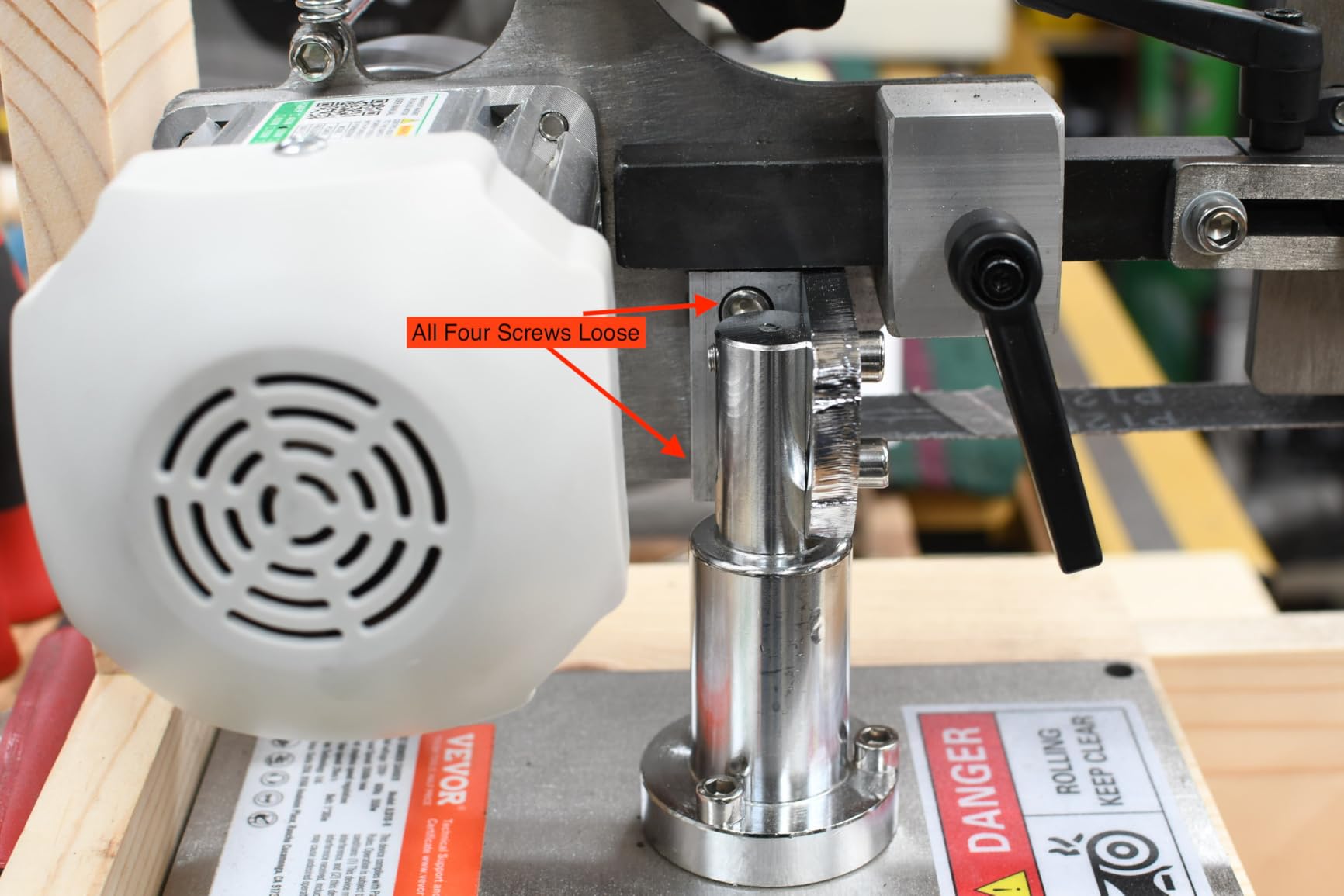
At 14.76 by 7.09 inches and 17.4 pounds, this is one of the most compact machines we looked at, and for a bench with limited depth it is the easiest to work around. The detachable workbench and the vertical or horizontal switch mean one machine covers short knife work, handle scale work and sharpening.
The 550W pure copper motor runs at 5,500 rpm and drives the belt at 26 m per min through a VFD, so you can dial the speed for a shaping pass or a finishing pass. Two grinding modes, circular and flat, and three belts at 100, 180 and 240 grit are included, along with both grinding attachments.
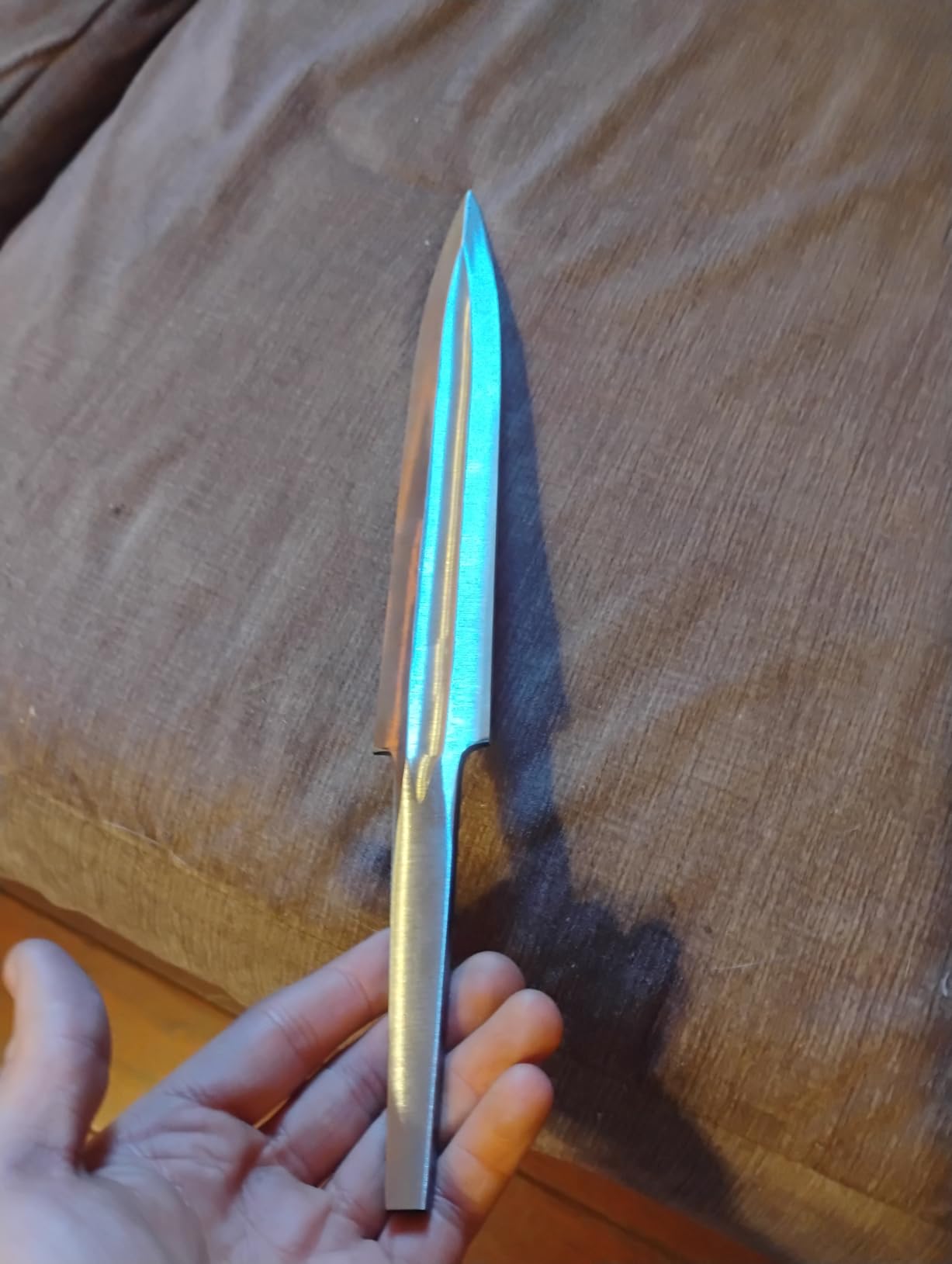
Reviewers value the variable speed and the fact that the accessories are in the box rather than sold separately. At 4.3 stars from 366 reviews with 68 percent five-star ratings, the profile is solid, and about 9 percent one-star reviews mention assembly or tracking adjustments, which is the normal first-session work on a machine of this type.
Belt tracking on this family is reported as stable once set, and owners say the reinforced steel body holds up under vibration better than the price suggests. The detachable workbench is what makes it viable for repeated setup changes between horizontal and vertical work.
How It Handles Real Knife Work
Short blades, handle blanks, and sharpening existing edges are the natural range here. With the flat grinding rack fitted, bevel work on smaller knives is straightforward, and the VFD keeps the finishing passes controllable.
Long blades and full-size sharpening jigs are the limitation, because a 1×30 belt will not support the whole length. Plan this as a detail and finishing machine.
What to Know Before You Buy It
At 550W, this does not have the power for aggressive passes on hardened steel. The variable speed helps more than the motor does, so plan light passes and sharp belts rather than pressure.
Plan your first hour for assembly and tracking. It is the most common friction reported in the reviews, and doing it once properly means it never becomes a mid-project problem.
11. Goldsand 1×30 Belt Sander with Reverse Run – Best for Reverse Belt Direction
- Working reverse function out of the box for edge trailing control
- Variable speed from sharpening to material removal speeds
- Accepts standard 1x30 belts including Cubitron and Trizact
- Zirconia corundum belts in three grits included
- Customer service shipped replacement parts quickly
- Thin documentation so setup needs study
- Some units arrive with loose screws and edge burrs
- Tracking needs re-adjustment after reversing the belt
- No dust collection
The reverse function here is a working switch rather than a setting, and it is the reason this machine is on the list. Running the belt edge-trailing lets the abrasive flow back toward you, which keeps the contact point visible and makes it easier to judge how much material you are taking.
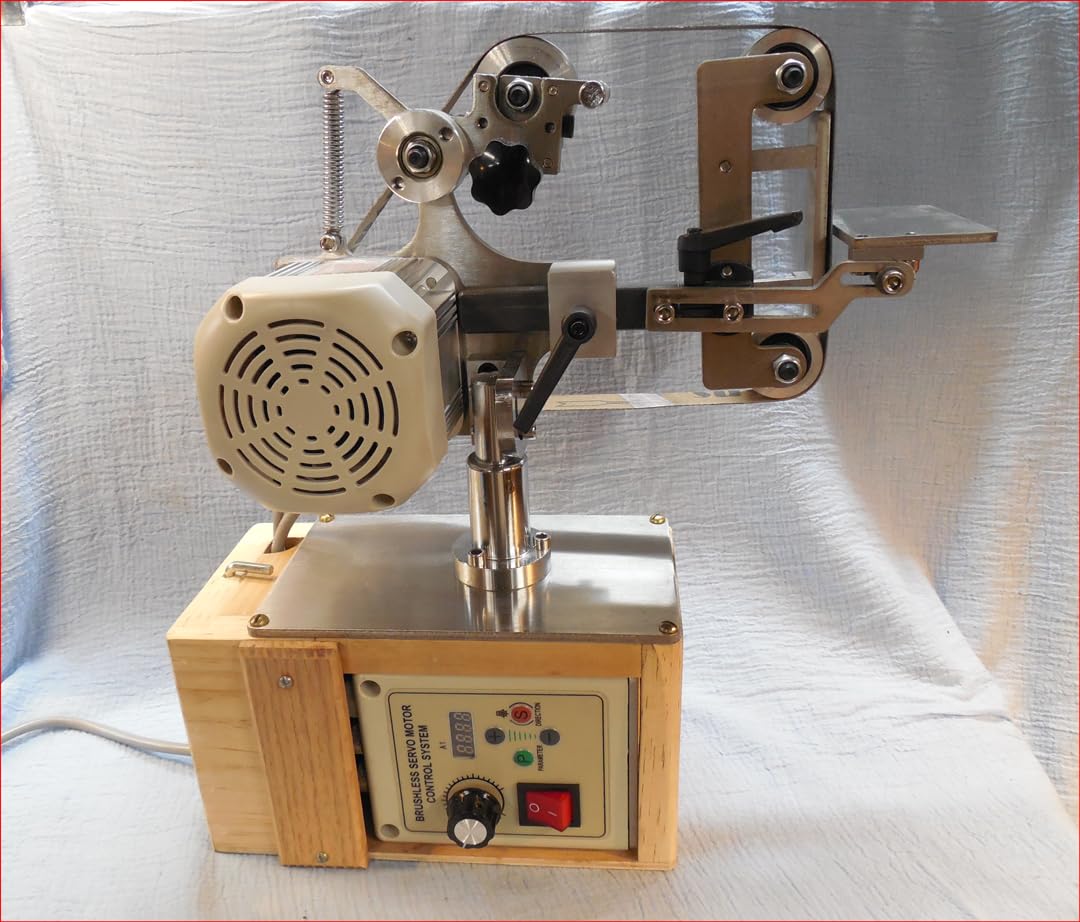
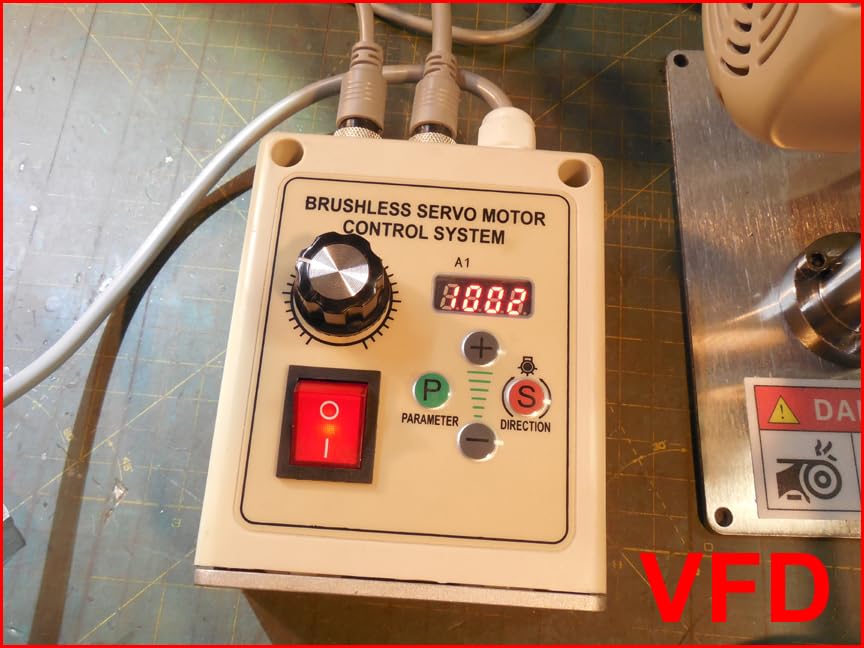
Underneath that, it is a 550W pure copper motor at 5,500 rpm with VFD stepless control and a 26 m per min belt line speed. It ships with three zirconia corundum belts at 100, 180 and 240 grit, runs in circular or flat mode, and switches between vertical and horizontal with a reinforced steel frame.
At 4.6 stars from 38 reviews, the rating is the second highest here, with 78 percent five-star. It is a small sample, and we treat it as such. What owners consistently praise is the working reverse function, the variable speed, and the value for what the machine does.
Two practical details matter. It accepts standard 1×30 belts, including Cubitron, Trizact and leather strop belts, so you are not locked into one abrasive supplier. And customer service reportedly shipped replacement parts quickly, which is worth more on a small machine than the rating spread suggests.
How It Handles Real Knife Work
It takes standard 1×30 belts, so the abrasive options for knife work are wide open, including fine polishing belts and leather strop belts for the finishing stage. Reverse run gives better control on a small blade than a forward-running machine.
Size limits still apply. This is a detail and sharpening machine, and the 1×30 belt will not carry a full-length blade blank.
What to Know Before You Buy It
Allow extra time for setup, because the documentation is thin and assembly configurations have to be worked out from photos. Some units arrive with loose screws and burrs on machined edges, so check the frame before first use.
There is no dust collection on this machine, and tracking needs re-adjustment after you switch direction. Both are manageable, but both are workarounds rather than features.
12. Jinlida 2×72 Belt Grinder – Best 2×72 for Speed Range Control
- 2.2kW VFD stepless control from 0 to 2800 rpm is the widest range in the 2x72 class
- Highest average rating in the roundup at 4.7 stars
- 2x72 belt sized for full length knife work
- Two grinding kits covering circular flat and arc modes
- Bands cover 60 grit deburring through 180 grit polishing
- Thickened one piece steel frame with powder coated finish
- Only 17 reviews so long term durability is not yet documented
- 110V operation needs the included 110v to 220v transformer
- Transformer adds a step to every setup
This machine has the highest average rating in the roundup at 4.7 stars, and the spec that earns it is the 2.2kW VFD. Stepless adjustment from 0 to 2,800 rpm is the widest published range in the 2×72 class here, and on a 2×72 belt that range is the difference between aggressive shaping and polishing in a single setup.
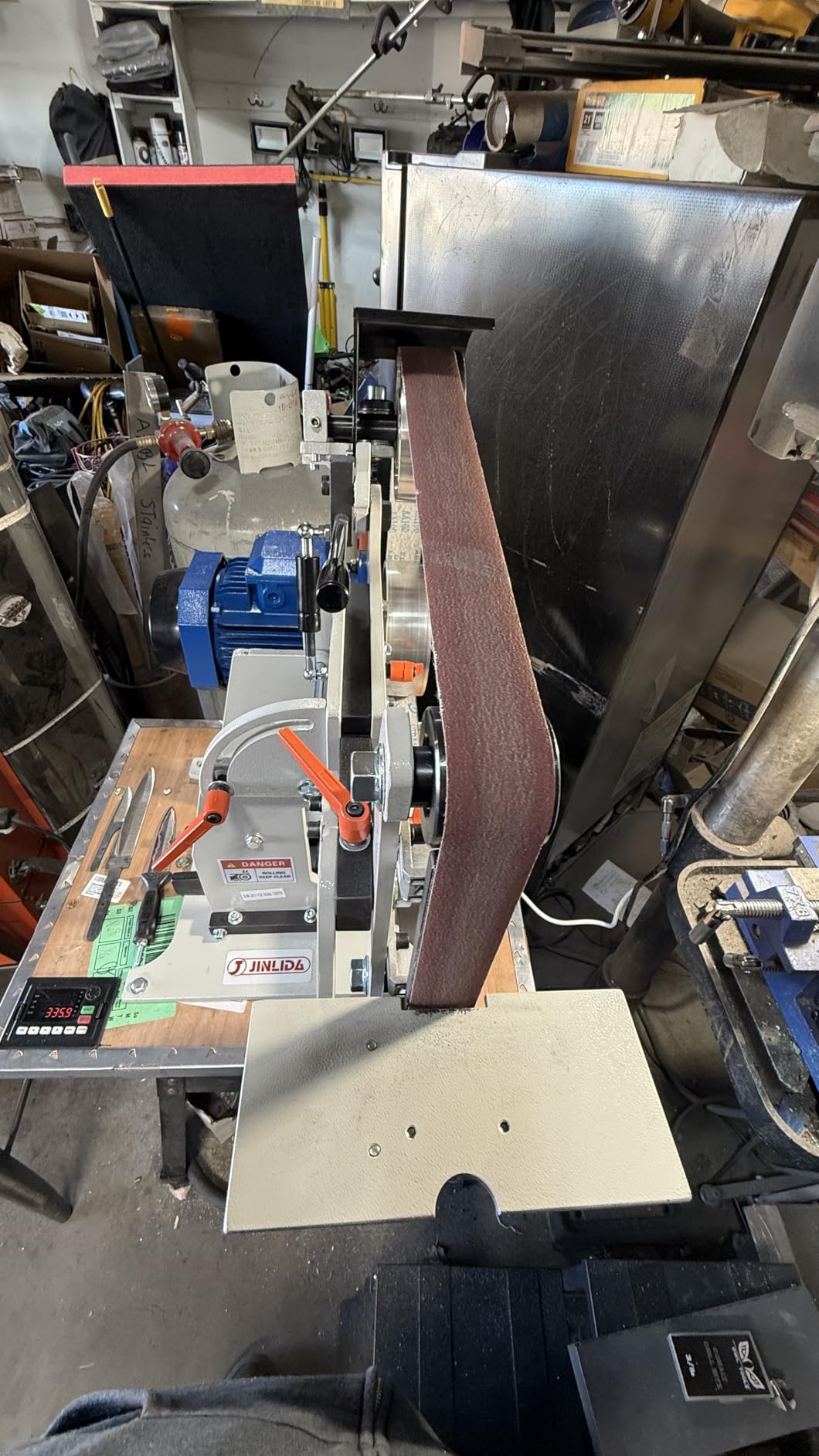
The 1500W pure copper motor uses an efficient transmission structure, and two grinding kits cover circular, flat and arc work. Three belts are included across the full workflow, 60 grit for coarse deburring, 100 grit for medium shaping and 180 grit for fine polishing. The frame is a thickened one piece steel unit with a powder coated anti-rust finish.
Owners report strong power and smooth speed control, and 91 percent of the reviews are five star. We want to be careful with that number, because it comes from 17 reviews. Long term durability on this model is not yet documented anywhere, and that is exactly the information a buyer paying at this level is entitled to.
One setup note: this runs on 110V and needs the included 110v to 220v power transformer. It draws 10 amps, so the circuit matters. The machine measures 30 by 24 by 18 inches, so it also needs a dedicated place in the shop.
How It Handles Real Knife Work
A 2×72 belt at 1500W with a 0 to 2,800 rpm range covers the full arc of knife work, from taking a thick tang down to a finished polish. The three included belts mean you can start immediately rather than shopping for abrasives first.
Two grinding kits give you three working modes out of the box, which is more than most machines in this roundup offer without buying attachments.
What to Know Before You Buy It
Plan the circuit and the transformer before delivery day. At 10 amps with a step up to 220V, this is not a machine you plug into a shared outlet and hope for the best.
The thin review history is the real risk. A 4.7 average on 17 reviews tells you current owners are happy, not that the machine will still be tight in five years. Ask the manufacturer about parts and support before you commit.
How to Choose a Belt Grinder for Knife Making
Six factors decide this purchase, and they matter in this order. Take them in sequence and the machine that fits your shop falls out of the answer.
Belt size and what it actually changes
Belt length sets the longest piece you can work in one pass, and belt width sets how much material you can take off in a single pass. A 1×30 handles sharpening, short blades and handle work. A 1×42 is a step up in both directions and adds dual-speed options. A 2×42 is the classic beginner knife belt sander size, and a 2×48 keeps 2 inch width in a smaller footprint. The 2×72 is the professional standard, and the 4×36 is a woodworking size you should not buy for knives at all.
Length also drives how hot the belt runs. A longer belt has more abrasive surface area to shed heat, which is why r/knifemaking posters note that small belts heat up quicker than a 2×72 and that the speed is often too fast for heat treated steel.
Motor horsepower and torque
The rule of thumb makers argue about is one horsepower per inch of belt width at a 72 inch belt length, so a 2 inch belt wants 2 HP and a 1 inch belt wants 1 HP. The same forum consensus is that torque matters more than the horsepower number on the label, because torque is what lets you press without stalling and losing your angle.
Check the 1/3 HP machines carefully before buying. Several machines in this roundup use that motor, and a reviewer describing them as often on the weaker side, so you cannot lean on them like a tank, is the accurate summary. Light passes, sharp belts, and letting the machine work at its own pace is the technique that makes them usable.
Belt speed in SFPM, and variable speed
Surface feet per minute is the speed the abrasive travels past your work, calculated as pi times drive wheel diameter times motor RPM. Steel wants roughly 4,000 to 7,000 SFPM. Below that you are polishing whether you wanted to or not, and well above it you are putting heat into the edge.
This is why we weight variable speed heavily. A VFD lets one machine handle shaping and finishing, and it lets a beginner slow down instead of learning to work fast. A fixed-speed machine is not disqualified, but it forces you to change grit to change the job, and grit changes take time.
Platen, contact wheel and tool rest
The platen is the flat reference surface behind the belt, and a thin one deflects under pressure. Rigid platen material is a quality signal you can see in the weight and the frame. The tool rest sets your angle, so a locking miter gauge or an included angle guide is worth more than it sounds.
Contact wheel diameter changes the grind line. Half inch to 3/4 inch wheels work for choils and small inside curves, 1 to 1.5 inch wheels suit finger grooves, and 2 to 4 inch wheels give a broad surface for flat bevel work. Machines with interchangeable wheels, like the ones with a contact wheel and flat platen in the box, let you change the job without changing the machine.
Dust collection and spark containment
Metal and abrasive dust is a real shop problem, and it is the factor most often skipped. A machine with a belt dust port, a disc dust port, or an adjustable dust chute costs you nothing extra to hook up. Several machines here have no port at all, and on those you are relying entirely on a shop vacuum held near the platen.
Sparks are the other half of the same problem. A spark containment hood on the disc side matters more than the belt side, because the disc throws sparks outward. Position the machine so the belt runs away from you, keep a fire extinguisher within reach, and never grind without eye and ear protection.
Support, parts and what the machine is worth later
Warranty length is a real signal. The RIKON carries five years, the JET and Shop Fox two years, and the BUCKTOOL low speed model two years, which tells you something about how each manufacturer expects the machine to be treated. Before buying, confirm that replacement parts exist, because a machine with no parts supply is a machine with a finite life.
Then think about resale. On the American Bladesmith Society forum, credentialed makers make the same argument in different words: cheap grinders have effectively no resale value, while a good machine holds its value for a decade. That changes the effective cost of an entry machine if you know you will move up to a 2×72 later.
What to Avoid When Buying a Belt Grinder for Knives
Four categories of machine come up constantly in advice threads, and all four are avoidable.
4×36 woodworking grinders. A 4×36 is built for wood. You cannot work on the belt edge because the platen placement prevents it, which removes the half of the belt that knife makers actually need. Skip it.
1/3 HP combo sanders marketed for knife making. Several listings in this roundup advertise knife making on a 1/3 HP motor. The American Bladesmith Society forum thread is blunt about this class of machine: they are not made for anything other than light hobby use, and not intended for grinding steel. They are not useless, but they are not steel machines either.
Cheap general sanders with no dust port. You will outgrow them, they will not hold resale value, and grinding steel with them means breathing abrasive and metal dust. In the forums, the recurring advice from credentialed makers is to save up and buy one good machine rather than buy twice.
Machines with no parts supply. Before you buy any of the smaller units, check whether replacement belts, idlers, guards and motors are actually available. Limited parts availability was a recurring complaint from long-term owners of one machine in this roundup, and it matters more than any feature on the spec sheet.
One more caution about marketplace and budget machines: quality varies between units of the same model. Several reviews here mention assembly issues on the same model number, so if you are buying a budget 2×72, expect to spend a session on setup and accept that you may return one.
Frequently Asked Questions
What belt grinder is best for sharpening knives?
A low-speed 1×30 with variable speed is the best belt grinder for sharpening knives. Models such as the RIKON 50-161VS, which runs a 3/4 HP stepless motor from 2,000 to 3,400 rpm, and the BUCKTOOL 1×30 low speed machine at 1,790 rpm give you the slow finishing speed that keeps heat out of a hardened edge. A 2×72 or 2×42 with a VFD is the better choice if you also shape and profile.
What type of grinder is best for knife making?
A belt grinder with a rigid platen and a 2 inch wide belt is the standard machine for knife making. A 2×72 with a 2 HP motor is the professional default because the long belt runs cooler and carries longer workpieces. A 2×42 with a 1/2 HP or better motor is enough to make your first knives, and you will move up from there.
Which 2×72 belt grinder is the best for knife making?
In this roundup the assembled 2×72 options are the VEVOR 2×72 with a 1500W motor and VFD, the Jinlida 2×72 with a 2.2kW VFD running 0 to 2,800 rpm, and the Shop Fox W1843, which is a 2×72 to 76 inch knife sander and buffer with a 1 HP motor at 4,500 FPM. Each trades platen precision and manufacturer support for reach. Among dedicated 2×72 builders, the machines experienced forum makers name as reference points are KMG, Origin Blade Maker and OBM, and a shop aiming at competition work should look there.
What is the best belt grinder for a beginner who wants to make knives?
A 2×42 belt sander is the best starting point for a beginner, ideally with a 1/2 HP or 3/4 HP direct drive motor and an included tool rest. The BUCKTOOL 2×42 combo and the KFMK 2×42 are the two we recommend. Broad stock removal is where a 2×72 earns its place, and most beginners can get through their first knives on a 2×42.
What is a 2×72 belt grinder used for?
A 2×72 belt grinder is a metalworking machine with a 2 inch wide by 72 inch long abrasive belt. The long belt spreads heat over more surface, so it runs cooler and lasts longer between grit changes than a 1×30. That makes it the industry standard for professional knife making, handling full length blades, hollow grinds, bevels and finishing.
How much horsepower and what RPM does a 2×72 belt grinder need?
The rule of thumb is one horsepower per inch of belt width at a 72 inch belt length, so a 2×72 wants a 2 HP motor. A 1 HP machine is usable for lighter work, and the 1 HP machines in this roundup run at 1,725 to 2,900 rpm. For belt speed, surface feet per minute equals pi times drive wheel diameter times motor RPM, and steel wants roughly 4,000 to 7,000 SFPM.
Which Belt Grinder Should You Buy
Start with where you are, not where you are going. On your first knife and a small bench, the BUCKTOOL 2×42 combo is the machine we would buy, because the review history behind it is deeper than anything else here and the tilting belt takes long work in stride. If you already know you are heading toward a 2×72, the VEVOR 2×72 puts you in that class today rather than in a few years.
If your priority is squareness and repeatable geometry, the JET 2×42 in cast iron is the platform, and the KFMK 1×30 with its forward and reverse run is the sharpest tool for learning bevel angles. For a dedicated knife machine with a buffer built in, the Shop Fox W1843 is the one built for that job rather than adapted to it.
The one thing we would not do is buy a machine you know you will outgrow, on the assumption that resale makes it cheap. The cost of owning two machines is more than the money, it is the bench space and the time spent tracking belts on something that was never right for the work. Pick the size that matches your longest workpiece today, and choose the one with a platen and a tool rest you trust. Everything else on the spec sheet is negotiable.
We keep our shop notes on etching machines for knife makers and wide belt sanders for cabinet shops alongside this one, since the abrasive and dust questions overlap. Whichever machine you land on, buy a rack of belts before you buy the machine, and give the first afternoon entirely to tracking and squareness.