

A headphone amplifier is a small, dedicated audio component that supplies the voltage and current your headphones need to play properly, taking over from the weak built-in amplifier in a phone, laptop or AV receiver. That is the whole idea behind our best headphone amplifiers for home listening roundup: find the box that matches your headphones, your sources and the amount of desk or shelf space you have to give it.
A headphone amp takes an analogue line-level signal, boosts it cleanly with very low noise and very low distortion, and drives the drivers inside your headphones. Headphones are a far harder electrical load than speakers at this scale, so the circuit is designed to excel at small signal levels. Get the match right and you hear deeper, more controlled bass, smoother treble and more volume without strain.
Are headphone amplifiers worth it? Usually, yes, but only in specific situations. Owners of high-impedance headphones consistently report a night-and-day change once power stops being the limiting factor. If you drive easy-to-match earbuds from a laptop, an amp adds little. If you run 300 ohm headphones, planar magnetics or Grado, a dedicated amp is often the single biggest upgrade available to you.
We spent weeks pairing these ten units against open-backs, closed-backs and planars, swapping them into the same chain, and watching for the things that matter after the first week: channel balance, noise at low listening levels, whether the volume control stays smooth, and how each one behaves when the system is running for hours. Several of the picks below are cheap enough that the question is not whether they beat a laptop jack, but whether they earn their place in a system that already has good headphones.
Table of Contents
Top 3 Picks for Home Listening in 2026

Fosi Audio Q4
- USB optical and coaxial inputs
- 3.5mm and RCA outputs
- Drives 16-200 ohm headphones
- Bass and treble tone knobs

iFi Zen DAC V3
- PCM 768kHz DSD512 and MQA
- 4.4mm balanced and 6.3mm outputs
- PowerMatch gain switch
- XBass+ bass restoration
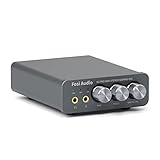
Fosi Audio K5 Pro
- 1000mW into 16 ohm
- 500mW into 32 ohm
- 80mW into 300 ohm
- USB-C optical and coaxial inputs
Our top three covers the three situations most people actually land in. The Fosi Q4 is the general-purpose workhorse with the largest owner base in this group. The iFi Zen DAC V3 is the one to buy if you want a single box that handles digital sources and headphones with real headroom options. The Fosi K5 Pro is the value pick, and its power figures are the most conservative of the three.
Each of the three carries a badge that matches the card in its own review below, and the same badge appears in the comparison table further down. If you want the short version: buy the Q4 unless you already have a DAC, and buy the K5 Pro only if your headphones are not demanding.
All 10 Headphone Amplifiers Compared Side by Side in 2026
Every product in this roundup, with the two or three specifications that decide whether it belongs in your system. Output power is the number most often quoted misleadingly, so the figures below are the manufacturer ratings at the impedances each maker actually published.
| Product | Specifications | Action |
|---|---|---|
| Fosi Audio Q4 |
|
Check Latest Price |
| iFi Zen DAC V3 |
|
Check Latest Price |
| Fosi Audio K5 Pro |
|
Check Latest Price |
 Douk Audio P1 Douk Audio P1 |
|
Check Latest Price |
 Douk Audio U3 Douk Audio U3 |
|
Check Latest Price |
 FiiO K11 FiiO K11 |
|
Check Latest Price |
 Fosi Audio P3 Fosi Audio P3 |
|
Check Latest Price |
 FiiO K13 R2R FiiO K13 R2R |
|
Check Latest Price |
 Apos Gremlin Apos Gremlin |
|
Check Latest Price |
 Fender Mustang Micro Plus Fender Mustang Micro Plus |
|
Check Latest Price |
Two numbers deserve a note before the reviews. The K5 Pro and the U3 both publish wattage across five or six impedances, which makes them unusually easy to compare. The iFi Zen DAC V3 publishes a single ceiling figure, and owners report that ceiling can be reached too late for very demanding headphones.
1. Fosi Audio Q4 – Best All-Round Entry Point for a Home Desk
- Plug-and-play with no driver installation and all cables included
- Bass and treble knobs give real tone shaping
- Full-metal shell and metal knobs feel durable
- Compact at 3.9 by 2.9 inches and light at 430 g
- Clearly reduces hiss and hum from onboard PC audio
- Audible white noise with low-impedance headphones
- Channel noise levels can differ
- No 1/4-inch jack and no microphone input
- Volume knob doubles as the power button
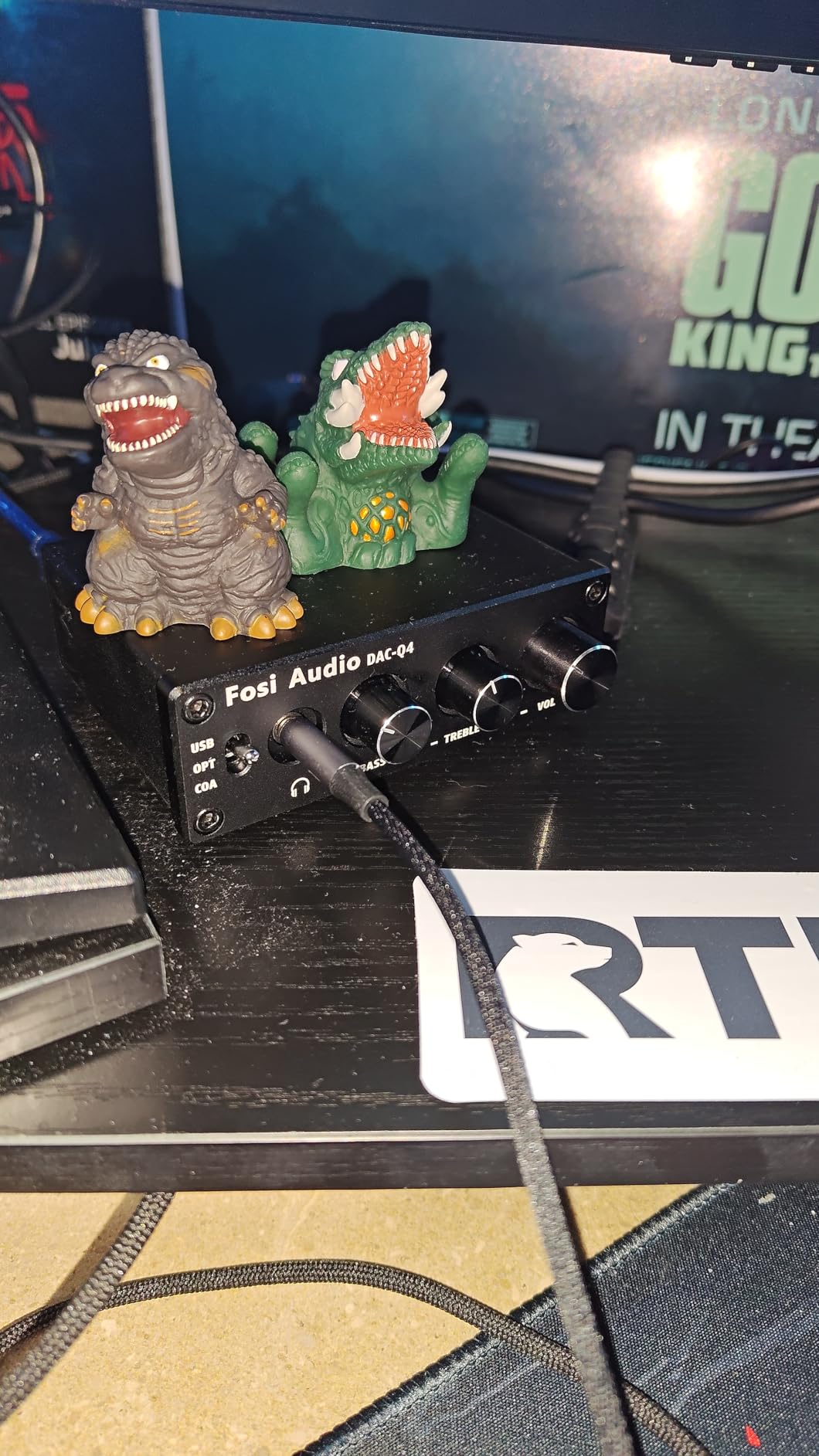
This is the unit we keep coming back to because it does the most jobs with the least fuss. It accepts USB, optical and coaxial digital input, and gives you a 3.5mm headphone jack plus RCA line outputs for a pair of powered speakers. In a home setup that is genuinely everything most people need from a desktop component.
Our time with it confirmed the owner consensus: it is a dramatic step up from motherboard audio, and it takes about ten seconds to set up because there is no driver to install. The USB cable, an optical cable and a PC-USB to Type-B cable all come in the box, so nothing else needs buying before first light.
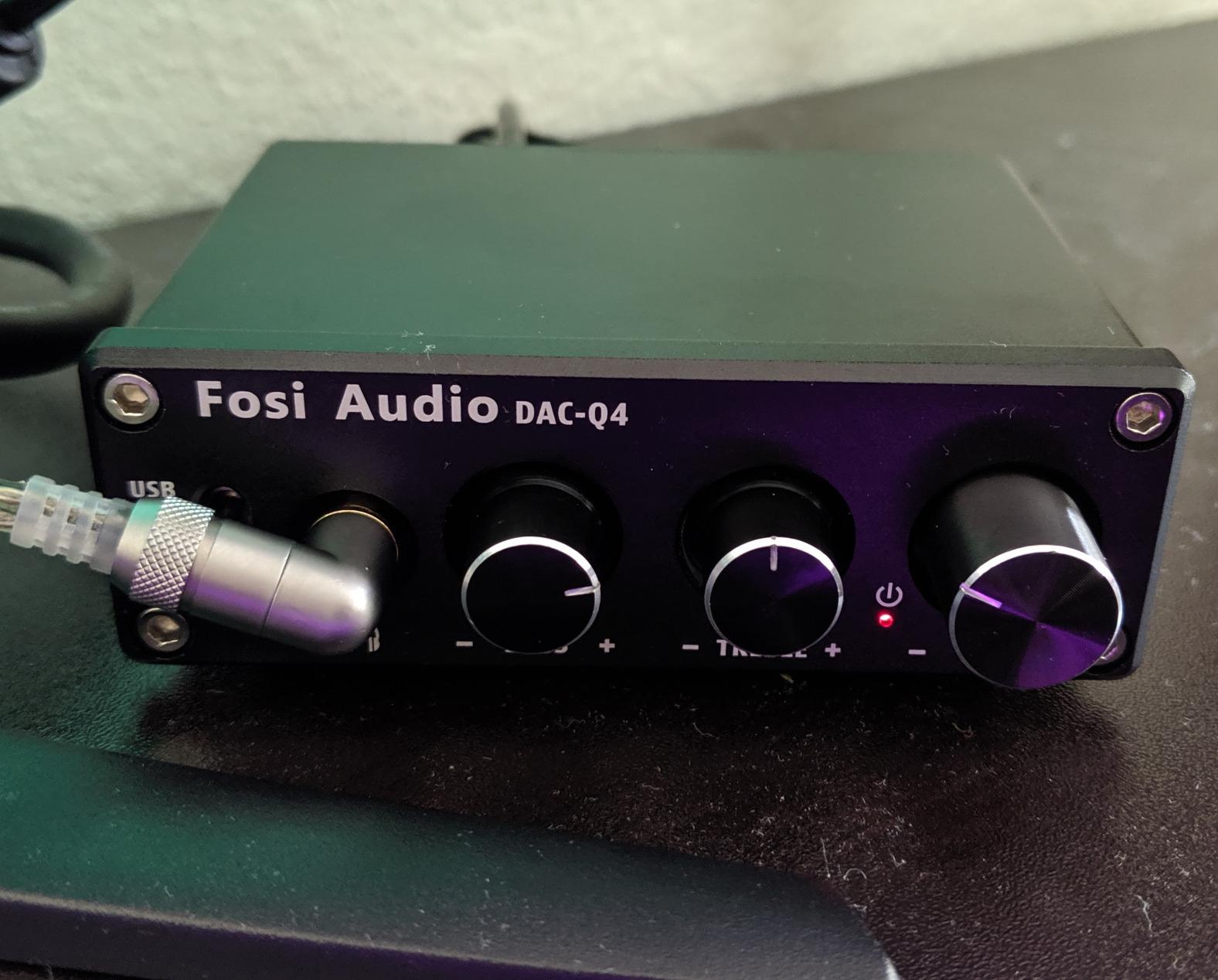
The tone controls are the reason many people keep it on the desk permanently. Separate bass and treble knobs let you flatten a harsh track for late listening or add lift to a flat one, and the metal volume control has enough friction to set a level with one hand. At 430 grams and under four inches across, it is small enough to move between the desk and the bedside table.
Output protection circuitry is fitted, and the manufacturer lists a 24-month warranty. That combination of protection and a two-year term is unusual at this end of the market and matters if you are leaving it connected to a system that stays powered.
Who this amp suits
It suits anyone whose main complaint is that a computer or a game console sounds thin and quiet. If your headphones sit somewhere between 16 and 200 ohm, the published range covers them, and the RCA outputs let you feed a small pair of active speakers from the same box.
It also suits anyone building a first home system on a budget who wants one device instead of a separate DAC and an amp. The 24-bit/192kHz support is not the headline here; the connectivity is.
Who should skip it
Do not buy it for sensitive in-ear monitors or very low-impedance planars, because the recurring owner complaint is a faint white noise floor that becomes obvious on those loads. The second channel can also sit at a slightly different noise level, which some listeners notice on quiet passages.
There is no 1/4-inch jack, so 6.35mm headphones need an adapter, and no microphone input if you use a headset for calls. Because the volume knob also switches the unit on and off, your level setting resets each time you cycle power.
2. iFi Zen DAC V3 – Best Value DAC and Headphone Amplifier Combo
- Clean detailed sound owners compare to far costlier DACs
- Low noise floor praised by in-ear monitor users
- PowerMatch and XBass+ are used daily
- Solid metal build and smooth volume knob
- Plug-and-play on Windows macOS and Linux
- No DC power brick included so extra power can be needed
- Included USB cable is very short
- Some reports of crackling and Windows driver issues
- 390mW ceiling is low for very demanding headphones
If your sources are digital, this is the pick that removes the most boxes from the shelf. It decodes PCM up to 768kHz, DSD512 and MQA over USB-C, and offers both 6.3mm single-ended and 4.4mm balanced headphone outputs. Owners describe the sound as detailed but warm, and the background as effectively silent, which is why in-ear monitor users rate it highly.
Two switches do real work. PowerMatch changes the gain so you can match sensitive and less sensitive headphones without hunting with the volume pot, and XBass+ lifts low frequencies in a way intended to correct for the way sealed designs roll off the bottom end.
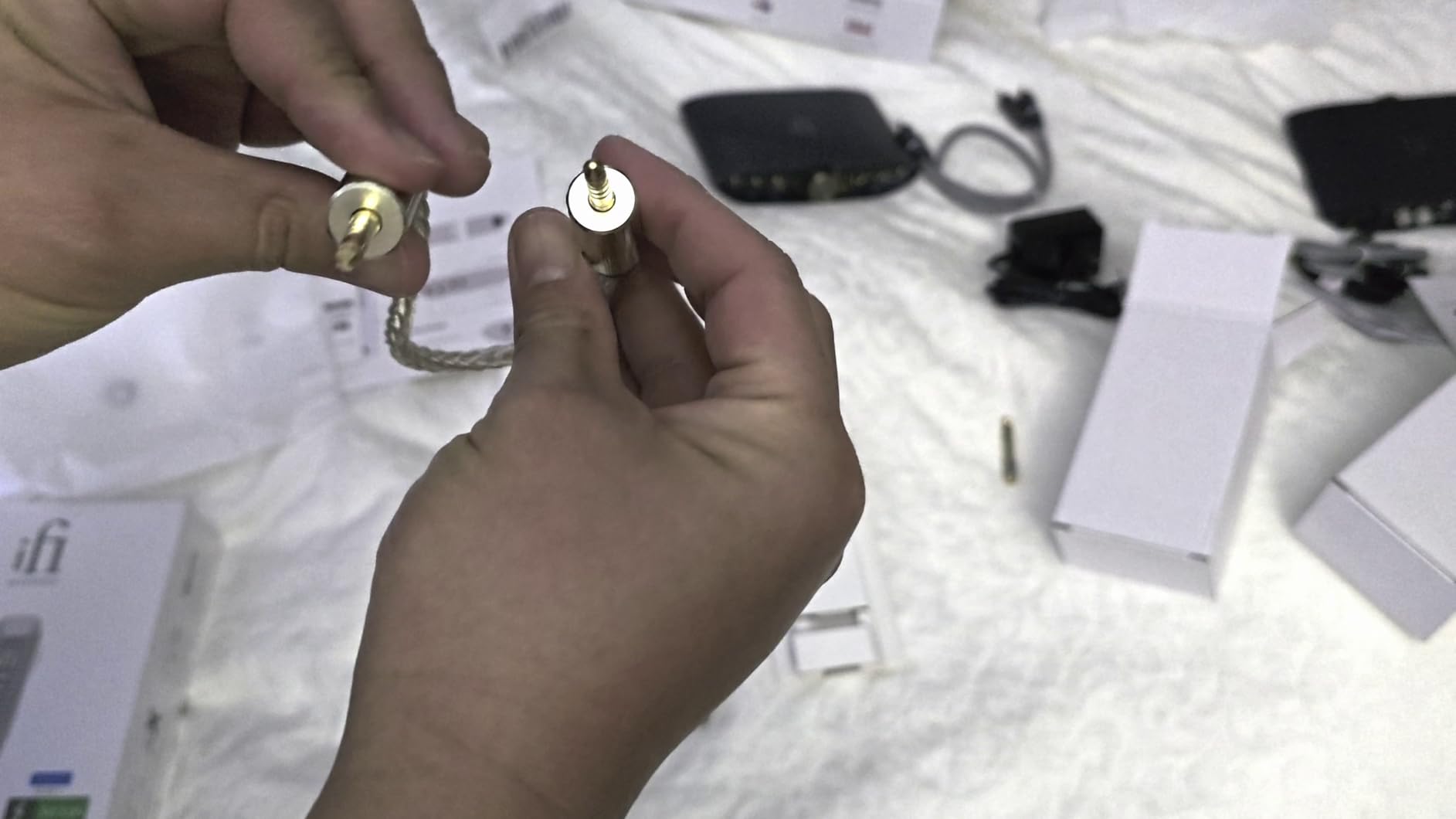
The output stage reaches up to 390mW. That is plenty for portable headphones, easy dynamic drivers and most in-ear monitors, and it is also enough headroom for a good share of 300 ohm models with volume control to spare. It is not enough for the hardest planars, and that limit is the one specification worth checking against your headphones before you commit.
The RCA and balanced line outputs can run in variable or fixed volume mode, which means this unit can also sit in front of a power amplifier or a pair of active speakers. A colour-coded ring around the volume knob shows the incoming format at a glance, which saves guessing when a source changes.
Who this amp suits
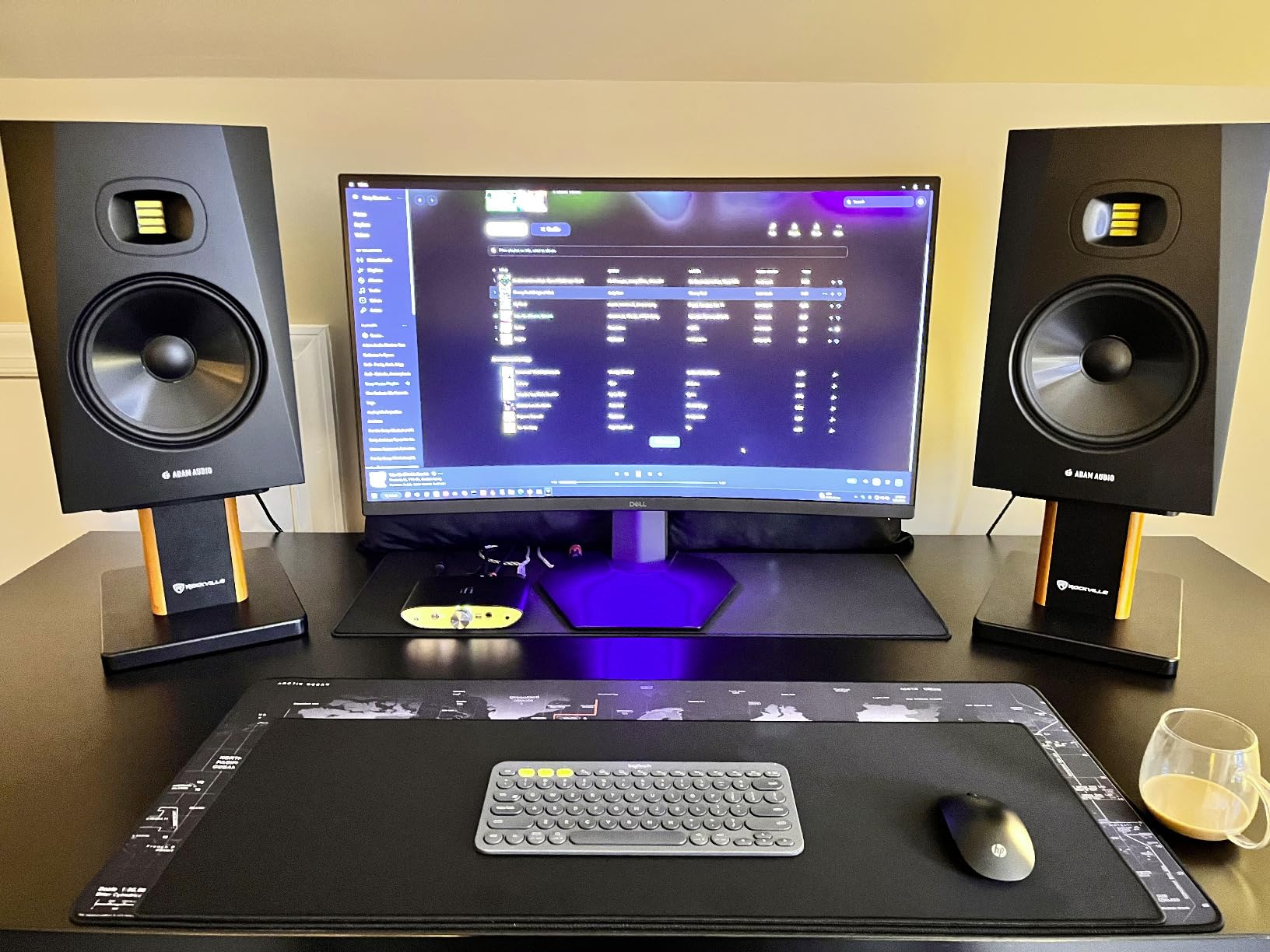
It suits people with one source and one pair of headphones who want the simplest possible chain. Connect a laptop or a streamer over USB-C, plug in, and you have a complete system with a balanced option available.
It also suits anyone who already owns a decent DAC and wants to use the amp as a hub rather than replace anything. The fixed-volume line output mode makes it behave like a conventional preamp for a second zone.
Who should skip it
Owners flag that no DC power brick is included, so external power can be needed before the volume control works, and the supplied USB cable is short enough to be annoying on a desk. There are also recurring reports of crackling and driver trouble on Windows machines.
Build details take a small hit too: the buttons feel loose and the internal board flexes slightly when the 6.35mm jack is unplugged. If you need serious current for difficult planars, look up the power ladder rather than buying on the feature list.
3. Fosi Audio K5 Pro – Best Budget Amplifier for a PC, Mac or Console Desk
- Big improvement over onboard PC and console audio
- Bass and treble controls useful for gaming cues
- All-metal chassis with smooth rotary knobs
- Works with PS5 PC Mac and phones
- Drives everything from in-ears to 300 ohm
- RCA out is disabled when headphones are plugged in
- Bundled 3.5mm splitter cable is of questionable quality
- Volume knob feel is loose and the LED is very bright
- 3.5mm output only with no 1/4-inch jack
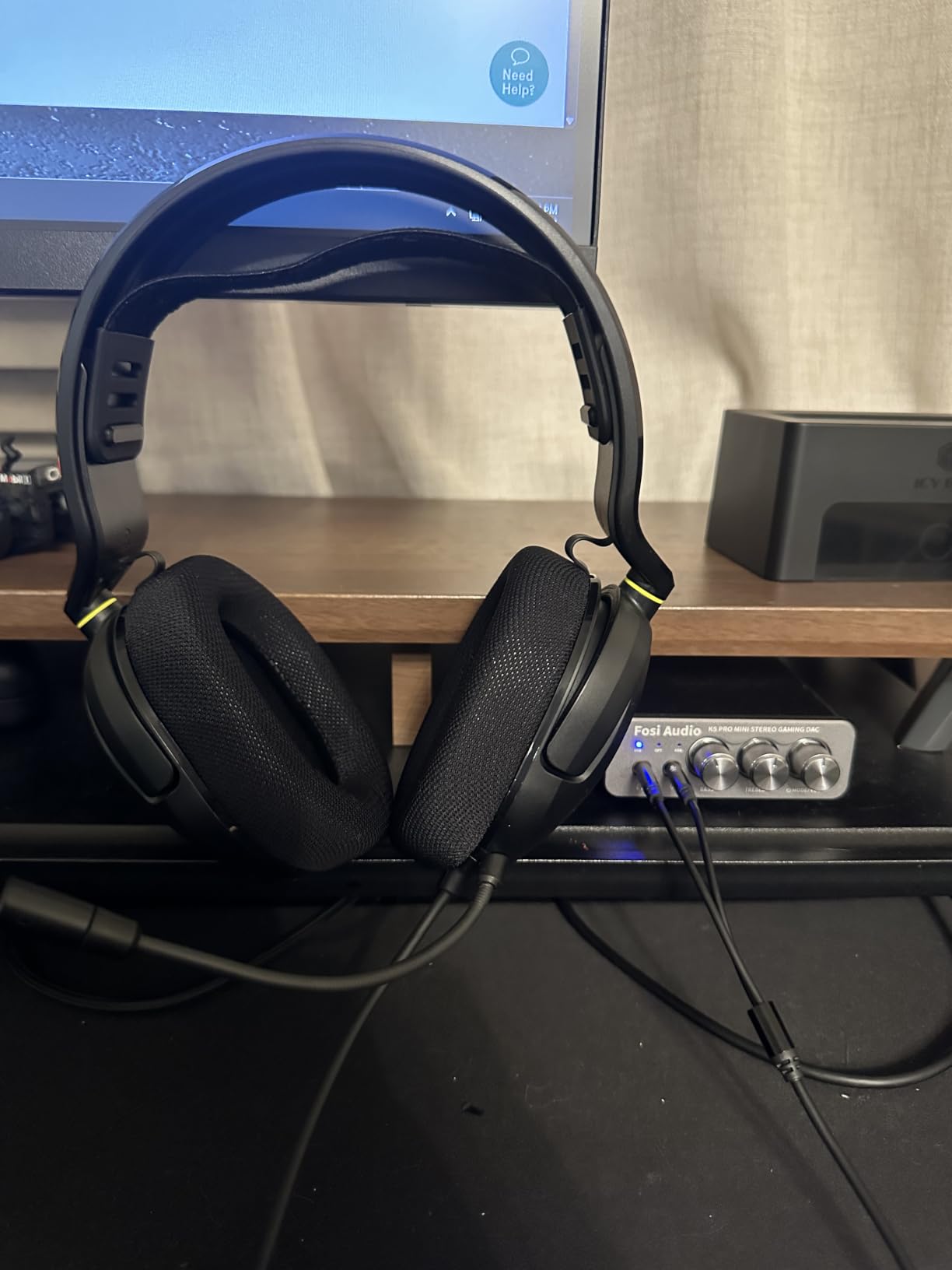
This is the most fully specified power rating in the group, and it is the reason this unit is worth reading carefully. The manufacturer publishes output at five impedances: 1000mW into 16 ohm, 500mW into 32 ohm, 300mW into 64 ohm, 150mW into 128 ohm and 80mW into 300 ohm. Most competitors quote one figure at an inconvenient load, so this is a genuinely useful specification sheet.
The amplifier stage uses a Texas Instruments NE5532 op-amp with total harmonic distortion stated at or below 0.003% and a signal-to-noise ratio of at least 110dB. Those are the numbers to compare against competitors, and they hold up well for a unit at this level.
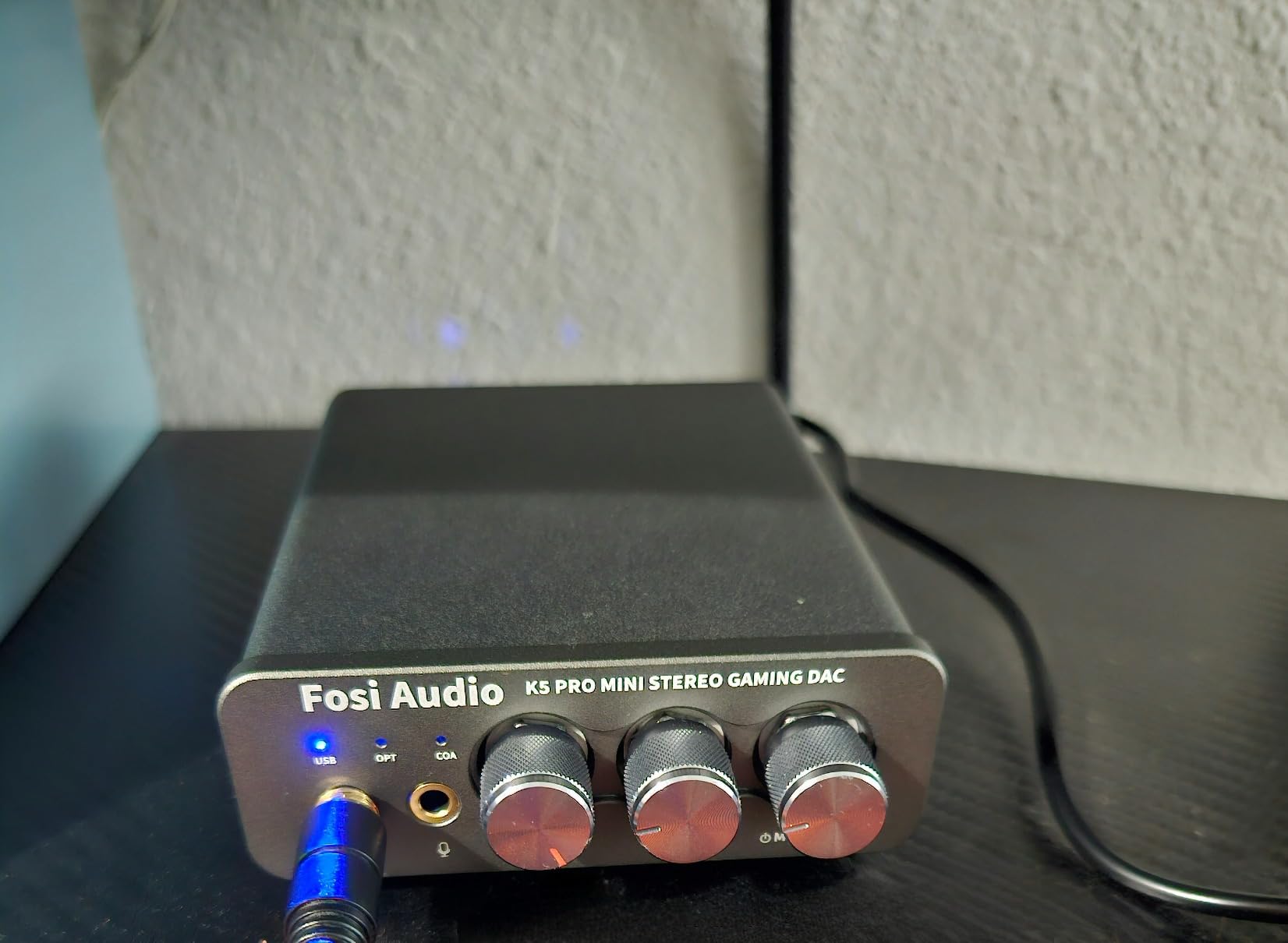
Inputs are USB-C at up to 24-bit/96kHz, plus optical and coaxial at up to 24-bit/192kHz. A single input mode switch covers the digital sources, and the USB-C port doubles as charging, which matters on a desk where a phone or console is the source. Outputs are a 3.5mm headphone jack, a 3.5mm microphone input for chat, and RCA for speakers.
Volume, bass and treble are all on the front panel. Gamers tend to use the tone controls to pull dialogue forward or lift footsteps, and the master volume shares a button with power, so it needs a long press to switch on.
Who this amp suits
It suits a desk shared between work and play, especially if you switch between a PC, a console and a phone. The microphone input is a real advantage over the other budget units here, and the USB-C port keeps the desk to one cable.
It also suits anyone whose headphones sit well below 300 ohm. With 500mW into 32 ohm and 300mW into 64 ohm, this covers the majority of dynamic drivers and many planars without strain.
Who should skip it
The speaker arrangement frustrates people. The RCA output is disabled when headphones are plugged in, so you cannot run a pair of powered speakers and headphones at the same time without unplugging, and the bundled 3.5mm splitter cable is frequently reported as needing reseating or replacing.
There is no 1/4-inch jack, so studio-pro headphones need an adapter. The volume knob feels slightly loose, the blue power LED is bright enough to be distracting in a dark room, and there is no Bluetooth and no automatic sleep function.
4. Douk Audio P1 – Best for Tube Warmth as a Compact Preamplifier
- Warm musical tube presentation that softens digital harshness
- Bass and treble controls plus a tone bypass switch
- Stable Bluetooth 5.0 with quick pairing
- USB DAC beats phone and laptop built-in outputs
- Retro look with switchable tube lighting
- 3.5mm jack often fails to make full contact on many cables
- Stock tubes are unreliable and may fail early
- No optical input
- Very bright power supply LED
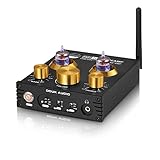
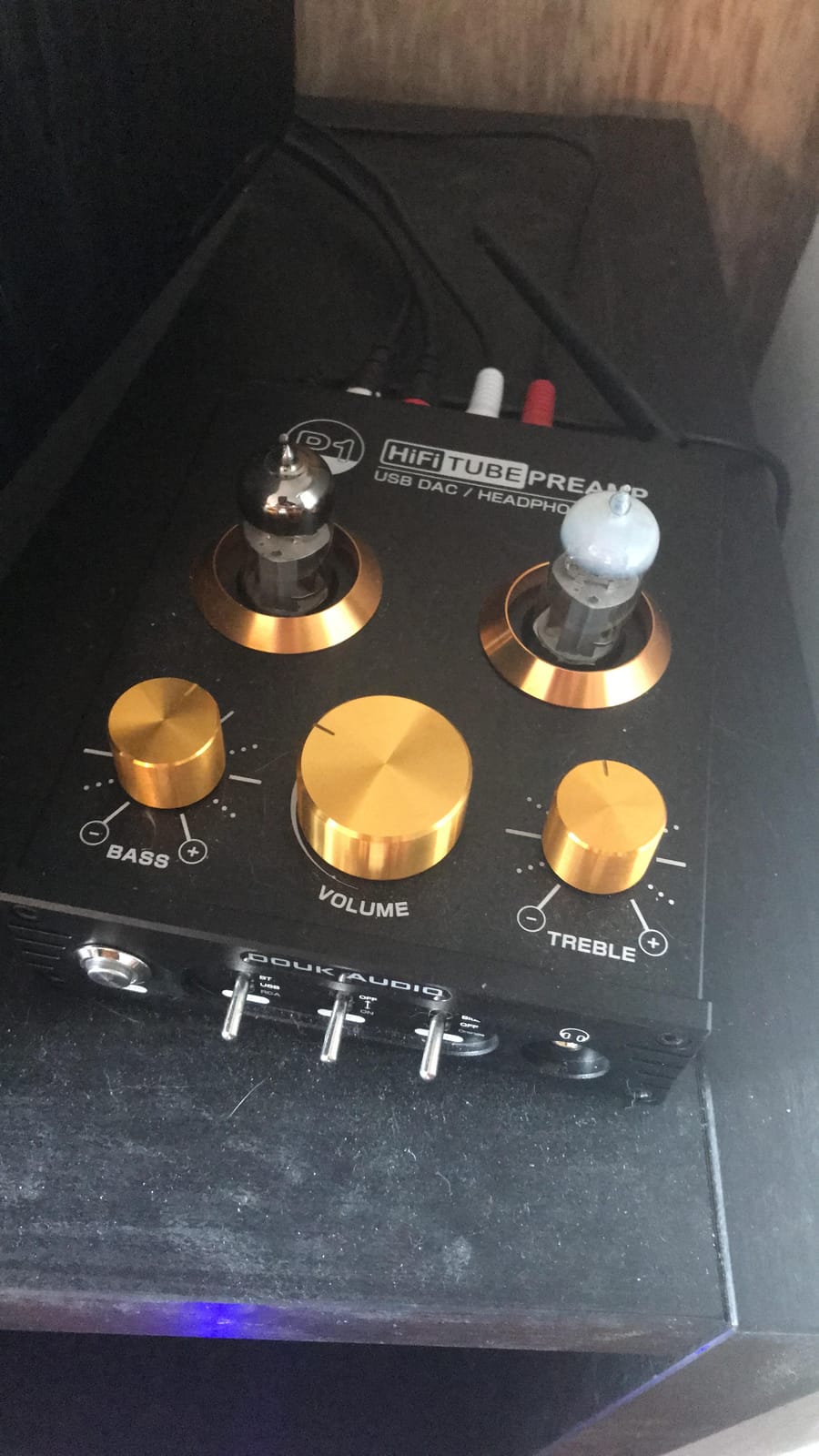
The P1 does two jobs that normally need two boxes. It is a tube preamplifier that can sit between a source and a power amplifier, and it is also a headphone amplifier and USB DAC with Bluetooth. The tube stage uses JAN5725 valves with the voltage raised so they operate properly, which is where the warmth comes from.
Wireless is handled by a QCC3034 chip with Bluetooth 5.0 and aptX-HD, and the wired digital path uses a CM6642 USB DAC supporting 24-bit/192kHz on Windows, Mac and Linux. The output stage is an NE5532 op-amp in a 47 architecture, rated up to 160mW for headphones between 32 and 300 ohm.
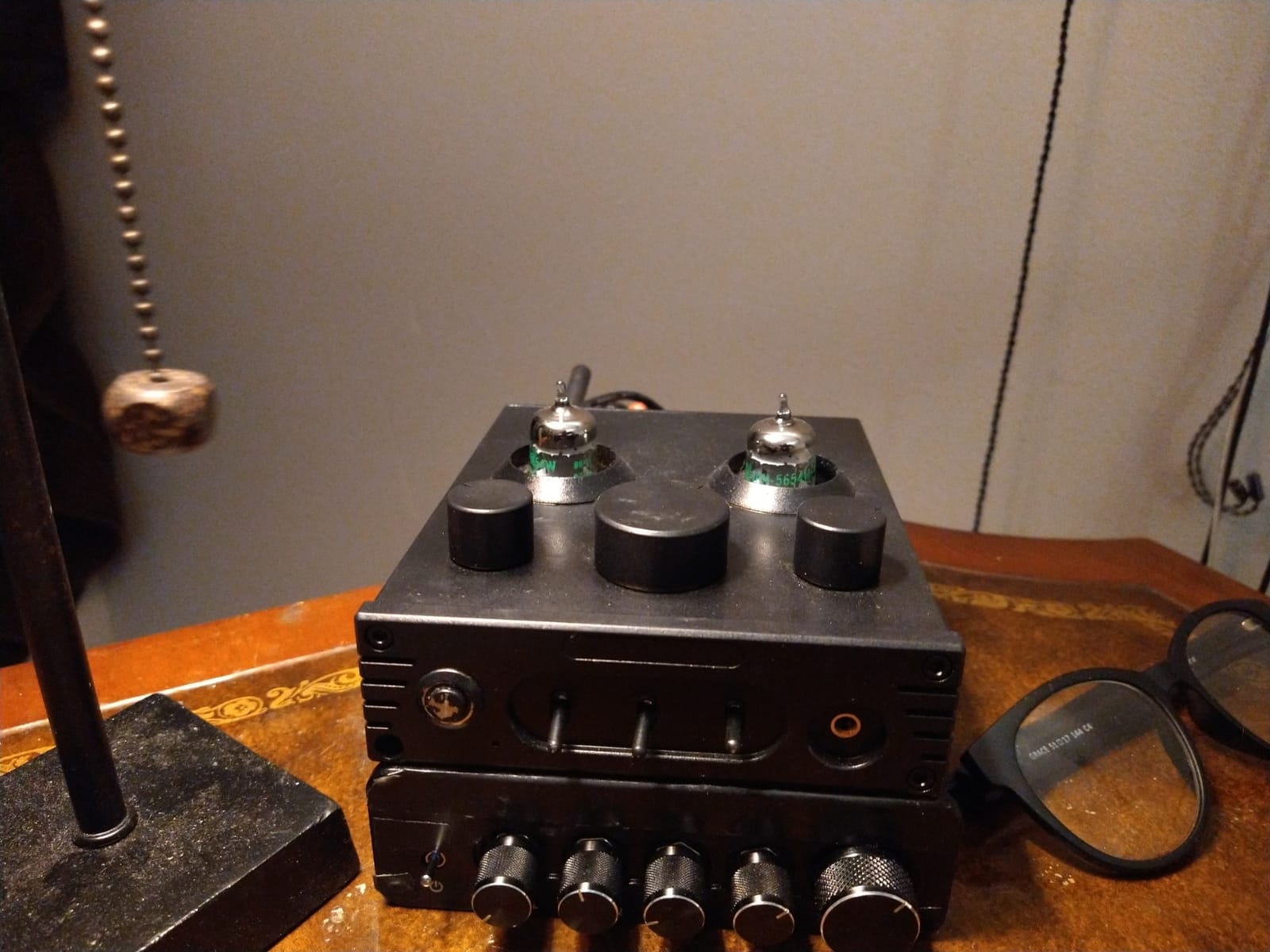
The tone section is unusually useful for a device like this. Bass and treble controls give plus or minus 6dB, and a bypass switch flattens them completely for critical listening. RCA inputs and outputs cover analogue sources and downstream amplification, and a 3.5mm headphone jack sits on the front.
At about one pound, it fits where a component would normally look out of place, and the tube illumination can be switched between blue and amber to match a room. The listed warranty is 18 months.
Who this amp suits
It suits people building a compact desktop stereo around active speakers who want tube voicing in a single component, and who want to add wireless playback without another streamer. The bypass switch means you can also get a clean, flat signal when you want one.
It suits listeners who find digital sources hard or bright and prefer a warmer presentation, which is the main reason owners buy a tube unit at all.
Who should skip it
The headphone jack is the weak point. Owners repeatedly report that the 3.5mm socket does not achieve full contact with many cables, producing one-sided playback or static, and that a 3.5mm to 1/4mm adapter is often needed.
Several buyers replaced the supplied tubes soon after purchase because of early failures, and there is no optical input. With one RCA input and one output pair, the routing is simple rather than flexible, and the power supply LED is bright.
5. Douk Audio U3 – Best for High-Impedance Headphones on a Budget
Douk Audio U3 Headphone Amps, Mini Hi-Fi Amplifier for Home Desktop PC 6.35mm / 3.5mm Headsets, Class A, RCA Input, DC 5V
- Sound quality and separation owners rate above its class
- Enough clean power for demanding high-impedance headphones
- Metal construction that punches above its tier
- Tactile detents on the volume control
- Op-amp rolling lets you change signature
- Very bright oversized blue power LED
- RCA-only inputs need an adapter for 3.5mm sources
- Weak shielding against nearby wireless interference
- Channel imbalance at the lowest volume positions
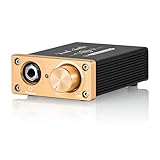
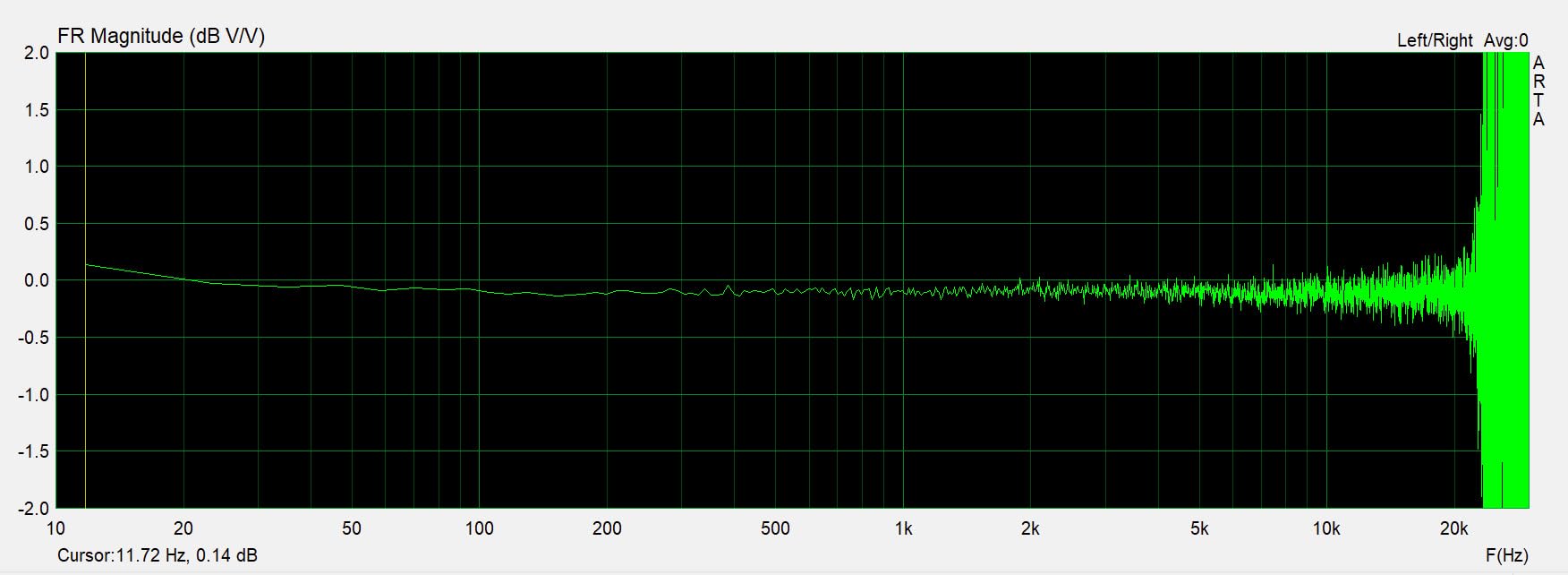
This is the amp-only box in a roundup that is mostly combos, and that is exactly why it is here. No DAC, no wireless, no tone controls, just an analogue headphone amplifier that does one job. For a home system with a decent source already feeding it over RCA, that focus is an advantage rather than a limitation.
It runs a class A design built around an original TI NE5532 op-amp with transistor current expansion, powered by a 1300mA output transistor. Maximum output is quoted at 1300 milliwatts, and the manufacturer specifically names HD580, HD600 and HD650, K701 and K702, DT880, T70 and T90, SR225 and SR325, and RS1e as targets.
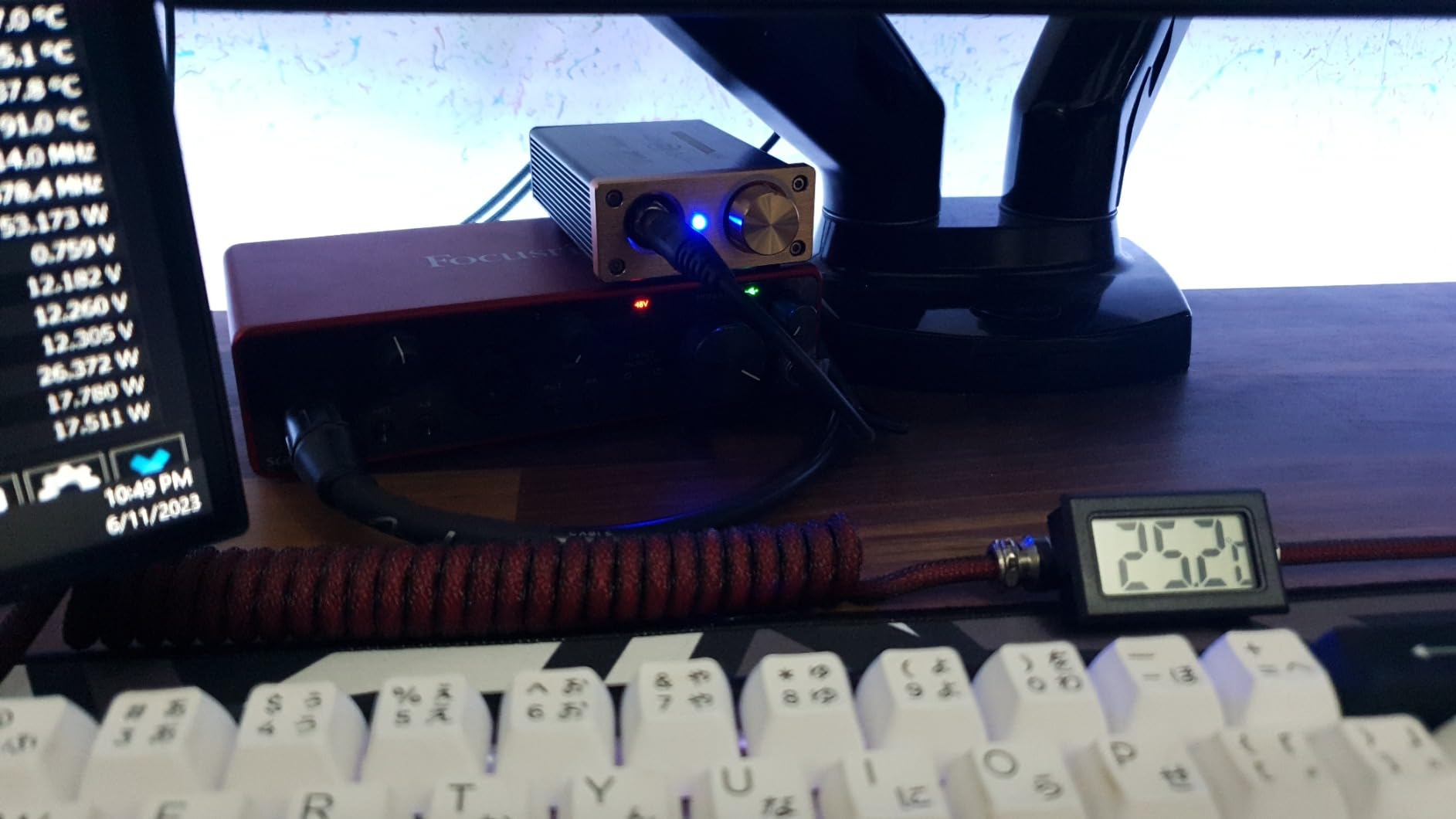
The feature that stands out is the pluggable op-amp socket. It turns the unit into a small experiment platform, because swapping the op-amp changes the voicing of an otherwise fixed circuit. Owners use it to chase a warmer or more analytical presentation without buying new hardware.
It also accepts a DC input from 5V to 20V and runs the circuit at a higher internal voltage to keep the noise floor low. Outputs are 6.35mm and 3.5mm with RCA inputs, and the volume control has tactile detents so a level can be found again the next day.
Who this amp suits
It suits owners of demanding high-impedance headphones who already have a source with a decent line output. At roughly six ounces it is the smallest and lightest unit here, which matters if the amp lives on a shelf behind a turntable rather than on a desk.
It also suits anyone who enjoys modifying audio gear. The socket makes swapping parts low-risk and reversible, and the class A topology is a good platform for experimenting.
Who should skip it
Shrouded in caveats for a reason. The blue power LED is large and bright enough to light up a dark room, and because the inputs are RCA only, a 3.5mm source needs an adapter cable. There is no power supply in the box.
Owners also report hum and interference when it sits near wireless devices, and noticeable channel imbalance at the very lowest positions on the volume control. If you listen to in-ear monitors at night, neither of those is a minor issue.
6. FiiO K11 – Best for Balanced Desktop Audio with a Real Display
FiiO K11 DAC and Headphone Amplifier for Home Audio or PC, 6.35mm and Balanced 4.4mm, RCA, Coaxial, Optical, 1400mW, 384kHz/24Bit DSD256 (Silver)
- Clean detailed largely neutral sound far above onboard audio
- Balanced 4.4mm output handles high-impedance headphones
- Compact aluminium body with an informative display
- Multiple gain settings and digital filters
- Works from desktops laptops and consoles without drivers
- Menu system is not intuitive at first
- Headphone impedance is not auto-detected
- Some digital filters sound compressed or plastic
- ASIO output needs drivers on desktops
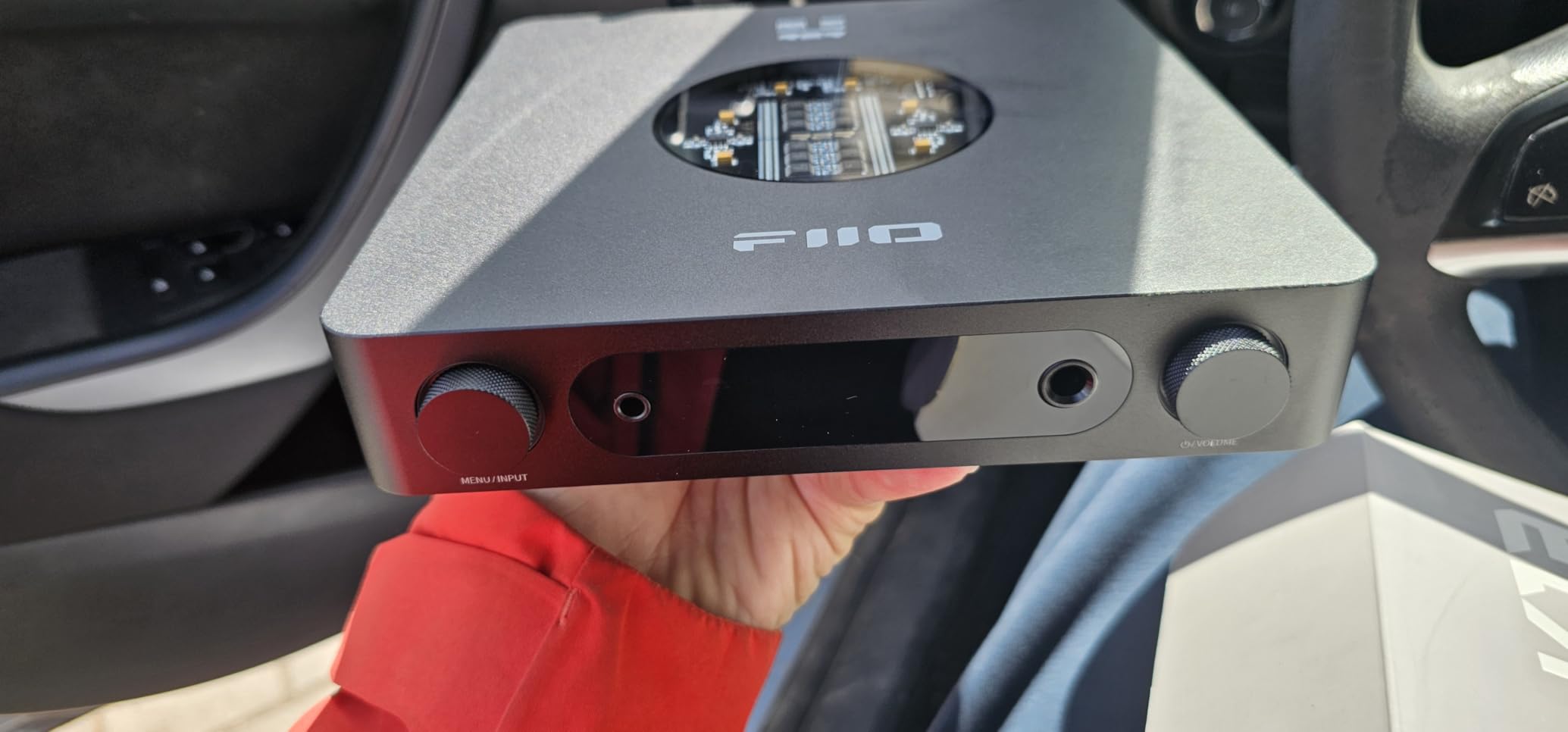
The FiiO K11 is the most convincing balanced desktop unit in this group, and the reason is the pairing of a 4.4mm balanced output with enough power behind it. Output is quoted at up to 1400mW, recommended for headphones between 8 and 350 ohm, which is the widest useful range any unit here claims.
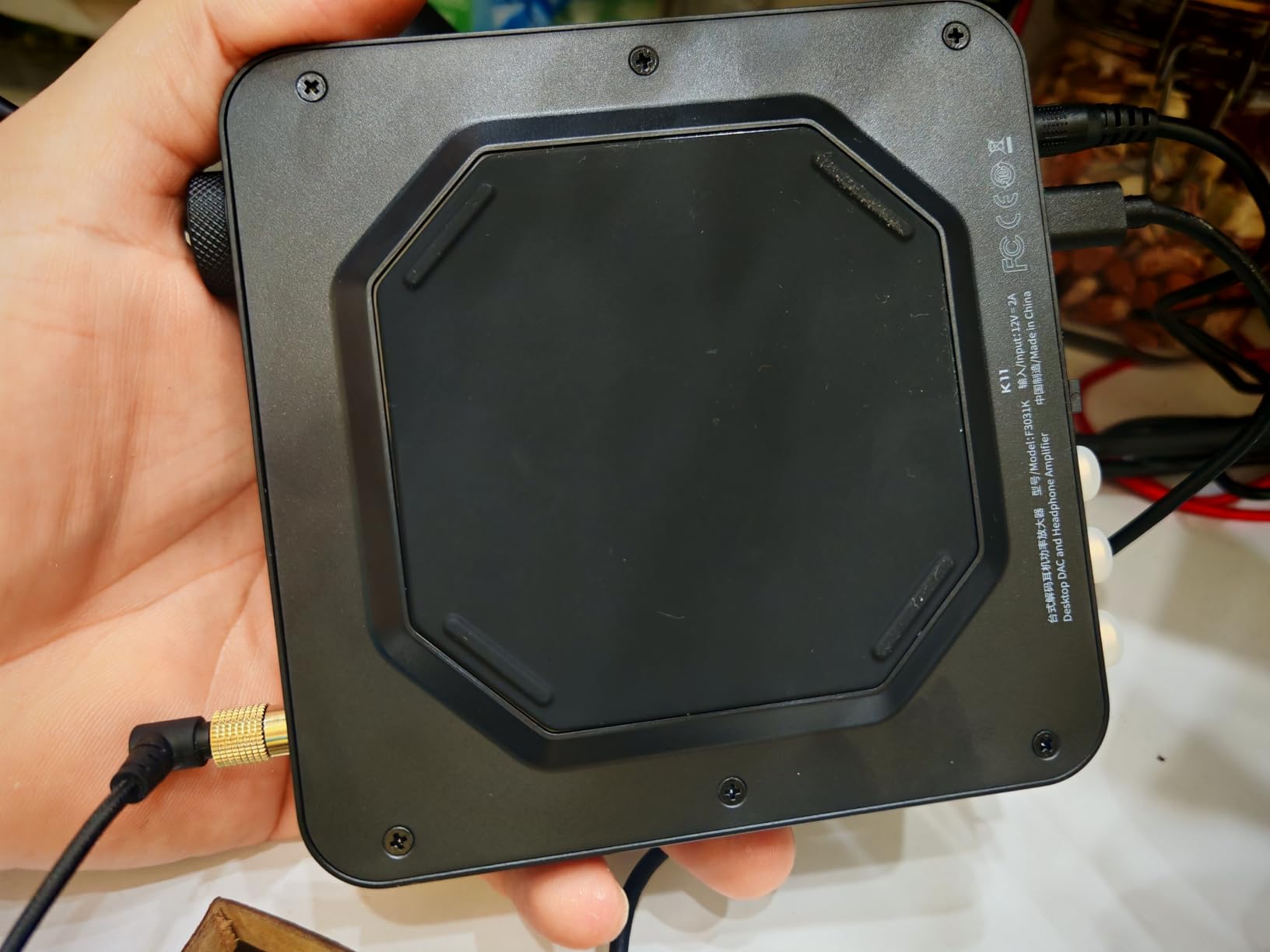
Inputs cover USB, coaxial and optical. Outputs are a 4.4mm balanced jack and a 6.35mm single-ended jack on the front, plus an RCA line output and a coaxial output on the back. Decoding runs to 384kHz at 24-bit and DSD256.
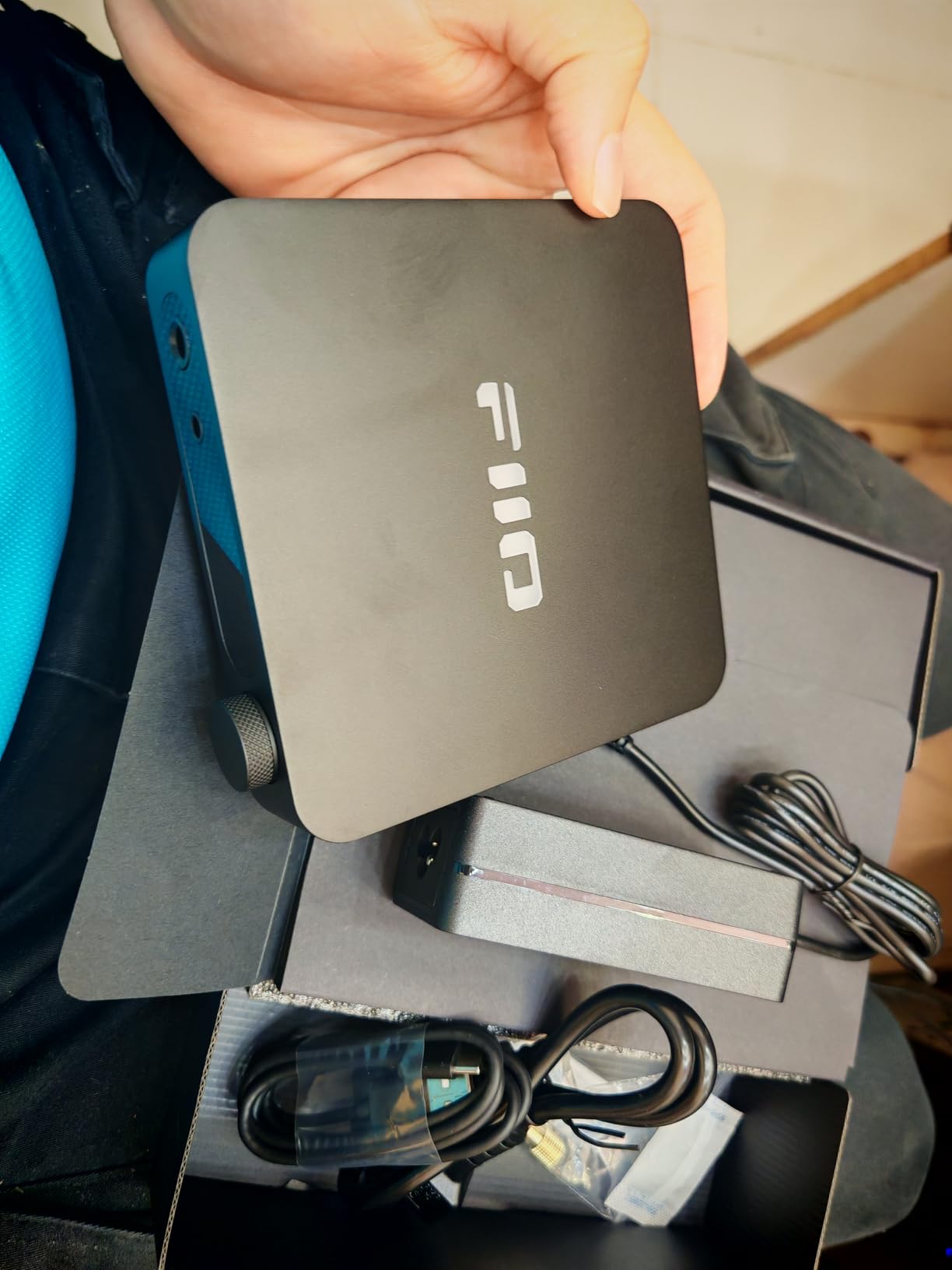
The display is the practical difference in daily use. A high-definition VA screen shows the sample rate, current volume, selected gain and the output mode without any menu diving, so you can confirm a source is running at the rate you think it is. The chassis is aluminium alloy, roughly 9.65 by 7.8 by 2.32 inches, with a one-year warranty.
Sound is described by owners as clean, detailed and largely neutral, with no obvious colouration in either direction. Multiple gain settings and a set of digital filters give control, though the filters change the character of the sound more than some listeners want.
Who this amp suits
It suits anyone with balanced-capable headphones who wants a proper 4.4mm path without spending on a separate desktop chassis. The combination of 1400mW of headroom and a visible gain setting makes it forgiving across a wide range of headphones.
It also suits desktop users who switch sources constantly, because the display removes the guesswork and the unit runs from desktops, laptops and consoles without a driver for normal playback.
Who should skip it
The software is the complaint, not the hardware. The menu system needs practice, headphone impedance is not detected automatically so gain must be set by hand, and a few digital filter presets are reported as sounding compressed or plastic.
ASIO output on a desktop requires drivers, which trips up first-time users. The illuminated buttons on top also give it a gaming look that will not suit everyone, and at just over two pounds it is the heaviest unit in the roundup after the larger desktop designs.
7. Fosi Audio P3 – Best for Small Desktop Systems and Subwoofers
- Warm rich tube sound with crisp highs and rhythmic bass
- Bluetooth 5.1 with aptX HD and low-latency LL
- Headphone output covers 16 to 300 ohm
- Can build a 2.1 system with a subwoofer
- Tone knobs have centre detents for instant bypass
- Copper rings must be removed before installing tubes
- 3.5mm headphone output only with no 1/4-inch jack
- Not a full DAC since digital input is Bluetooth only
- Remote adds little beyond the front panel
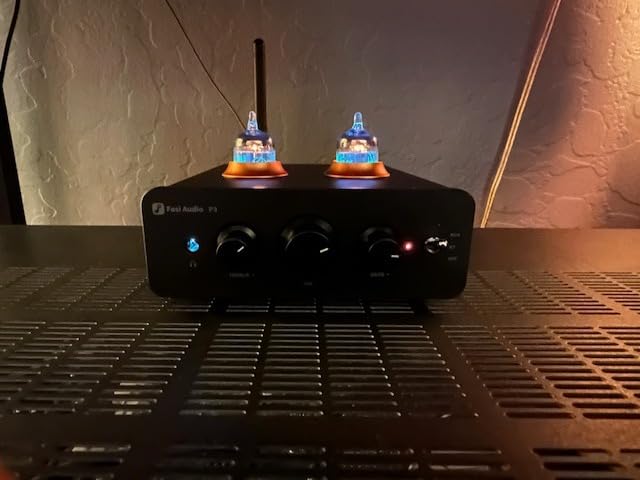
The P3 is the unit to buy if your home listening is really a small speaker system with headphones as a second option. It raises the signal to 54V before the tube stage so the valves work at their proper operating point, and the same stage feeds a headphone output rated for 16 to 300 ohm headphones.
Wireless is the main input, using a Qualcomm QCC3031 chip with Bluetooth 5.1 supporting aptX HD and aptX LL. LL is the low-latency variant, which is why this works for video as well as music. There is also an RCA analogue input, and a manual reset button stops the unit accepting Bluetooth connections by accident.
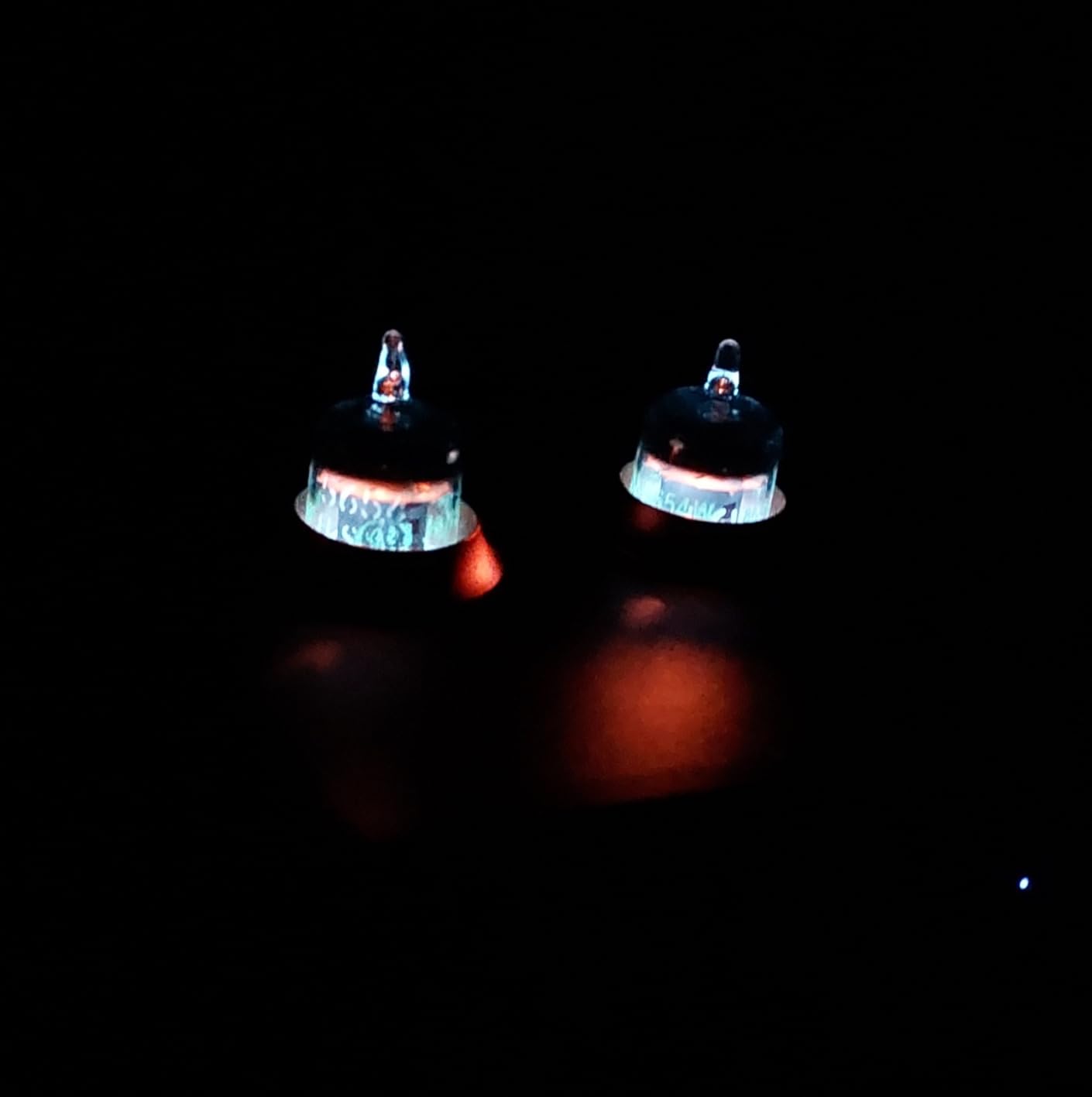
Back panel flexibility is the standout. RCA and AUX outputs let you chain a power amplifier, a subwoofer and active speakers into a 2.1-channel system from one box, which is a use case very few headphone amps cover. The passive components are specified with some care, using ELNA audiophile-grade capacitors, a taper A potentiometer, signal-to-noise up to 103dB and crosstalk of 95dB.
Tone controls give plus or minus adjustment on bass and treble with a centre detent, so pulling them to the middle defeats them completely. A remote is included along with the power supply, and the warranty runs 24 months.
Who this amp suits
It suits people running a compact stereo with active speakers and a subwoofer who want tube voicing on the way in. Owners regularly report building a working 2.1 system from one P3, and the detented tone controls make A/B comparison against a flat setting instant.
It also suits anyone who wants to add wireless to a system that has no streamer, and patients who enjoy the look of glowing tubes in a small enclosure.
Who should skip it
Setup has one real trap. The protective copper rings have to be removed from the sockets before the tubes are fitted, and buyers who miss this report a unit that seems faulty. It also carries the usual caveat for tube hardware that early tube failures occur.
It is not a full DAC. Digital input is limited to Bluetooth rather than USB, so a computer cannot connect digitally. The headphone output is 3.5mm only with no 1/4-inch jack, and the supplied remote does very little beyond the front panel.
8. FiiO K13 R2R – Best for R2R Warmth and Multi-Output Hub Duty
- Warm organic R2R presentation that reduces fatigue
- 2400mW drives demanding 300 ohm and planar headphones
- XLR and dual RCA make it versatile as DAC preamp and amp
- 10-band parametric EQ with app and web control
- LDAC Bluetooth 5.4 and dual power supply
- Remote line-out button can be pressed by accident
- Remote buttons feel stiff and no batteries are included
- Small display is hard to read across a room
- Needs 5 to 10 minutes of warm-up
- Intermittent USB static blips on some hosts
The K13 R2R is the most capable device in the roundup and the one that rewards the most patience. Its converter is a self-developed four-channel fully differential 24-bit R2R design built from 192 precision thin-film resistors at 0.1% tolerance, and owners consistently describe the result as warm, organic and easier to listen to for long sessions than typical delta-sigma sources.
Two listening modes are offered. NOS mode runs non-oversampled, and OS mode oversamples to 384kHz. Decoding covers PCM up to 384kHz at 32-bit plus DSD256, and Bluetooth 5.4 handles LDAC alongside AAC and SBC.
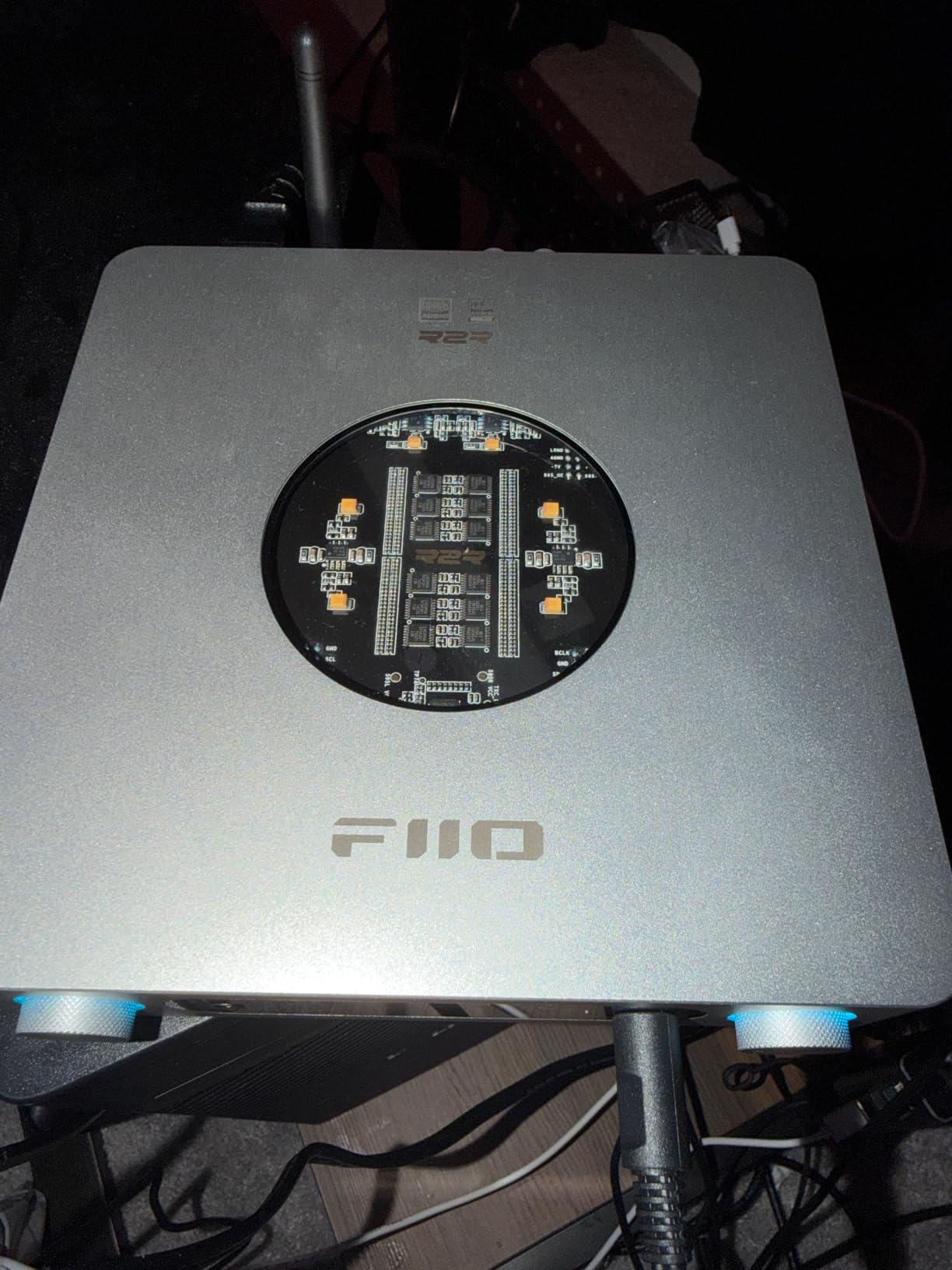
On the output side it is the most flexible unit here. Headphone connections are 4.4mm balanced and 6.35mm single-ended, with output power up to 2400mW, which is the highest figure in the group. Behind it sit an XLR balanced line output and dual RCA outputs, so the same box can be a DAC, a preamplifier feeding a power amplifier, or a headphone amplifier for a demanding planar.
There is also a 10-band parametric equaliser with app and web-based control and shared preset support. That is a genuinely useful feature for correcting a room or a headphone’s low end, provided you leave headroom by lowering the global gain, since pushing a boost into clipping is easy otherwise.
Who this amp suits
It suits someone whose headphones are genuinely hard to drive, since 2400mW removes volume as a constraint on almost every non-electrostatic design. It also suits anyone who wants to hear the difference between delta-sigma and R2R conversion and has the time to switch modes and compare.
The XLR and dual RCA outputs make it a good central hub for a system with multiple sources and a power amplifier or active speakers downstream, and the parametric EQ helps in a real listening room.
Who should skip it
The remote is the most-discussed problem. Its line-out button can be pressed by accident, which bypasses the volume control and sends full-level signal to an external amplifier, and the buttons themselves feel stiff and cheap with no batteries included.
The display is small and hard to read from across a room, the unit needs five to ten minutes of warm-up before it reaches full potential, and some users report intermittent USB static depending on the host machine. Equaliser settings must be set through the app or a web browser, which is a barrier for anyone who wants to stay offline.
9. Apos Gremlin – Best for Fully Balanced Tube Sound
- Exceptional value for a class A fully balanced tube amp
- Warm musical presentation from the tube stage
- Supports tube rolling for personalisation
- 1250mW drives demanding headphones
- Fully balanced design reduces noise and interference
- Matched Ray Tubes included in the box
- Signature is more neutral than warmly tube-voiced
- May struggle with very high impedance designs
- LED lighting under the tubes is unnecessary
- Needs 15 to 30 minutes of warm-up
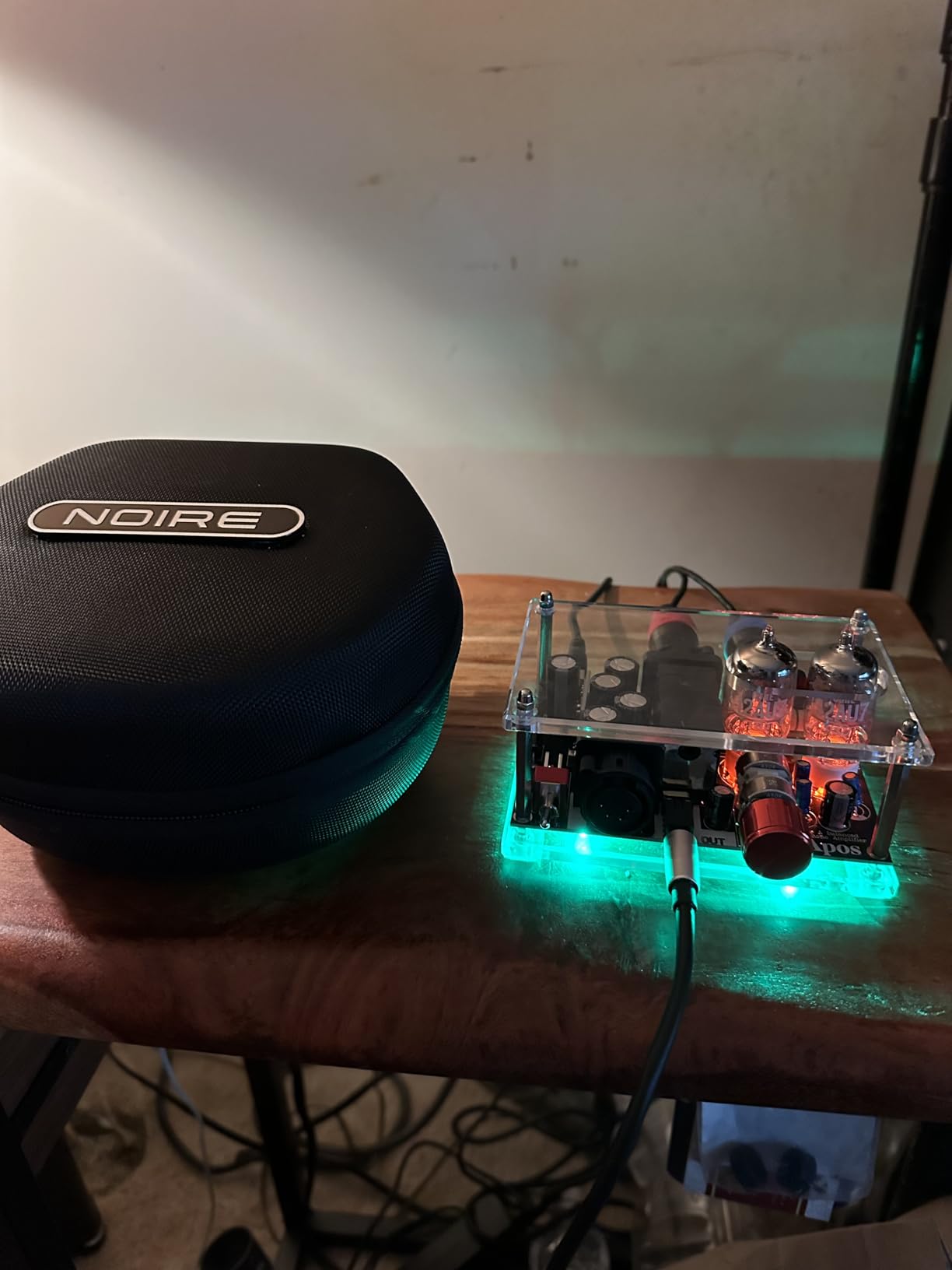
This is a hybrid design, and that is the point. Vacuum tubes handle the voltage amplification stage while transistors handle current, which is the usual way to get tube voicing with modern current capability. Output is quoted at 1250mW, and the entire signal path is class A and fully balanced.
Balanced operation is real here rather than cosmetic. The inputs are balanced XLR, and the outputs are balanced 4-pin XLR and 4.4mm, so a balanced source reaches a balanced headphone without a single-ended conversion in the middle.
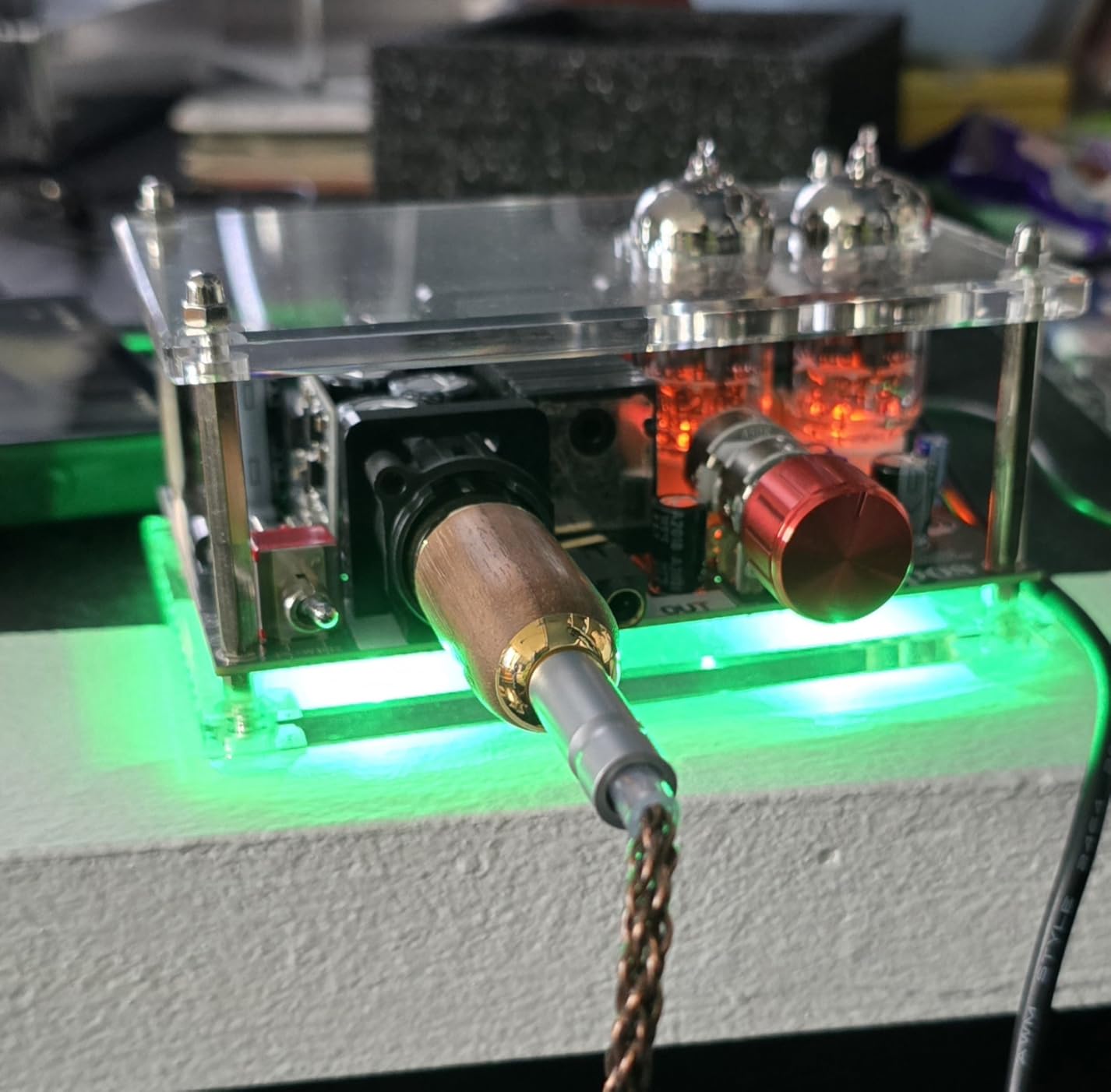
Matched 12AU7 tubes are supplied, and the amp accepts both 12AU7 and 6922, so tube rolling is straightforward. Owners who came for warmth sometimes find the default presentation more neutral than expected, and that is the single most repeated observation in the reviews.
At 0.95 kg it is the second-heaviest item here, and it carries a one-year manufacturer warranty. A USB power adapter is included alongside the manual, though users outside the US may need an adapter for the mains plug.
Who this amp suits
It suits someone with a balanced front end who has been told balanced operation is mostly marketing, and wants a demonstration of what it actually does. The XLR-to-balanced path makes it a natural match for a balanced DAC or a professional-style source.
It also suits planars and dynamic drivers that need real current but not extreme voltage, and listeners who enjoy swapping tubes as a hobby. Matched tubes in the box mean you can start listening immediately.
Who should skip it
If you are chasing the classic warm, soft tube sound, look elsewhere, because several owners describe this one as neutral rather than warm. It may also struggle with very high impedance designs, of the 470 ohm kind.
It needs 15 to 30 minutes of warm-up before it settles, the lighting under the tubes is something several owners consider unnecessary, and the owner base is far smaller than any other pick here, so long-term feedback is thinner.
10. Fender Mustang Micro Plus – Best for Guitar Practice and Recording
Fender Mustang Micro Plus Headphone Amplifier, Bluetooth Audio Streaming and 50 Amp and Effects Models, with 2-Year Warranty
- 25 amp and 25 effect models with 100 editable presets
- Bluetooth streaming with video sync for practice
- USB recording captures directly to a computer
- Rechargeable battery gives 4+ hours of playing
- Compact enough for bedroom practice and travel
- Built-in tuner and global EQ
- Digital modelling is not analogue tone
- 3.5mm output only so some headphones need adapters
- Battery life limited to 4+ hours
- Deep app editing has a learning curve
We include this one for honesty rather than fit. The Mustang Micro Plus is a guitar practice amplifier, not a hi-fi component, and it will not replace any of the nine above for music. It earns its place because a lot of home listening involves a guitar, and because it shows how a headphone amp category can be misunderstood from the outside.
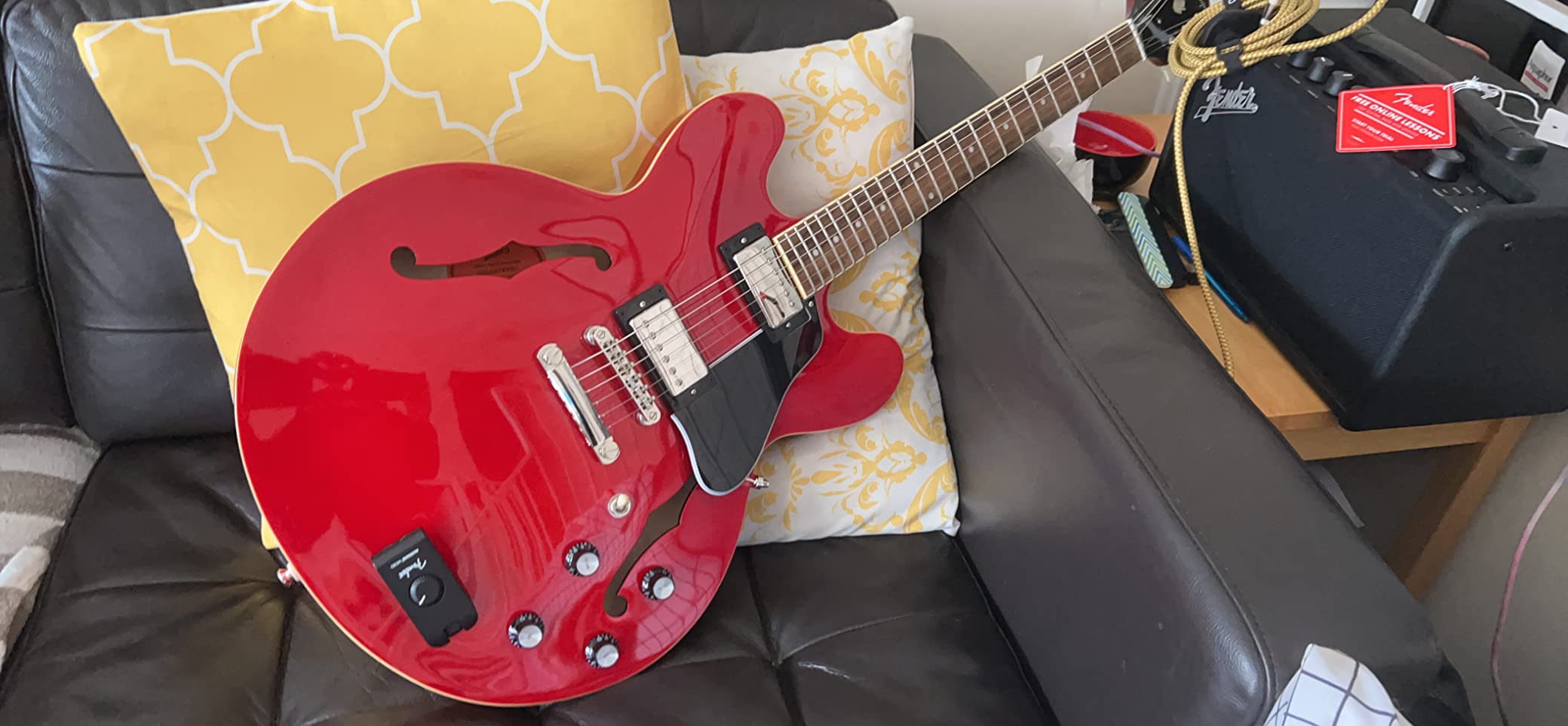
What it offers is a headphone output, Bluetooth streaming with video sync, and bi-directional USB recording so you can capture a direct signal to a computer or phone. The input is a rotating plug that fits most guitars and basses, and it powers from a rechargeable battery for 4+ hours.
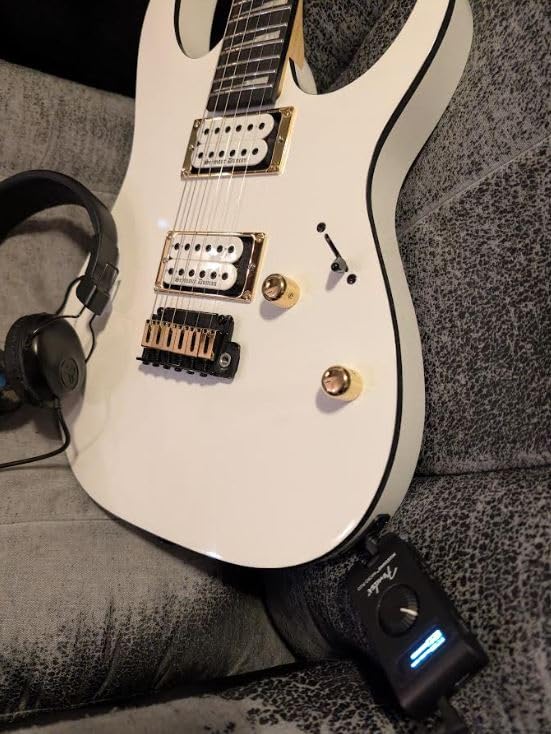
Inside there are 25 amp models, 25 effect models and 100 editable preset slots, with a built-in tuner and an adjustable global EQ. The Fender Tone app opens up the underlying parameters, which is where the flexibility lives, and the display shows what you have selected.
It weighs 7.04 ounces and measures about 6.8 by 6.3 by 2.2 inches, with a two-year limited warranty. That footprint is smaller than any desktop amp in this roundup, which is the one genuine home-listening advantage it has.
Who this amp suits
It suits guitarists practising at home who want to hear an amp without making noise, record ideas straight into a laptop, and jam along to backing tracks over Bluetooth. The preset count and the app support make it easy to move between tones in seconds.
It suits anyone in a small household, or a hotel room, where a practice amp is the whole setup. For that job it is very good, and the two-year warranty is the longest in the group.
Who should skip it
Skip it entirely for music. The tone is digital modelling, which means amp simulations and effects, not the sound signature of a dedicated audio amplifier, and no amount of preset browsing changes that.
The output is a single 3.5mm jack, so headphones with a 4.4mm balanced cable or a 1/4-inch plug need adapters. Battery life of 4+ hours suits practice rather than all-day listening, and deep parameter editing has a learning curve that some buyers find tedious.
How to Choose a Headphone Amplifier for Home Listening
Buy the amp last, not first. If your headphones are entry-level, an amp will not make them sound like a different product, and the money is better spent on the headphones or the source. A sensible sanity rule is that the amplifier should represent a meaningful but smaller share of your system cost than the headphones themselves, not more.
The other half of that rule is honesty about your sources. The single most common upgrade mistake we see is buying a demanding amplifier and driving it from the headphone jack of a laptop, which adds nothing because the bottleneck never moved. Our guide to other home gear choices such as home cable and equipment picks follows the same logic: fix the weakest link first.
Match the amp to your headphone impedance and sensitivity
Impedance is measured in ohms and describes how much the headphone resists the signal. Sensitivity, measured in dB per milliwatt, describes how loud it becomes for a given power. Both matter, and they matter together.
Roughly, easy-to-drive dynamic headphones and in-ear monitors sit between 16 and 32 ohm. Mid-range open-backs sit around 150 ohm. Demanding 300 ohm models, Grado, and most planar magnetics need real voltage and current. Check your headphone specification before anything else, then confirm the amp covers it.
It also helps to be clear about what you are trying to fix. If the goal is clearer dialogue on a television rather than better music, that is a different category of product, and our picks for hearing amplifiers for TV watching cover that need instead.
Read power ratings at the impedance you actually own
Power ratings quoted at an odd impedance are the most common source of confusion in this category. The Fosi K5 Pro shows you how to read a good specification sheet: 1000mW at 16 ohm, 500mW at 32 ohm, 300mW at 64 ohm, 150mW at 128 ohm and 80mW at 300 ohm.
When a maker quotes one number at 250 ohm or similar, treat it with care. Power into a higher impedance is always lower than power into a lower one for the same voltage, so a single headline figure tells you very little about how a 32 ohm headphone will perform.
Decide between a combo unit and an amp-only box
A DAC converts a digital signal into analogue. A headphone amplifier boosts that analogue signal and drives your headphones. A combo unit does both in one chassis, which is simpler and usually cheaper than two boxes.
If your sources are digital and you listen on one pair of headphones, a combo is the right answer and most of this roundup qualifies. If you already own a DAC, or a turntable, or an AV receiver, an amp-only box such as the Douk U3 avoids paying twice for the same function. A pure amp also tends to have fewer things to go wrong.
Balanced input is not balanced output
This is the most common misunderstanding in the category. A balanced input accepts a differential signal from your source. A balanced output sends a differential signal to your headphones. They are independent, and a balanced input does nothing for you if the headphone side is single-ended.
Two balanced headphone connectors are common. The 4.4mm Pentaconn is the smaller, more convenient option found on most modern desktop units. Balanced 4-pin and 6-pin XLR are larger and appear on bigger, rack-style and headphone-focused amplifiers.
The Apos Gremlin and the FiiO K13 R2R are the picks here with genuine balanced headphone paths, and the FiiO K11 and iFi Zen DAC V3 cover the common 4.4mm case.
Gain switching matters more than raw wattage
More power is not always better. Very sensitive in-ear monitors connected to a powerful amplifier can pick up its noise floor and produce hiss at low levels, so a gain switch that lets you drop the operating level is worth more than extra headroom. The iFi Zen DAC V3 with PowerMatch, and the FiiO K11 with multiple gain settings, both handle this well.
Look for a gain switch or a selectable output impedance setting rather than a single fixed gain. Matching the amplifier operating level to the headphone removes the need to use the volume control at an awkward position, which is also how volume control distortion is avoided.
Desk space, heat and warm-up time are real buying factors
For home listening, physical size deserves the same attention as specifications. The Douk U3 weighs about six ounces and the Fosi Q4 measures under four inches, so both fit beside a monitor. The FiiO K11 is roughly 9.65 by 7.8 by 2.32 inches, and the FiiO K13 R2R and Apos Gremlin are heavier units that need a real shelf.
Class A and tube designs run warm by design, so leave clearance for airflow. Tube units also need a warm-up period before they sound their best, listed at 5 to 10 minutes for the FiiO K13 R2R and 15 to 30 minutes for the Apos Gremlin. If the system is for background listening during the day rather than focused sessions, that is a factor worth weighing. Our notes on fitting gear into a home office alongside compact home equipment cover the same kind of space planning.
Use the amp as the hub of the whole system
Several picks here can sit in the middle of a system rather than at the end of a chain. The FiiO K13 R2R offers XLR and dual RCA line outputs, so it can feed a power amplifier with variable volume. The iFi Zen DAC V3 can output fixed-level signal for the same purpose.
The Fosi P3 takes active speakers and a subwoofer into a 2.1-channel system from one box, and the Douk P1 works as a preamplifier between a source and a power amplifier with a tone bypass for flat comparison. If you already own speakers, a hub-style unit saves buying a separate preamp.
What we deliberately left out
Gaming headsets and portable dongles do not belong in a home listening roundup, even though the same shopping results mix them together. Electrostatic headphone systems were also left out, since they need dedicated energisers and a different cost and space commitment entirely.
Streamers and Bluetooth receivers were left out as standalone picks, since they solve a source problem rather than a headphone-driving problem, and several units here already cover wireless. The Fender Mustang Micro Plus appears only because it is regularly mistaken for an audio headphone amplifier.
Frequently Asked Questions
Are headphone amplifiers worth it?
An amplifier earns its place when the built-in output in your device runs out of headroom. If your headphones are high-impedance, low-sensitivity, planar magnetic or Grado, a dedicated amp usually delivers deeper, more controlled bass, smoother treble and more volume without strain. If you listen at low volumes on easy-to-drive headphones from a laptop, the improvement is small and the money is better spent on the headphones. Match the amplifier to the impedance and sensitivity of your specific pair before buying.
What is the best headphone amplifier?
For most home setups the Fosi Audio Q4 is the strongest all-round choice, covering 16 to 200 ohm with USB, optical and coaxial inputs and both 3.5mm headphone and RCA outputs. If you want more power and a balanced path, the FiiO K11 reaches up to 1400mW for 8 to 350 ohm and adds 4.4mm balanced output. If you want the highest output available, the FiiO K13 R2R provides 2400mW with XLR and dual RCA line outputs.
Is a headphone amplifier the same as a DAC?
No, they do different jobs. A DAC converts a digital signal from a computer, streamer or game console into analogue audio. A headphone amplifier takes an analogue line-level signal, boosts it with low noise and low distortion, and drives your headphones. A DAC/headphone amp combo does both in one box, which is convenient if your sources are digital. If you already own a DAC, an amp-only box such as the Douk Audio U3 avoids paying for the same function twice.
Does a DAC really improve sound?
It depends entirely on what you are replacing. Moving from the headphone output of a laptop or a motherboard to a dedicated DAC usually improves the sound, because those outputs add noise and their power runs out on demanding headphones. Moving from a competent desktop DAC to another competent desktop DAC usually changes the presentation rather than the level of detail, and the difference between delta-sigma and R2R converters is largely about character. Judge a DAC on noise floor, supported sample rates and output flexibility rather than on the converter type alone.
How do I match an amp to my headphones?
Check three things. First, the impedance in ohms, which tells you how much the drivers resist the signal, and the sensitivity in dB per milliwatt, which tells you how loud they get for a given power. Second, confirm the amplifier publishes output at your impedance rather than at an inconvenient one, since power falls as impedance rises. Third, use a gain switch to match the amplifier operating level to the headphone so you are not cranking the volume control. A 300 ohm headphone or a low-sensitivity planar needs far more of both than a 32 ohm dynamic driver.
The Best Headphone Amplifiers for Home Listening in 2026
The Fosi Audio Q4 is our pick for most people, because it covers a wide impedance range, takes every digital source you are likely to own, and needs no setup. The FiiO K11 is the step up when you want a real balanced path and more power, and the Fosi K5 Pro is the value answer for a shared desk. The FiiO K13 R2R is where we land when a system has a balanced front end and demanding headphones.
For high-impedance models on a tight budget, the Douk Audio U3 is hard to argue with, and the two tube options here, the Douk P1 and the Fosi P3, suit people who want a preamplifier as much as a headphone amp. Whatever you pick, check the published wattage at your headphone’s impedance, set the gain properly, and spend on the headphones first.
If you want to keep up with the latest roundups and gear guides, bookmark our buying guides section and check back each 2026 for the updated list.