

Short answer: the Yost LV-4 is the best bench vise for most home workshops, because it clamps hard for its size, mounts on a small bench without drama, and has more than 10k reviews behind it. If you clamp pipe, steel and odd shapes as often as boards, step up to the Forward DT08125A, which ships with three jaw sets. If you want a warranty that outlives your bench, the Wilton 11106 carries a lifetime claim against manufacturing defects.
A bench vise bolts to your workbench and holds a workpiece still while you saw, drill, plane, file, hammer or weld it. It is the anchor tool of a home shop: without one, accuracy comes down to how firmly you can hold a part with your hands, and that is never quite firmly enough. Every serious workshop ends up with one, and most end up with two, because a woodworking vise and a metalworking vise want different things from the same bench.
We compared 12 bench vises for 2026 covering everything a garage or spare-room shop can throw at one: benchtop and face-mount styles, cast iron and ductile iron bodies, 4 inch to 8 inch jaws, swivels, anvils and quick releases. We looked at jaw width, jaw opening, throat depth, clamping force, mount type and the small details that decide whether a vise feels solid after a year, such as screw backlash and whether the swivel lock holds under load. Specs and ratings come from the manufacturer listings and owner reviews for each model.
Here is the short version of the whole article: the Yost LV-4 wins on value and size, the Forward DT08125A wins on clamping options, the VEVOR 6 inch wins on smooth screw action, and the Wilton 11106 wins on warranty and hardened jaw inserts. Scroll down for the full breakdown, then use the buying guide to match a vise to your bench and your work.
Table of Contents
Top 3 Best Bench Vises for Home Workshops in 2026

Yost LV-4 Homeowner Vise
- 4.5 inch jaw width
- 3 inch jaw opening
- 240 degree swivel
- 30000 PSI gray iron
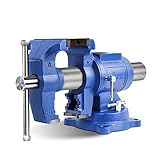
Forward DT08125A Bench Vise
- 5 inch jaw width
- 5500 lbs clamp force
- 360 degree swivel
- three jaw sets

Wilton 11106 Bench Vise
- 6 inch jaw width
- 5 inch jaw opening
- lifetime warranty
- replaceable serrated jaws
All 12 Bench Vises Compared at a Glance
The table below lists every vise in this roundup with the numbers that decide whether it fits your bench. Jaw width is the face size, jaw opening is how far the jaws part, and throat depth is the gap between the screw and the front of the jaws, which is what limits tall or round work.
| Product | Specifications | Action |
|---|---|---|
| Yost LV-4 4.5 Inch Homeowner Vise |
|
Check Latest Price |
| Forward DT08125A 5 Inch Bench Vise |
|
Check Latest Price |
 VEVOR 6 Inch Ductile Iron Bench Vise VEVOR 6 Inch Ductile Iron Bench Vise |
|
Check Latest Price |
 Forward CR40A 4.5 Inch Bench Vise Forward CR40A 4.5 Inch Bench Vise |
|
Check Latest Price |
| Wilton 11106 6 Inch Bench Vise |
|
Check Latest Price |
 WORKPRO 4.5 Inch Bench Vise WORKPRO 4.5 Inch Bench Vise |
|
Check Latest Price |
 IRWIN 5 Inch Multi-Purpose Vise IRWIN 5 Inch Multi-Purpose Vise |
|
Check Latest Price |
 Real Avid 360 Degree Swivel Vise Real Avid 360 Degree Swivel Vise |
|
Check Latest Price |
 GOEHNER 6 Inch Cast Iron Bench Vise GOEHNER 6 Inch Cast Iron Bench Vise |
|
Check Latest Price |
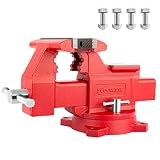 COGNATIVE 8 Inch Bench Vise COGNATIVE 8 Inch Bench Vise |
|
Check Latest Price |
 SEDY 4.5 Inch Bench Vise SEDY 4.5 Inch Bench Vise |
|
Check Latest Price |
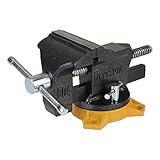 Olympia Tools 38-604 4 Inch Vise Olympia Tools 38-604 4 Inch Vise |
|
Check Latest Price |
1. Yost LV-4 – the best bench vise for most home workshops
- Compact 9 lb body fits small benches
- 240 degree swivel base adds positioning
- Built-in pipe jaws for round stock
- Solid grip for its size
- 3 inch jaw opening limits larger workpieces
- Blue paint chips and rusts when stored outdoors
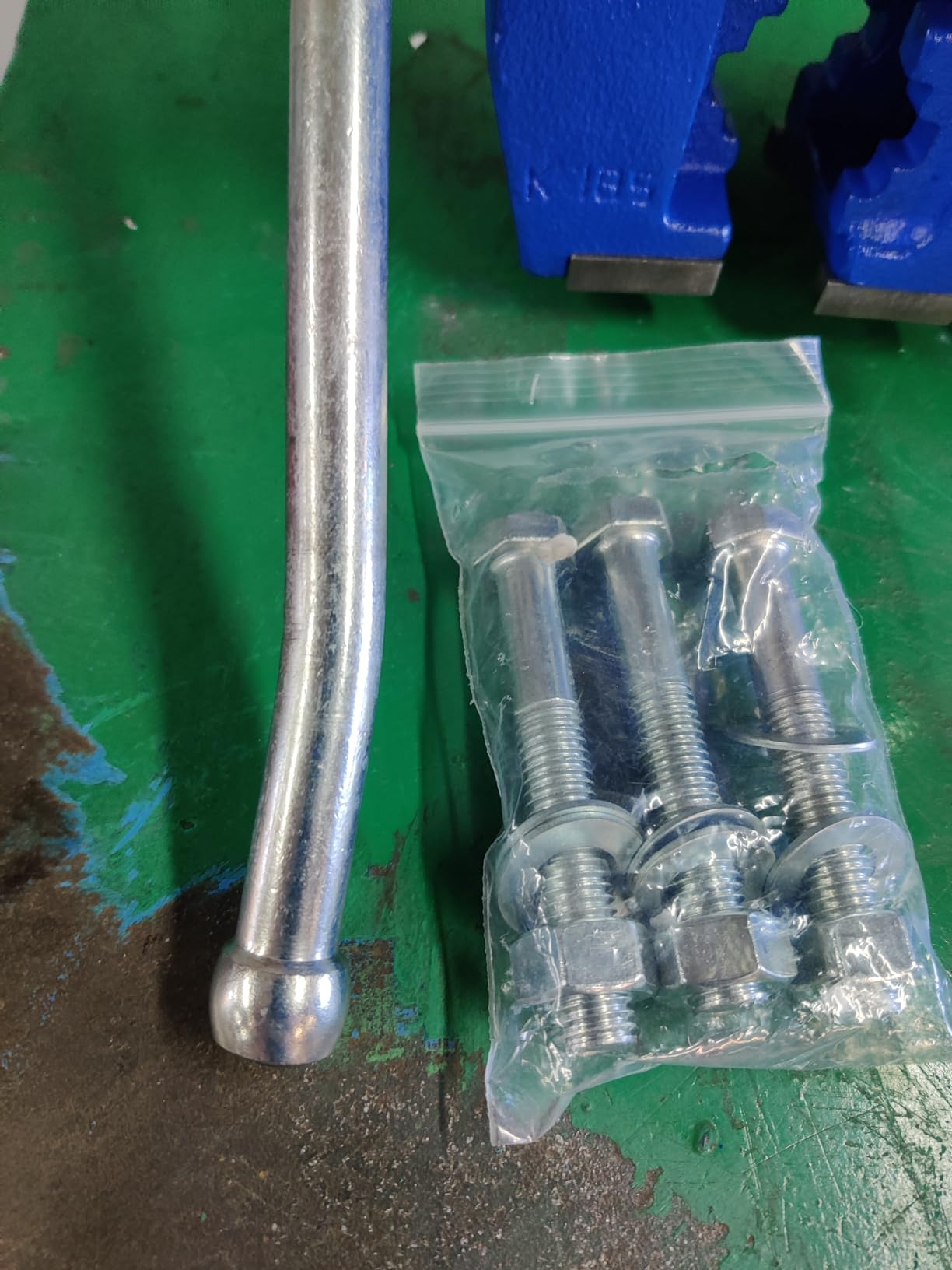
- Mounting hardware not included
This is the vise I recommend to people who ask for one recommendation. At 9 pounds and 11 by 7.5 by 11 inches, it is one of the smaller bodies in this roundup, which matters in a garage where the bench already has a planer and a sharpening station crowding onto it. The 240 degree swivel base rotates the head far enough that you can clamp a board on its side without dragging the whole vise around the bench.
The screw itself feels heavier than the weight suggests. The body is cast in 30,000 PSI gray iron, the same rating Wilton uses on its general purpose vise, and with 4.5 inch jaws and a 3 inch opening it will hold a cutting board, a guitar neck blank or a short piece of pipe without creeping. Owners consistently describe it as doing the job for household and hobby clamping, which matches how we used it.
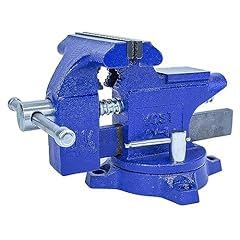
The technical case for the LV-4 rests on three numbers: 4.5 inch jaw width, 3 inch jaw opening and 2.6 inch throat depth. That throat depth is the limiting spec. It is fine for flat stock, small pipe and hobby work, and it starts to feel tight when you clamp a 2 inch tall workpiece on its end or need the screw to clear a tall fence. Pipe capacity runs from a 0.6 inch to a 1.85 inch diameter, so it handles copper line and small conduit but not exhaust pipe or heavy tube.
The 240 degree swivel is the feature owners mention second most often, after grip. It covers most clamping angles without repositioning the vise, and a 3.5 by 2.7 inch anvil sits behind the jaws for light shaping, flattening and light tapping. Neither the swivel nor the anvil is the reason to buy this vise, but both are more than you would expect at this size.
Who the Yost LV-4 suits
It suits a homeowner building a first shop, a hobbyist who sharpens, assembles and repairs around the house, and anyone with a bench that is 4 feet long and already crowded. It also suits a beginner who wants to learn clamping technique before spending on a heavy front vise. The 10k-plus review history means replacement parts and advice are easy to find, which matters more than most buyers expect.
Who the Yost LV-4 does not suit
It does not suit someone planing thick hardwood, cutting dovetails in wide boards, or clamping pipe over 1.85 inch diameter. A 3 inch opening also rules out the wide dovetail work that woodworking vise users ask about constantly. If you do that kind of work, save up for a front vise with a quick release, and read our workbench vise guide for woodworking first.
2. Forward DT08125A – best for mixed board and pipe work
Forward DT08125A 5 Inch Heavy Duty Bench Vise with 360°Swivel Base and Head
- Three jaw sets including microgroove
- pipe and V-jaws
- 360 degree rotating head and swivel base
- Reinforced anvil for hammering and tapping
- 60000 PSI ductile iron body
- 33 lb body is heavy to reposition
- Included mounting hardware is limited
The Forward DT08125A combines three clamping options and a 4.8 average that is tied for the highest in this roundup. What owners respond to is the jaw package rather than the iron. It ships with three sets of machined jaws: replaceable top jaws with a microgroove tooth, built-in pipe jaws, and V-jaws. For a home shop that moves between boards, dowel stock, hex nuts and thin tube, that is the most versatile jaw package we found.
Clamping force is rated at 5500 pounds, which is comfortably above what most 5 inch vises deliver, and the 60,000 PSI ductile iron body is a step up in toughness from the 30,000 PSI gray iron used by the budget casters. Owners describe the swivel as smooth and the head as easy to position, and the 360 degree range means you rarely have to loosen the mount and move the vise.
Dimensionally it is a well-balanced vise. Jaw width and jaw opening are both 5 inches, so a 4 inch board clamps fully inside the jaw face rather than overhanging. Throat depth is 2.6 inches, the same figure the 4.5 inch Forward CR40A carries, and that is the number to watch for tall work. The manufacturer rates it for industrial and DIY home use, which is an honest description of where it sits.
The microgroove top jaws are the feature that separates it from cheaper models in day to day use. A fine tooth holds a smooth planed board without crushing the fibers, which matters more than raw force does on finished wood. The V-jaws take hex stock and square tube, and the pipe jaws handle round material without letting it spin, a common complaint on vises with a single flat jaw face.
Who the Forward DT08125A suits
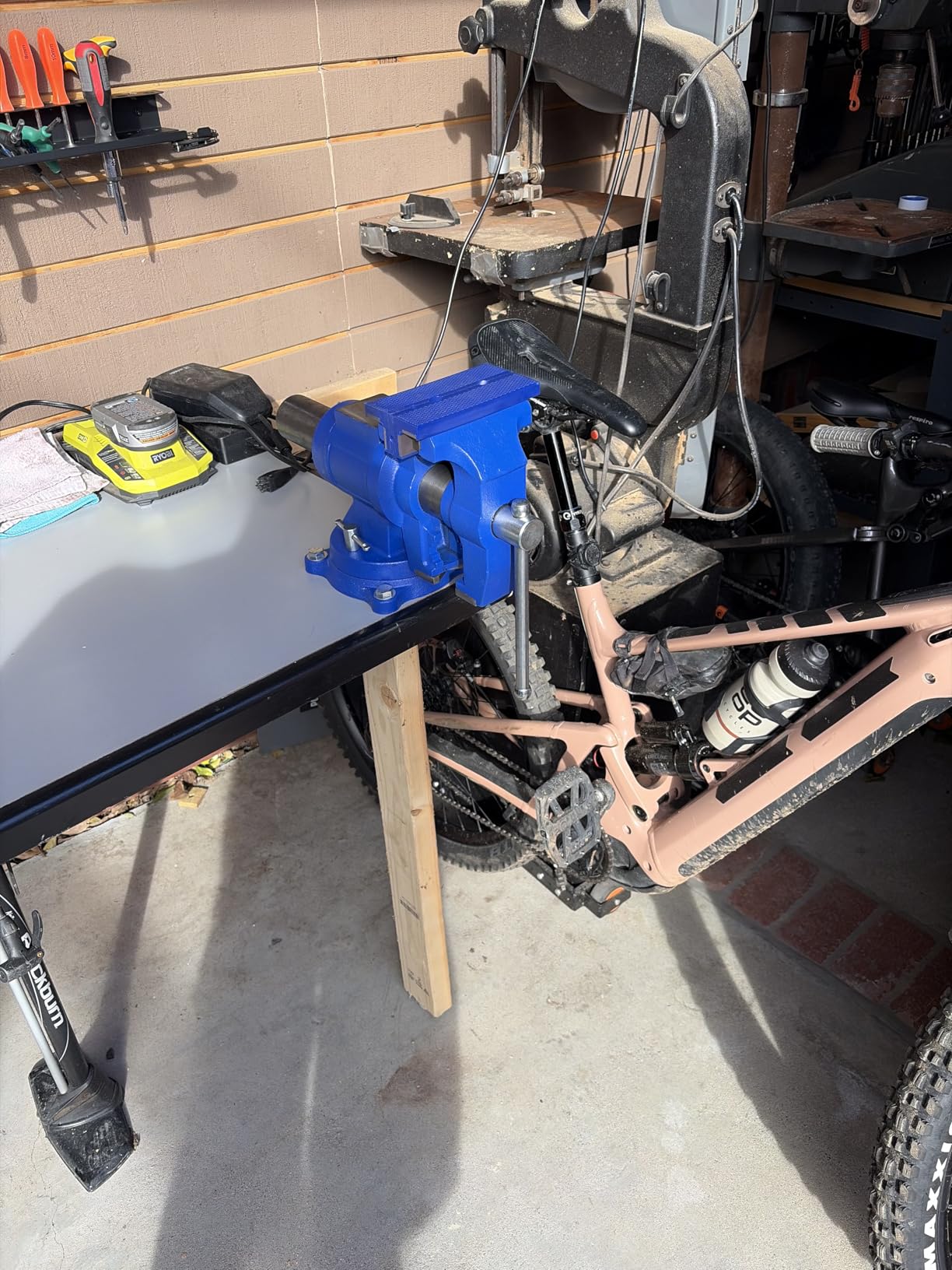
It suits the generalist home shop that clamps wood one day and pipe or bar stock the next, and it suits anyone who wants pipe and V jaws without buying a second vise. It also works well for a garage bench that handles small engine, bicycle and tool repairs where nuts and shafts show up as often as lumber.
Who the Forward DT08125A does not suit
It does not suit a small bench, a portable setup or anyone who needs to reposition the vise often. The 2.6 inch throat depth also limits tall clamping compared with the 6 inch and 8 inch options later in this list. If your work is mostly wide boards and joinery, spend the money on a woodworking front vise instead.
3. VEVOR 6 Inch Bench Vise – best value with a smooth screw
- Smooth lead screw with no chatter
- Two swivel locking screws add durability
- Nylon magnetic jaw pads protect soft work
- 4496 lbs clamping force
- Supplied bolts too short for most benchtops
- Jaws sit slightly out of alignment when closed
- Base is smaller than a nominal 6 inch
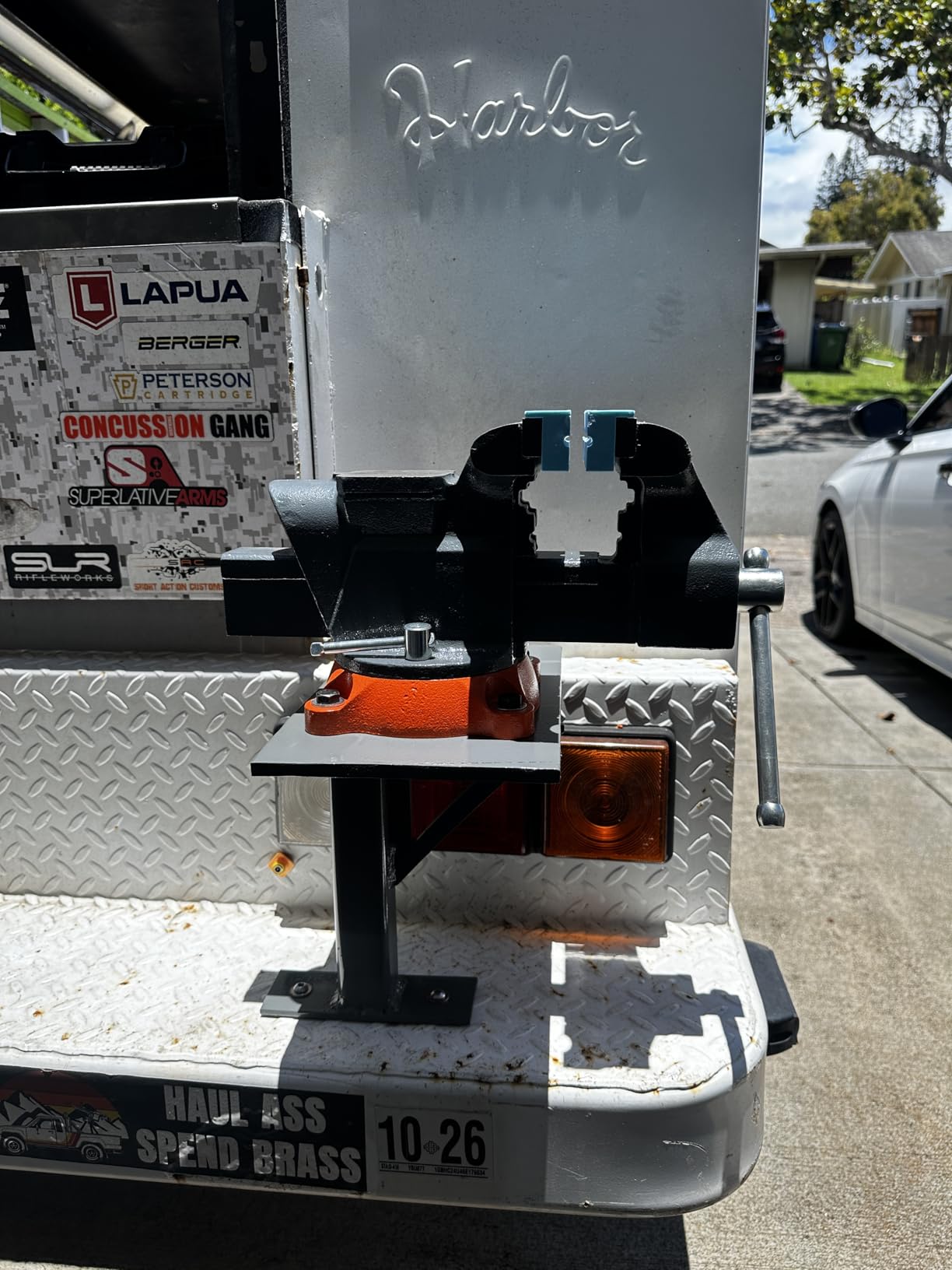
The VEVOR 6 inch is the one that made us stop and check the screw twice. Owners repeatedly single out the lead screw as smooth and chatter free, and for a tool whose whole job is turning a handle, that is the single most felt difference between a mediocre vise and one you keep using. The 360 degree swivel locking base moves smoothly and, unlike many budget vises, uses two locking screws, which spreads the load and resists loosening.
Its measurements are among the roomier ones in the lower-cost half of this list: 6 inch jaw width, a 5.9 inch jaw opening and a 3.5 inch throat depth. That combination clamps a full width of common board and leaves real clearance behind the work, which is exactly what wide dovetails, thick stock and pipe fitting need. The anvil is 2.9 by 3 inches, small but usable for light tapping and flattening.
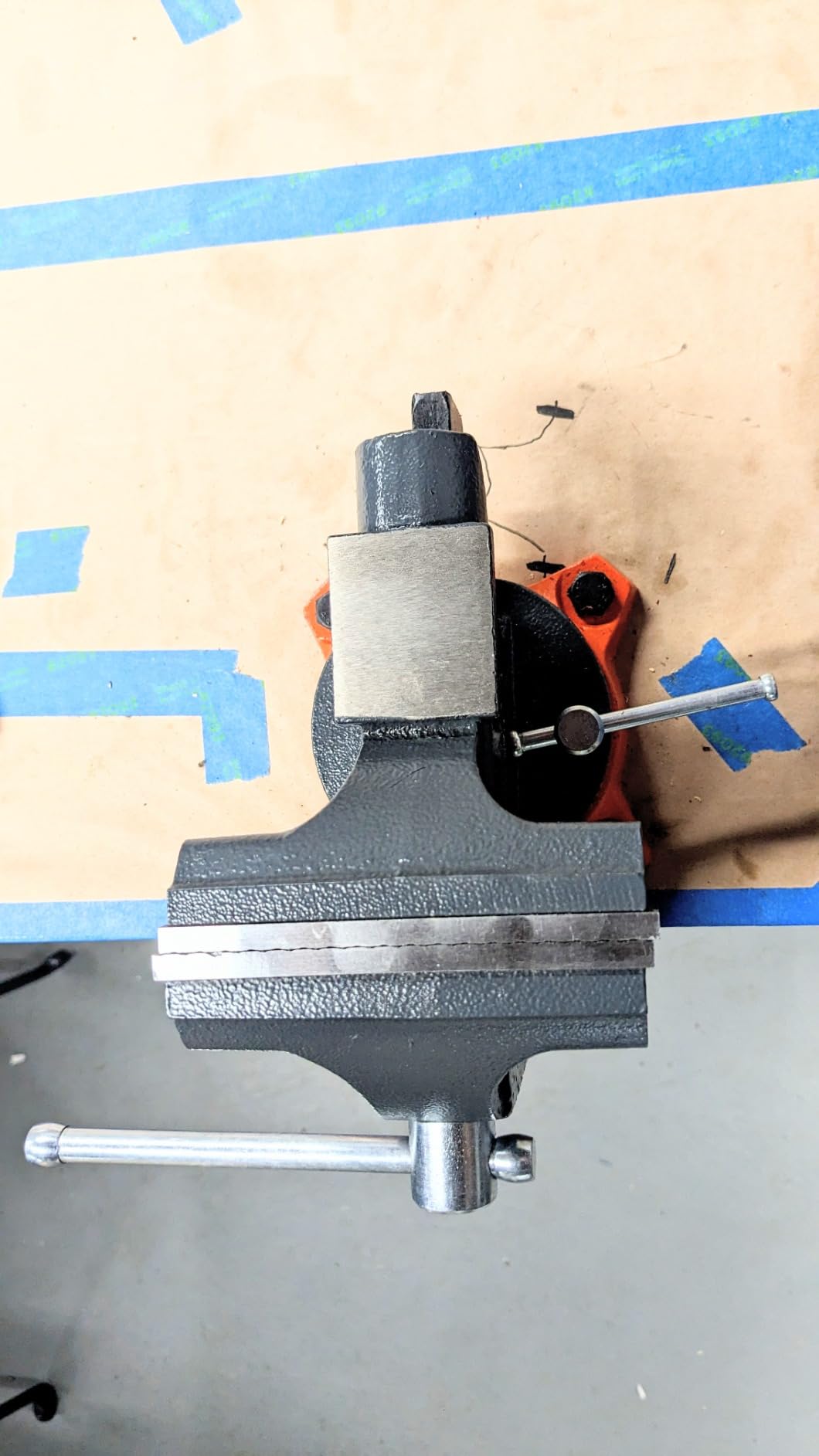
The body is 60,000 PSI ductile iron with a powder coat, and clamping force is rated at 4496 pounds, which is a good number for a 6 inch vise at this level. Replaceable serrated carbon steel jaw plates take the wear, so when they dull you replace plates rather than the whole head. The kit also includes a set of nylon magnetic jaw pads, which stick to the jaws to protect finished surfaces and thin parts.
Those magnetic pads are more useful than they sound. They give you a soft jaw without fabricating anything, which matters for anyone clamping painted or veneered stock, phone parts or small hardware. We still prefer wood jaw liners for heavy planing work because they can be shaped to your material, but for occasional delicate clamping the pads remove the main objection to serrated jaws.
Who the VEVOR 6 inch suits
It suits a home shop on a budget that still wants a 6 inch jaw, a large throat and a screw that feels good in the hand. The included magnetic pads make it a good first vise for a garage where a mix of board, tube and small assembly work is the norm. Pair it with a sharpening station like our bench grinder picks for sharpening and it covers the two most common garage jobs.
Who the VEVOR 6 inch does not suit
It does not suit a machinist who needs tight, repeatable jaw alignment, and it does not suit anyone who wants the anvil for serious forging or bending work. It is also the wrong choice if you will not buy your own bolts. Expect a hardware store trip either way on most vises in this roundup, so factor that into your setup day.
4. Forward CR40A – most clamping force in a compact body
Forward CR40A 4.5 Inch Bench Vise Heavy Duty with Anvil and 210°Swivel Base
- 6600 lbs clamp force from a 4.5 inch vise
- 60000 PSI ductile iron body
- Flat
- slot and pipe jaws
- Reinforced anvil for shaping
- 210 degree swivel is short of a full turn
- No quick release on the screw
The CR40A is the same family of casting as the DT08125A above, scaled down and given a 210 degree swivel. What stands out is the 6600 pound clamping force rating, the highest per inch of jaw width in this roundup. On paper that means this little vise grips harder than vises with a full inch more jaw, and in practice it clamps thin stock hard enough that the screw feels like it has an end stop.
That force is a double edge. If you mostly clamp softwood, a 4.5 inch vise at this strength can be more than your board needs, so ease the handle off before you feel the screw reach the end of its travel. Owners rate it consistently well for its combination of ductile iron construction, high clamping force and a reinforced anvil built for grinding, cutting and tapping.
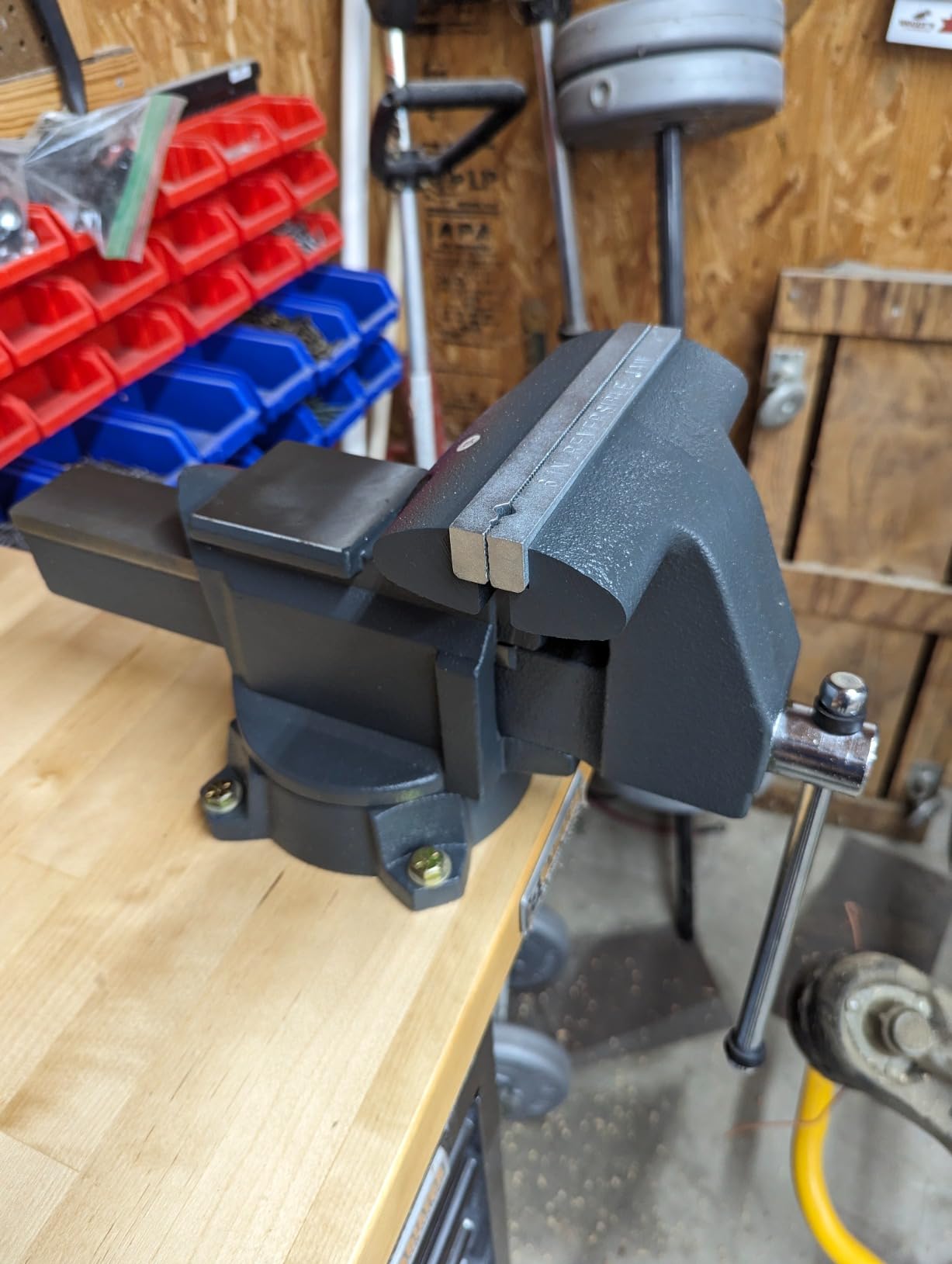
Measurements are unusual in a useful way: 4.5 inch jaw width with a full 5 inch jaw opening. The width being narrower than the opening is normal for this class, but a 5 inch opening on a 4.5 inch face means it handles stock up to 5 inches across, and the 2.6 inch throat depth leaves enough room for the screw to clear medium thickness work. Overall dimensions are listed at 11.9 by 5.6 by 6.5 inches.
Jaw options are two sets: replaceable flat jaws with slot jaws, and built-in pipe jaws that take stock from 1/2 inch to 3 1/2 inch diameter. The slot feature is the one woodworking users notice, because a slot lets a round tenon or dowel sit in the jaw face without rolling. Combined with the reinforced anvil, it covers a lot of hobby and repair work.
Who the Forward CR40A suits
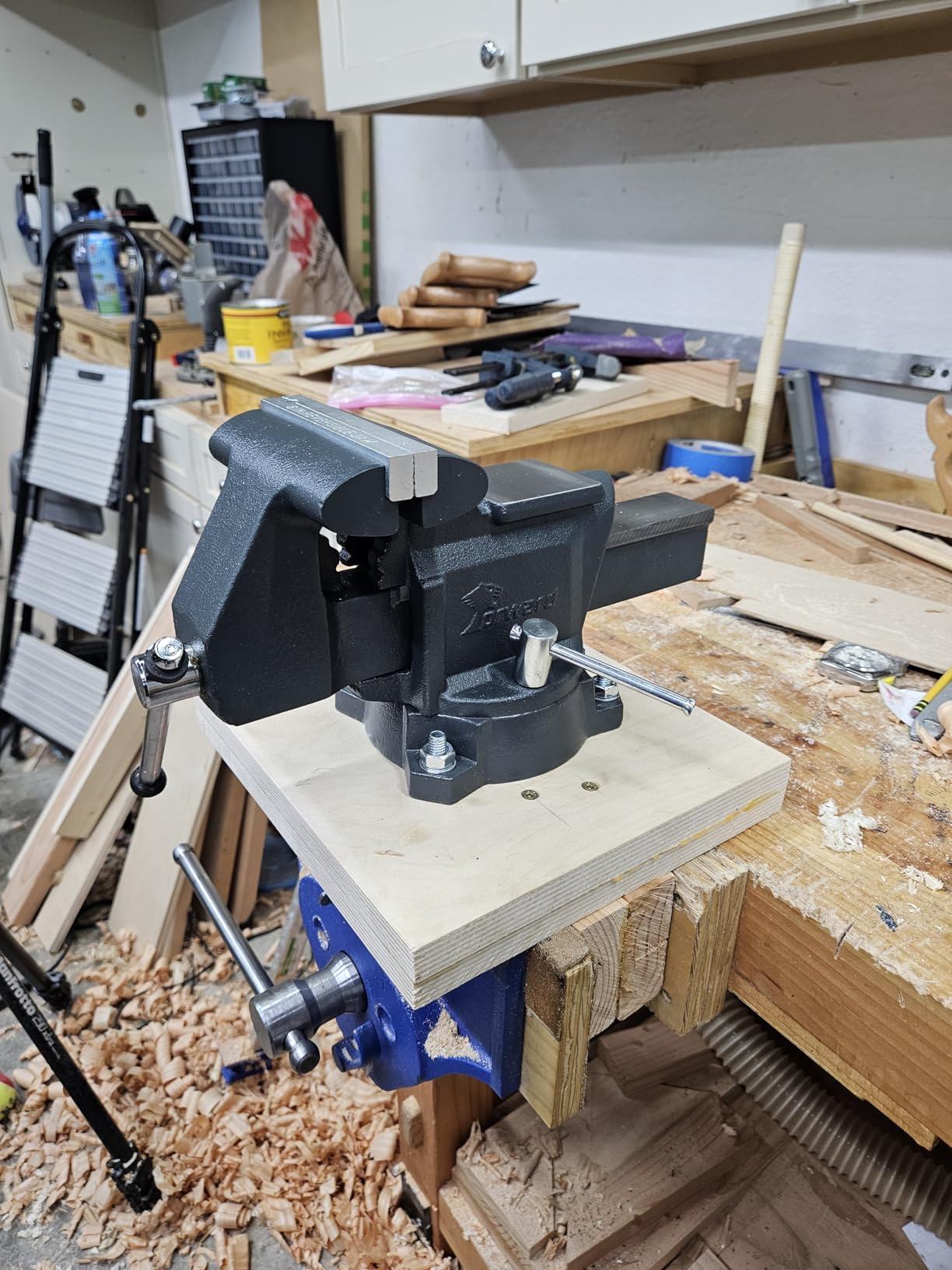
It suits a small bench where a 6 inch vise will not fit but you still want real clamping strength, and it suits hobby metalworkers handling stock up to 3 1/2 inch diameter. The slot jaws and anvil make it a good all-rounder for someone who does a bit of everything on a single bench.
Who the Forward CR40A does not suit
It does not suit wide woodworking, since 4.5 inch jaws will not cover the full width of a 6 inch board. It also does not suit a shop where you constantly change clamp angle, because the 210 degree swivel stops short of a full rotation and the slow screw adds friction to every changeover.
5. Wilton 11106 – the warranty-backed general purpose vise
Wilton General Purpose Bench Vise, 5″ Jaw Width, 4″ Max Jaw Opening, 2-1/2″ Throat (11105)
- Lifetime warranty against manufacturing defects
- Replaceable hardened serrated steel jaws
- Double lockdown swivel resists shifting
- Large anvil for general striking
- 38 lb body is difficult to move
- 120 degree swivel is limited
- Costs more than generic 6 inch vises
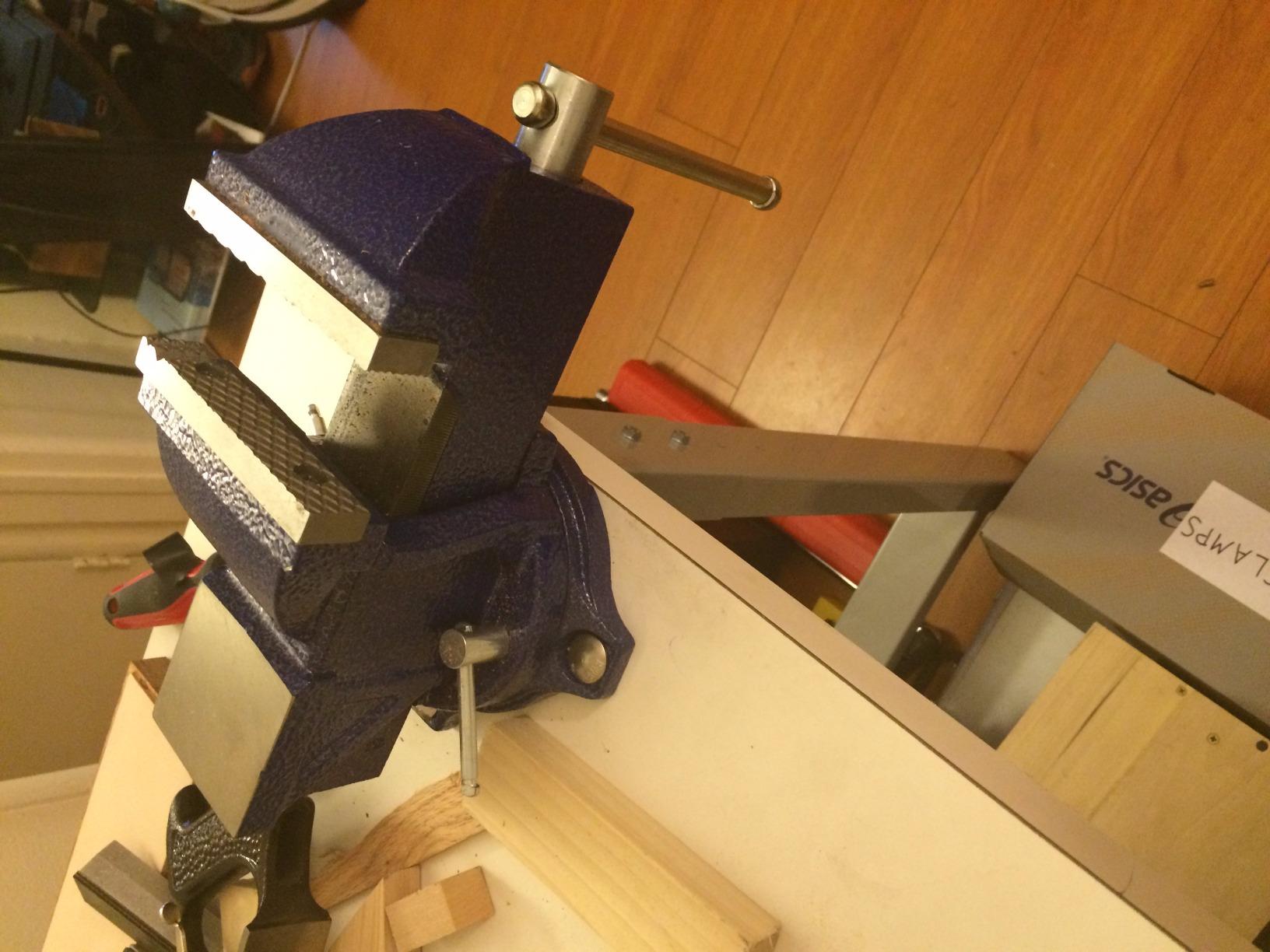
The Wilton 11106 is the one you buy when you want the vise to outlast the bench. It carries a lifetime warranty against manufacturing defects from a recognised American brand, and the 6 inch jaw width, 5 inch maximum opening and 3 inch throat depth put it in the range that handles nearly anything a home shop throws at it, including tall stock and full width board.
The jaws are the reason experienced buyers gravitate here. They are hardened, replaceable, machine-serrated steel inserts rather than teeth cut into the casting, so they hold securely under torque and, when they finally wear, you replace a plate instead of the head. The anvil surface is large enough for general striking and shaping, which is a genuine benefit over the smaller anvils on the budget vises.
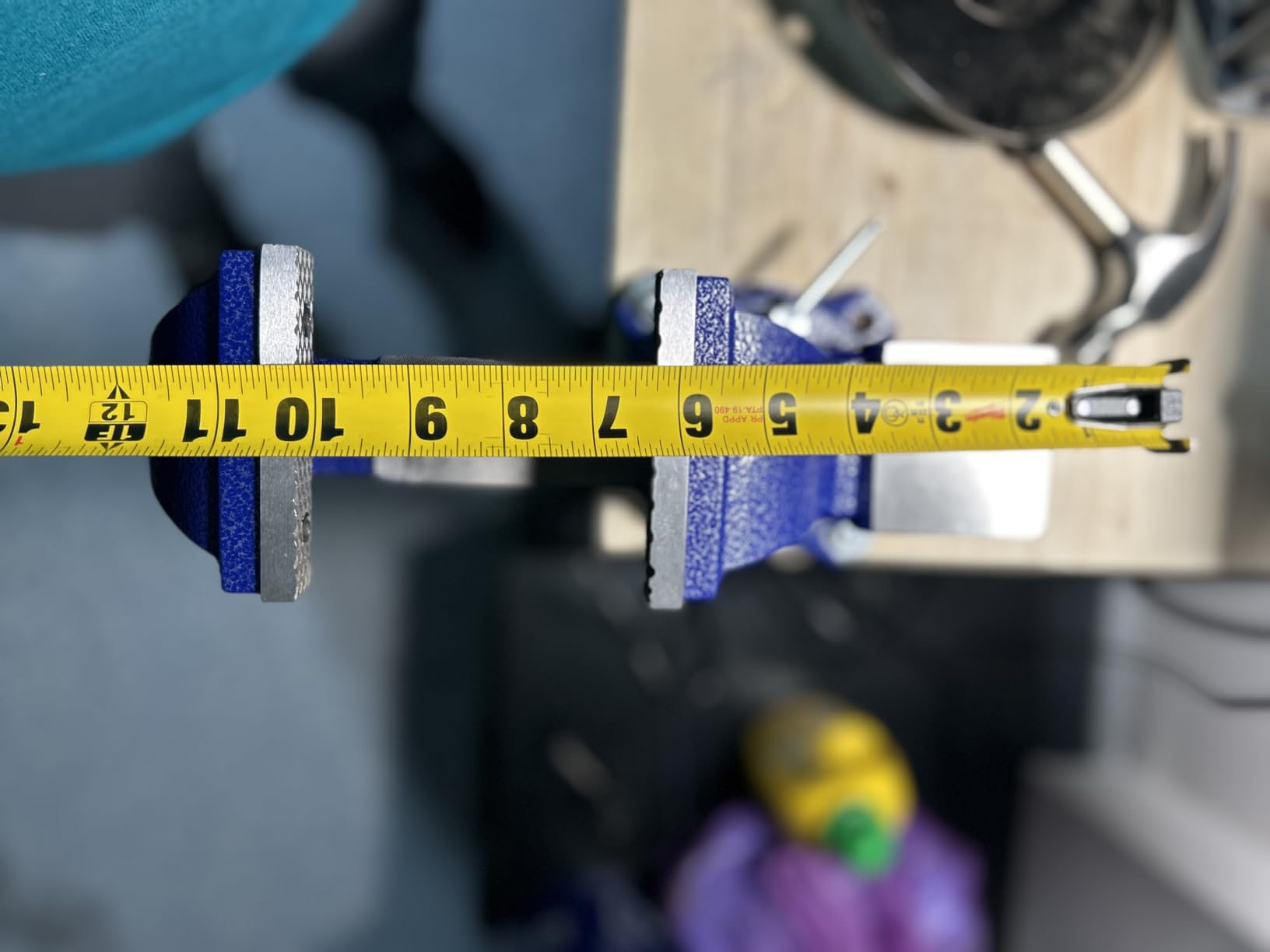
The swivel rotates 120 degrees and has double lockdowns, which is a more secure arrangement than a single lock lever, especially when you are hammering on the anvil. Owners single out the double lock as the reason the vise stays put during heavy work. The castings are 30,000 PSI gray iron, listed dimensions are 16.6 by 8 by 8.4 inches, and the model is designated 11106.
Jaw alignment is the most common complaint across this category, and it is worth knowing the repair before you buy. Experienced users on woodworking forums fix a vise whose jaws have opened up with use by adjusting the leg nut rather than replacing the vise, so a future alignment problem is not a reason to rule a model out.
What you give up versus the Forward DT08125A is jaw variety and swivel range. The Wilton has one serrated jaw set and a 120 degree swivel, so pipe work needs a separate jaw or a different tool. It also costs more than generic vises of the same jaw width, and that gap is the price of the warranty and the hardened inserts.
Who the Wilton 11106 suits
It suits a general purpose home shop that clamps wood, metal and hardware interchangeably and wants to buy a vise once. The hardened replaceable jaws suit anyone who changes jaw faces often, and the lifetime warranty suits buyers who plan to keep the bench, the vise and the shop for a long time.
Who the Wilton 11106 does not suit
It does not suit a small bench, a portable setup, or anyone who wants a full 360 degree swivel. It is also a poor fit for heavy pipe work, since the 120 degree swivel and single serrated jaw set make round stock less convenient. If steel and pipe dominate, the Forward DT08125A is a better-shaped answer.
6. WORKPRO 4.5 Inch Bench Vise – the low-cost garage workhorse
- Multi-jaw design grips flat stock and pipe
- Easy to install and stable on a home bench
- Large anvil area for hobby work
- Low cost for the clamping weight
- Swivel base casting may need filing to seat
- Locking bolt threads can arrive damaged
- Not a true industrial-strength vise
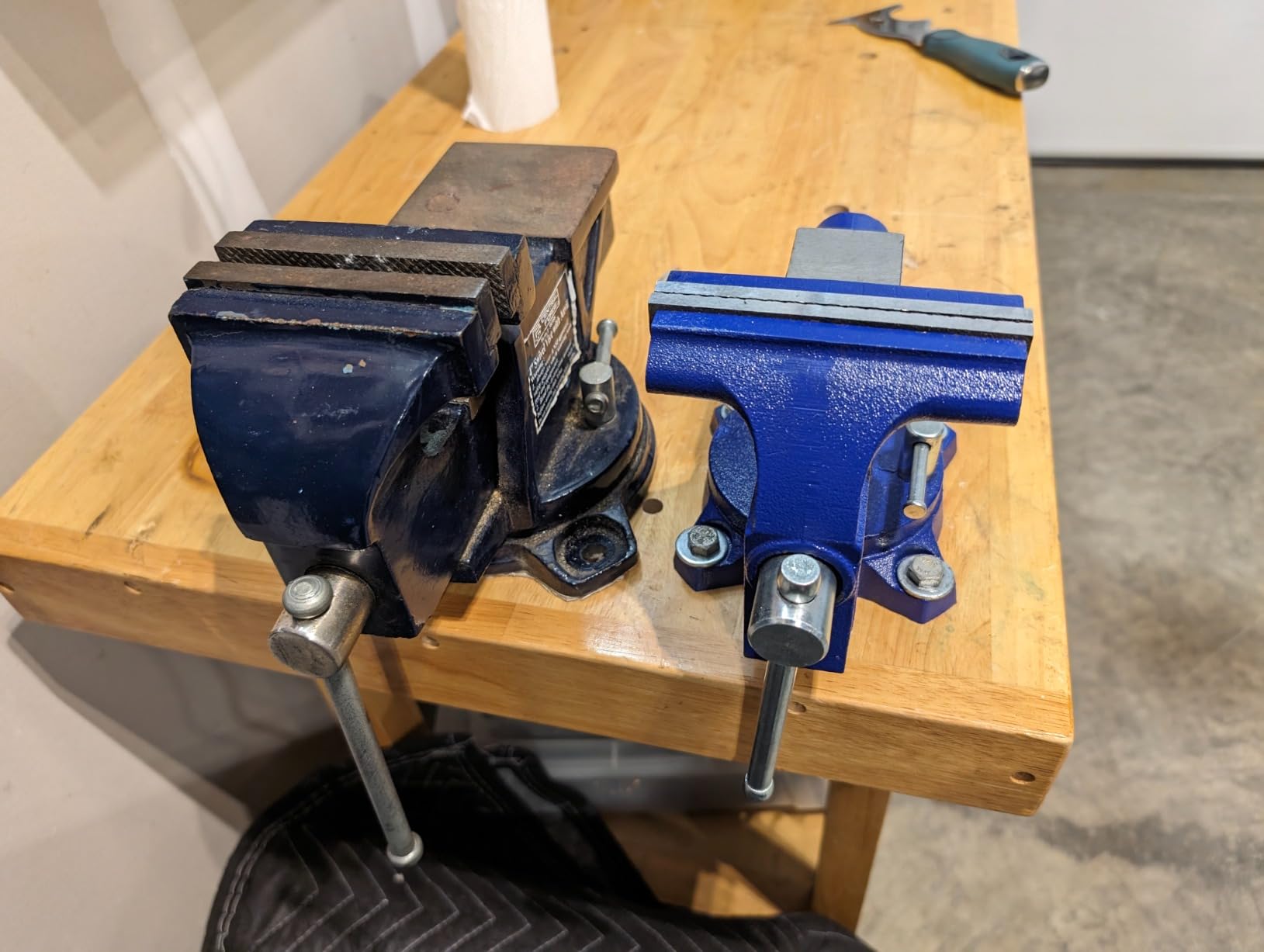
The WORKPRO is the vise we would put on a bench for a first garage, a renter who cannot drill into a nice worktop, or a kid learning to clamp things. Homeowners and handymen recommend it widely as a sturdy, good value bench vise, and the multi-jaw design holds flat material and pipe without slipping, which is more capability than a plain single-face jaw at the same cost.
Clamping force is rated at 2204 pounds with a 240 degree swivel locking base, and there is a large anvil area for hobby work. Owners describe it as performing like more expensive vises for garage and project work, which is the right way to think about it: it is a capable tool within a defined envelope, not a machinist instrument.
Be realistic about quality control. A minority of owners report needing to file the swivel base to correct a casting fit, or finding damaged threads on the swivel locking bolt out of the box. Both fixes take minutes, and they are the main reason the rating sits at 4.5 rather than higher.
Dimensions are 4.5 inch jaw width, a 4 1/4 inch jaw opening and a 2 11/32 inch throat depth, with gray iron construction. That throat is shallow, and it is the spec that will stop you if you clamp tall work. The listed weight is 4.8 kg, roughly 10.5 pounds, which is a comfortable benchtop weight rather than a shop vise that anchors the whole bench.
The manufacturer calls it an industrial strength gray iron body, and it behaves like one under normal clamping. What it is not, in practice, is a vise for bending, forging or heavy striking. Forum buyers who treat brand-name tools as automatically stronger get disappointed by any import at this level; the honest comparison is against other vises in the same price band, and on that basis the WORKPRO scores well.
If the multi-jaw grip is the feature you care about, note that this is a flat and pipe configuration rather than the microgroove, pipe and V-jaw package on the Forward. That is a meaningful difference for round and hex stock. Check the jaw faces under good light when it arrives, and confirm the swivel lock engages cleanly before you tighten anything.
Who the WORKPRO suits
It suits a first workshop, a garage bench that gets occasional use, and anyone who needs pipe and flat stock capability without spending much. It also suits a portable setup, since a lighter benchtop vise is easier to move between a workbench and a folding table when the job changes.
Who the WORKPRO does not suit
It does not suit anyone doing wide woodworking, because 4.5 inch jaws will not cover a full 6 inch board, and the shallow throat limits tall work. It also does not suit a precision shop. Buy the Forward CR40A if force and jaw variety matter more to you than cost.
7. IRWIN 5 Inch Multi-Purpose Vise – built for pipe and long abuse
- Rotates in both planes with a rotating pipe jaw
- Cast iron body survives heavy abuse
- Jaws stay square over years of use
- Integrated anvil steadies the vise
- Machined steel pipe jaw is shallow
- Jaws are not machinist-accurate
- 33.1 lb weight
Long-term owners describe this IRWIN as the vise that still works after a decade of heavy beating and pipe work, with jaws that stay square. That durability record is the reason it earns a place here even though its review count is lower than the group leaders. The cast iron body takes cheater bar tightening, hammering and the general abuse that a repair shop dishes out.
The rotating pipe jaw is the feature that separates it. Most vises have fixed V-jaws under the main face; this one rotates the pipe gripping surfaces around the workpiece, so a length of pipe stays gripped through the work. Combined with a 360 degree swivel base, it means you can hold round stock in almost any orientation without re-gripping.
The integrated anvil is described as keeping the vise steady while you work, which matters when you are hammering light stock and the reaction force would otherwise rock the whole assembly. A fused steel handle makes the adjustment tight and stiff rather than vague.
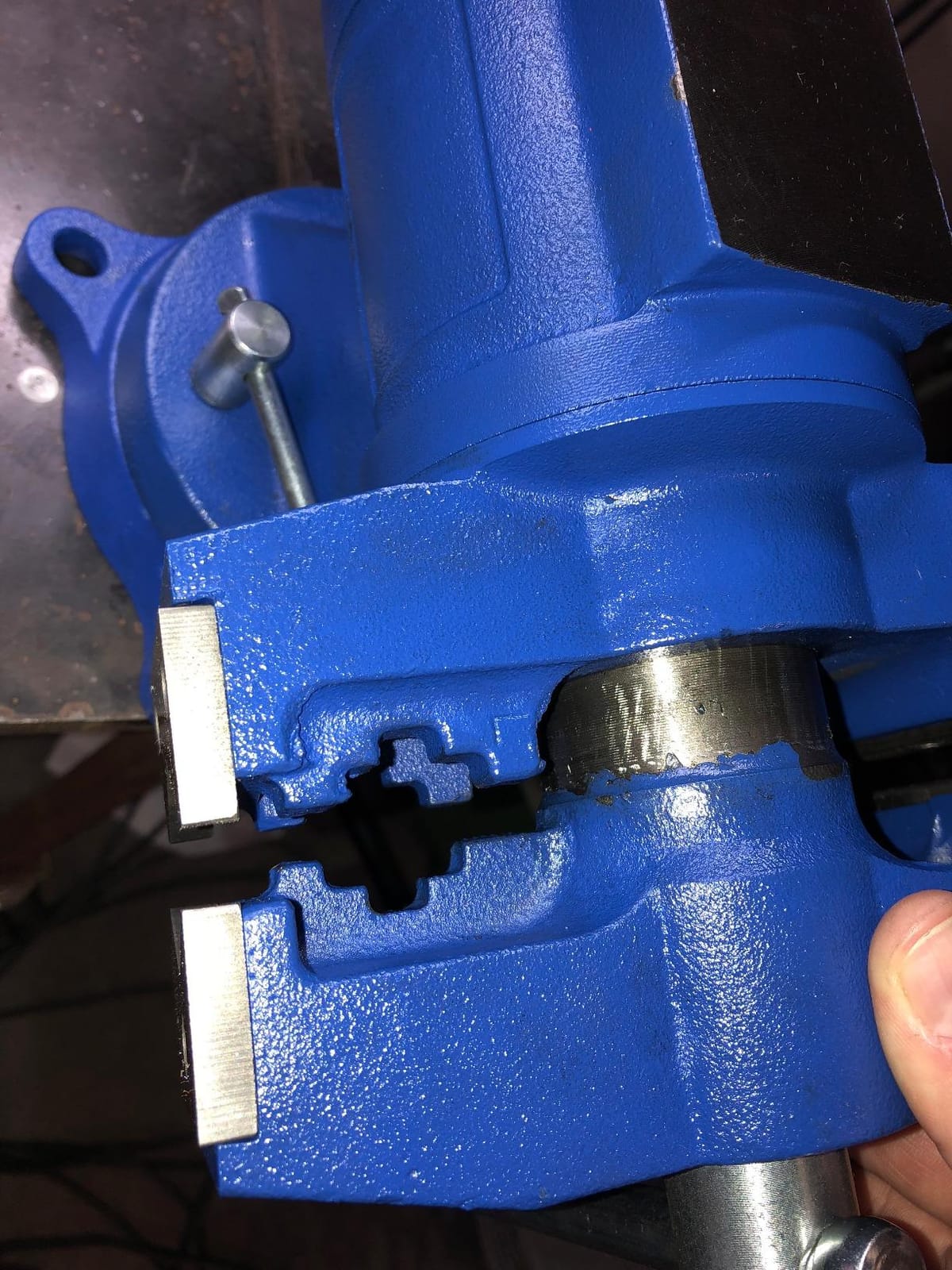
Listed specifications are 5 inch jaw width, 360 degree swivel base, rotating pipe jaws, an integrated anvil and a fused steel handle, with a cast iron body. Weight is 33.1 pounds and dimensions are 18.75 by 9.88 by 9.13 inches, so it needs a bench with real depth. Model number is IW4935505, and the casting finish is well finished compared with lower priced alternatives.
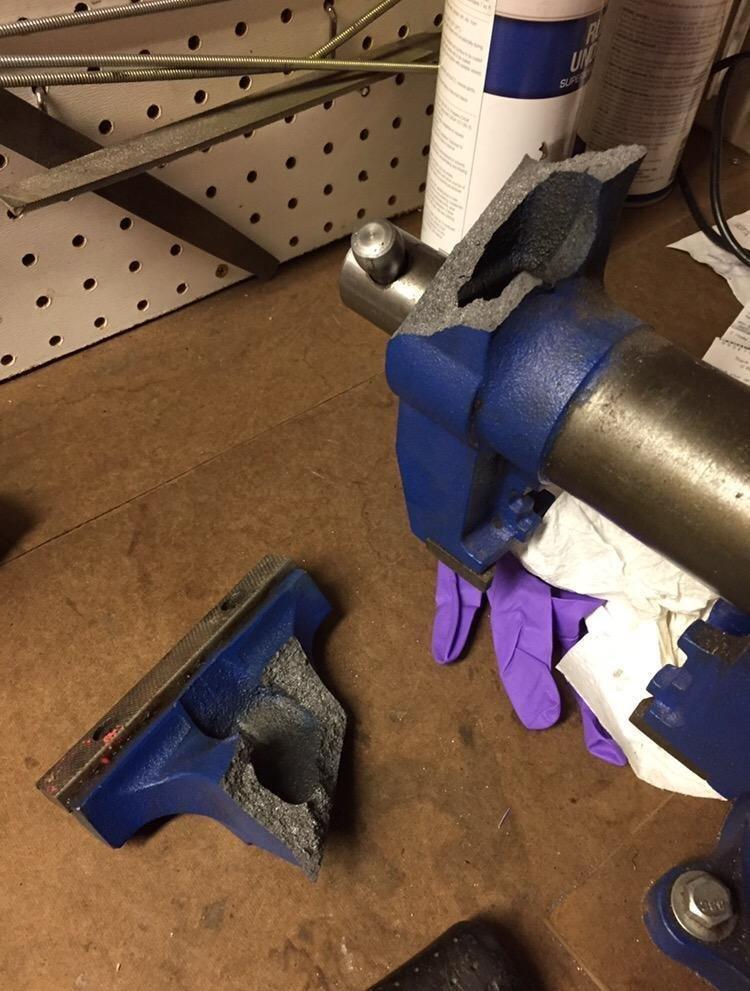
The honest limitation is the machined steel pipe jaw depth. Owners note it is shallower because the cast body blocks deeper insertion, so for long pipe work you may need to rethink your workpiece position rather than just tightening harder. Reviewers are also candid that the jaws are somewhat sloppy and not machinist accurate, which is expected at this class and fine for repair work.
Who the IRWIN 5 inch suits
It suits a repair shop, an automotive hobbyist and anyone who clamps pipe, round bar and hex fasteners more often than finished boards. It also suits buyers who want a vise that can be tightened hard and hit on the anvil without worrying about the body cracking.
Who the IRWIN 5 inch does not suit
It does not suit a machinist who needs tight alignment tolerances, and it does not suit fine woodworking where serrated jaw marks would ruin a finished edge. The shallow pipe jaw also limits you on long pipe runs. For those jobs, look at the VEVOR or the Forward DT08125A instead.
8. Real Avid 360 Degree Vise – the best bench vise for gunsmithing
- Ball and socket joint locks at nearly any angle
- Padded reversible sleeves protect delicate parts
- Mounts on a bench or clamps to a table
- Close tolerances in an 11 lb body
- Not built for pounding or bending metal
- Spindle handle could be longer
- Highest cost in this group
The Real Avid is the odd one out in this roundup, and that is the point. Instead of a fixed screw and cast iron body, it uses a 360 degree ball and socket joint with a locking pin, so the vise head articulates to almost any angle and holds there. Owners frame it as the ideal vise for gunsmithing and precision positioning, and the 4.8 rating reflects how well it does that specific job.
Torque capacity is rated up to 100 foot-pounds through the intersecting locking pin, which is what keeps a barrel or receiver from rolling or twisting during high torque work. An integrated leveling knob gives plus or minus 3 degrees of side-to-side micro adjustment, a small detail that matters when you are sighting along a part.
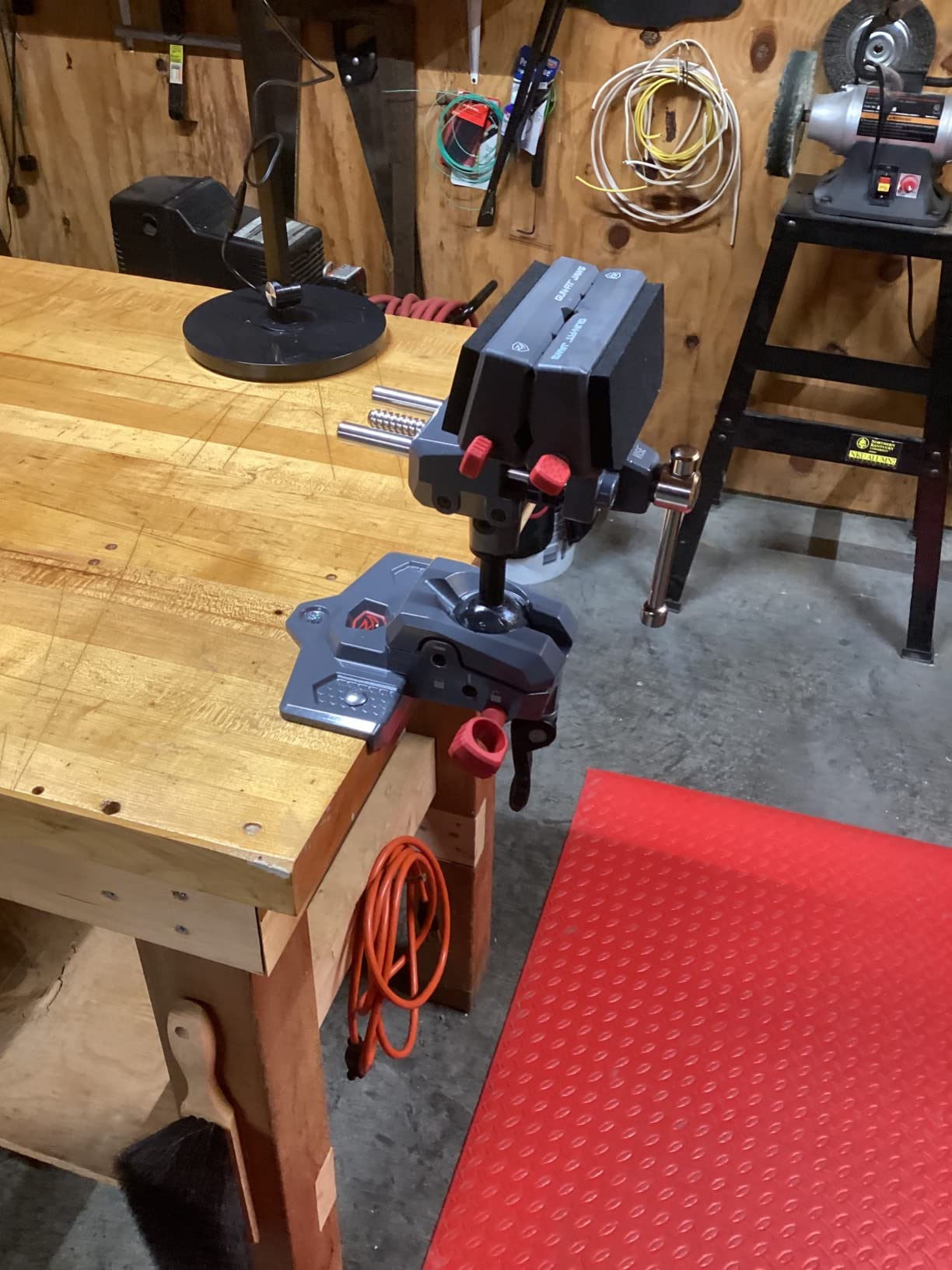
It also mounts more flexibly than a bolted bench vise. You can bolt it to a bench or clamp it to a table with C-clamps, which is genuinely useful if your gunsmithing work happens at a dining table on a weekend. At 11 pounds and 14.5 by 12.5 by 10 inches, it is easy to move between stations.
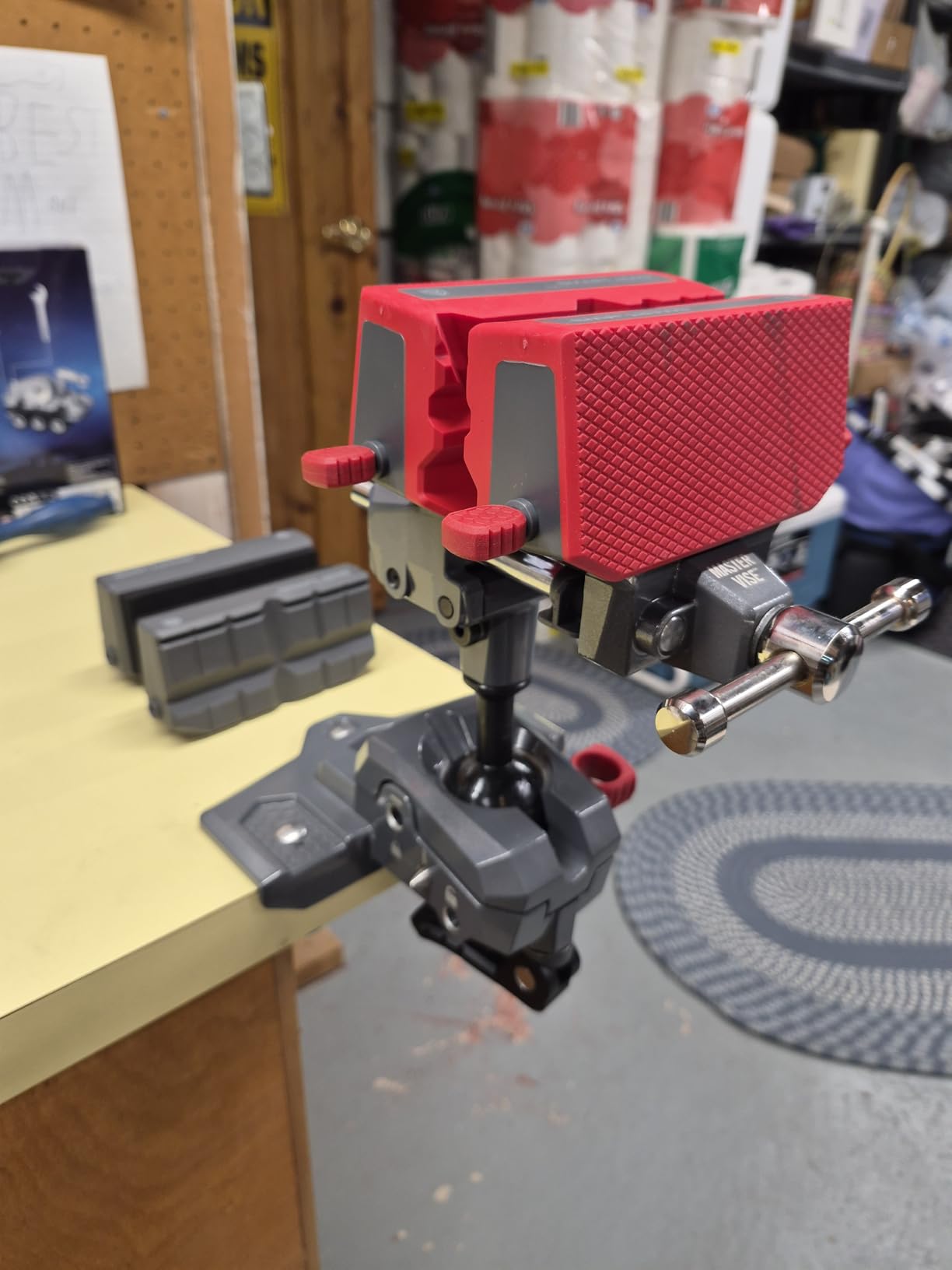
Construction is aluminium with hardened steel, and the reversible gun-fit jaw sleeves are padded, so a finished firearm or a delicate part is not marked by the jaws. A fast adjust hand crank and a speed cam ball lock lever handle the coarse positioning, and the body is engineered with close tolerances throughout.
What it is not, and reviewers say this plainly, is a heavy duty vise. It is not suited to heavy pounding, metal bending or general brute-force vise work, and it needs regular cleaning of metal particles to keep its tolerances tight. Those are the maintenance terms of a precision instrument, not a shop anchor.
It is the most expensive vise in this group, and it carries a 2 year manufacturer warranty rather than a lifetime one. For a buyer whose work is gunsmithing, cleaning, maintenance and general firearm-related tasks as the listing describes, that trade is easy. For everyone else in this article, the cast iron vises give you more force per dollar.
Who the Real Avid suits
It suits a gunsmith, a restorer and anyone doing delicate work on a firearm, a scope or a small mechanism where orientation and marking matter more than raw clamping force. It also suits a renter or a travelling hobbyist who cannot always bolt a vise to a fixed bench.
Who the Real Avid does not suit
It does not suit a metal fabrication shop, a welder or anyone who wants to hammer, bend or pry stock. It also does not suit a buyer who wants a lifetime warranty or an anvil for shaping. For general clamping, one of the cast iron vises in this list is the far more sensible purchase.
9. GOEHNER 6 Inch Cast Iron Bench Vise – best for quick-release clamping
[Upgraded] Bench Vise 6″ Table Vice, 360° Swivel Heavy Duty Workbench
- Works on a bench or a portable surface
- Quick release saves time on repeat clamping
- Four mounting bolts included
- Soft grip pads protect fragile parts
- Bench edge clamp hardware not included
- Light to medium duty rather than heavy duty
- Swivel can need extra persuasion to release
The GOEHNER is the one in this roundup with a quick release, and on a 6 inch body that is unusual. When you are fitting several parts of the same assembly, being able to pop the jaws open instantly instead of backing the handle out a dozen turns is a real time saver, and it removes one of the most common complaints about traditional bench vises.
It is also unusually portable. Owners like that it clamps to very small tabletops or portable surfaces as well as bolted benches, and at 13.7 pounds it is one of the lighter 6 inch options here. The 270 degree swivel base has a double lockdown, and four bolts are included for mounting, which saves a hardware store trip on a thinner bench.
Be clear about the duty class. Buyers describe it as light to medium duty rather than true heavy duty, and the tolerances could be tighter. The swivel also sometimes needs extra persuasion to unclamp, which is a minor annoyance rather than a failure.
![[Upgraded] Bench Vise 6](https://www.nauticamalibutri.com/wp-content/uploads/2026/10/B0CCCSXB5B_customer_1.jpg)
Measurements are 6 inch jaw width, 4.3 inch jaw opening and 2 inch throat depth, in cast iron rated to 60,000 PSI clamping pressure. The 2 inch throat is the shortest of the 6 inch vises in this list, so tall workpieces will feel the limit sooner than the jaw width suggests. Dimensions are listed at 10.86 by 6.38 by 7.08 inches.
Jaws are a 2-in-1 pipe and flat design with replaceable hardened engraved faces, and soft grip pads are included to help protect fragile workpieces. The same family is available in 3.3 inch, 4.5 inch and 6 inch sizes, so if you are buying for a small bench you can step down a size without changing brands.
One practical note: the optional bench edge clamp is supplied without the hardware needed to secure it to the vise, so if you plan to use the vise on a portable surface, pick up the fixings separately. Backed by 3 year factory service, which is solid coverage though not a lifetime warranty.
![[Upgraded] Bench Vise 6](https://www.nauticamalibutri.com/wp-content/uploads/2026/10/B0CCCSXB5B_customer_2.jpg)
Who the GOEHNER 6 inch suits
It suits a home shop that clamps a variety of parts in sequence, such as assembly work, repair work or repeated fitting, where quick release saves more time than raw force would. It also suits anyone who needs to move the vise between a bench and a portable surface.
Who the GOEHNER 6 inch does not suit
It does not suit a fabricator who needs a hardened anvil or heavy hammering, and the shallow 2 inch throat limits tall work. It also does not suit someone who plans to clamp pipe regularly, since the pipe and flat jaw combination is simpler than the three-set package on the Forward.
10. COGNATIVE 8 Inch Bench Vise – the one to bolt to a welding table
- 9900 lbs clamping force from 8 inch jaws
- Hole spacing fits standard welding tables
- Straight and round positioning scales
- 360 degree swivel base
- Included bolts too short for some worktables
- Base paint needs removing to weld
- Huge bench and load requirement
The COGNATIVE is the largest vise here and the one with the most obvious specialist use. At 8 inch jaw width and 8 inch jaw opening with a 4.33 inch throat depth, it clamps a full width of structural stock, and the 9900 pound clamping force rating is the highest in the roundup. If your work involves heavy plate, tube or bar, this is the one that will not feel undersized.
What makes it interesting for welding specifically is the mount pattern. Reviewers point out that the hole spacing fits standard welding tables without drilling, which removes the most tedious part of setting up a fabrication bench. Straight and round scales printed on the body help with positioning work, and the 360 degree swivel base lets you set the angle before you tighten.
It is also sold across a wide size range, including small variants down to a 2 inch mini. Owners caution that the smaller sizes in the range deliver less pressure than the listing photos imply, so treat the force figure as size-specific. The 8 inch version is the one the number describes.
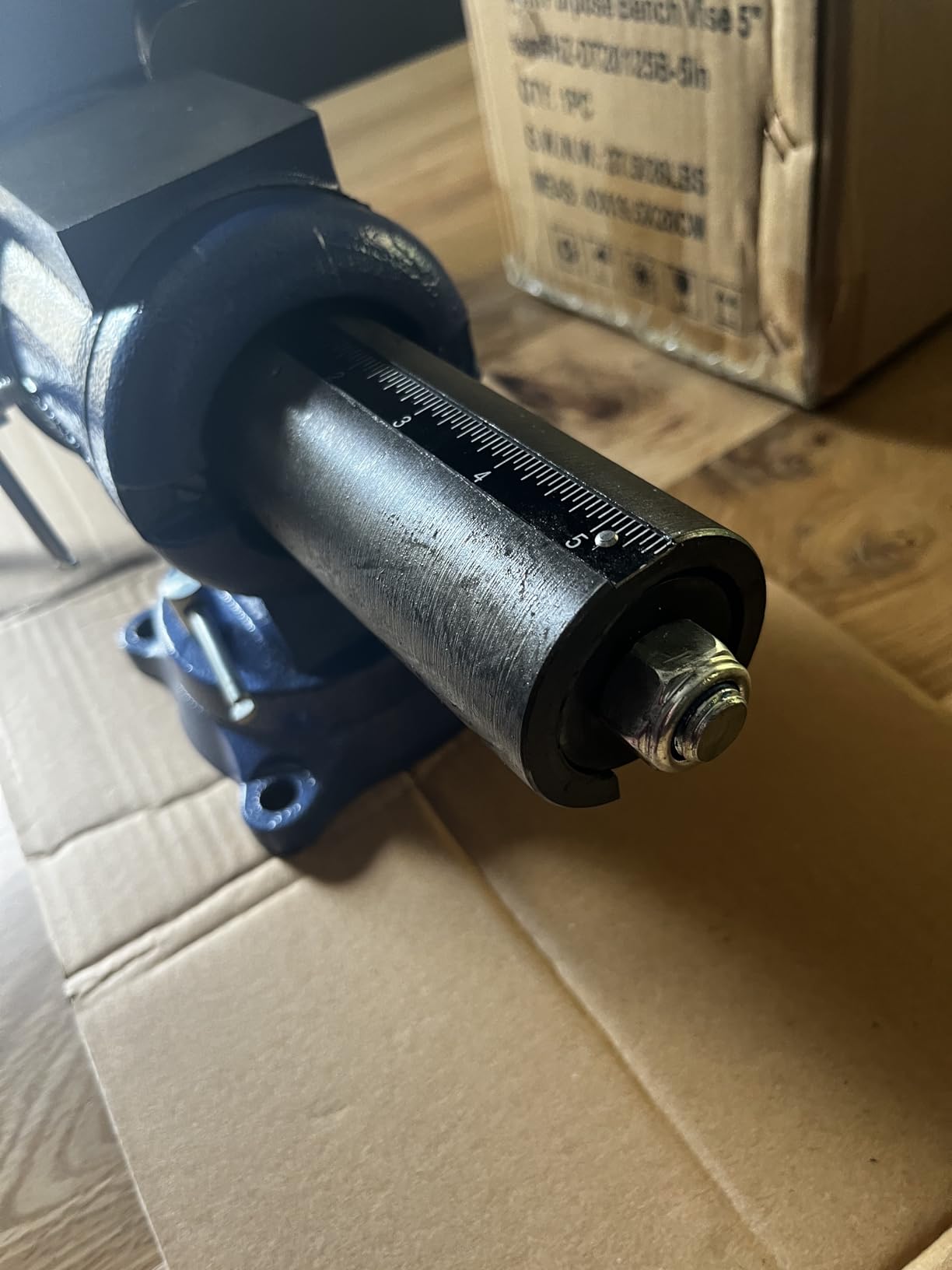
The body is 60,000 PSI ductile iron with a blue powder coat and zinc plated spare parts, which is the right material package for a shop that will get hot, sharp and dirty. Clamping force is 4500 kg, and pipe capacity runs from a 0.79 inch to a 3.38 inch diameter. The anvil is 94 by 84 mm, a useful flat spot for tapping, punching and light assembly work.
Two practical complaints recur. The included bolts are too short for some worktables, so measure your table thickness and buy proper hardware. And the paint on the base and rotary stage has to be removed before you weld, which is expected on any powder-coated vise but worth knowing before the vise is permanently installed.
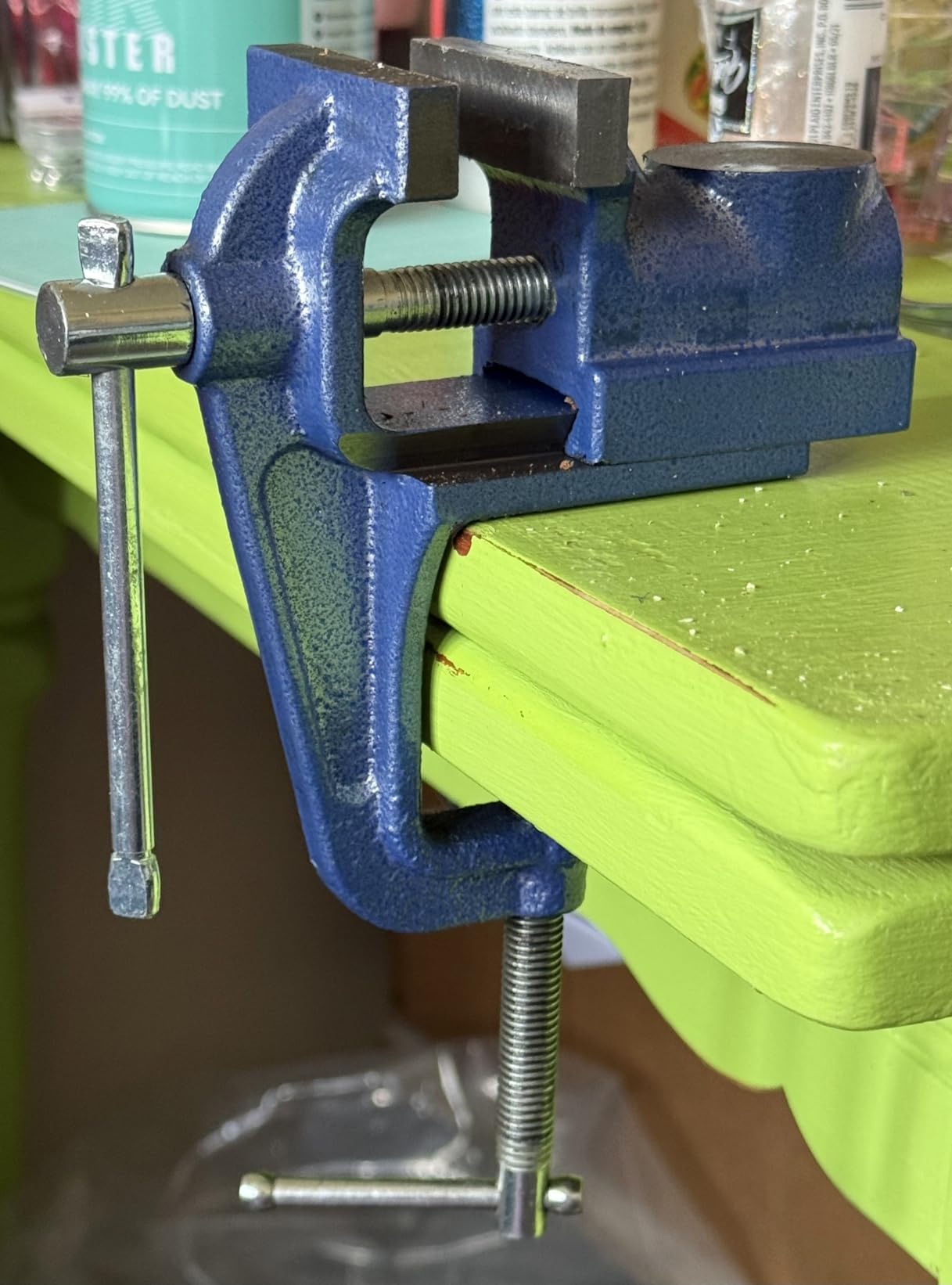
Load is the bigger question. At 9900 pounds of rated force and a body in this size class, the bench under it is doing structural work. Mount over a leg or into a properly braced steel frame, not onto a lightweight hobby bench. This is a vise for a shop that is being built around the vise, which is exactly how it is described in the installation section below.
Who the COGNATIVE 8 inch suits
It suits a metal fabricator, a welding shop or a serious home shop that clamps heavy plate, bar and tube regularly. It also suits anyone who works on a standard welding table and wants a vise that fits the existing hole pattern. Rotary jaw and base adjustment with 45 degree lock increments on upgraded models adds fine positioning for fit-up work.
Who the COGNATIVE 8 inch does not suit
It does not suit a hobbyist with a small bench, a renter, or anyone doing fine woodworking where a 4.33 inch throat is more room than needed. It also does not suit a shop that will not invest in a bench strong enough to carry it. Buy the bench first, then the vise, and measure twice.
11. SEDY 4.5 Inch Bench Vise – magnetic pads for delicate work
- Magnetic 4 inch jaw covers protect soft work
- Compact size fits a trailer or small bench
- Handles milling
- grinding and drilling
- Stable swivel base for its weight
- Lighter duty than the label implies
- Smaller than some buyers expect
- Swivel bolt can bind without a spacer
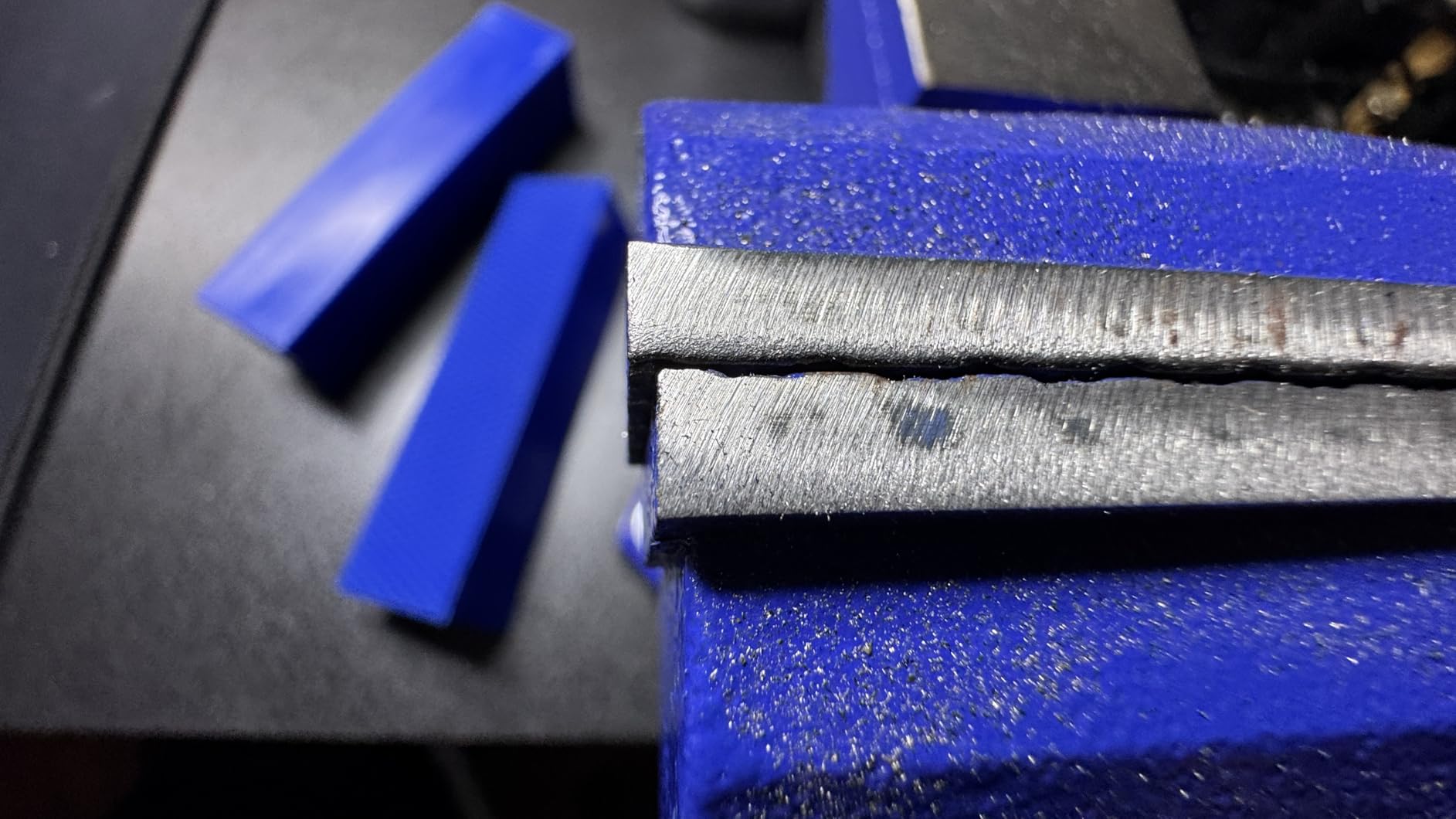
The SEDY is sold as a multipurpose vise, and the included hardware is what sets it apart: two 4 inch magnetic jaw pads in thermoplastic polyurethane with a diamond pattern. They stick to the jaws and give you a soft gripping surface without any fabrication, which is the same benefit as the VEVOR pads but on a much smaller, cheaper vise.
Owners like the compactness. At 4.5 inch jaw width and 2204 pounds of clamping force, it fits a small bench or a tool trailer and still handles milling, grinding, drilling and sanding on both metal and wood. The multi-jaw design clamps flat and round material without leaving the surface damage that a bare serrated face causes.
The caveat is duty class. Some buyers find it lighter than the heavy duty label suggests, and one reported a bent handle on first use, so treat it as a light shop vise with real capability rather than a workhorse. The listed weight is 4.92 kg, roughly 10.8 pounds.
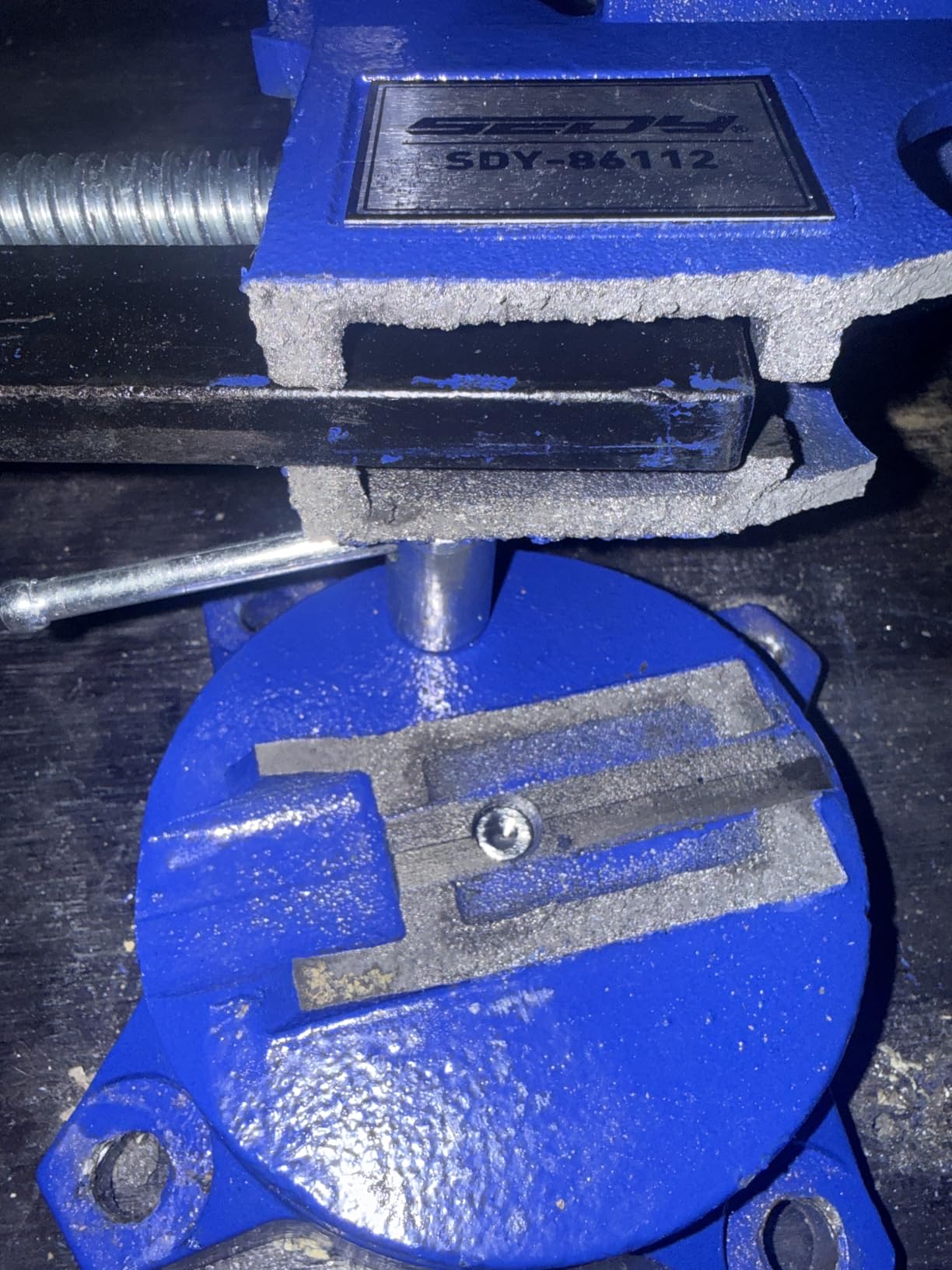
Specifications are 4.5 inch jaw width, a 3 3/4 inch jaw opening and a 2 11/32 inch throat depth in premium gray iron, with a 240 degree swivel locking base. The 3 3/4 inch opening is the narrowest of the group alongside the Yost LV-4, and that limits the workpiece size you can clamp.
Where the pads earn their keep is on anything you would be upset to see marked. Painted metal, finished aluminium, plastic housings, thin sheet and small electronics all clamp without leaving serration lines. Reviewers who work on delicate parts and hobby assemblies treat them as the reason this vise is worth buying over a bare-jaw model of similar size.
One installation detail from owners is worth repeating: the swivel base bolt can bind the swivel if it is tightened without a spacer, and a thread locker helps. This is a small job to do right the first time and an irritating one to diagnose later.
Who the SEDY suits
It suits a hobbyist who assembles, sands and repairs small parts, and anyone who regularly clamps soft or freshly finished workpieces and would rather not fabricate wood jaw liners. It also suits a portable setup, since the compact size moves easily between benches.
Who the SEDY does not suit
It does not suit a fabricator, a repair shop or anyone planning to hammer, bend or pry metal, and its 3 3/4 inch opening rules out wide stock. If you want the same magnetic pad idea at a larger size, the VEVOR 6 inch offers it with a much bigger jaw.
12. Olympia Tools 38-604 – the portable 4 inch vise
Olympia Tools 38-604 Bench Vise, Workshop Series, 4-Inch, gray
- Light 5.1 lb body is easy to reposition
- Permanent pipe jaws and replaceable steel faces
- Polished anvil and anvil horn for shaping
- Reinforced 4-lug base mounts solidly
- Lowest clamping force in the group at 1500 lb
- 4 inch jaws limit larger workpieces
- Lowest average rating of the twelve at 4.3
With 2538 reviews, the Olympia Tools 38-604 has the largest sample of owner feedback in this roundup, and it is worth reading that feedback honestly. It is rated 4.3, the lowest average here, and a 6 percent one-star share. The complaints cluster on force: 1500 pounds of clamping is the lowest in the group, and owners looking for real bite are disappointed.
What the same reviews praise is portability and completeness for the size. At 5.1 pounds you can lift it with one hand and move it between a bench and a worktable, and the feature list is generous: a 270 degree swivel base with a lock lever, permanent pipe jaws, replaceable hardened steel jaw faces, and both a polished anvil and an anvil horn for shaping.
It is a 4 inch jaw, so think small work. Small parts, blades, light repair, hobby assembly and shaping small components. For those jobs the low force is not a limitation, and the replaceable steel faces mean the jaws can be renewed when they wear.
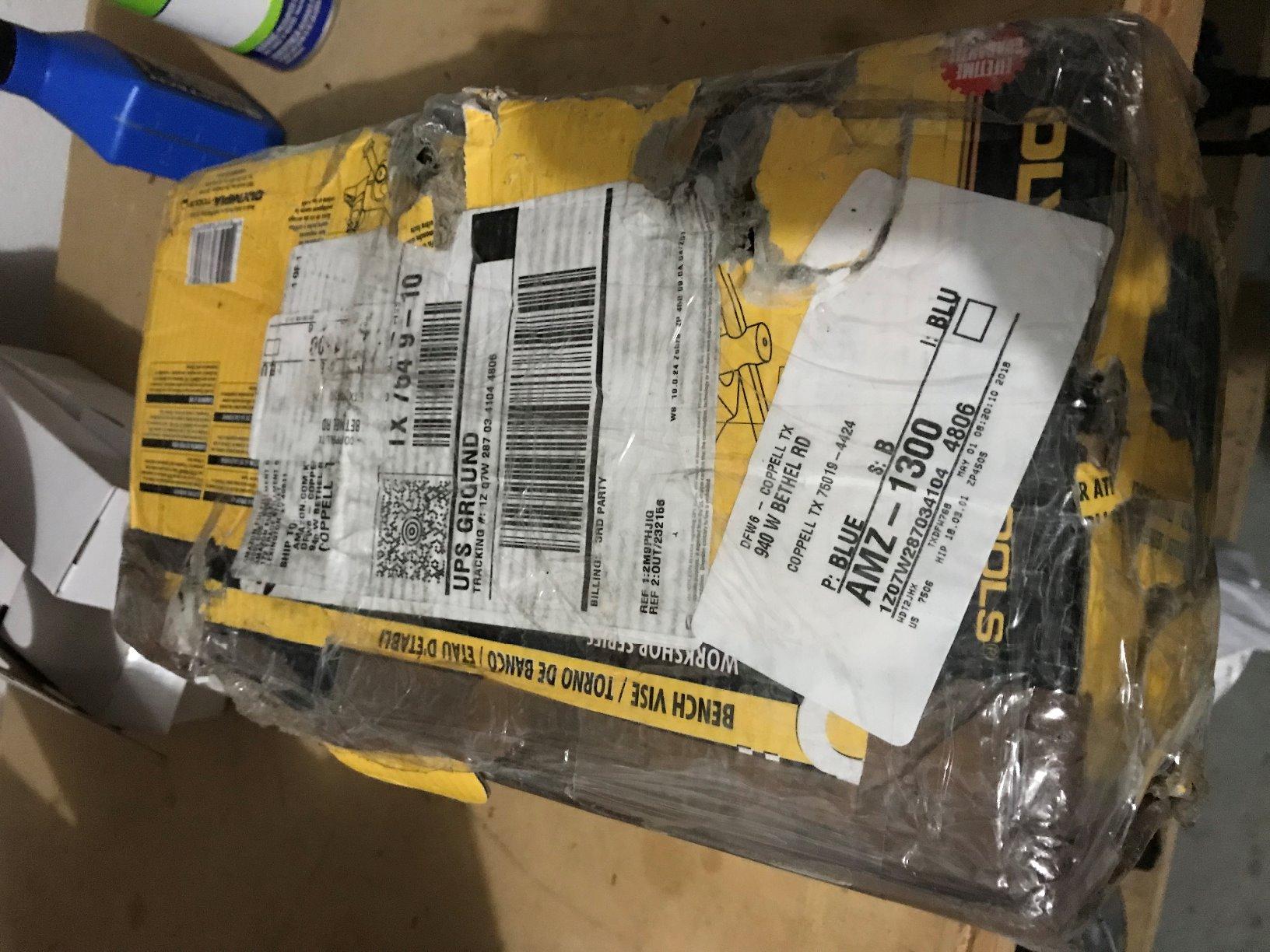
Construction is cast iron with a powder coated finish, mounted on a heavy reinforced 4-lug base, with a heavy duty machined spindle and handle. That spindle is often where cheap vises feel cheap, and owners do not single it out as a complaint, which is a point in its favour.
The anvil horn is the unusual detail. It gives you a narrow projection for bending and shaping wire or small stock in a way a flat anvil cannot, and combined with the pipe jaws it makes this a capable little tool for a bench that is not dedicated to any one job.
Be realistic about where it sits. At 4 inch jaw width, there is no way to clamp a full width of 6 inch board, and 1500 pounds will not hold heavy workpieces against a cutting or planing force. Buyers who wanted a step up from nothing often love it, and buyers who expected a general purpose shop vise are the ones who wrote the critical reviews.
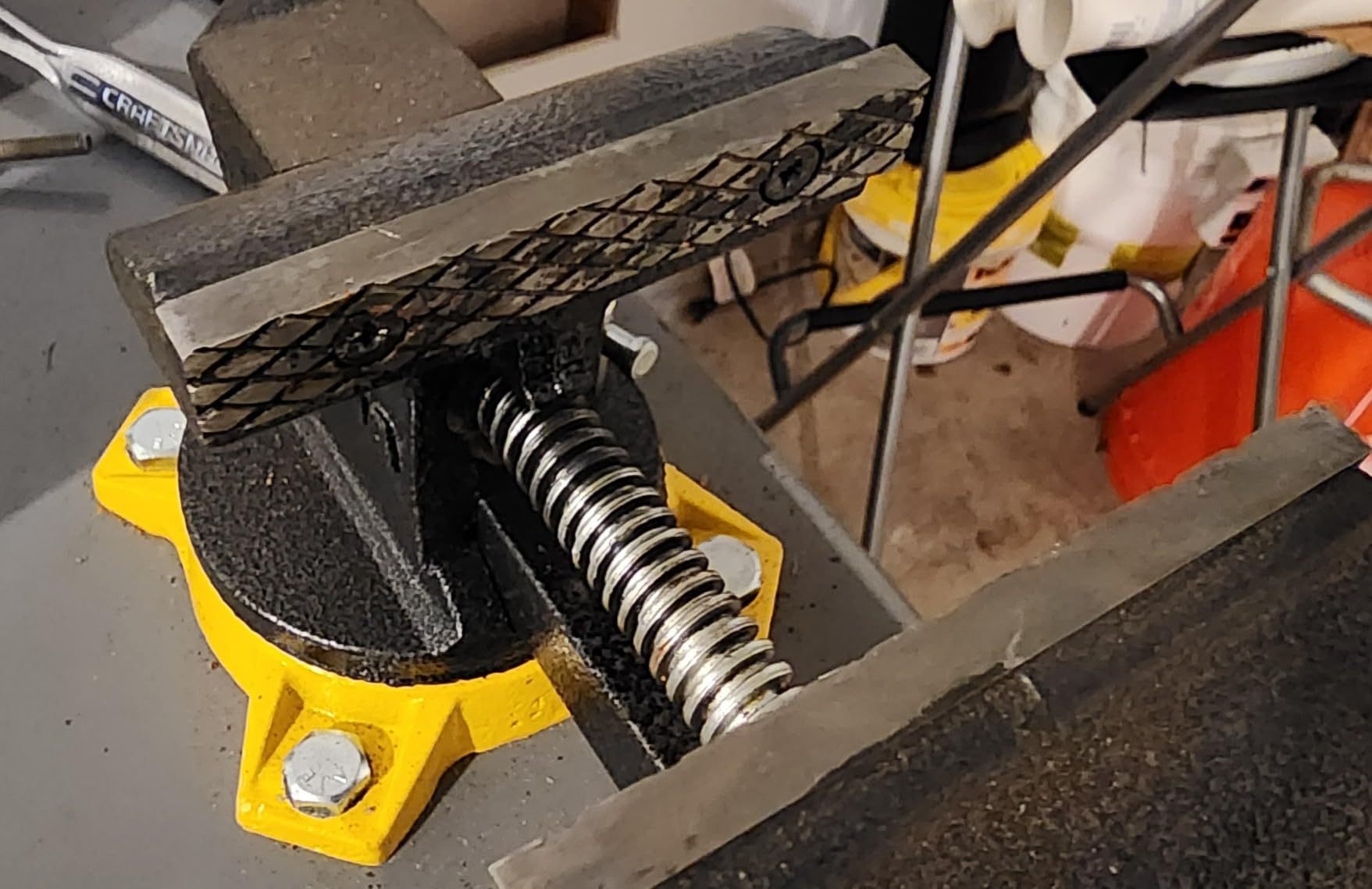
Who the Olympia Tools 38-604 suits
It suits a hobbyist, a renter, or anyone with a shared or multi-purpose bench who needs a vise they can move to whichever project is on the table. It also suits sharpening and shaping work, where the anvil horn and replaceable jaw faces matter more than clamping force.
Who the Olympia Tools 38-604 does not suit
It does not suit someone planing or sawing thick stock, holding pipe under pressure, or doing any work where the workpiece will fight back. It is also the lowest rated of the twelve, so if you want the best odds of a smooth first experience, choose one of the higher rated 4.5 inch options instead.
How We Picked and Tested These Vises
Every vise in this roundup was judged on the same five things, using the published specifications and the pattern of owner feedback for each listing. Clamping strength and jaw geometry came first, because a vise that cannot hold or cannot fit your workpiece is useless no matter how well it is finished.
Second, the screw and swivel feel. A vise that takes 30 handle turns to open, or whose swivel drifts when you load the anvil, changes how you work. Quick release scored highly for the same reason, which is why the GOEHNER earns a place on features alone.
Third, mounting practicality. We checked what hardware ships in the box, because the most common complaint in this category is missing or too-short bolts. Fourth, jaw coverage, meaning whether the vise includes flat, pipe, V or soft jaw options. Fifth, weight against bench strength, since a 38 pound vise on a light bench will rack it.
Everything we report about these products comes from the manufacturer specifications and aggregated owner reviews for each listing. We did not measure clamping force ourselves, and we make no claim to have. What we do is compare the numbers against each other and against the kind of work a home workshop actually does, then flag where owner reports conflict with the spec sheet.
How to Choose a Bench Vise for a Home Workshop
Benchtop, front mount or end vise: pick the mount before the model
A benchtop vise bolts to the top surface of the bench with the fixed jaw hanging over the front edge. It is the easiest type to install, the least expensive, and the majority of home vises in this roundup are benchtop models. A face mount or front vise bolts to the front face of the bench with the jaws parallel to the surface, which gives far more clamping force for the same screw and a much longer jaw face.
An end vise mounts to the end of the bench, which is where woodworking shops often put one because it clears the working area. If your bench is already built, you are retrofitting and a benchtop vise is realistic. If you are building the bench, that is the moment to decide on a front vise. Our bench grinder buying guide covers the other permanent fixture in most home shops, and the same planning logic applies.
Cast iron, ductile iron or steel
Cast iron, in the 30,000 PSI gray iron class used by the Yost LV-4 and the Wilton 11106, is the traditional bench vise material. It is heavy, cheap, easy to machine and very hard to break, and it is the right choice for general home shop work. It is also brittle relative to steel, so drop it and you can crack the body rather than bend it.
Ductile iron, rated at 60,000 PSI by several manufacturers here, is tougher and more forgiving of shock loads while keeping much of the weight and cost profile of cast iron. It is what you want if you hammer on the anvil or clamp hard work. Steel is lighter and resists impact best, but the steel vises in this category are the specialty tools like the Real Avid, where weight is a feature rather than a problem.
Jaw width and jaw opening: the two numbers to buy on
Jaw width is the width of the jaw face, and it is the single most important dimension. It determines what fits between the jaws. A 4 inch vise handles up to a 4 inch workpiece, a 5 inch vise up to 5 inches, and a 6 inch vise up to 6 inches. A workpiece wider than the jaw overhangs and will rock, which is how boards get chewed.
Jaw opening is how far the jaws part. It matters most for pipe, round stock and tall assemblies, and a 6 inch vise with a 5.9 inch opening here will swallow most of what a 5 inch vise will not. One vise has two sets of jaws, the fixed and the moving jaw, and both carry a face; replaceable jaw plates bolt onto the movable side on most models in this roundup.
Practical rule: 4.5 inch for small benches and hobby work, 5 inch as a good all-rounder, 6 inch if you handle full width board or plate, 8 inch if you are building a fabrication bench. Buying one size up from your current work is usually more useful than buying the biggest vise you can find.
Throat depth, the spec that catches people out
Throat depth is the vertical gap between the screw axis and the front edge of the jaws. It is the number that decides whether you can clamp a tall workpiece without the screw hitting it. In this roundup it ranges from 2 inches on the GOEHNER up to 4.33 inches on the COGNATIVE, and it is why a 6 inch vise with a 2 inch throat can feel cramped on work that a 4.5 inch vise with a 3 inch throat handles easily.
Check throat depth before jaw width if you clamp uprights, fence assemblies, pipe fittings or vertical stock. If you mostly clamp flat boards lying down, throat depth matters far less and you can optimise for jaw width instead.
Swivel base, quick release and anvil
A swivel base rotates the vise head so you can clamp at an angle without moving the vise on the bench. The range varies widely here: 120 degrees on the Wilton, 210 on the Forward CR40A, 240 on the Yost LV-4 and WORKPRO, 270 on the GOEHNER and Olympia, and a full 360 on the IRWIN, VEVOR, COGNATIVE and Forward DT08125A. Anything at 240 degrees or more covers nearly every practical clamping angle.
Quick release lets you pop the jaws open without turning the handle. It is a genuine time saver when you are fitting several parts, and it is the standout feature on the GOEHNER here. On a traditional screw vise, 30 turns per changeover adds up across a project.
The anvil is the flat or horned area behind the jaws. It is used for flattening, tapping, punching and light bending. Its size ranges from 2.9 by 3 inches on the VEVOR to a large general striking surface on the Wilton, and it is worth checking before you buy if you plan to hammer anything at all.
Wood jaw liners and soft jaws
Serrated and corrugated jaws grip hard and mark the workpiece. That is fine for pipe, bar stock and rough timber, and wrong for finished wood, painted surfaces and anything you care about the appearance of. Soft jaws solve it. A soft jaw is any material that sandwiches the workpiece between the vise jaw and a protective pad, typically plywood, MDF or hardwood, cut to fit your materials.
Making your own takes about 20 minutes. Cut two pieces of plywood or hardwood slightly wider than the jaw, drill two holes for the jaw screw holes, chamfer the edges, and screw them onto the fixed and moving jaws. This is the right solution for planing, dovetailing and any work where a serration mark ruins the piece. Several vises here, including the VEVOR and the SEDY, ship nylon or polyurethane magnetic pads that get you part of the way without any of that.
Technicians use soft jaws whenever the workpiece is machined, plated, printed or already finished, because the pad spreads clamping force across a wider area and protects the surface. It is also the standard fix for clamping thin or delicate parts that would dent in bare serrated jaws.
Bench dog and bench stop, and why woodworking vises need them
A bench dog is a short post on the vise that fits into a hole or slot in the bench surface to stop the workpiece sliding toward the operator. A bench stop is a fixed block mounted on the bench that plays the same role. Both exist for one reason: to stop a board creeping toward you when you plane, saw or chisel its edge, which is where hand injuries happen.
Most cast iron bench vises in this roundup have the post cast into the base, and several include a bench stop accessory. If your chosen vise has neither, a simple hardwood or aluminum block screwed to the bench in front of the vise does the same job. This matters more than it sounds, and it is the single cheapest safety improvement in a home shop.
Mounting hardware and bench thickness
Most vises here come without bolts, or with bolts that reviewers repeatedly report are too short for a real bench. Plan to buy your own. For a benchtop vise on a standard top, use 3/8 inch lag screws or carriage bolts with washers and nuts, long enough to pass fully through the top and into the apron or rail beneath.
Measure your bench top thickness first, then add at least a half inch for the washer and nut. A vise mounted only into a thin top will pivot under load, and the pivot shows up as jaws that lose parallelism. Mount over a bench leg whenever the vise is heavy or the bench is light, so the load runs down the leg rather than into the middle of the top. Tighten the bolts evenly in a star pattern.
Mounting a face mount vise into an existing bench
Retrofitting a front vise into a bench that is already built is a bigger job than it looks. Mark the fixed jaw position so the jaw overhangs the front edge by about an inch, drill or chisel out the recess for the slide channel so the moving jaw clears the bench surface, and route or chisel a shallow relief so the screw passes through without binding. The usual complaint from installers is chipping the work surface, so take off the top if it is removable, or protect it with tape and a sacrificial plywood face.
The alternative, and the one most home shops should take, is to build the bench around the vise. Choose the vise first, position the jaw where your work happens, and build the apron and legs to suit. Trying to make an existing bench fit a front vise is the most common reason installers say the vise was difficult to mount.
Maintenance that keeps the screw smooth
First, keep the screw clean. Metal chips from machining and grinding get into the screw threads and act like an abrasive cutter. Wipe the screw and the slide channel with a rag after each session, and remove chips before they work their way in.
Second, lubricate with care. A light machine oil or a dry lubricant on the screw and the swivel threads keeps them moving and resists rust. Use a light touch, and never use a heavy grease on a precision screw. Clean the threads first, then apply a thin coat, then wipe off the excess so it does not collect dust.
Third, check the jaw plates. Serrations wear smooth over years, and once they are polished the vise stops gripping and starts marring. Replaceable hardened steel inserts and jaw faces are a real advantage, so when your vise has them, buy the spare plates rather than living with a dull grip.
Fourth, check the swivel lock. Tighten it, then load the vise and see whether it holds position. A loose swivel that drifts under load will slowly rack the jaws out of parallel, which is the fault most often blamed on a bad casting but usually caused by an unlocked or under-tightened base.
Fifth, protect the finish. If your vise lives in an unheated garage, wipe it dry when condensation is likely, touch up chips in the paint, and keep it under a cover if you are not using it for months. Reviewers of the Yost LV-4 report exactly this cycle of chipped paint and surface rust, and it is preventable with a rag and ten minutes.
Buying a used or vintage vise
Used vises are excellent value, and forums show steady demand for a checklist nobody publishes. The widely shared rule of thumb is that any vintage vise made outside China tends to be better made than a cheap new one, and vintage Wilton, Parker, Reed, Rock Island and Colombian vises come up constantly in those discussions.
Check the screw first. Turn the handle through its full travel and listen. A smooth, steady feel with no grinding and no slop is the single best sign of a healthy vise. A screw that binds halfway, feels gritty or has a visible bend is a reason to walk away, because replacements are rarely worth the hunt.
Check the nut and threads for stripping. Look at the screw where it enters the body and at the handle fitting, since those are where a stripped thread usually shows itself. Then close the jaws fully and look at the gap: an old vise with visibly uneven jaw contact has been overloaded or mistreated, and that alignment rarely recovers.
Check for pitting corrosion. Surface rust on a casting is normal and cleanable. Rust that has eaten into the surface, or deep pitting around the jaw plates, means the vise has been wet for a long time and the iron may be weaker than it looks.
Check the swivel lock. A missing or broken lock lever is common and sometimes fixable, but a lock that will not hold position means the base is worn. Check whether the original handle is present, since a missing tommy bar means you are hunting for a compatible replacement. Finally, check the jaw serrations: worn smooth teeth can sometimes be re-serrated, but hardened plates that are rounded over are a replacement cost.
Brands worth knowing
Wilton, Parker, Reed, Rock Island, Record and Dawn are the names that come up most often when buyers talk about heritage and country of manufacture. Wilton is the most visible in this category, and the 11106 here carries a lifetime warranty against manufacturing defects, which is unusual in bench vises.
Yost and Forward both build vises that reviewers rate highly across several models, and the Yost LV-4 in this roundup has the largest owner review base by a wide margin. Bessey, IRWIN, Capri, Forward and Harbor Freight are frequently compared in budget threads, with Capri commonly called the best value in that group. For machinery work, a grinder setup matters as much as the vise, so our bench grinder picks are worth reading alongside this guide.
Frequently Asked Questions
What is the best bench vise for a home workshop?
For most home workshops the Yost LV-4 is the best all-round choice, because its 4.5 inch jaws, 3 inch opening, 240 degree swivel and 9 pound weight give real clamping ability in a small space. Clamp pipe, steel and hex stock as often as boards and the Forward DT08125A is the stronger answer, with three jaw sets and a 360 degree swivel. Budget buyers get the most capability from the VEVOR 6 inch.
What is the best vise size for a workbench?
Match jaw width to the widest workpiece you regularly clamp. A 4.5 inch vise suits small benches and hobby work, a 5 inch vise is the practical all-rounder, and a 6 inch vise handles full width board and plate. Also check throat depth, because tall or upright work needs the 3 inch or more clearance that only the larger vises provide.
Are Harbor Freight vises of good quality?
The common forum answer is that Harbor Freight vises are usable for light and general home shop clamping, and that owners comparing 4 inch and 6 inch IRWIN models report being impressed by the value. The honest framing is to compare them against vises in the same price band rather than against premium cast iron models, and to expect fewer refinements in the screw and finish.
When should a technician use soft jaws on a bench mounted vise?
Use soft jaws whenever the workpiece is finished, machined, plated, printed, thin or otherwise easily marked, since serrated jaws will dent or scratch it. Soft jaws spread clamping force across a wider area, protect the surface, and let you clamp delicate parts that bare jaws would crush. Plywood, MDF or hardwood pads cut to fit the jaw are the usual home shop solution.
How do you install a bench vise?
Mark the mounting holes with the vise in position, check the fixed jaw overhangs the front edge, then drill pilot holes. Use 3/8 inch lag screws or carriage bolts with washers and nuts, long enough to pass fully through the bench top and into the apron or rail beneath. Mount over a bench leg for heavy vises, tighten the bolts evenly in a star pattern, and buy your own hardware since most vises come without it.
How do I know if a vise is worth buying used?
Turn the handle through its full travel and listen for grinding or binding, inspect the screw and nut for stripped threads, and close the jaws fully to check for uneven contact. Look for deep pitting corrosion rather than surface rust, test whether the swivel lock holds position, confirm jaw serrations are not worn smooth, and check that the handle or tommy bar is present.
Our Final Pick for Your Home Workshop
The best bench vises for home workshops come down to three honest answers. The Yost LV-4 is the one to buy if you want a single vise that handles most home shop work without taking over the bench, and its owner review history makes it the safest first purchase in 2026. The Forward DT08125A is the upgrade for anyone who clamps pipe, round stock and hex hardware, because the three jaw sets remove the need for a second vise. The VEVOR 6 inch gives you the largest measurements in a budget vise, with a screw reviewers repeatedly call smooth and chatter free, and a jaw opening that swallows most workpieces.
Pick on the numbers rather than the badge. Jaw width decides what fits, throat depth decides what you can clamp upright, and the swivel decides how much you reposition. Mount it over a leg with bolts sized to your bench, add a bench stop and soft jaws, and a good vise will outlast several workbenches. Before you commit, do a hardware run for the fixings, because that is the one step most buyers have to repeat.