
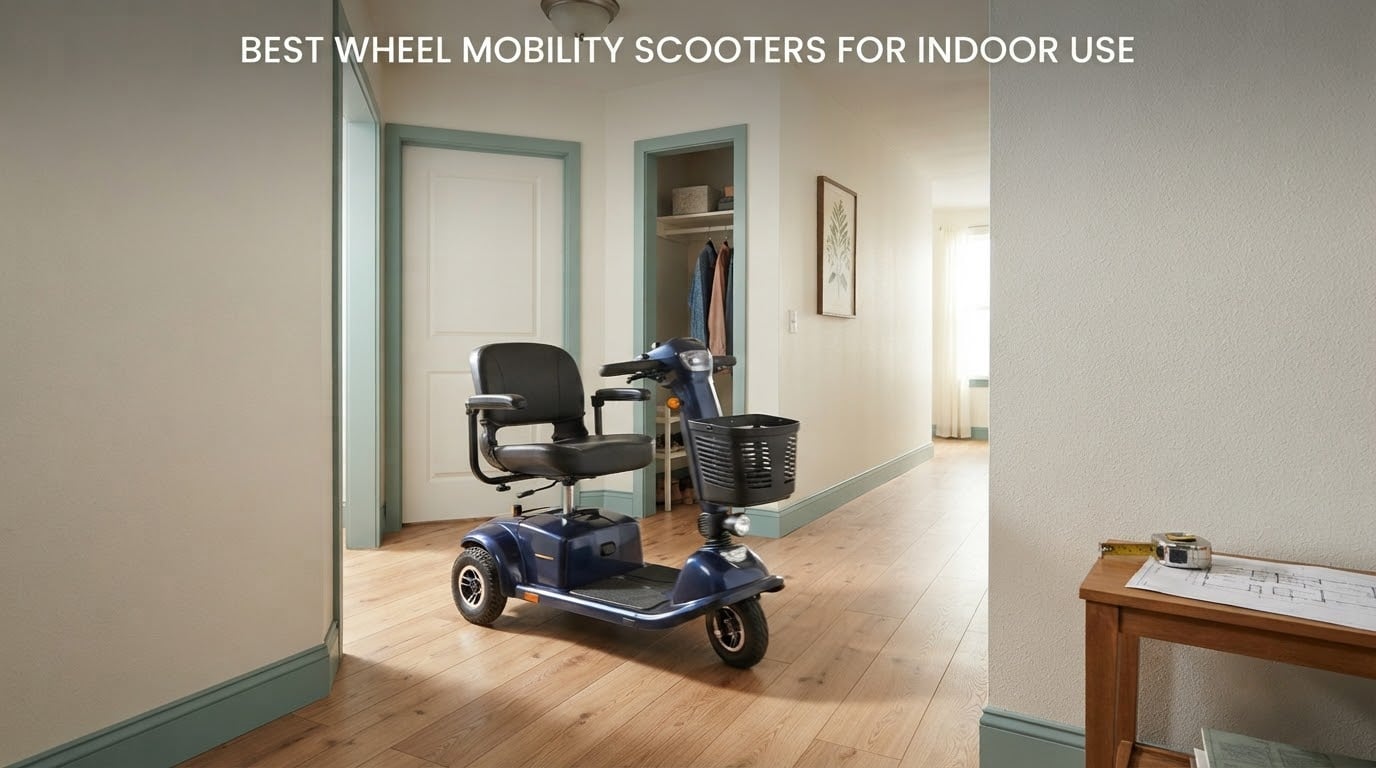
Most mobility scooter buying guides are written in showrooms, and that is exactly why so many people end up with a scooter that cannot make it down their own hallway. The specifications on the spec sheet are real, but the numbers that decide whether you use it every day are the width of your narrowest doorway, the clearance behind your kitchen counter, and the turning circle you have in a bedroom. Choosing among the best 3 wheel mobility scooters for indoor use comes down to those physical facts, not to the largest battery or the fastest top speed.
For 2026 we read owner reviews and manufacturer spec sheets across twelve three-wheel scooters, then sorted them against one question: how well does this thing behave inside a home? That means published turning radius where it exists, overall width in inches, the weight of the heaviest removable section, weight capacity against your body weight, and tire type against your floor. It also means reading the complaints, because the complaints are where the indoor experience actually lives.
What we found is a fairly consistent pattern. Three-wheel scooters turn dramatically better than four-wheel models, and the difference is felt most in kitchens, hallways and elevators. But indoor-only use has a catch: the smallest scooters, the ones that turn tightest and store most easily, are also the ones with the lowest weight capacity and the least comfortable seats over long days. Our mobility scooter guide for seniors covers the wider category; this one is narrowed to indoor fit, and updated for 2026.
One note before we start. This is a shopping guide, not medical advice. If you have a balance condition, neuropathy, or a history of falls, talk to your occupational therapist or clinician before choosing a three-wheeler, because the same narrow turning radius that makes these fun to drive indoors is the reason they carry a higher tip-over risk than four-wheel models.
Table of Contents
Top 3 Indoor Scooter Picks for 2026
Our three standouts below cover the three situations that come up most: a small apartment where storage and car transport dominate, a home where sit-to-stand transfers are the hard part, and a household that needs the tightest turning circle on the market.

SuperHandy Foldable Scooter
- Folds to 5 pieces
- 26 lb frame
- 275 lb capacity
- 6.5 miles per battery
Best 3 Wheel Mobility Scooters for Indoor Use (October 2026)
Every scooter in the table below is a three-wheeler. Where a manufacturer publishes a turning radius, we quote it in inches so you can compare directly against your own hallway measurements. Several brands do not publish the figure at all, and we mark those as not published rather than guessing.
| Product | Specifications | Action |
|---|---|---|
| SuperHandy Foldable Scooter |
|
Check Latest Price |
| Vive 3 Wheel Scooter |
|
Check Latest Price |
 Drive Medical Spitfire Scout 3 Drive Medical Spitfire Scout 3 |
|
Check Latest Price |
 Mbxcooter M1Pro Mbxcooter M1Pro |
|
Check Latest Price |
 Ecomobi M3 Ecomobi M3 |
|
Check Latest Price |
 GREAT CIRCLE Folding Scooter GREAT CIRCLE Folding Scooter |
|
Check Latest Price |
 Pride Go-Go Ultra X Pride Go-Go Ultra X |
|
Check Latest Price |
 iScooter Portable 3-Wheel iScooter Portable 3-Wheel |
|
Check Latest Price |
 Pride Go-Go Sport SC73 Pride Go-Go Sport SC73 |
|
Check Latest Price |
 Rascal Venture Rascal Venture |
|
Check Latest Price |
 PAISEEC D3 PAISEEC D3 |
|
Check Latest Price |
 Havenland 3-Wheel Scooter Havenland 3-Wheel Scooter |
|
Check Latest Price |
Why 3-Wheel Scooters Beat 4-Wheel Indoors
A 3-wheel mobility scooter turns tighter than a 4-wheel scooter because one front steering wheel sits closer to the load, so the whole machine pivots almost in place instead of sweeping a wide arc. In a 36-inch hallway, that difference decides whether you can turn around without reversing three times.
For indoor use specifically, aim for a published turning radius under about 47 inches (roughly 1200 mm). Among the twelve scooters we reviewed, four publish a figure at or under 33 inches: the Mbxcooter M1Pro at 20 inches, the Havenland at 31.5 inches, and the Ecomobi M3 and Rascal Venture at 33 inches. The Drive Medical Spitfire Scout sits at the wide end at 45.5 inches, and the PAISEEC D3 is 43 inches. The rest simply do not publish a number, which in itself is useful information about how much a brand expects you to care.
The honest tradeoff is stability. A three-wheeler has a narrower base than a four-wheeler, so it can tip if a front wheel catches on a threshold, a rug edge, or an uneven outdoor surface. That is a real consideration, not marketing filler, and it is why riders with balance impairment are usually steered toward four-wheel models. Indoors, on smooth level flooring, the risk drops considerably, but you still want anti-tip or anti-rollback wheels and a speed that you can feather.
Owners on mobility-focused forums consistently describe three-wheel scooters as noticeably more agile in hallways, kitchens and store aisles than four-wheel models, and community consensus leans toward three wheels whenever the primary environment is indoors. The balance caveat is the one condition that flips that advice.
1. SuperHandy Foldable Mobility Scooter – Best Overall for Apartments
SuperHandy Foldable Mobility Scooter for Adults, 3 Wheel, One Battery
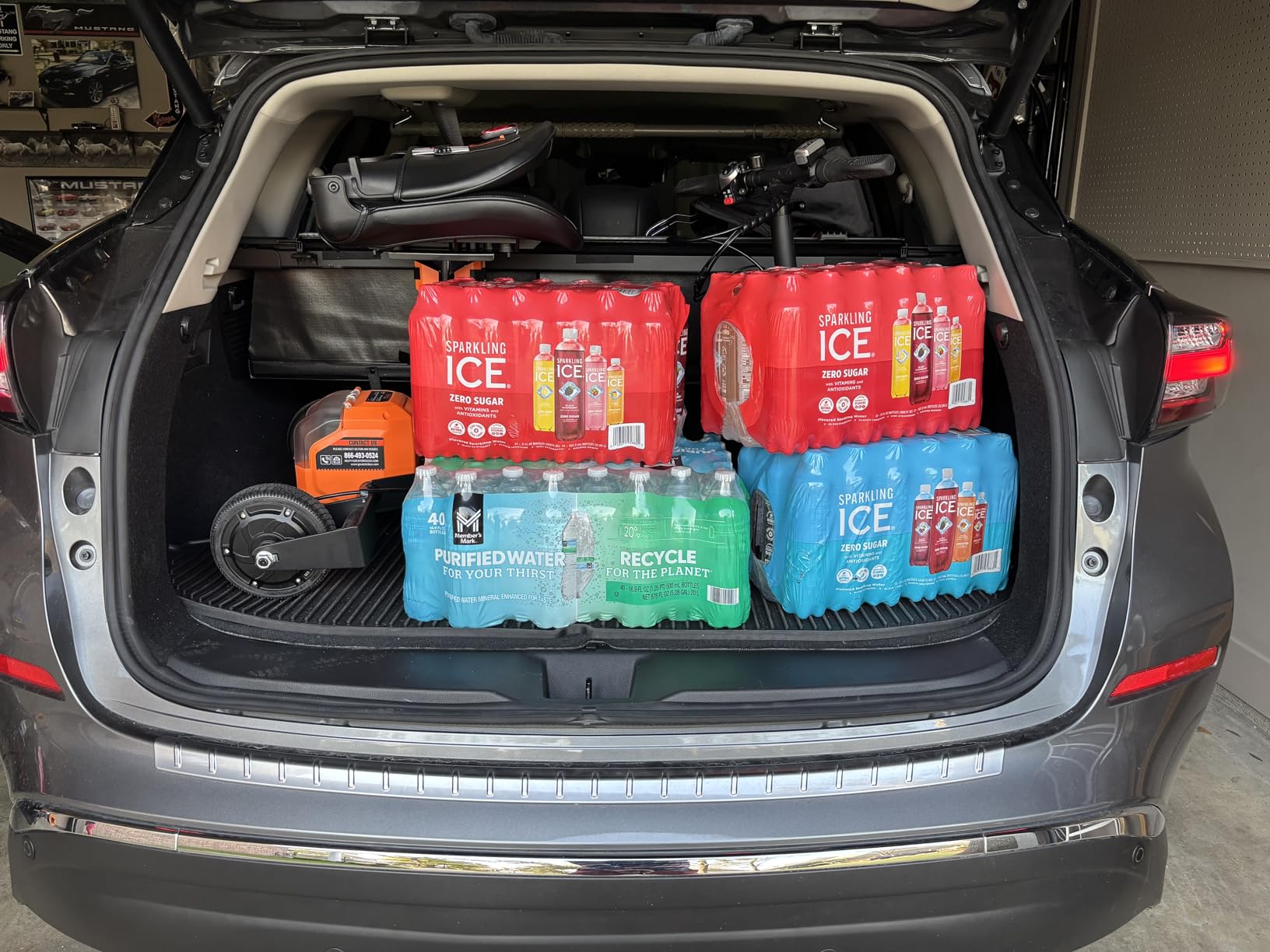
- Disassembles into 5 pieces that fit a sedan trunk
- 26 lb aluminum frame
- hot-swappable 48V battery
- three-wheel tight-space maneuverability
- wide 16.9 in padded seat with adjustable height
- No armrests so the rider grips the handlebars with both hands
- about 35 lb must be lifted to transport
- capacity stops at 275 lb
- disassembly takes practice to reassemble correctly
Our top pick is the one we would put in a one-bedroom apartment with a coat closet and no elevator. The SuperHandy GUT112 weighs 26 pounds as a frame and 35 pounds as a complete unit, and it breaks into five pieces. That breakdown is not a marketing flourish: it is the difference between a scooter that lives in your hallway and one that lives in a storage unit.
The 48V brushless motor drives a 6.5-mile range per charge, and the battery is hot-swappable, so a second pack takes total range past 12 miles. Buyers care about this because indoor scooters still get used for the trip to the pharmacy or the corner store, and one battery is not always enough to skip a charge cycle.

Flat-free non-marking tires handle hardwood, tile and low-pile carpet without the scuffing that pneumatic rubber leaves behind, which matters a great deal if you rent. The 16.9-inch padded faux leather seat has a backrest and adjustable height, and the variable speed thumb accelerator reduces wrist fatigue compared with a twist grip.
The brakes are a manual fast-acting drum rather than an electromagnetic system, and the three-wheel layout is what lets you thread a doorway that a four-wheeler simply cannot enter. Reviewers repeatedly praise the foldable footprint for apartment living and car transport, and the model has been on sale for well over a year, with well over a thousand reviews behind it.
Who the SuperHandy Foldable suits indoors
This is the scooter for a rider who lives in a small space, travels by car a few times a week, and wants the scooter to disappear into a closet when it is not in use. At 275 pounds of capacity it suits the majority of riders comfortably. Our broader senior-focused picks are worth reading if you need more headroom.
The 48V swap-and-go battery also makes it the right pick if your building has no dedicated charging outlet near the parking spot, because you can carry a single 48V pack indoors to charge overnight.
Where the SuperHandy Foldable falls short
There are no armrests, which means both hands stay on the handlebars for the entire ride. Buyers cite this as the top reservation, and it makes longer outings less relaxing than a scooter with padded, flip-up armrests.
Riding it also means lifting roughly 35 pounds to load it, and a 275-pound ceiling is below the 300-pound class. If you are a heavier rider, skip to the heavy-duty options further down.
2. Vive 3 Wheel Mobility Scooter – Best for Sit-to-Stand Transfers
- Swivel seat makes transfers easier and reduces twisting
- adjustable armrests flip upward for boarding
- four-piece breakdown with a 29 lb rear section
- color-coded battery indicator on the tiller console
- 5-year frame guarantee
- 84 lb total weight is heavy for a folding three-wheeler
- no horn and coarse speed steps on the console
- non-standard battery is not an off-the-shelf replacement
- 265 lb capacity is below the heavy-duty class
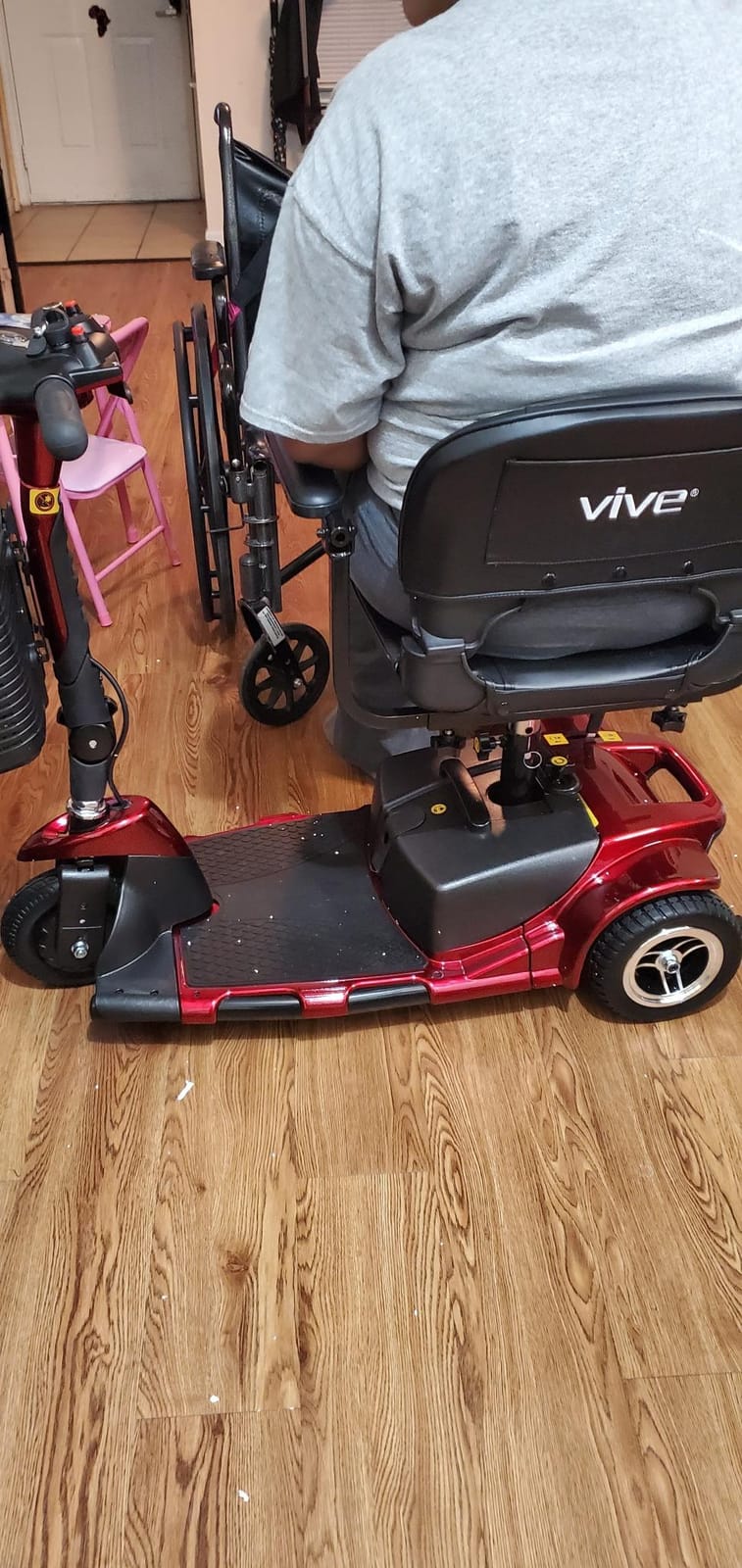
The Vive is the scooter we recommend when the hard part of the day is not the hallway, it is getting out of the chair. Its 16.9-inch padded swivel seat and backrest rotate, and the two padded armrests both adjust and flip upward, so you can open the side of the seat before transferring instead of swinging your legs around a fixed post.
That combination is the single most-praised feature set in owner reviews, along with the four-piece disassembly. The rear section weighs 29 pounds, the seat removes, and the tiller folds, which makes it a realistic two-person load rather than a lift only a strong caregiver can manage.
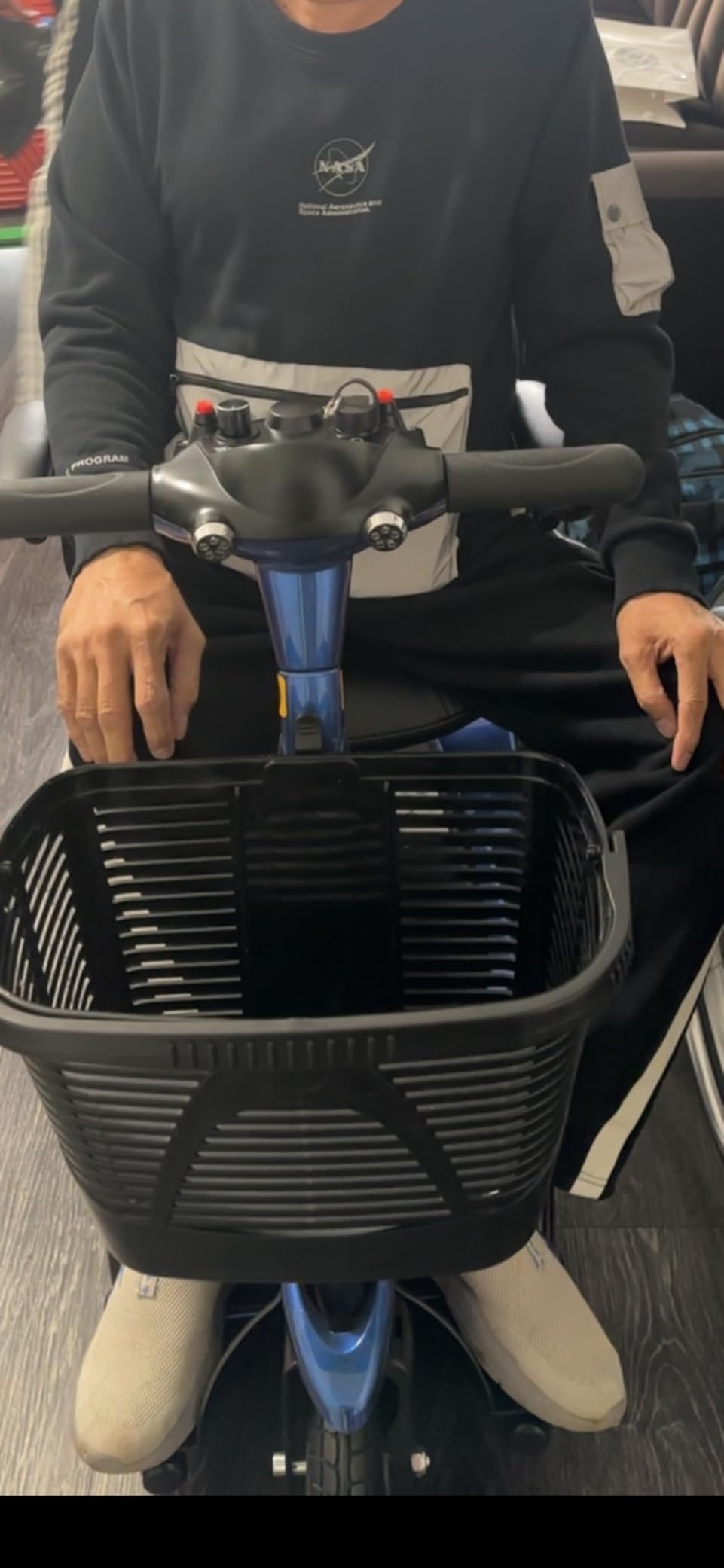
Specification-wise it holds its own indoors: 265 pounds of capacity, a 3.7 mph top speed that is appropriately gentle for shared hallways, and up to 12.4 miles per charge. The 8-inch flat-free non-marking tires roll fine on indoor floors and on paved outdoor paths, so a trip to a clinic does not require a vehicle.
The tiller console carries a variable speed dial, a forward and reverse switch, a headlight, a warning tone, and a color-coded battery indicator. You will not find a horn, which a few owners miss, and the 5-year frame guarantee is longer than most competitors in this list offer.
Who the Vive suits indoors
Choose this one if you have a power chair or scooter already but find the daily transfer the sticking point. Swivel seating reduces twisting for anyone with back or hip pain, and the flip-up armrests mean you do not have to lower yourself and lift yourself around them.
It is also a sensible pick for a household that wants a full-size scooter rather than an ultra-light folder, because the 12.4-mile range means fewer mid-day charges when you also use it for appointments.
Where the Vive falls short
At 84 pounds total it is heavy for a three-wheeler in this roundup, and even with a 29-pound heaviest section it is not the scooter to load one-handed into a sedan. Plan for a ramp or a second person.
The battery is a non-standard pack, so a dead pack is not a trip to a hardware store. That matters most for riders far from a dealer, and it is worth asking about replacement logistics before you buy.
3. Drive Medical Spitfire Scout 3 – Best Anti-Tip Stability
Drive Medical Spitfire Scout 3 Compact Travel Scooter, 3-wheel, Red/Blue
- 8 x 2 inch flat-free non-marking tires with anti-tip wheels
- 300 lb capacity
- height-adjustable swivel seat with fold-down backrest
- quick-connect 12Ah battery with 9 miles of range
- tool-free disassembly into light pieces
- 2.5 inch ground clearance means the rear wheels catch on raised doorsteps
- 8 inch wheels struggle in grass and sand
- 45.5 inch turning radius is wide versus newer compact models
- instructions do not explain how to unlock the front wheel
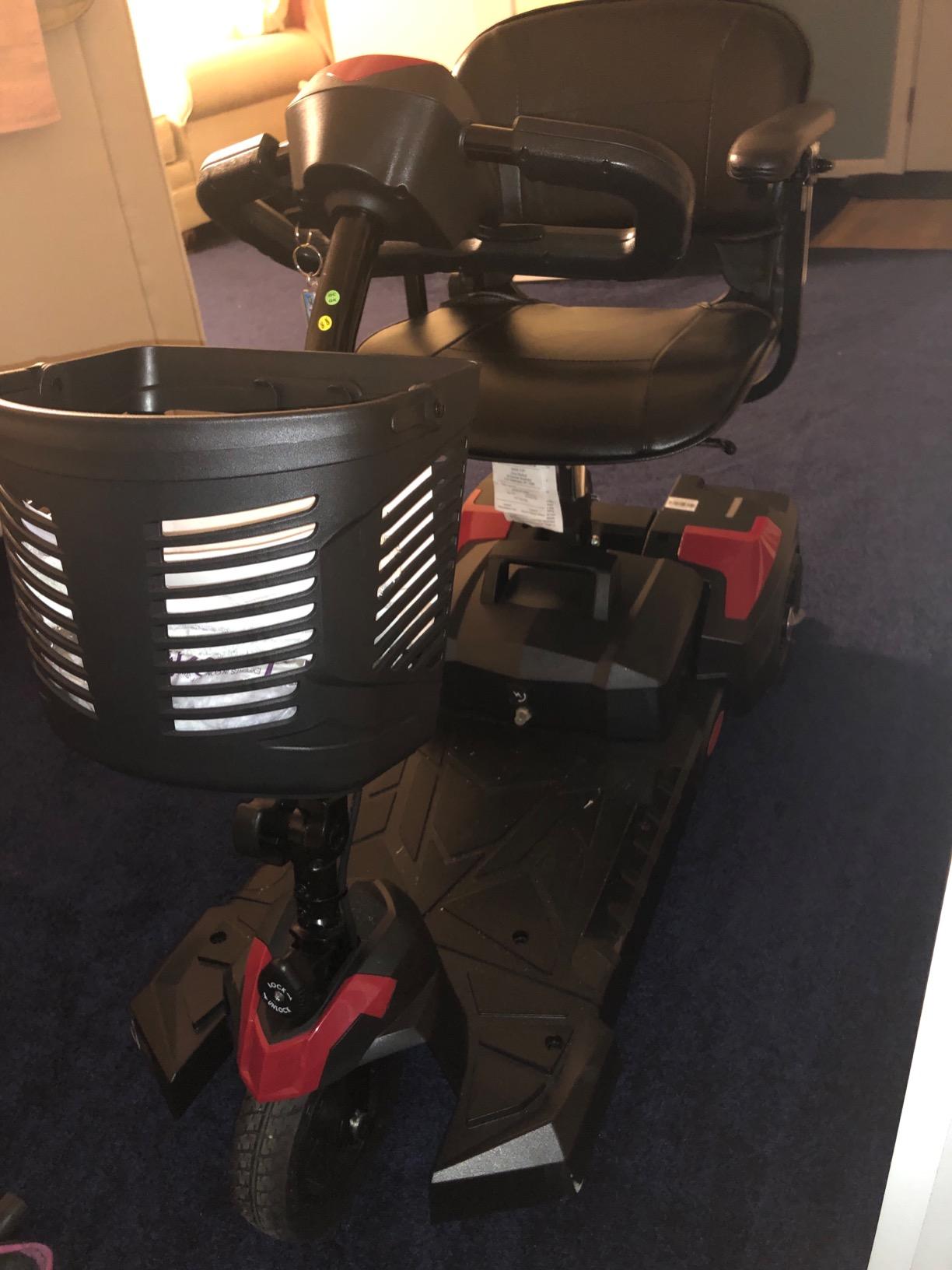
The Spitfire Scout is the oldest design in this roundup, a platform that has been in production for well over a decade, and that longevity is itself a signal. Long-term owners describe it as a dependable indoor and travel scooter, and several reviewers point out that the three-wheel format plus a swivel seat restored independence in offices, clinics and on cruise ships.
Its standout indoor safety feature is the pair of anti-tip wheels at the rear, working with 8 x 2 inch flat-free non-marking tires. For a rider who wants three-wheel agility but is nervous about tip-over, that hardware is the deciding factor, and capacity runs to 300 pounds.
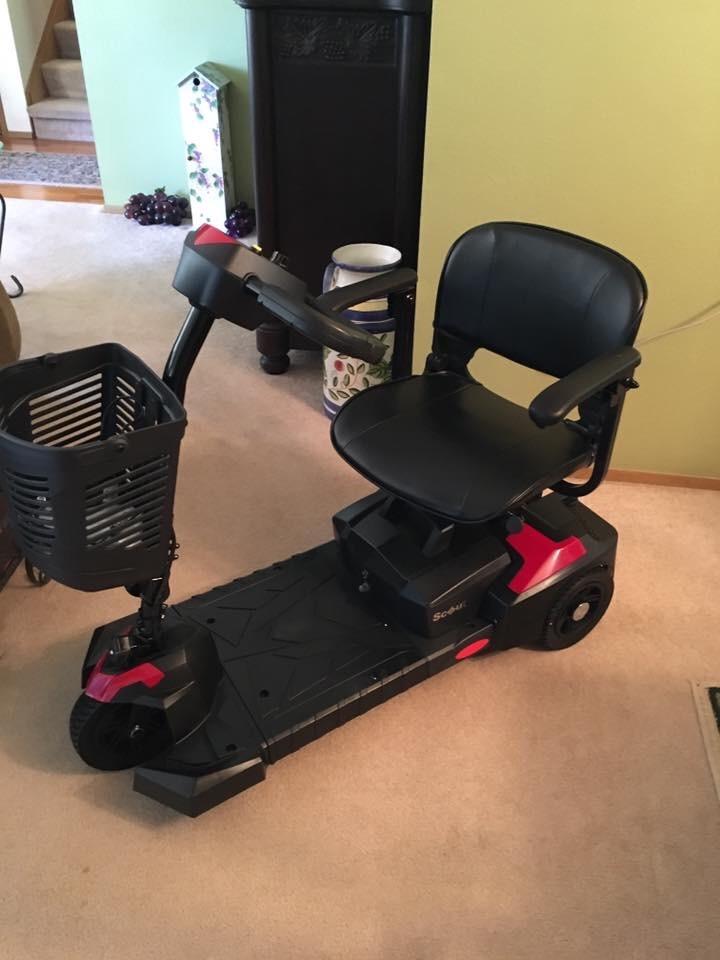
Battery endurance is the other reason people keep this model. The quick-connect 12Ah pack is rated at up to 9 miles of autonomy, and multiple owners report a week to ten days of typical daily indoor use per charge. The height-adjustable swivel seat has a fold-down backrest, and the padded armrests are adjustable and removable.
Controls are a delta tiller with ergonomic throttle and free-wheel operation, which is intuitive once you have it. Note the size: 42.5 by 20.5 by 36 inches and 85 pounds, so it is a full-size unit that will not slip into a narrow coat closet.
Who the Spitfire Scout suits indoors
This is our pick for anyone who is nervous on a three-wheeler and wants the extra rear anti-tip hardware, or for a rider who uses the scooter in a clinic, office or senior living facility where the floor plan is known and predictable. The 300-pound capacity also widens the audience considerably.
Owners frequently highlight the swivel seat letting them maneuver and park unobtrusively in hallways and small rooms, and the tool-free disassembly lets a caregiver load it into a van without a full workshop teardown.
Where the Spitfire Scout falls short
Ground clearance is only 2.5 inches, so rear wheels catch on doorsteps taller than about an inch and a half. If your home has a raised entry or interior threshold, measure it before this one goes on your list.
The 45.5-inch turning radius is wide by modern standards, and it means more back-and-forth in a tight kitchen. There is no headlight, the horn is quiet, and the front basket is small. The delivery instructions also leave several reviewers unsure how to unlock the front wheel.
4. Mbxcooter M1Pro – Tightest Published Turning Radius
- Tightest 20 inch turning radius in this roundup
- 31.7 lb frame that one person can lift
- one-step one-lift fold
- dual removable lithium batteries with 20 or 32 mile range
- LED headlight
- tail light and reflective strips
- Small 8 inch wheels feel tippy over minor ground indentations outdoors
- limited leg room in the footwell
- one reviewer cited a frustrating return process when sizing was wrong
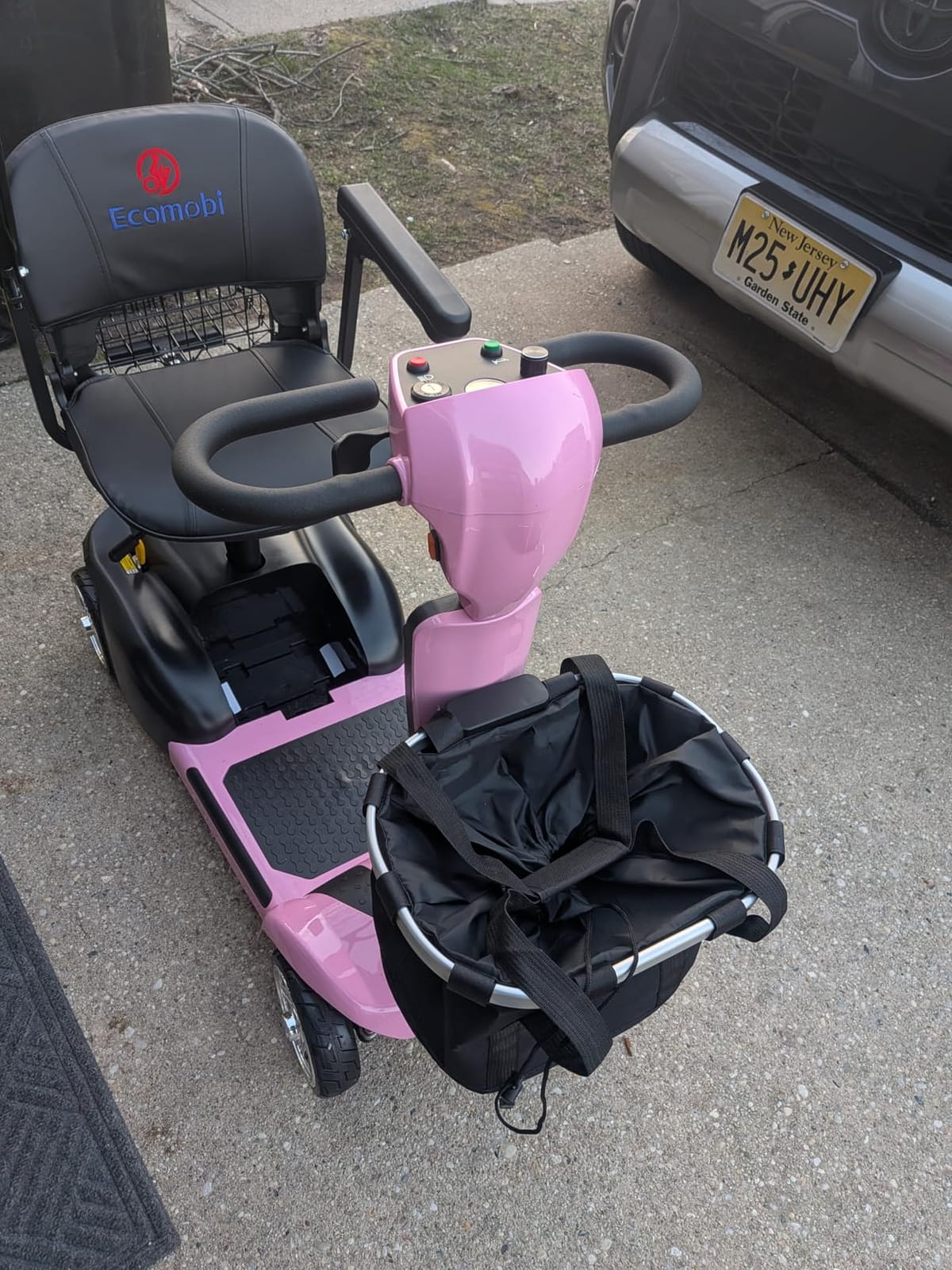
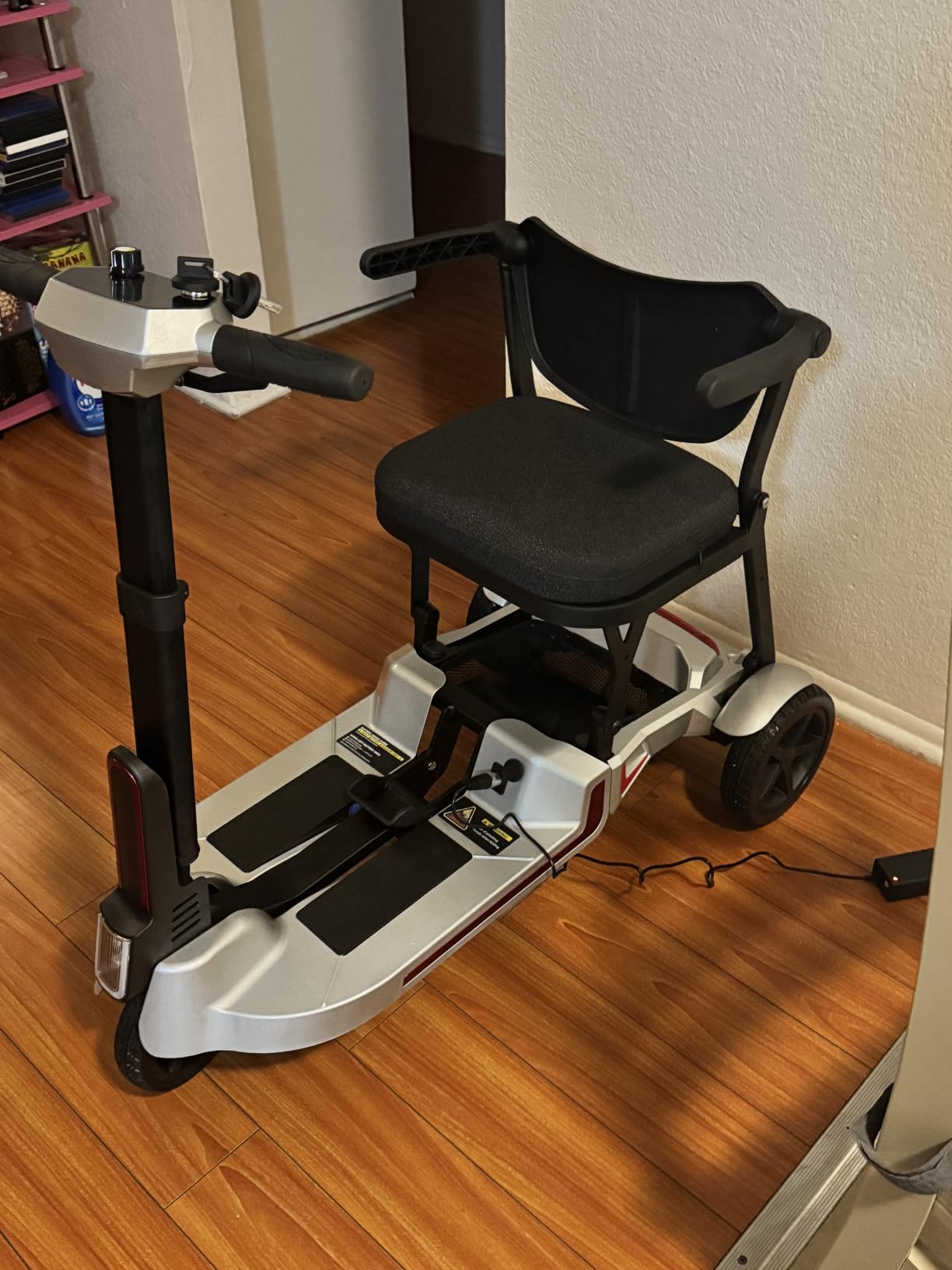
On the single most important indoor number, the Mbxcooter M1Pro wins. Its published 20-inch turning radius is the tightest of any scooter we reviewed and less than half the width of a typical four-wheeler’s sweep, which means it can pivot in a space where other machines need a full room to turn around.
Weight is the other headline. The frame is 31.7 pounds without the batteries and 37.93 pounds complete, and the one-step, one-lift fold means a single person can pick it up rather than wrestling with a multi-piece breakdown. That combination is why reviewers describe it as ideal for apartments, elevators, hallways and shopping aisles.
The 350W motor and 8-inch tires drive a top speed of up to 5 mph, which is fast for a hallway, so riders generally work down the speed setting indoors. Rear anti-tip wheels add stability, and the unit is rated for gentle slopes up to 15 degrees if you also step outside.
Two removable lithium battery options are offered, either 24V 8Ah x2 or 12Ah x2, giving roughly 20 or 32 miles of range, and the batteries are described as airline approved. Lighting is a genuine indoor plus: an LED headlight, a rear tail light and reflective strips for dim corridors.
Who the Mbxcooter M1Pro suits indoors
This is the scooter for a genuinely tight home. If your hallway is 30 inches wide, your elevator is a small building elevator, or you need to turn inside a bedroom without shuffling back and forth, the 20-inch radius changes what is possible on a daily basis.
It is also a strong option for anyone who travels. The light frame, single-motion fold and removable batteries cover both a car trunk and a flight, and owners who have used it outdoors note it works best on smooth, level ground.
Where the Mbxcooter M1Pro falls short
Those same 8-inch wheels and a narrow body can feel tippy over even minor ground indentations outdoors, and the compact proportions that produce the tight turn also produce limited leg room in the footwell for users with restricted mobility.
Capacity is 265 pounds, which is mid-range rather than generous, and one reviewer reported a frustrating return process after ordering the wrong size. Confirm seat height and footwell clearance with measurements from your own chair before you commit.
5. Ecomobi M3 – Best for Very Small Apartments
Light Weight Mobility Scooter for Adults, 3 Wheel Mobility Scooter
- Frame weighs only 30 lbs without seat and batteries
- 33 inch turning radius for near in-place turns
- tool-free one-lift fold
- 2 inch padded seat with under-seat storage
- electromagnetic braking and rear anti-tip wheels
- 30 lb figure is frame-only and assembled weight is higher
- the 11.8 inch folded depth is tall for a shallow closet
- many color variants make models hard to distinguish at a glance
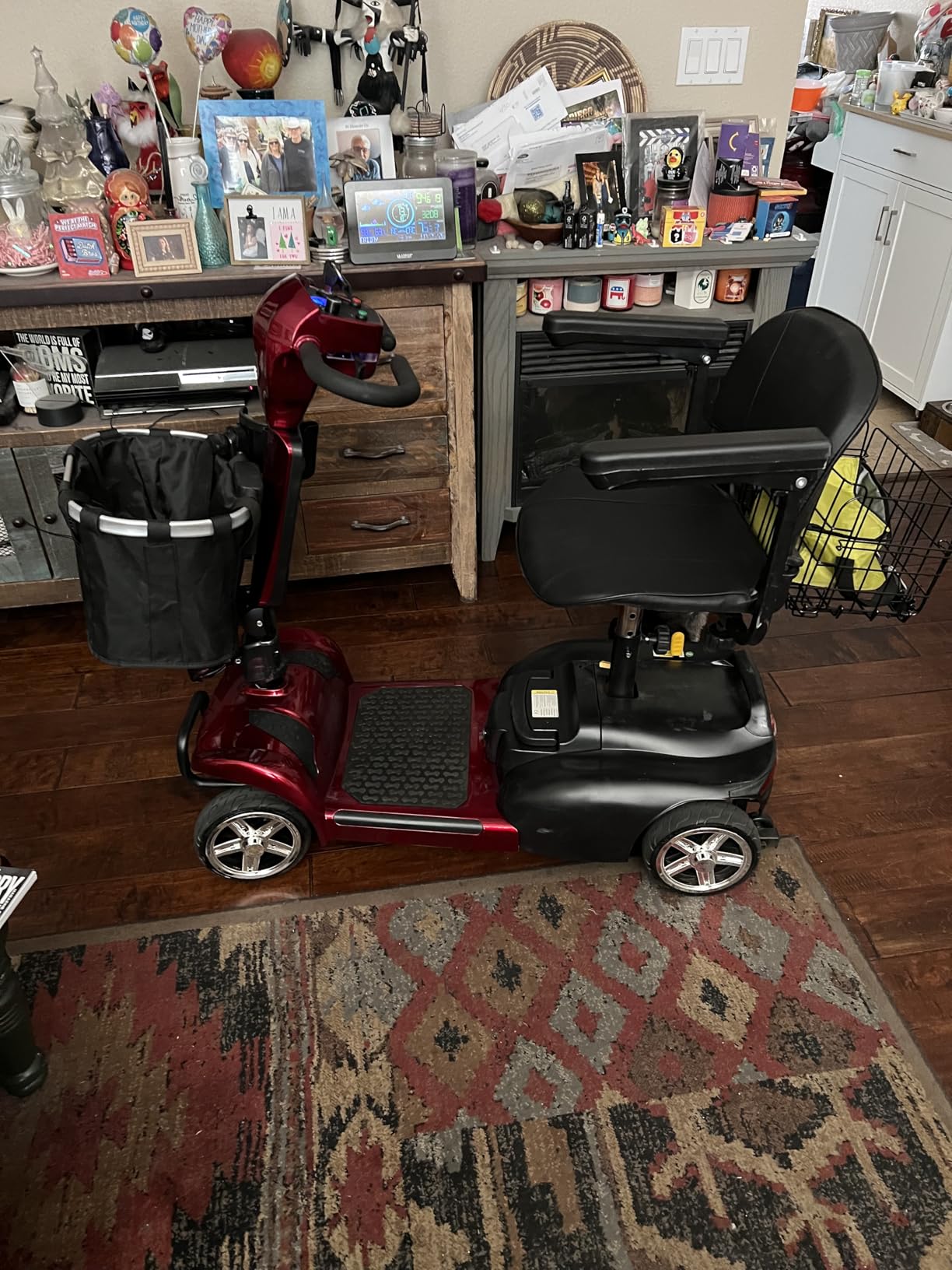
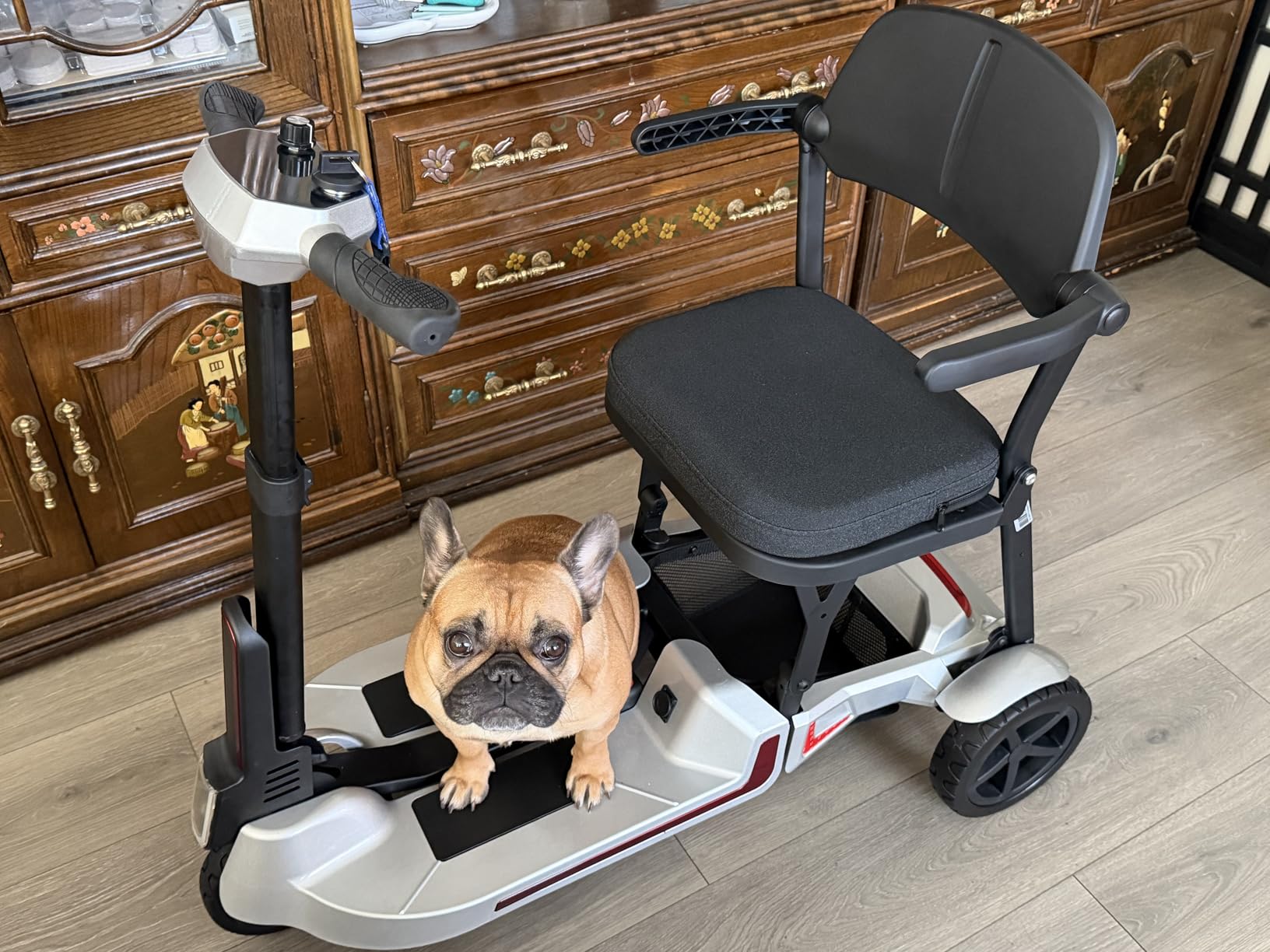
The Ecomobi M3 is the one we would put at the end of a short hallway. The frame weighs 30 pounds without the seat and batteries, which is roughly what a lead-acid scooter battery weighs on its own, and it folds to 11.8 by 19.7 by 33.8 inches in a single tool-free lift.
Its 33-inch turning radius lands it in the tight half of this roundup. In a kitchen or a bedroom it behaves close to a power chair, which is something owners who also use a power chair indoors notice immediately and appreciate.
Comfort is better than the other ultra-light folders. The 2-inch thick padded seat sits over an under-seat storage basket, so groceries or a jacket bag have somewhere to go that does not involve a handlebar basket, and an upgraded front basket is included.
Battery choice is modular: dual 8Ah packs give up to 20 miles and dual 12Ah packs up to 32, and the digital display shows battery level with speed adjustment up to 8 km/h. Rear anti-tip wheels and electromagnetic braking add stability. A small external GPS locator accessory is also included, which helps when you park indoors in a shared corridor.
Who the Ecomobi M3 suits indoors
Pick this if your storage problem is the dominant problem. A 30-pound frame and a single-motion fold mean one person can move it between a closet, a corner of the living room and a car without assistance, and owners frequently mention easy lifting and one-hand folding as the reason they bought it.
It also suits riders who want airline-friendly range without a heavy chassis, and the under-seat storage is unusually useful in an apartment where counter space is scarce.
Where the Ecomobi M3 falls short
The 30-pound figure is frame-only, and once the seat and batteries are on, the assembled weight is meaningfully higher. Ask for the complete weight if lifting is your deciding factor.
The folded depth of 33.8 inches means it stands tall, so a shallow closet will not take it without a vertical hanging setup. And with this many color variants on the market, it is worth checking that the listing you are buying is the model with the under-seat basket and the battery options above.
6. GREAT CIRCLE GUT142 Folding Scooter – Best Lightweight Budget Alternative
- 26 lb aluminum frame is among the lightest here
- folds down and disassembles into 5 pieces that fit a sedan
- hot-swappable 48V lithium battery
- wide 16.9 inch padded seat with adjustable height
- anti-tip footrests
- No armrests so both hands stay on the handlebars
- about 35 lb must be lifted to transport
- capacity capped at 275 lbs
- 6.5 miles per battery is shorter than dual-battery rivals
The GREAT CIRCLE GUT142 shares its basic architecture with the SuperHandy: a 26-pound aluminum frame, a 48V brushless motor, and a five-piece breakdown. If the folding-in-five idea sold you and you want a second option in the same shape, this is the comparison to run.
What you get is a 16.9-inch fully padded faux leather seat and backrest with adjustable height, anti-tip footrests, flat-free solid non-marking rubber tires, and a detachable 48V lithium-ion battery that swaps in seconds. Runtime is rated at 6.5 miles, or about 1 hour 45 minutes of continuous use.

Owners value the low frame weight, the quick fold, and the sharp three-wheel turning radius for narrow indoor walkways. A thumb-drive accelerator reduces wrist fatigue on longer trips, and the manual fast-acting drum brake is straightforward to service.
The listing is described as airline friendly, and the battery is the standard 48V pack type, which is a practical plus if you fly. It has been on sale for several years, so there is a meaningful body of owner feedback behind it.

Who the GREAT CIRCLE GUT142 suits indoors
This suits a rider in a small apartment who will store the scooter in a closet or a sedan trunk, and who wants the lightest frame in the roundup without giving up a padded seat with a backrest. The anti-tip footrests are a small but sensible addition for indoor use.
It is a good value option when you need the folding footprint more than you need long range, since one battery will not carry you through a heavy week of errands without a recharge.
Where the GREAT CIRCLE GUT142 falls short
There are no armrests, which is the most common criticism in the reviews and the reason some riders rule it out for anything longer than a short indoor trip. The 275-pound capacity is also on the lower side.
Loading still means lifting about 35 pounds, and the 6.5-mile per-battery runtime is the shortest of the folding models here. If you plan to use it outdoors or for full-day outings, budget for a spare battery.
7. Pride Go-Go Ultra X – Best for Narrow Doorways and Limited Lifters
- Narrow enough to travel through most household doorways
- one-hand auto-latching frame separation splits it into 5 pieces in about a minute
- a relative with limited lifting strength can load and unload all five parts
- Pride Mobility construction holds up over years
- off-board dual voltage charger works on or off the scooter
- Seat and backrest are less comfortable and lower-backed than some rivals for all-day sitting
- battery gauge is a coarse green-to-red indicator
- horn is too quiet to be useful
- charging port sits low and requires kneeling to plug in
The Go-Go Ultra X solves the problem that stops most people from considering a travel scooter: you actually have to be able to break it apart. The auto-latching lockup mechanism separates the frame one-handed, an auto-connecting cable handles the electrical link, and the frame comes apart into five super lightweight pieces in roughly a minute.
One owner described a relative with limited lifting strength loading and unloading all five parts unassisted, and that single detail is why we rank it here. A front frame-mounted seat post also adds stability that most compact folders lack.

Indoor dimensions work well for an older home with standard doorways, and reviewers consistently praise the doorway maneuverability. You get 260 pounds of capacity, up to 4 mph, and up to 6.9 miles per charge, which is plenty for indoor circuits.
The charger is the practical surprise: it is a small, light off-board dual voltage unit that charges the pack on the scooter or off it, so you can bring just the battery and the charger indoors at night and leave the heavy frame parked in the garage or closet.
Who the Go-Go Ultra X suits indoors
This is our recommendation when a caregiver is the limiting factor. If the person helping you has limited strength, or if you are recovering from surgery in a house with a narrow doorway and no elevator, the one-hand separation and five-piece breakdown are more useful than any indoor specification on the sheet.
Long-dated owners report theirs holding together over a decade of use, including substantial travel, and the modular frame design is serviceable rather than sealed.
Where the Go-Go Ultra X falls short
Seat comfort is the top complaint. The seat and backrest are lower-backed and less supportive than the swivel seats on the Vive, Ecomobi and Rascal, which matters if you spend hours in it.
Other gripes are small but real: the battery gauge stays green for a long time and then drops quickly to red rather than reading precisely, the horn is too quiet in a busy space, and the charging port sits low enough that plugging in means getting on hands and knees. Long-term owners also mention battery replacement every one to two years and occasional drivetrain clanking.
8. iScooter Portable 3-Wheel – Best for Daily Errands
- Swivel seat with flip-up armrests makes getting in and out easy
- detachable basket with handle plus a built-in cup holder and USB charging port
- tight turning radius with automatic turn-slowing
- removable battery charges in the scooter or separately
- 85.5 lb assembled weight is heavy for a portable three-wheeler
- 264 lb capacity is the lowest in the roundup
- the basket and seat both remove and must be tracked
- 5 mph top speed feels twitchy at the highest setting indoors
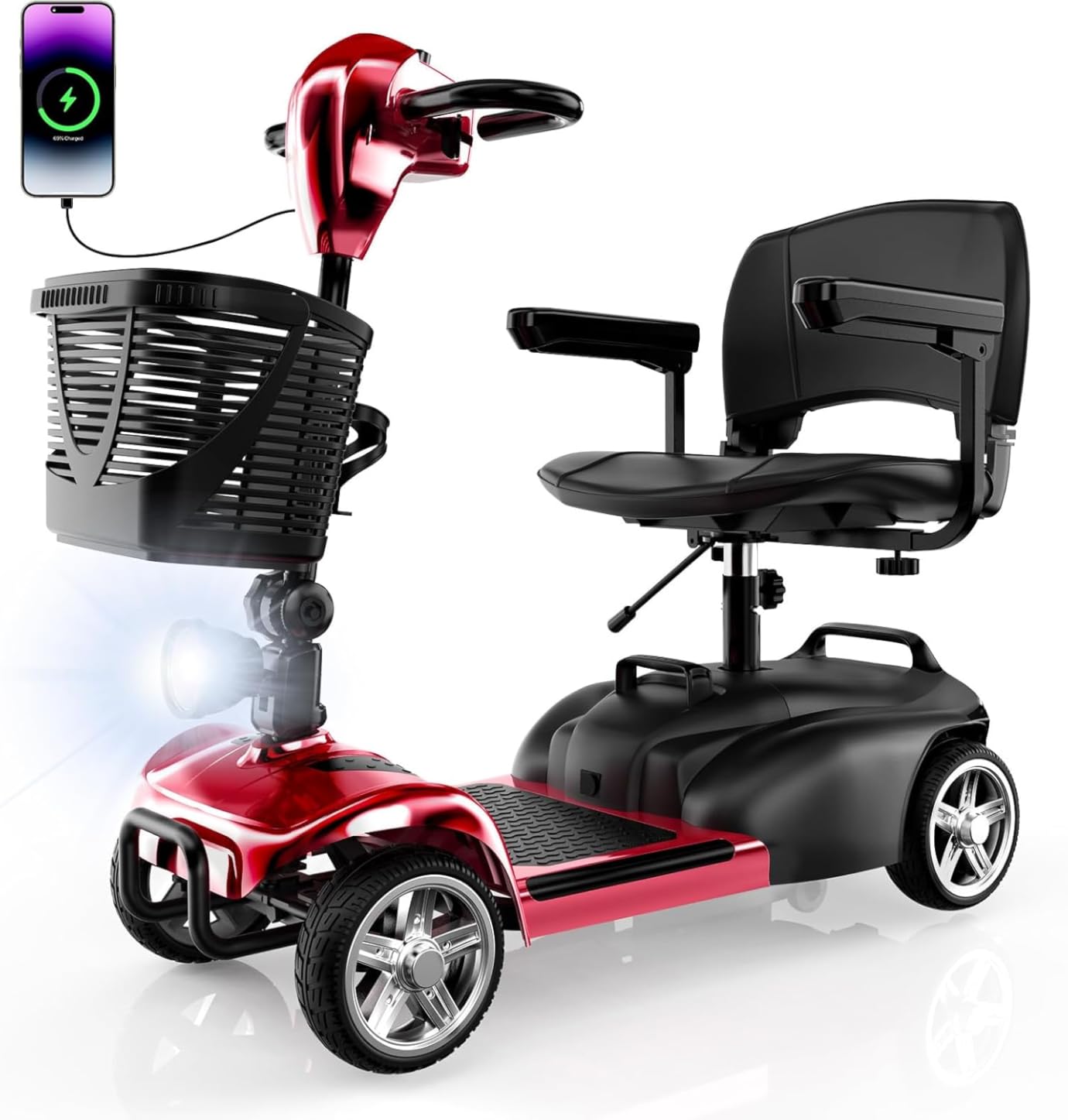
The iScooter is built around the errands rather than the hallway. The removable basket has its own handle, there is a built-in cup holder, and a USB charging port on the console so your phone charges while you wait in a clinic queue. For a scooter that doubles as a shopping run, those are the details that matter.
It also gets the ergonomics right. The seat swivels, the armrests flip up, and both seat height and armrest width adjust, so it adapts to different riders sharing one scooter rather than being set for one body.
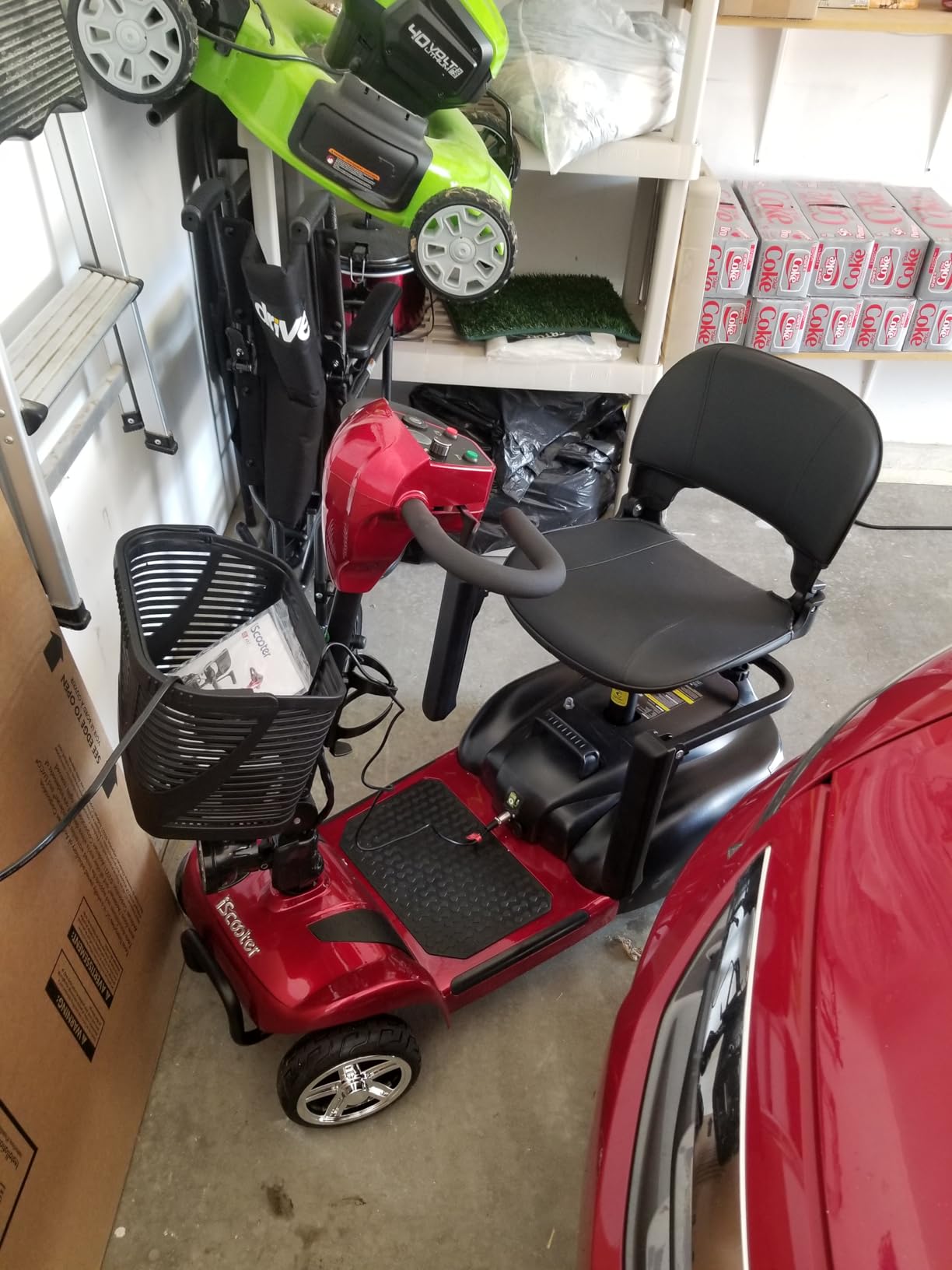
The control layout is simple: speed adjusts smoothly from 0 to 5 mph with forward and reverse, and the scooter slows automatically when you turn, which reduces the twitchy feeling at speed in a hallway. A rear anti-roll wheel adds stability at low speed.
The battery is removable and can charge in the scooter or be taken out to charge separately, so you do not have to move the whole unit to a wall outlet. Solid tires mean zero maintenance and no scuff marks on hard floors. Warranty coverage is 360 days on some components and 180 days on others, so read the terms before you rely on a specific part.
Who the iScooter suits indoors
Pick this if the scooter is your grocery and pharmacy vehicle as much as your indoor mobility device. The basket, the cup holder, the USB port and the adjustable seating make short errands practical for one person, and the automatic turn-slowing helps in busy shared spaces.
It is also a good fit for a household sharing one scooter between two riders of different sizes, since the armrest width and seat height both adjust.
Where the iScooter falls short
It weighs 85.5 pounds assembled, and with both the basket and the seat removable you are tracking more pieces than the ultra-light folders require. The 264-pound capacity is the lowest of the twelve, which rules it out for heavier riders.
A 5 mph top speed is quick for an apartment building, and reviewers note it can feel twitchy at the highest setting. Keep the speed dial low indoors.
9. Pride Go-Go Sport SC73 – Best for Heavier Riders
- Heavy-duty chassis that holds heavier riders and feels stable on rougher surfaces
- generous leg room and a longer-range battery than comparable units
- good turning radius for a full-size three-wheeler
- built-in headlight useful for late-night indoor trips
- fits a sedan trunk
- Requires lifting roughly 40 lb pieces to load into a car
- a reported drive connector failure was not covered leaving a costly part plus shipping
- seller and manufacturer support criticized after electrical faults
- 120.2 lb total weight is the heaviest unit here
Most of the compact scooters in this roundup top out around 264 to 275 pounds. The Pride Go-Go Sport platform is built for riders above 300 pounds, and it is the one to look at if a lighter scooter has already ruled itself out on capacity. The frame also gives you noticeably more leg room.
Indoor performance is stable rather than nimble. Reviewers describe the turning radius as very good for a heavy-duty three-wheeler, and the full-size chassis feels planted on floors that make a compact folder feel twitchy.
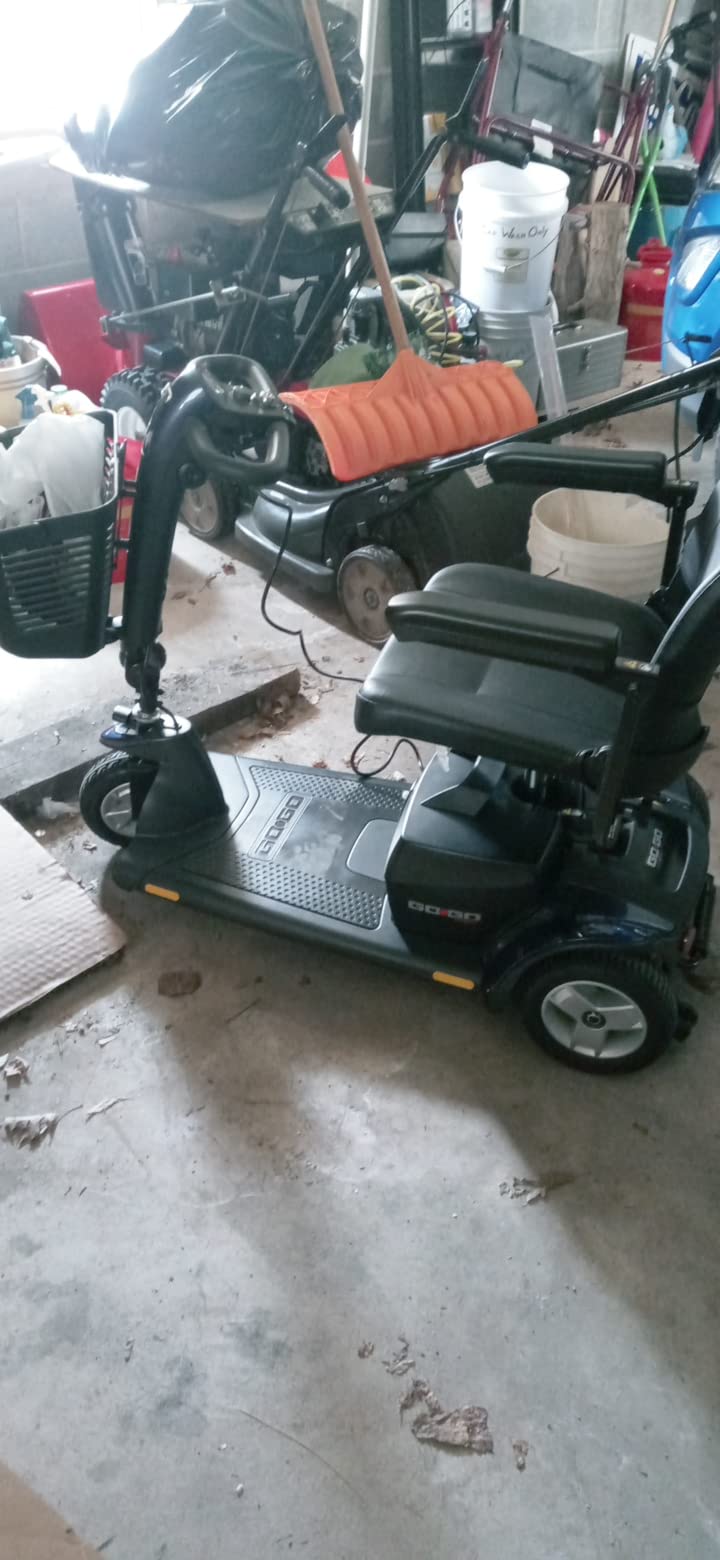
The built-in headlight deserves a specific mention. Several owners point out that it is genuinely useful at night getting to the bathroom or down a dark hallway, and it is not a feature you will find on every model here.
Transport is the tradeoff. It disassembles into two main pieces that fit a sedan trunk, but owners describe lifting roughly 40 pounds with some bending to get them in, and the total unit weighs 120.2 pounds. The included Challenger Mobility accessory is a bonus rather than a necessity.

Who the Go-Go Sport suits indoors
This is the pick for larger riders who want three-wheel maneuverability at home and a scooter that also handles a rough path, driveway or yard without feeling precarious. The long-range battery means fewer charging interruptions between indoor and outdoor use.
If your home has a hallway wide enough for a full-size scooter, the stability advantage over a compact folder is real, and owners who fly with it report it fits a sedan trunk.
Where the Go-Go Sport falls short
Weight is the obvious limitation. At 120.2 pounds total with roughly 40-pound pieces, loading is a two-person job or a ramp job, and it will not live in a small closet.
More seriously, several buyers report that a failed drive connector was not covered and left them responsible for the part and shipping, and support after electrical faults drew criticism. If reliability history matters to you, ask the seller directly what is covered before you order, and keep a record of your purchase.
10. Rascal Venture 3-Wheel – Best Rated with the Longest Warranty
Rascal Venture 3-Wheel Portable Mobility Scooter for Travel, Easy Disassembly, Compact Design, 300 lb Capacity, Battery Included
- Highest average rating in this roundup at 4.7 with an 84 percent five-star share
- 33 inch turning radius in a full-size three-wheeler
- disassembles into five pieces with the heaviest at 29.5 lb
- up to 10 miles per charge with regenerative and electromechanical brakes
- 3-year frame warranty
- 96.5 lb total weight makes it a two-person load despite light individual pieces
- warranty service must go through an authorized Mega Motion provider
- 8 inch mag wheels limit rough-terrain use
The Rascal Venture is the highest-rated scooter we reviewed, at 4.7 stars across more than a hundred owner reviews, and the reasons owners give are unusually consistent. They talk about the 33-inch turning radius in a full-size machine, the five-piece breakdown where the heaviest section is only 29.5 pounds, and roughly 10 miles of range per charge.
That combination is unusual. Most full-size scooters are either comfortable with short range or light with long range. This one manages 300 pounds of capacity, a swivel seat, adjustable seat height, armrest position and tiller, and a 3-year frame warranty without becoming a two-person lift for its individual pieces.

Braking is dual system, regenerative plus electromechanical, which gives you controllable slowing in a hallway without relying on a single friction mechanism. The 17-inch seat is larger than most compact models, and the front basket takes everyday items.
It is also an FDA Class II medical device, which matters if you will be seeking reimbursement or want documentation of device classification from a clinician. Wheels are 8-inch mag, and the frame is alloy steel.
Who the Rascal Venture suits indoors
This is the top pick for a full-size scooter that will not feel cramped in a room. The 33-inch radius competes with the compact folders, the swivel seat makes transfers clean, and the adjustable tiller and seat height mean one scooter can suit different drivers.
Owners describe it as practical in apartments, assisted living and travel, and the 10-mile range covers a day of indoor plus outdoor use without a mid-day charge.
Where the Rascal Venture falls short
Total weight is 96.5 pounds, which means loading it is a two-person or ramp-assisted job even though each piece is light. If your storage spot is a small closet, this is not the one.
Warranty service has to go through an authorized Mega Motion provider, which is inconvenient if you travel or live far from one, and the 8-inch mag wheels are not intended for rough ground. Check provider locations before you buy.
11. PAISEEC D3 Ultra Light Scooter – Best for Air Travel and Long Indoor Days
PAISEEC D3 Ultra Light Mobility Scooter for Seniors, 39.7lbs, TSA Approved
- Light enough that users with limited hand strength fold and load it single-handed
- two detachable batteries of about 4 lb each giving up to 18.6 miles and chargeable away from the scooter
- folds flat to fit most car trunks
- adjustable armrests fold down and never obstruct transfers
- 43 inch turning radius is wider than the tightest compact models
- 8 inch rubber tires transmit bumps and cracks
- seat and frame may feel small for riders six feet or taller
- one reviewer reports the battery type was not accepted by an airline despite the TSA approval claim
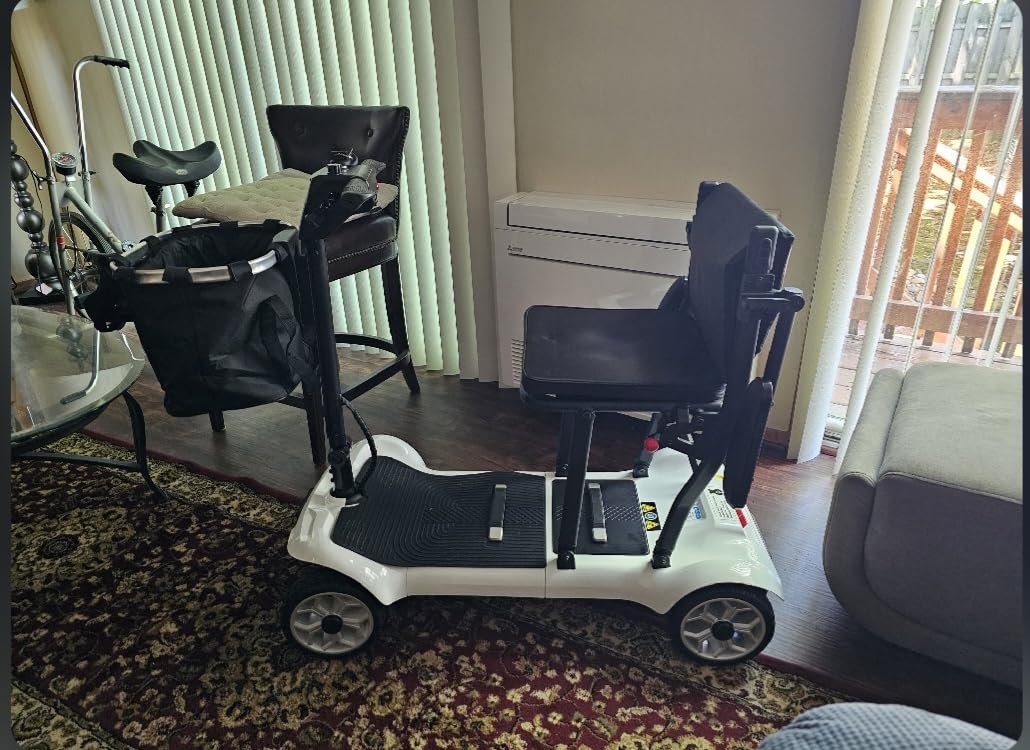
The PAISEEC D3 is the one to look at if you fly. It is listed as TSA approved, and one owner completed a 40-day trip across six airlines, cobblestones and dusty roads without incident, which is a stronger endorsement than any spec sheet. Two detachable lithium batteries of about 4 pounds each deliver up to 18.6 miles and can be charged away from the scooter.
That battery arrangement is the real indoor story too. A 4-pound pack is something you can carry to a wall outlet in a hallway or a bedroom, so a nightstand charging setup is realistic even in a small apartment.
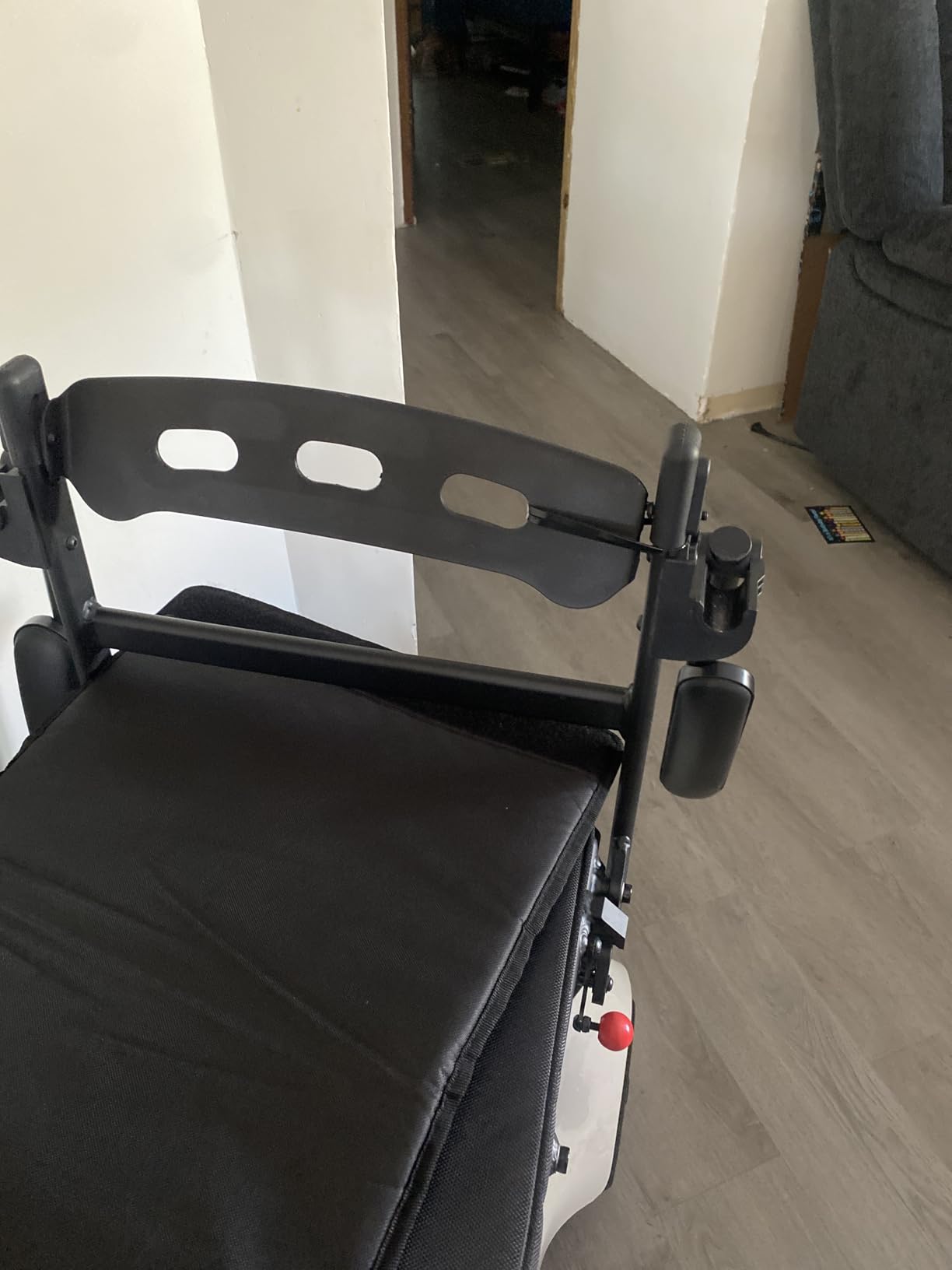
The aluminum frame weighs 39.7 pounds without batteries and supports up to 275 pounds, with a 270W brushless motor, a 5 mph top speed and incline capability up to 8 degrees. Controls are distinctive: dual throttle levers, one for forward and one for reverse, with an automatic electronic brake the moment you release.
There is a headlight and horn, an adjustable handlebar and armrests that fold down, plus a large basket and under-seat space for a travel bag. The frame folds to 38.8 by 19.7 by 36.2 inches, and a one-year commitment with seven-day online support backs it.
Who the PAISEEC D3 suits indoors
Pick this if you split your time between home and travel, or if you need to charge a small battery indoors overnight rather than wheeling a full scooter to an outlet. The folding armrests that never obstruct transfers also suit riders with limited shoulder movement.
For a tall rider, sit on it before buying. Several reviewers who did thorough research before purchasing highlight the range and handling, but the fit is the thing to verify.
Where the PAISEEC D3 falls short
The 43-inch turning radius is wider than the compact leaders, so in a genuinely tight room you will reverse and shuffle more than you would with the Mbxcooter or Ecomobi. The 8-inch rubber tires also transmit bumps and cracks rather than absorbing them.
And one reviewer reports a battery type that an airline did not accept despite the TSA approval claim. Confirm battery watt-hours with your airline in writing before you book, because approval changes.
12. Havenland 3-Wheel Electric Scooter – Best for Rugged Access to a Home
- 31.5 inch turning radius is among the tightest here
- 330 lb load capacity is the highest listed
- dual 500W brushless hub motors
- large 12 inch front and 10 inch rear pneumatic wheels roll over uneven surfaces and clear curbs up to 2.76 inches
- three speed settings plus a 3.7 mph reverse
- Seat does not fold and must be removed before storage
- actual weight is higher than the listed 48.5 lb figure
- small narrow seat with a short foot plate
- reported wobbly feel while seated and a parking brake that does not fully stop the scooter
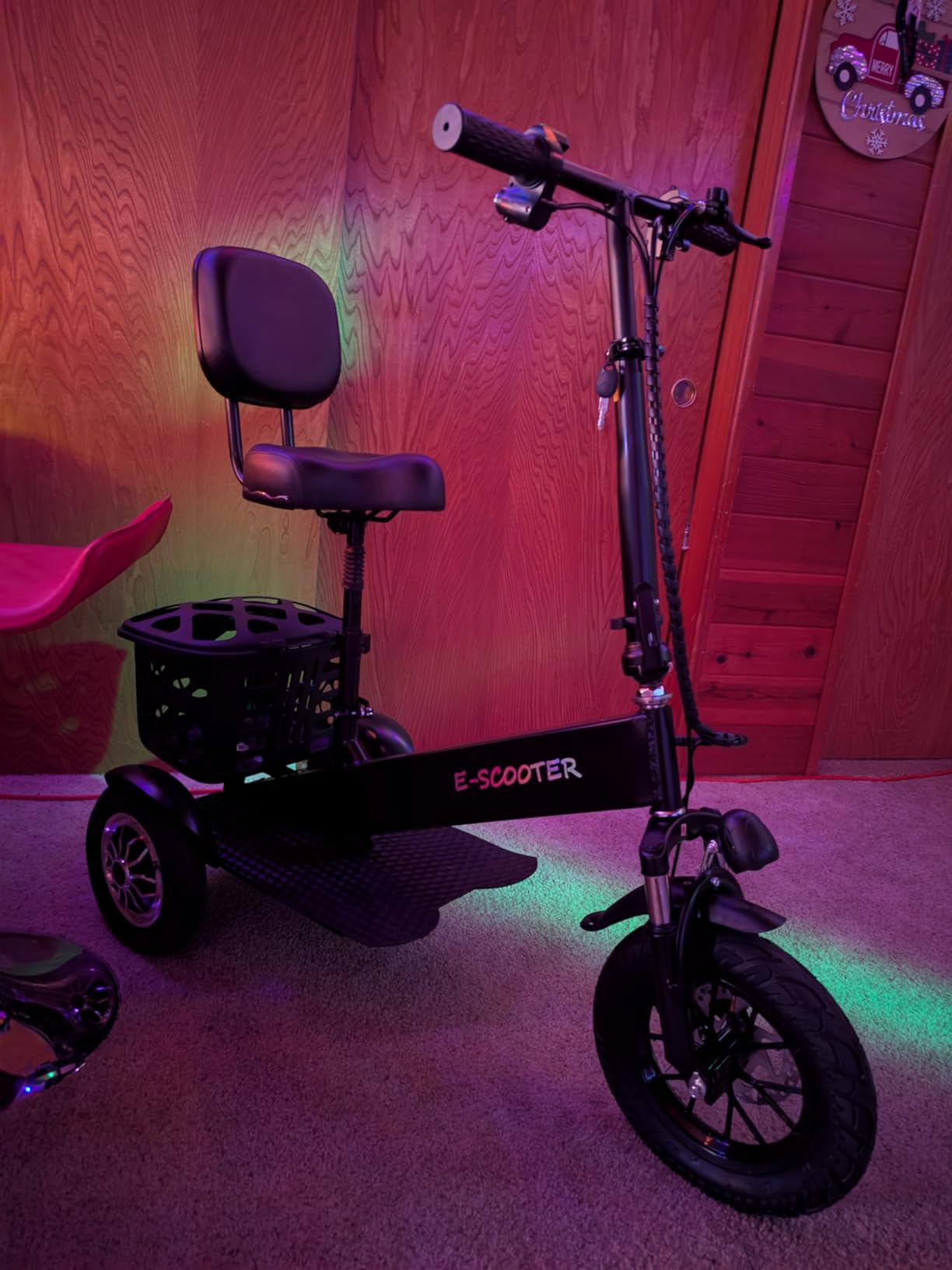
The Havenland is here for a specific indoor situation: a home with a rough approach. Where most scooters here have 8-inch wheels, this one runs 12-inch front and 10-inch rear pneumatic tires that clear curbs up to 2.76 inches and roll over uneven ground, and the dual 500W brushless hub motors have real torque behind them.
Its 31.5-inch turning radius is among the tightest we found, and the 330-pound load rating is the highest in the roundup, so it covers a wide range of riders. Three speed settings at 6.2, 12.4 and 18.6 mph, plus a 3.7 mph reverse, give you real control indoors even though the top setting is only for outdoor use.
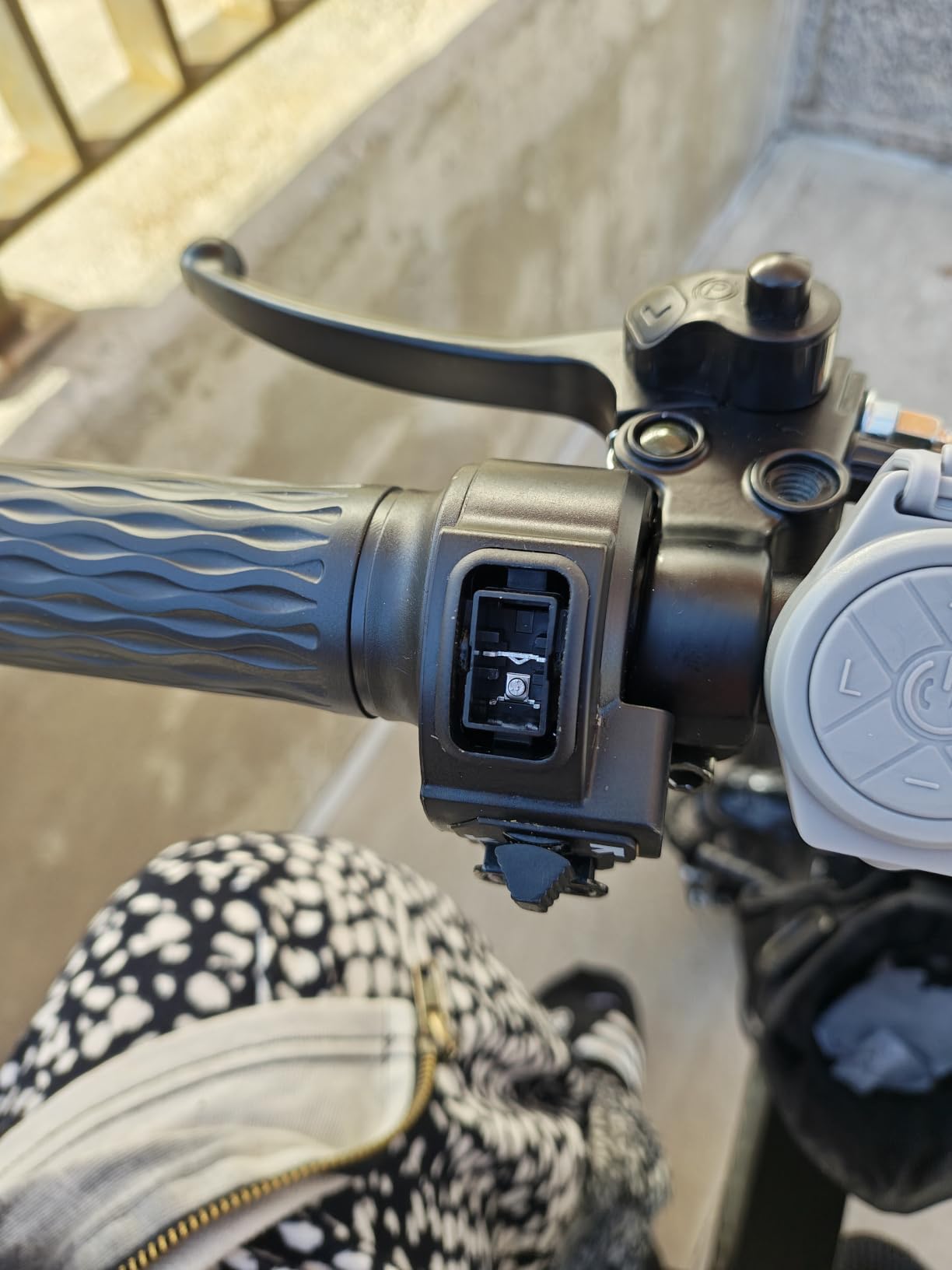
Reviewers like the value, the power, the range of about 10.5 miles from the 36V 8Ah lithium battery, and the simple assembly. The body measures 41.3 by 19.6 by 37 inches with 15.7 inches of legroom, and there is a handbrake with parking gear plus headlights and a horn on the console.
The digital display shows speed and battery level, and the seat and handlebars both adjust. For someone who is not fussy about cosmetics, the engineering is more than adequate for neighborhood travel and indoor use.
Who the Havenland suits indoors
Choose it if you still want to get out of the house over gravel, grass edges or a cracked driveway without feeling like the front wheel will catch. The larger wheels and higher ground clearance handle what the 8-inch scooters here cannot.
It is also the broadest fit by weight, at 330 pounds, and the reverse gear at 3.7 mph is helpful when backing out of a narrow hall into a tight living room.
Where the Havenland falls short
Read the critical reviews before ordering, because several flag gaps between the listing and the machine. The seat does not fold as the images suggest and has to be removed before storage, and the real weight is higher than the listed 48.5 pounds, which makes carrying it harder than expected.
Comfort is the other issue: the seat is small and narrow despite the thick cushioning, the foot plate is too short to place a full foot on, and some owners report a loose swivel and a wobbly side-to-side feel while seated. The manual also states flat dry smooth terrain and 5-degree ramps, which does not match the advertised 30-degree incline capability, and one buyer reported reverse not working out of the box.
How to Measure Your Space Before You Buy
Almost every indoor scooter return story traces back to a number nobody measured. Spend twenty minutes with a tape measure before you order, and write the answers down. Here is the checklist we use.
Narrowest doorway. Measure the clear opening of the tightest interior door, not the door frame. A standard interior door gives roughly 30 to 32 inches of clear width. Subtract the scooter’s overall width, then leave 1 to 2 inches of clearance on each side so you do not scrape the frame on every pass. For scale, the scooters here run from about 19.6 inches wide to 25 inches wide.
Hallway width. Measure the corridor at its tightest, and check whether there is a turn at the end. A 33-inch turning radius needs a bit more than 33 inches of clear space to complete a turn, and a 45.5-inch radius needs considerably more.
Elevator door and cab size. Many building elevators have narrower doors than the cabs inside them. Measure both, and add the scooter’s length of around 36 to 44 inches against the cab’s diagonal, not just its width.
Turning clearance in the kitchen and bedroom. The most common failure is not the doorway, it is the space between a refrigerator and a wall where you need to turn a full circle. Mark the diameter of your tightest room on the floor with tape.
Every threshold and raised entry. Note the height of each step, trim and sill. The Drive Medical Spitfire Scout has 2.5 inches of ground clearance, so steps taller than about 1.5 inches will catch its rear wheels, and the Havenland clears curbs up to 2.76 inches.
Storage spot, measured. Decide where the scooter lives. Measure the closet width, the depth under the bed or the trunk opening. An 11.8 by 19.7 by 33.8 inch folded package needs a closet that is tall as well as wide.
Charging outlet distance. Walk the route from your bed or chair to the nearest outlet. If it means crossing a doorway the scooter cannot pass, plan on removing the battery and charging it indoors instead.
Buying Guide: How to Choose a 3-Wheel Scooter for Indoor Use
Seven decisions stand between you and the right scooter. Work through them in order, because each one eliminates more options than the one before it.
Turning radius under about 47 inches. This is the number that decides whether you can live with the machine. Among the twelve here, four publish a figure of 33 inches or less. If a brand does not publish one, ask for it in writing, because a spec sheet without a turning radius is a spec sheet that assumes you are not buying for indoors.
Overall width against your narrowest doorway. Subtract the width from your clear doorway opening and add an inch per side. Compact models at 19.6 to 20.5 inches wide pass through most standard interior doors. A 25-inch full-size chassis will not, which is a real constraint in older homes with 28-inch doorways.
Weight capacity with about 30 pounds of headroom. Pick a scooter rated at least 30 pounds above your body weight, and add your typical cargo weight if you will use a basket heavily. A 264-pound scooter suits a 200-pound rider with room to spare; a 235-pound rider should be looking at 275-pound and 300-pound models instead.
Tires matched to your floor. Nearly every scooter here uses flat-free non-marking tires, and for indoor use on hardwood, tile, vinyl and low-pile carpet that is the right call. Non-marking rubber leaves no scuff, unlike pneumatic rubber. Pneumatic tires, found on the Havenland, feel better over outdoor cracks and gravel but need pressure checks and can mark a floor.
Stability hardware, honestly. Three wheels tip more readily than four. Look for anti-tip wheels or a rear anti-roll wheel, which the Spitfire Scout, Mbxcooter, Ecomobi, iScooter and Rascal all have. Add electromagnetic or regenerative braking for controlled slowing in hallways, and keep the speed dial low indoors. If you have a diagnosed balance condition, this is the point to stop and talk to a clinician.
Battery and indoor charging logistics. Most indoor use is well served by 6 to 12 miles of range. The bigger question is where the charger lives. A removable battery, on the SuperHandy, GREAT CIRCLE, Mbxcooter, Ecomobi, iScooter and PAISEEC, means you charge a small pack indoors overnight and leave the chassis parked. A non-removable pack, like the Vive’s non-standard battery, means the whole unit goes near the outlet.
Folding versus disassembly, and indoor-only versus mixed use. A one-lift fold, on the Mbxcooter and Ecomobi, is the fastest to store. A five or four-piece breakdown, on the SuperHandy, Vive, GREAT CIRCLE, Go-Go Ultra X and Rascal, is more pieces but often lighter individually. If you also need the porch or driveway, avoid the 8-inch-wheeled models and check ground clearance first.
Two questions come up constantly, so they are worth answering directly. On indoor versus indoor-and-outdoor: a scooter designed for both needs larger wheels, real ground clearance and a climbing angle, and it will always be heavier and turn less tightly than an indoor-only unit. Riders who need the porch should weight the Spitfire Scout, Rascal Venture and Havenland more heavily, and accept a wider footprint. On apartment noise: reverse gear beeping is a genuine annoyance that owners raise often in shared indoor spaces, and the only real fix is a speed setting low enough that the tone never triggers, plus a tiller that is not hypersensitive.
Storage deserves a sentence of its own. Apartment residents report that vertical hanging, under-bed placement and closet hooks are what make a scooter viable at all in a small home. A folded unit that stands 33.8 inches tall needs a closet with real height, and a 96.5-pound full-size scooter needs a floor corner rather than a shelf. If you also use a rollator or resistance bands for at-home strength work between scooter trips, our mobility band guide covers the complementary side of indoor mobility.
One last practical note. If you intend to seek reimbursement, tell your clinician you plan indoor-focused use before you buy. Coverage rules vary, and a documented mobility limitation tied to specific activities is a stronger case than a general request.
Frequently Asked Questions
What is the best mobility scooter for both indoor and outdoor use?
Look for a three-wheeler with real ground clearance and wheels larger than 8 inches, because most compact indoor models use small solid tires that struggle on gravel and grass. The Rascal Venture offers about 10 miles per charge with a 33-inch turning radius, and the Havenland runs 12-inch front and 10-inch rear pneumatic wheels with a 330 lb load rating. Expect a trade-off: dual-use scooters are heavier and turn less tightly than indoor-only folders.
What is the best 3-wheel scooter for seniors?
The SuperHandy Foldable is our top overall pick because its 26 lb frame breaks into five pieces that fit a sedan trunk, it has a hot-swappable battery, and it holds up in daily apartment use. If transfers are your hard part rather than storage, the Vive 3 Wheel Scooter wins on its swivel seat and flip-up armrests. If turning radius is the problem, the Mbxcooter M1Pro publishes a 20-inch figure.
Which mobility scooter has the tightest turning radius?
Among the twelve we reviewed, the Mbxcooter M1Pro is the tightest at a published 20 inches. Next are the Havenland at 31.5 inches, and the Ecomobi M3 and Rascal Venture at 33 inches. The PAISEEC D3 lists 43 inches and the Drive Medical Spitfire Scout 45.5 inches, while several brands publish no turning radius at all. For indoor use, aim under about 47 inches.
Is a 3 wheel mobility scooter safe?
A three-wheel scooter is safe for many riders indoors, but it carries more tip-over risk than a four-wheel model because the base is narrower. Reduce that risk by choosing anti-tip or anti-rollback rear wheels, keeping the speed dial low on smooth floors, and avoiding raised thresholds taller than your scooter’s ground clearance. Riders with balance impairment should consult a clinician before choosing a three-wheeler.
Can I keep a mobility scooter indoors?
Yes, and in a small apartment you may have little choice. Plan three things: a storage spot measured against the folded or disassembled dimensions, a charging arrangement, and a path from the storage spot to every doorway. A removable battery makes charging indoors simple, since you carry a small pack to an outlet instead of moving the whole scooter.
What are some common problems with mobility scooters?
The complaints that repeat across reviews are a low ground clearance that catches on doorsteps, small 8-inch wheels that feel tippy outdoors, batteries with coarse gauges that are not precise, charging ports placed too low to reach, and armrests missing entirely on compact models. Weight is the other recurring theme, since a 26 lb frame still means lifting 35 lb to load into a car. Check warranty terms on drive components before buying.
What is an alternative to a mobility scooter?
A power wheelchair gives finer joystick control and a smaller turning circle indoors, but usually less range and a higher cost. A rollator or walker works if you can still walk short distances with support. A transfer chair helps getting in and out of bed or a car but does not move you around a home independently. Which option fits depends on how far you walk and for how long.
Final Verdict: The Indoor Scooter Shortlist
The best 3 wheel mobility scooters for indoor use come down to three numbers you can measure tonight: your narrowest doorway, your tightest turning space, and the weight of the person who will lift it. Match those first, and the choice narrows fast.
Our winner remains the SuperHandy Foldable for its 26-pound frame, five-piece breakdown and swappable battery. Take the Vive if transfers are your daily struggle, the Mbxcooter M1Pro if your hallways are genuinely narrow, the Rascal Venture if you want full-size comfort with a 33-inch radius, and the Spitfire Scout if anti-tip hardware and a 300-pound capacity matter most. Measure before you order, keep the speed dial low on smooth floors, and check in with your clinician if you have any balance concerns.
This roundup was compiled and reviewed for 2026. Prices and specifications change, so confirm the current figures on the product page before you buy.