
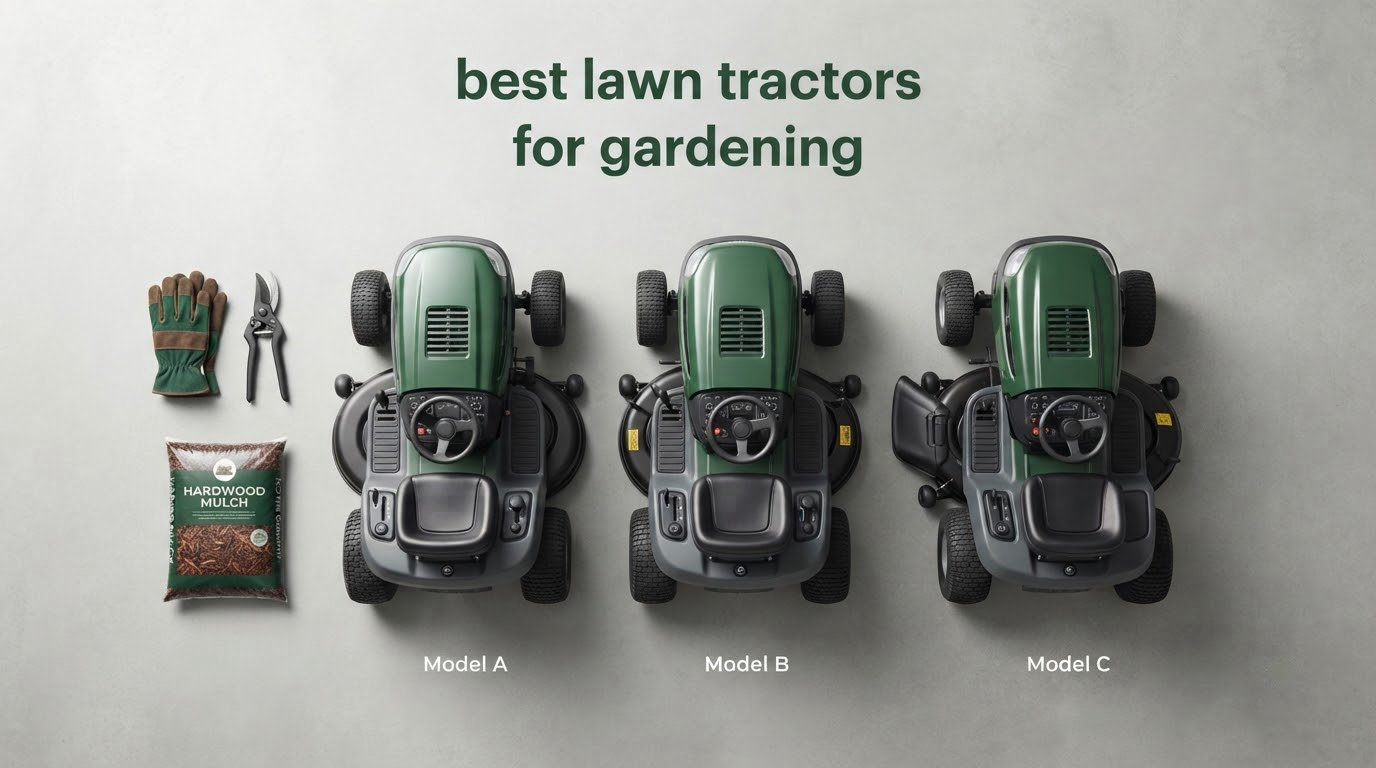
The best lawn tractors for gardening are the machines that can do more than cut grass, and in 2026 that increasingly means a battery-electric tractor rather than a gas one. Most major gas lawn tractor brands are sold exclusively through dealers, so the tractors you can actually buy online today are cordless models built on the same chassis logic: a frame, a deck, a drive system and a rear hitch. Our picks below are ranked on the things that decide whether a tractor earns its space on a property with a vegetable garden, not just an expanse of turf.
Here is how we chose. We looked at engine or motor output measured the way each brand states it, cutting-deck width and construction, drive speed and control layout, hitch and towing capability, slope rating, warranty length and how many owners have actually logged hours on the machine. We weighted garden-task capability heavily: a tractor that can pull a loaded cart or a tiller earns its keep over a decade, while a pure mower earns it over a season.
One quick reality check on thresholds. A riding machine generally makes sense at about half an acre or more, or any time a walk-behind pushes past 45 minutes of mowing per cut. Below that, storage footprint and maneuvering eat the time you saved. And measure your narrowest gate and shed door before you fall in love with a wide deck; a 52-inch deck on a tractor will not clear a 48-inch opening no matter how well it performs in open grass.
We spent several weeks going through the available owner reviews on the six machines below, comparing complaint patterns across them and separating thin evidence from solid evidence, and cross-checking what owners say on r/lawnmowers and r/BuyItForLife about attachment capability and long-term durability. What follows is what we found, including where the evidence is thin.
Table of Contents
Top 3 Picks for Lawn Tractors That Earn Their Keep in 2026

EGO ZT4204L 42 inch Zero Turn
- 42 inch stamped steel deck
- Cuts up to 2 acres per charge
- Up to 8 MPH
- 10 height positions

EGO TR4204 42 inch Tractor
- Rear tow hitch
- 42 inch stamped steel deck
- Up to 1.5 acres per charge
- Dual brushless motors

EGO ZT5207L 52 inch Zero Turn
- 52 inch deck
- Cuts up to 4 acres per charge
- 25 HP equivalent
- 8 MPH
Best Lawn Tractors for Gardening in 2026 at a Glance
All six machines below carry a stamped steel deck. Two of them publish a tow rating, and deck width, drive layout and per-charge acreage differ enough that your property size, not the spec sheet, should pick your winner.
| Product | Specifications | Action |
|---|---|---|
| EGO ZT4204L 42 inch Zero Turn |
|
Check Latest Price |
| EGO TR4204 42 inch Tractor |
|
Check Latest Price |
| EGO ZT5207L 52 inch Zero Turn |
|
Check Latest Price |
 Greenworks 60V 30 Inch Tractor Greenworks 60V 30 Inch Tractor |
|
Check Latest Price |
 GIYI 42 Inch Cordless Tractor GIYI 42 Inch Cordless Tractor |
|
Check Latest Price |
 Speedy 25HP 803cc Zero Turn Speedy 25HP 803cc Zero Turn |
|
Check Latest Price |
1. EGO Power+ ZT4204L 42 Inch Zero Turn – Editor’s Choice
- Cuts up to 2 acres on one charge
- Up to 8 MPH mowing speed
- 10 cutting height positions from 1.5 to 4.5 inches
- Batteries cross-compatible with EGO 56V ARC Lithium tools
- Quiet operation with no fuel or oil maintenance
- Deck height indicator hard to read from the seat
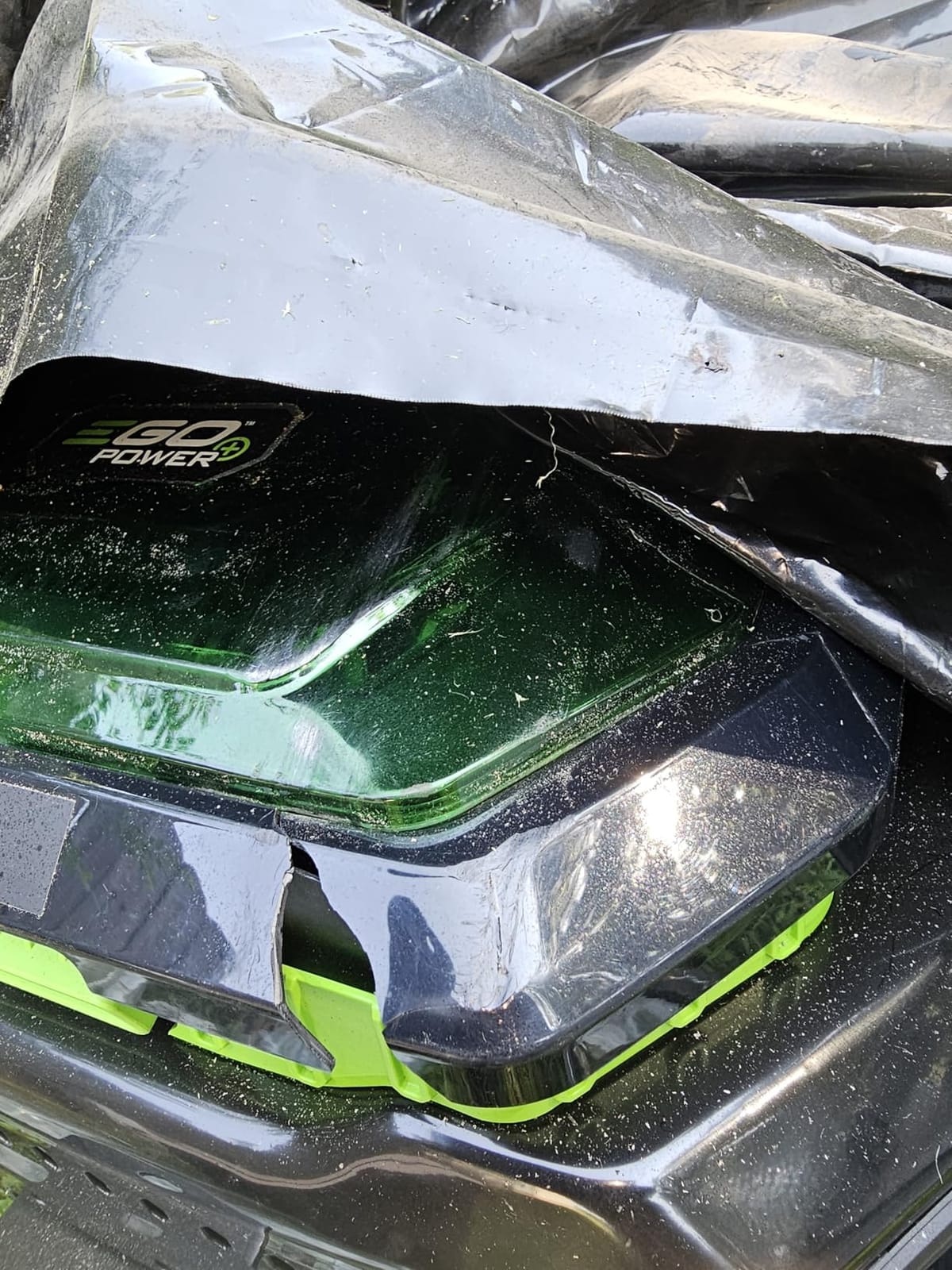
- Heavy steel roll-off crate complicates unboxing
- Some reports of battery management and electronics faults
Best for: owners of roughly one to two acres who want 2 acres cut per charge at up to 8 MPH, and who will accept a machine with no moving belts under the deck. EGO rates this at the equivalent of 22 horsepower, with four 56V 10.0Ah batteries included.
Across 149 reviews the pattern is consistent. Owners like the cut quality, the near-silence, and the fact that one charge usually covers a one-acre property with charge still showing. Several report matching or beating a previous gas zero-turn they owned for years, which is the single strongest endorsement this category can produce.
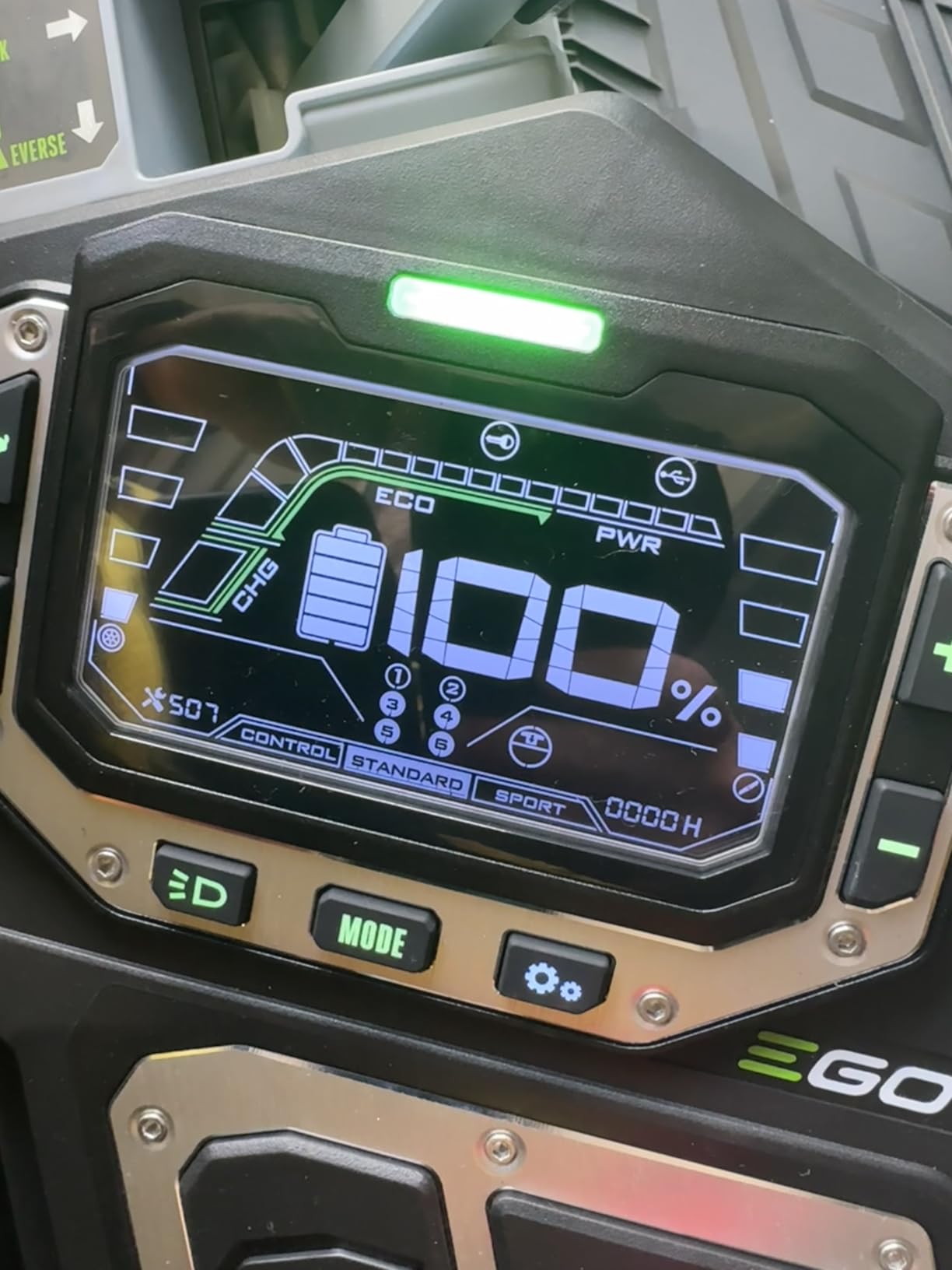
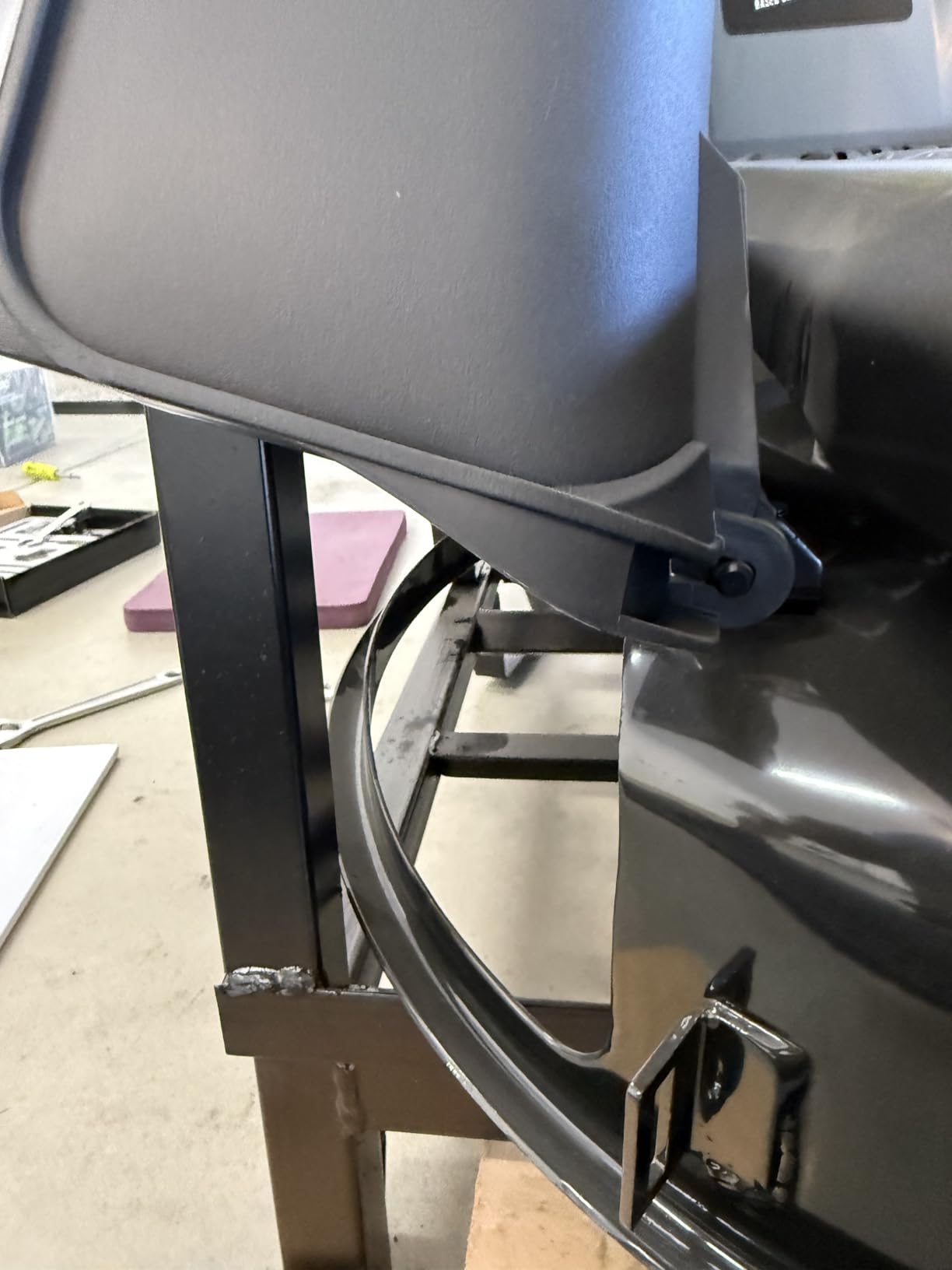
The criticisms are about convenience rather than capability. The deck cut-depth indicator sits where you cannot read it from the seated position, so height changes mean stopping and leaning. Unboxing is a genuine chore: the machine arrives in a heavy steel roll-off crate that takes time and extra tools to break down. A smaller group of owners report electronics and battery-management faults, including error 607 shutdowns, and one reported a failed firmware update.
The deck is a 42-inch stamped steel unit with 3-in-1 mulching, bagging and side discharge, adjustable across 10 positions from 1.5 to 4.5 inches. Charging is fast by electric standards: about two hours for all four batteries on the included wall charger, and an LCD interface lets you set driving modes.
What this tractor is built for
This is a mowing-first machine with hauling capability bolted on rather than a work-first tractor. Zero-turn steering and 8 MPH travel speed are what make it efficient on open lawn, and the 2-acre-per-charge figure means most half-acre to two-acre properties finish on one charge with a spare pack in reserve.
For garden work, treat the hitch as light duty. It will move a small cart, bags of compost and a trailer of leaf litter, which is genuinely useful. It is not a tilling platform, and the stamped deck is not what you want when blades hit a rock or a buried root.
Where it falls short
If your property is tight, a zero-turn’s steering inputs take practice, and this machine weighs 620 pounds. If your ground is uneven or you plan serious bed preparation, the faster-but-lighter approach here is not the right tool. And the cluster of electronics complaints, while not dominant, is a category of failure no small engine shop can fix for you.
One more caution: the crate disposal is a real cost in time. Factor an hour into delivery day if you are not near a scrap metal recycler.
2. EGO Power+ TR4204 42 Inch Tractor – Best for Garden Work
- Rear tow hitch for hauling around the property
- Dual brushless cutting motors mean no belts to replace
- Cuts up to 1.5 acres on a single charge
- LCD display with three blade settings and cruise control
- 5 year tool warranty plus LED lights and a USB port
- Six included batteries mean a long first charge
- Steering-wheel format feels less maneuverable than a zero-turn
- Peak output only reached with all six batteries fitted
Best for: owners whose property includes a vegetable garden, compost operation or a plot they actually tow things around. This is the one in the set with a rear tow hitch named as a feature, and that single line is why it sits at number two.
Power comes from Peak Power Technology, which combines up to six 56V ARC Lithium batteries for up to 20,000 watts, equivalent to a 21-horsepower gas engine. Output is only available at full with all six packs installed, so plan your acreage around the charge, not the headline number.
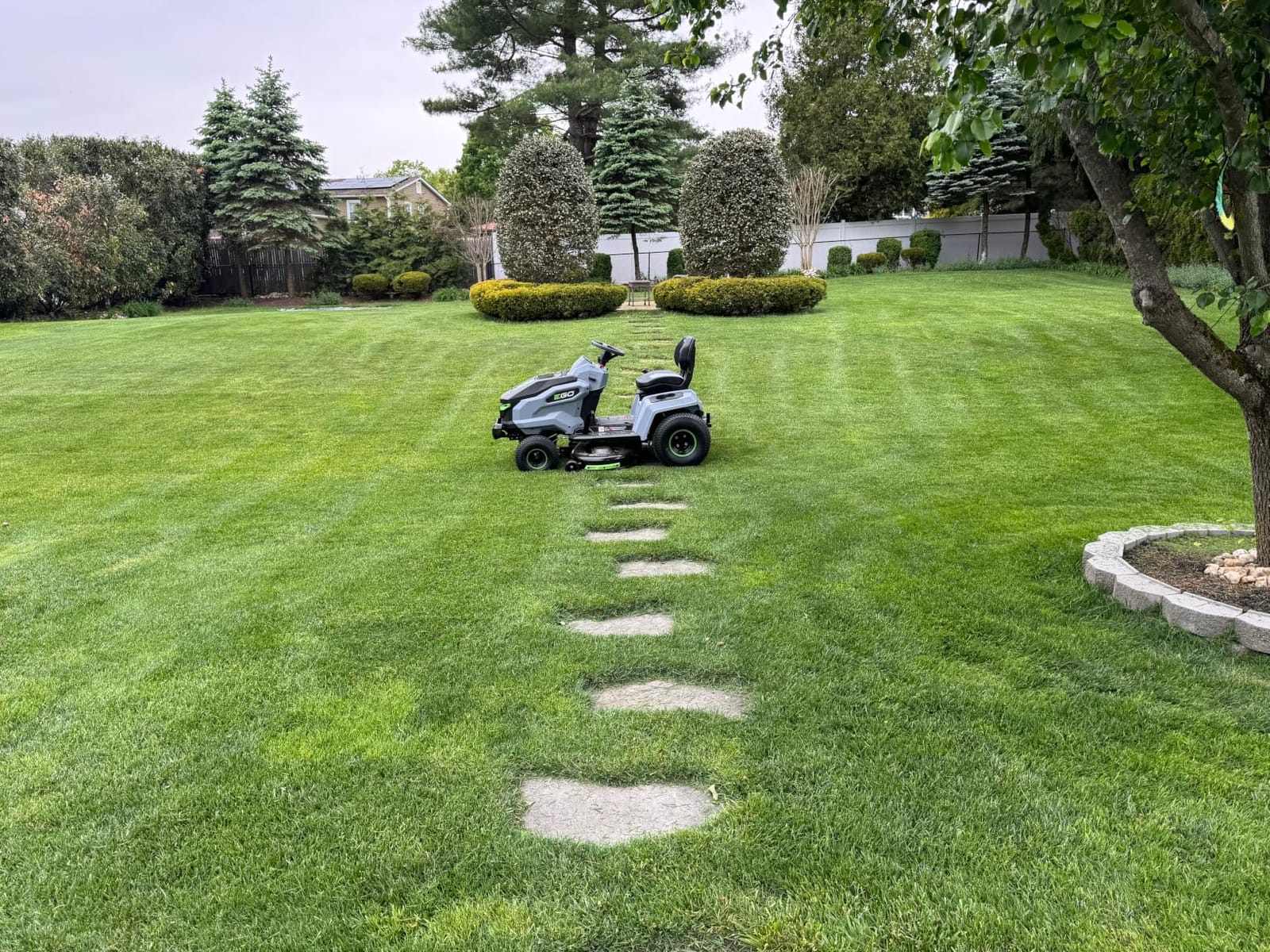
Across 135 reviews the praise centers on gas-equivalent power, a clean cut, straightforward controls and very little maintenance. The dual brushless cutting motors mean there are no drive belts to replace and almost nothing under the deck to service. The LCD display offers three blade settings, three drive speeds and cruise control, and mowing speed tops out at 6 MPH.
The drawbacks are logistical rather than mechanical. Six batteries means a substantial charge time before the first cut, which is a bad look if you borrow the machine from a neighbour on a Saturday morning. Some owners also find the steering-wheel tractor format less nimble than the zero-turn sibling. The warranty is a five-year tool warranty, which is longer than most gas warranties in this class.
The deck is 42-inch stamped steel with 12 cutting height positions from 1.5 to 4.5 inches. LED lights, a USB charging port and Bluetooth come standard, which matters if you mow at dusk or want the app as a key.
What this tractor is built for
The hitch is the reason to buy this machine over the number one pick. Six batteries and a rear tow hitch means you can move feed sacks, firewood, compost and garden waste without a second machine, and the cruise control makes longer hauls less tiring than they would be on a mower deck. For a smallholding, that combination replaces a dedicated utility cart.
Because it is a tractor chassis rather than a zero-turn, it also turns in tighter spaces than the machines with lap bars, which matters around a vegetable plot with fenced edges and a shed behind it.
Where it falls short
One and a half acres per charge is the honest figure, and it is well short of the number-one machine. If you have three acres of open lawn and no interest in swapping batteries mid-mow, this is the wrong pick. The size of the machine at 640 pounds also matters if you have a small shed and tight side-yard access.
Note too that a stamped deck and brushless motors are excellent for grass and entirely unsuited to ground-engaging work. This tractor tows; it does not till.
3. EGO Power+ ZT5207L 52 Inch Zero Turn – Best for Large Acreage
- Widest deck in the lineup at 52 inches
- Cuts up to 4 acres on a single charge
- 25 HP gas equivalent performance
- Comfortable adjustable seat and lap bars
- Deck wash port and Bluetooth app control
- Metal crate takes an hour or more to disassemble
- Wide front axle can clip obstacles before the deck clears them
- Real-world acreage falls short in thick spring grass
Best for: owners of three to four acres of open, relatively level ground who want to finish a cut in one session. This is the biggest deck and the longest per-charge runtime in the group, with six 12.0Ah batteries covering up to four acres.
Two-season owners describe it as a convincing gas replacement that cuts faster and quieter with no consumables. Engine output is stated as equivalent to a 25-horsepower engine, with speed ranging from 4 to 8 MPH depending on mode. Comfort is a genuine strength: owners with more than one operator comment on the adjustable seat and lap bars fitting larger riders.
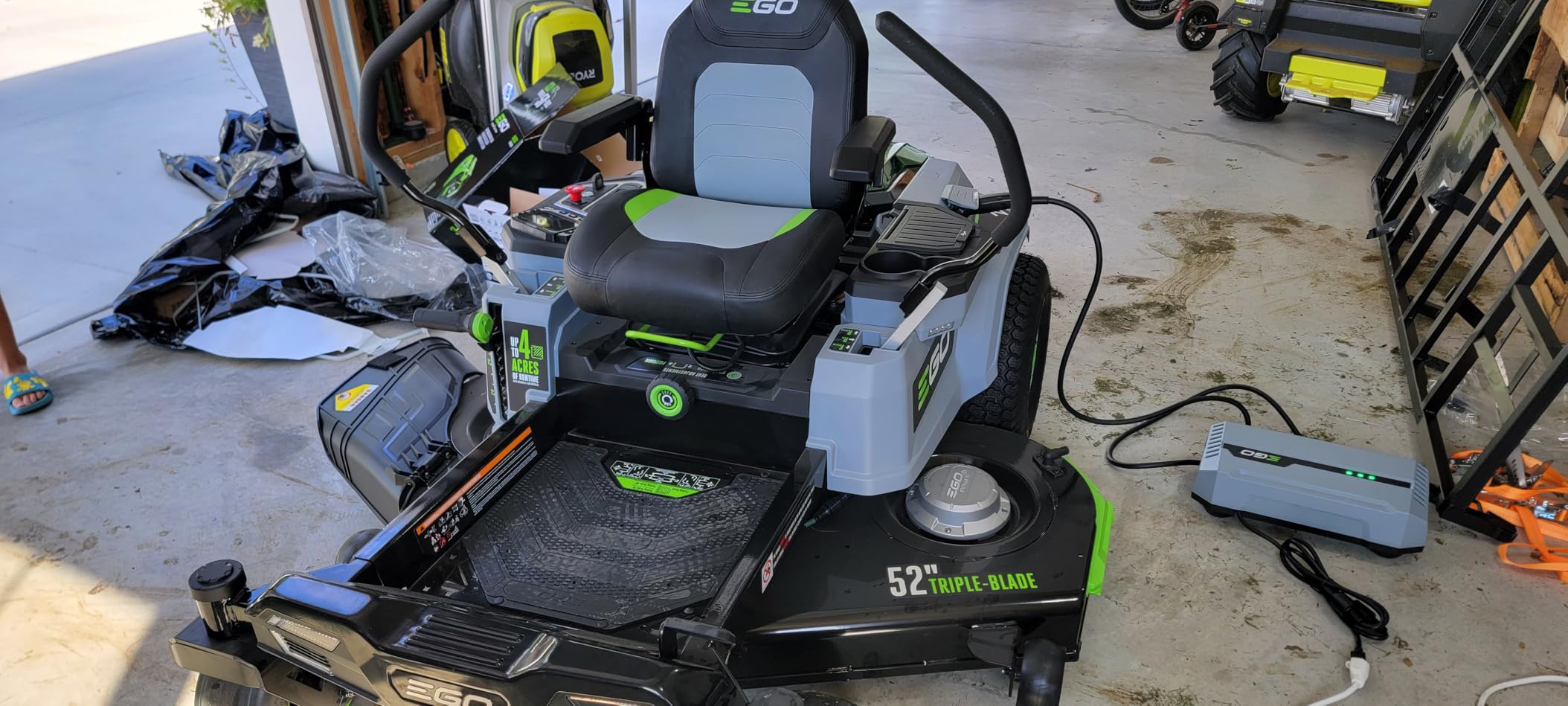
There is no gas, oil, spark plug or fuel line to maintain, which removes the winter-start and carburetor problems that make gas tractors frustrating to keep in storage over winter. A deck wash port accepts a hose, and the Bluetooth app adjusts blade speed, height and drive mode and can double as an ignition key.
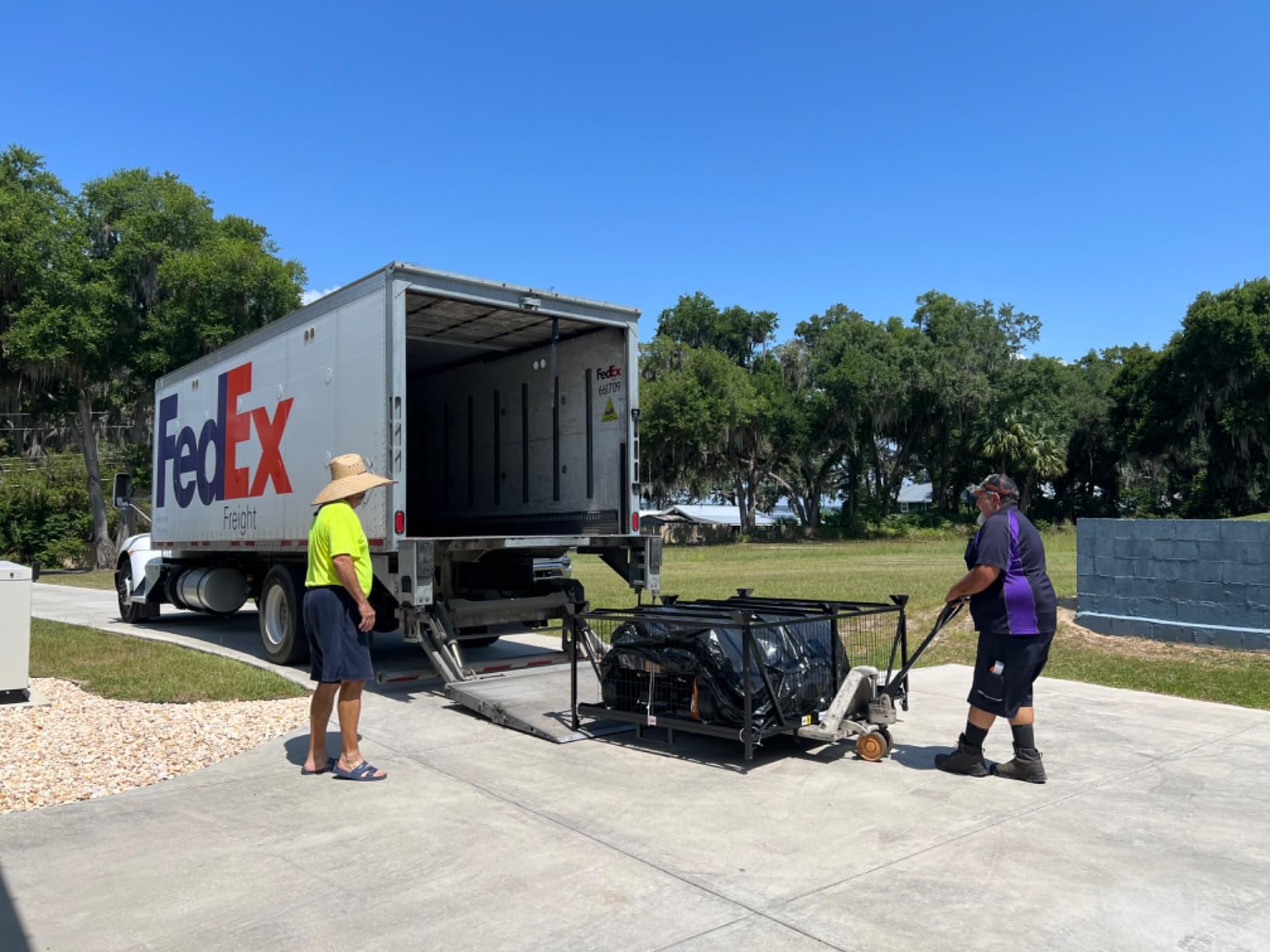
The complaints are specific. Disassembling the metal crate takes an hour or more and leaves a bulky item to dispose of. The wide front axle can strike obstacles before the 52-inch deck has cleared them, so trim near trees and posts with care. Several owners report that real-world acreage on thick spring grass falls short of the four-acre claim, which is the most common complaint by far.
At 527.4 pounds this is the lightest of the three EGO machines despite the biggest deck, a consequence of the battery platform. Cutting height runs from 1.5 to 4.5 inches across 10 positions.
What this tractor is built for
Large, open, mown regularly. The 52-inch deck and 4-acre charge figure mean a four-acre property is one job rather than two, and 8 MPH travel speed is what makes that realistic. The lighter weight than the 42-inch model also helps on softer ground in spring, when a wet lawn takes a heavier machine badly.
For a garden plot, its value is time and range. You can move to the far end of the property, mow, and come back without charging, which no sub-two-acre machine can promise.
Where it falls short
A 52-inch deck needs a wide gate, a wide shed and a wide turning area, and owners report front-end clipping precisely where tight spaces matter. On a property broken up by fences, trees and beds, that width becomes a liability and you will end up mowing narrow strips with a big machine. This is also the model with the most reviews flagging endurance shortfalls in tall grass, so a four-acre property that gets away from you will test it.
One owner reported a defective seat-mount frame post on an original unit, and brand support response times were described as slow by several reviewers.
4. Greenworks 60V 30 Inch Riding Tractor – Best for Narrow Gates
- Compact 30 inch deck fits through narrow gates and tight storage
- Rear hitch rated to tow up to 200 lbs
- Handles slopes up to 15 degrees with adaptive traction control
- Deck wash port and 7-position height adjustment
- One 60V battery platform runs 75 plus other tools
- Plastic side discharge chute repeatedly comes loose
- Chute rides on the grass at a 2.5 inch deck setting
- Ride and steering described as rough
- Crate is heavy and assembly is awkward
Best for: owners with a small property, a narrow gate, a tight shed and a slope they worry about. At 33.46 inches wide this is the narrowest machine in the lineup, and one of only two here with a published tow rating.
The deck is a 30-inch heavy-duty 4-in-1 stamped steel unit with an integrated deck wash port, running from 1.5 to 4.5 inches across seven single-lever positions. Output is stated as equivalent to a 16-horsepower gas engine, with brushless cutting motor technology and cutting speeds up to 6 MPH. Four 60V 8.0Ah batteries cover up to 1.25 acres.
The rear hitch is rated to tow up to 200 lbs, which makes this the most explicitly garden-capable machine in the lineup alongside the number-two pick. Owners also praise the belt-free, pulley-free drivetrain for how little cleanup it needs, and several note their batteries still had substantial charge left after a half-acre cut.
The single most repeated complaint is the plastic side discharge chute. Multiple reviews describe it coming loose during use, riding on the grass at a 2.5-inch deck setting, and twisting or detaching on uneven ground. Other owners describe the ride as rough and the steering as difficult, with a possible issue involving loose front wheels. Assembly requires finding tools hidden behind the seat, and the crate itself is heavy.
Warranty is four years on tool and battery. The battery platform is genuinely broad: the same 60V pack powers over 75 other products, so a single battery can mow, blow, trim and cultivate.
What this tractor is built for
Constraints. This machine exists for people whose gate is narrower than a standard deck and whose ground tilts. The 15-degree slope rating with adaptive traction control is a stated engineering claim, and traction control is meant to keep the machine straight and prevent sliding on hills, which is a genuine advantage on the uneven ground that trips up lighter machines.
For a small garden, the 200-pound tow rating is the number to plan around. That is a cart of compost, a trailer of pots, a bag of soil. It is not a cultivator and the stamped deck will not forgive stones.
Where it falls short
Thirty inches is a narrow cut, so an acre-plus of open lawn will take meaningfully longer than the machines above. The chute problem is real enough that you should expect to re-seat it mid-job. And the rough ride plus difficult steering reported by several owners is worth a test drive before you commit, especially if your ground is uneven, which is the exact condition owners say makes the chute detach.
5. GIYI 42 Inch Cordless Riding Tractor – Best for Lightweight Handling
GIYI Electric Riding Lawn Mower, Includes (6) 40V 6.0Ah Batteries and Charger, Riding Lawn Tractor with 42″ Deck Cordless Tractor
- Lightest machine in the set at 451 pounds
- Runtime of 60 to 80 minutes per charge from six batteries
- Belt-free brushless motor design
- Comfortable ergonomic low-back seat
- Handles slopes up to 15 degrees
- Only one customer review
- so long-term reliability is unverified
- 40V platform is smaller than the 56V and 60V packs used by rivals
- Claimed 1.2 acre coverage is unconfirmed by owners
Best for: owners who need a 42-inch cut but want the lightest machine in this group, and who care most about maneuvering in a small space. At 451 pounds this sits well under the 527 to 640 pound range the other battery tractors occupy.
Six 40V 6.0Ah lithium-ion batteries give a runtime of 60 to 80 minutes per charge, with a mowing speed up to 6 MPH. The stated coverage is up to 1.2 acres, and the manufacturer lists slope handling up to 15 degrees. The deck is a 42-inch stamped steel unit with nine height settings from about 1.37 to 4.52 inches, on 16-inch wheels.
Here we have to be direct about the evidence. There is a single verified owner review on this machine. It is a five-star review that reports ample runtime, a comfortable ride and the elimination of gasoline, oil and engine maintenance, and that is genuinely all we know. We have no multi-season data, no failure pattern and no service history, and we are not going to dress up one review as a track record.
The design logic is sound on paper: a belt-free brushless motor has nothing to replace under the deck, and the low-back seat and smaller frame should make this the easiest machine here to store and get in and out of a shed. Overall width is 48.62 inches, narrower than the 53-inch and 62-inch figures listed for two of the other tractors, which helps at a gate.
What this tractor is built for
Weight and footprint. If storage space is your binding constraint, this is the only machine here where a small shed is realistic. It also means less damage to soft ground and easier recovery if you get stuck on a hill, which is worth more than it sounds on uneven property.
The 40V platform is the weak point on paper. It is a smaller capacity than the 56V and 60V packs used by competing electric tractors, and that is why the runtime figure is expressed in minutes rather than acres.
Where it falls short
Evidence, first and plainly. One review cannot tell you how this machine behaves after 200 hours, whether the battery packs degrade quickly, or whether a service center exists near you. Everything else is secondary to that. Treat this as a spec-sheet purchase and buy it from a seller with a straightforward return policy.
The nine-position height adjustment is also less granular than the ten or twelve positions on the EGO machines, and there is no tow rating or hitch rating published for this unit, so do not plan garden hauling around it.
6. Speedy 25HP 803cc 50 Inch Zero Turn – Best for Heavy-Duty Gas Work
Speedy Zero Turn Riding Lawn Mower, 25HP 803cc Engine, Commercial Grade Tractor
- 25 HP 803cc gasoline engine built for sustained heavy work
- Reinforced heavy-duty steel frame and deck
- Heaviest build in the set at 850 pounds
- Zero turn steering for tight maneuvering around obstacles
- Adjustable high-back seat with armrests
- Only one customer review
- so field reliability is undocumented
- Sold under a generic brand name with no established dealer network
- Gas powertrain means fuel and oil maintenance
Best for: owners who need a gas engine specifically, who mow hard and long, and who can service the machine themselves. This is the only gasoline machine in the lineup and the only one with an engine displacement figure, at 803cc with 25 horsepower.
The build is where the specification is strongest: a reinforced heavy-duty steel frame and deck, an 850-pound machine weight, and zero-turn steering for maneuvering around obstacles. The adjustable high-back seat with armrests and an ergonomic control panel suits long sessions. Cutting height adjusts across four positions from 1.5 to 5 inches.
And we are going to be blunt about the drawback. There is one customer review, it is a five-star rating with no written detail, and there is no established dealer or support network behind the brand name. That is not a deal breaker if you are comfortable sourcing parts yourself, and it is a deal breaker if you expect a warranty claim to be handled locally.
What you take on with a gasoline machine is everything the electric models here avoid: fuel, oil changes, spark plugs, a carburetor that will not start after a winter in storage, and a fuel line that ages. Owners across the r/lawnmowers community describe hard starting and carburetor trouble after winter as one of the most common complaints on gas tractors generally.
What this tractor is built for
Endurance and toughness. If you mow several acres in one sitting, on rough ground, and you would rather not stop to swap batteries, a 25-horsepower gas engine has an honest advantage here. The 850-pound weight and reinforced frame also mean it handles heavy work that wears out lighter machines.
For a garden, the mass and torque make it the most physically capable machine in the set for towing and for working in rough conditions. Frame weight is not a rated hitch, though, and no tow rating is published, so confirm attachment fitment before you plan on it.
Where it falls short
Support, overwhelmingly. There is no dealer network, no parts documentation and no service history to lean on, and the single review means there is no community evidence of how it holds up.
Winter storage is the specific weakness of any gasoline machine, and this one has no owner base to troubleshoot with. The 50-inch deck needs space to be useful, and the listed length of 89.96 inches makes maneuvering on a tight property a genuine test of the zero-turn layout that otherwise works in your favor.
Lawn Tractor vs Garden Tractor vs Riding Mower: Which One Do You Actually Need?
This is the question that decides the purchase, and almost nobody answers it clearly. A riding mower is built to cut grass. A lawn tractor adds a heavier frame, a twin-cylinder-class engine and a rear hitch. A garden tractor goes further still with a cast-iron front axle, ground-engaging capability and attachment mounting designed for repeated work rather than occasional use.
The practical dividing line is not horsepower, it is what hangs off the back and what the front axle is made of. If your list of jobs includes tilling beds, cultivating, spraying or repeated hauling, you need the hitch and the axle. If the list is mowing and nothing else, you do not, and paying for tractor hardware is wasted money.
This matters for the machines in this roundup because five of the six are electric tractors. They sit in the middle ground: a real chassis, a stamped steel deck, a published hitch on two of them, and no ground-engaging attachment mounting. That makes them lawn tractors by frame and logic, and not garden tractors. Anyone planning serious bed preparation should look at the garden tractors built for larger properties instead.
How Big a Deck Do You Need?
Deck width is the easiest number to get wrong because it is measured by cut width, not by the machine’s width. Wider deck means fewer passes and a shorter job, but it also means more maneuvering frustration and a wider gate requirement. Match the deck to the shape of your grass, not just its area.
A 30-inch deck suits a small property where access is tight. A 42-inch deck is the general-purpose choice and handles most half-acre to two-acre properties well. A 52-inch deck is a time-saver on three acres or more of open, level lawn and a nuisance anywhere else. The narrowest gate, shed door and side-yard path on your property set the ceiling, not the acreage.
Before you order any deck wider than 42 inches, walk your property and measure the tightest opening it must pass through, then add several inches of clearance. Owners of wide-deck machines repeatedly report clipping obstacles with the front end before the deck has cleared, which is the practical limit nobody warns you about.
Transmission: Manual or Hydrostatic?
The transmission is the single biggest quality-of-life difference on any riding machine, and it is worth paying up for. A manual transmission uses a mechanical gear selector and a fixed-speed drive. A hydrostatic uses a pump and hydraulic motor, which on a tractor layout is controlled by a foot pedal rather than a lever, so speed is continuous and proportional to how hard you push.
On flat, open lawn the difference is small. Around trees, along beds, on slopes and in reverse, hydrostatic wins clearly: you slow to a crawl without shifting, which is exactly what bed edges and uneven ground require.
There is a reliability caveat that matters here, and it comes from owner forums rather than spec sheets. r/lawnmowers users note that many lawn tractors and cheaper garden tractors use the Tuff Torque K46 class of transaxle, which is not especially durable. The consensus is that it works decently on flat yards and struggles on slopes and rough terrain. If your property tilts, that is a specific reason to favor a machine with a stronger transaxle, or a zero-turn layout that does not use one.
None of the six machines here uses a manual gear selector, and none lists a hydrostatic pump-and-motor drive either. Three are tractor format with steering wheels and three are zero-turns controlled by lap bars, and the electric drivetrains on all five cordless machines make the pedal-versus-lever distinction something you feel only in the controls, not in the transmission itself.
Attachments and Garden Work: What a Tractor Adds Over a Mower
The EGO TR4204 and the Greenworks both have a published tow rating, and both can move real weight around a property. The number-two pick is built around that capability.
A rear hitch is the reason to buy a tractor instead of a better mower. It earns you hauling of compost, soil, firewood, pots and garden waste, plus the ability to pull a small trailer behind the machine rather than drag it by hand. That is real, recurring work, and it is why owners on r/BuyItForLife frame a tractor purchase around attachments rather than mowing speed.
What it does not earn you is bed preparation. Tilling, cultivating and ground-engaging work require cast-iron spindles, a heavier axle and attachment-specific mounting that none of these machines publish. If you want to till, the flail mowers and other compact tractor implements are the comparison to make, and the machine should be chosen for the attachment first.
The Greenworks and the GIYI both publish a 15-degree slope claim, and the Greenworks adds adaptive traction control. A published figure is worth more than an unstated one. On a property with real tilt, work from the bottom upward, mow across the slope rather than up and down it, and check the stated limit before you exceed it.
Snow is the most common second job for tractors in cold climates, and blade selection matters more than the tractor. If that is your plan, our guide to snow blades for compact tractors is worth reading before you decide on mounting. For smaller plots, our hydroponic systems for indoor gardening guide covers the off-season growing side of the same hobby.
Reliability, Maintenance, and What Actually Breaks
Owners on forums describe failure modes in a fairly consistent order of frequency, and it is worth knowing them before you buy rather than after.
Deck spindles and deck wheels come first. Uneven ground and cheap components produce repeated spindle and deck-wheel failures, and the symptom is a deck that no longer cuts level or a blade that wobbles. Cast-iron spindles rather than aluminum ones are the durable choice, and cast-iron front axles beat plastic or aluminum for the same reason. r/BuyItForLife owners treat an aluminum spindle on a machine you intend to tow as a deal breaker.
Transaxle weakness is second. The Tuff Torque K46 discussion above applies here, and it is the most-cited reliability fact in the owner communities.
Fuel and carburetor problems are third, and they apply almost entirely to the gas machine in this roundup. Hard starting, carburetor trouble after winter storage and fuel-related backfiring are the recurring complaints, and every one of them disappears with an electric drivetrain.
Clogging is fourth. Owners report mulch packing the deck in tall or wet grass, and a deck wash port, which the Greenworks and the 52-inch EGO both have, addresses it directly. Small fuel tanks forcing mid-job refuel breaks are a fifth complaint on gas tractors generally.
Bad spindle symptoms, since they are the most common repair, are simple: the cut develops a stripe or a scalped band on one side of the deck, the blade edge looks chewed or unevenly worn, the deck sits visually tilted at rest, or you feel vibration that changes with engine speed and blade position.
On longevity, forum-adjacent sources converge on roughly 8 to 15 years with maintenance. That range is dominated by maintenance discipline rather than brand. Oil changes, deck spindle greasing, blade sharpening, fuel stabilizer in storage and a clean battery terminal through winter will do more for longevity than the badge on the steering column.
One more buying criterion that keeps coming up on forums: how common is this model? Parts and manuals availability drive real purchases, and r/lawnmowers users recommend models precisely because they are comparatively common and inexpensive to fix. That is a genuine argument for the three EGO machines over the two here with the thinnest owner history, because a large installed base means parts and service knowledge exist.
Where and When to Buy a Lawn Tractor
Dealer-only brands are worth a dealer visit if you value test-fitting and warranty service. Battery tractors, by contrast, are sold direct by general retailers, which means the buying calendar matters more.
Dealer-markdown periods for outdoor power equipment typically run in late autumn, and broad selection is strongest in early spring. Battery machines also age on the shelf, so inventory from the previous season is frequently the better value. Buy ahead of the first spring cut rather than in the week you need it, and factor crate breakdown into your schedule: three of the machines here arrive in a heavy steel crate that takes real time to open.
Check the service side before you sign. For a battery machine, the question is whether warranty work is handled locally or whether the unit has to travel to a service center at your cost, which several owners of the top-ranked machine flagged as a frustration. If you also plan to run equipment off the tractor, see our PTO generator picks for tractors.
Frequently Asked Questions
What is the difference between a lawn tractor and a garden tractor?
A lawn tractor is a front-engine riding mower built with a heavier frame, a more capable engine and a rear hitch than a basic riding mower, so it can carry mowing decks and attachments like carts, tillers or snow blowers. A garden tractor goes further with a cast-iron front axle, stronger spindles and mounting designed for repeated ground-engaging work. If your jobs are mowing and light hauling, a lawn tractor fits. If you plan to till beds, cultivate or spray on a schedule, buy the garden tractor class.
Should I get a 42 or 48 inch mower?
For most properties between half an acre and two acres, a 42-inch deck is the balanced choice: wide enough to finish a cut in a reasonable session, narrow enough to maneuver around beds, trees and fences. A 48-inch deck rewards you above roughly two acres of open, level lawn. Below half an acre, a 30-inch deck often makes more sense because storage and access become the limiting factors. Measure your narrowest gate before deciding.
How big a lawn tractor deck can you buy?
Deck widths on consumer tractors commonly run from about 30 inches up to the low 50s, with 42 inches being the most common general-purpose size. Wider decks cut faster but need more maneuvering room. The real limit is not the deck width but your narrowest gate, shed door and side-yard access, since a wide deck on a tractor must physically fit through every opening on its route between the shed and the lawn.
Is a battery riding mower worth it for garden work?
For mowing plus light hauling on up to about two acres, yes. Battery tractors carry no fuel, oil, spark plug or fuel line, which removes the winter starting and carburetor problems that make gas tractors frustrating to store. The trade-offs are runtime and battery logistics, and the published tow rating is what determines hauling capability. For tilling or ground-engaging work, a battery tractor is the wrong machine regardless of brand.
What riding lawn mower has the least problems?
The most commonly reported failures are deck spindles and deck wheels, transaxle weakness in budget machines, and carburetor trouble on gas engines after winter storage. Deck spindle and transaxle problems both come back to component weight and ground conditions, so cast-iron spindles, a stronger transaxle and avoiding slopes on a lightweight machine are the practical mitigations. Electric drivetrains eliminate the entire fuel and carburetor category of problem.
How long does a lawn tractor last?
Owner sources converge on roughly 8 to 15 years for a well-maintained machine, and that range is driven more by maintenance discipline than by brand. Regular oil changes, spindle greasing, blade sharpening, a fuel stabilizer if the machine is gas, and keeping battery terminals clean through winter do more for service life than the make. Decks and spindles typically need attention first, usually on uneven ground.
The Final Word
Start from your jobs, not the spec sheet. If your work is mowing and light hauling on an acre or two, the EGO ZT4204L is the machine we would own first: 2 acres per charge, 8 MPH travel speed, and by far the most owner history behind it. If hauling is the point, the EGO TR4204 is the pick, because a rear tow hitch on a five-year-warranted chassis changes what the machine is for.
If your gate is narrow or your ground tilts, the Greenworks 60V is the honest answer, with a published tow rating of 200 lbs and a stated 15-degree slope claim. If you want the widest deck and the longest single-session runtime, the 52-inch EGO ZT5207L covers up to four acres per charge.
Two of these six have a single customer review each, and we have said so plainly rather than dressing them up. Buy those on their specifications and from a seller with a real return policy. And if bed preparation is the goal rather than grass, step up to the garden tractor class before you buy anything here.
Whichever machine you choose, measure the narrowest opening on its route through your property before you order. That one afternoon of measuring prevents the most common disappointment in this whole category.