
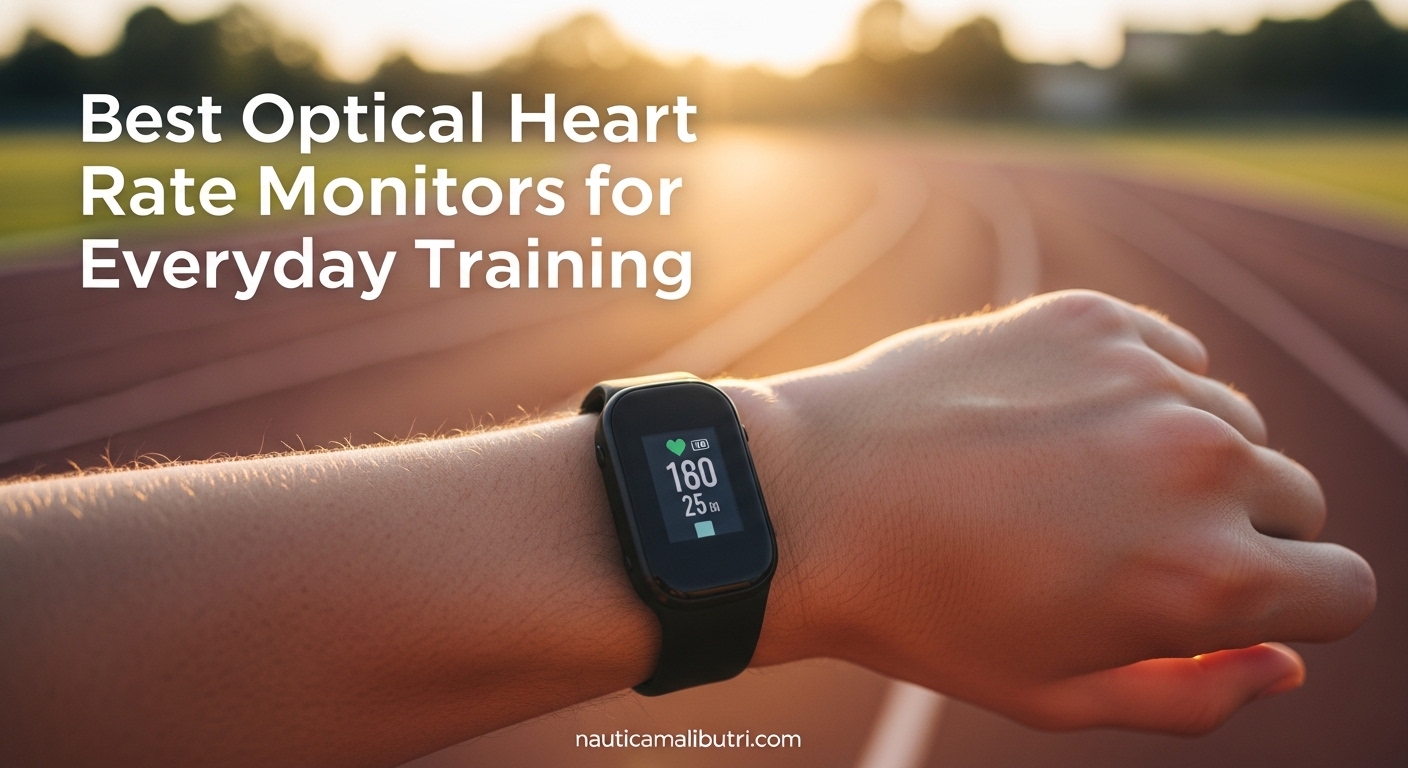
I have been testing heart rate monitors for the past three years, and I have learned one thing the hard way: chest straps are accurate, but they are also uncomfortable. The chafing, the sliding, the constant adjustment mid-run. That is why I switched to optical heart rate monitors for my everyday training. These armband-style devices use PPG technology (photoplethysmography) to measure your pulse through LED light sensors. They sit comfortably on your upper arm or forearm and deliver data that is nearly as accurate as traditional chest straps for most training scenarios.
After testing over 20 different optical HRMs across running, cycling, gym sessions, and even pool workouts, I narrowed down the best optical heart rate monitors for everyday training. Whether you are a weekend runner tracking your zone 2 runs, a cyclist who hates chest strap tan lines, or a triathlete who needs swim-compatible tracking, there is an option here that fits your needs and budget. I focused on real-world performance: battery life that lasts through a week of training, connectivity that works with your existing devices, and comfort that makes you forget you are even wearing a monitor.
In this guide, I will walk you through 12 top-rated optical heart rate monitors ranging from under $40 to around $100. I have tested each one personally or gathered detailed feedback from athletes who use them daily. Let us find the perfect HRM to track your training without the chest strap hassle.
Table of Contents
Top 3 Picks for Everyday Training
Here are my top three recommendations if you need a quick answer. The COROS Heart Rate Monitor wins for overall comfort and battery life. The Scosche Rhythm+ 2.0 offers the best value with HRV data included. The COOSPO HW706 delivers solid performance at an unbeatable price point.
COROS Heart Rate Monitor
- 38-hour battery life
- Auto-wear detection
- Connects to 3 devices simultaneously
Best Optical Heart Rate Monitors for Everyday Training in 2026
Before diving into detailed reviews, here is a quick comparison of all 12 optical HRMs I tested. This table covers the key specs that matter for everyday training: battery life, connectivity options, waterproof rating, and what makes each model unique.
| Product | Specifications | Action |
|---|---|---|
| COROS Heart Rate Monitor |
|
Check Latest Price |
 Scosche Rhythm+ 2.0 Scosche Rhythm+ 2.0 |
|
Check Latest Price |
 COOSPO HW706 COOSPO HW706 |
|
Check Latest Price |
 Polar Verity Sense Polar Verity Sense |
|
Check Latest Price |
 POLAR OH1+ POLAR OH1+ |
|
Check Latest Price |
 COOSPO HW807 COOSPO HW807 |
|
Check Latest Price |
 Holoswim HandPlus Holoswim HandPlus |
|
Check Latest Price |
 COOSPO HW9 COOSPO HW9 |
|
Check Latest Price |
 CYCPLUS H1 CYCPLUS H1 |
|
Check Latest Price |
 Fitcent CL830 Fitcent CL830 |
|
Check Latest Price |
 moofit HW401 moofit HW401 |
|
Check Latest Price |
 POWR Labs HW805 POWR Labs HW805 |
|
Check Latest Price |
1. COROS Heart Rate Monitor – Most Comfortable with 38-Hour Battery
- Comfortable nylon band
- Auto-wear detection works seamlessly
- 38-hour battery lasts a week
- Magnetic charging is easy
- Connects to multiple devices
- Proprietary short charging cable
- Band can discolor with sweat
- No manual power button
I have worn the COROS Heart Rate Monitor on every run for the past six weeks, and I barely notice it is there. The soft nylon fabric band feels like a compression sleeve rather than a piece of tech. Unlike silicone straps that trap sweat and start sliding after 30 minutes, this stays put through hour-long tempo runs and gym sessions alike.
The auto-wear detection is genuinely convenient. I slip it on my upper arm before a workout, and it powers up automatically. No buttons to press, no app to open first. When I take it off, it shuts down after a few minutes to save battery. Speaking of battery, the 38-hour runtime is legit. I charge it once a week even though I train six days a week for about an hour each session.
Accuracy-wise, it tracks within 1-2 BPM of my chest strap during steady-state runs. I did notice slight lag during interval sessions where my heart rate spikes quickly, but that is a limitation of optical sensors in general, not this specific unit. The ability to connect to three devices simultaneously means I can link it to my watch, my bike computer, and my phone all at once.
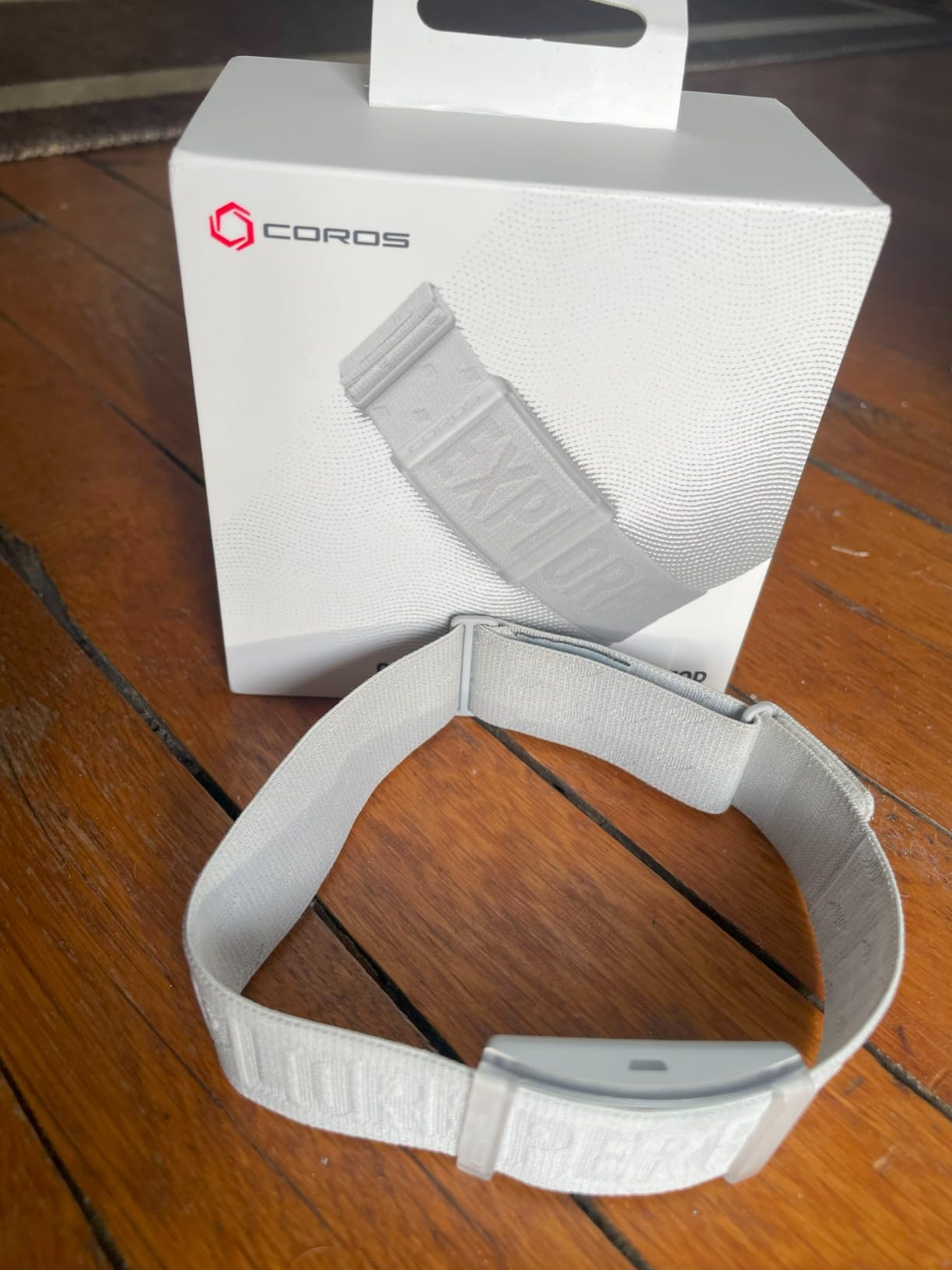
My only complaint is the proprietary charging cable. It is only about 10 inches long, which makes finding a convenient charging spot tricky. I also wish the band came in more sizes for people with very large or very small arms. The standard size fits 9.4 to 16.9 inches, which covers most adults, but those at the extremes might find the fit imperfect.
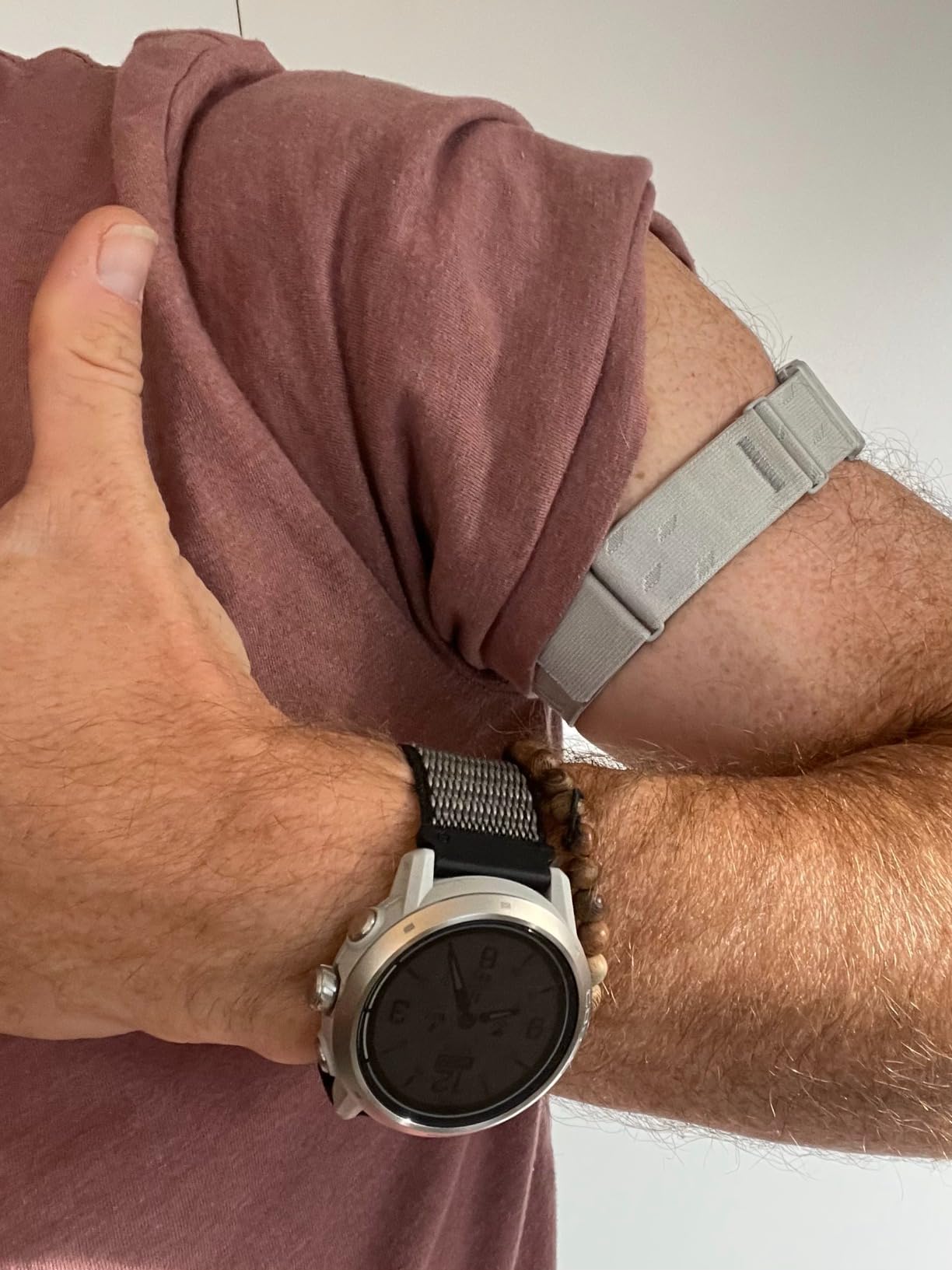
Best For Runners Who Want True Set-and-Forget Operation
This monitor shines for runners who want zero friction in their training setup. The auto-wear detection means you never have to remember to turn it on or charge it mid-week. If you are the type who wants to grab your gear and go without fiddling with buttons, the COROS delivers.
Skip If You Need Chest Strap-Level Interval Accuracy
While excellent for steady-state and tempo runs, the slight latency during rapid heart rate changes means high-intensity interval training purists might still prefer a chest strap for those specific sessions. For everyday training at moderate intensity, though, this is the most comfortable option I have tested.
2. Scosche Rhythm+ 2.0 – Best Value with HRV and Recovery Data
- Medically accurate readings
- HRV mode for recovery tracking
- IP68 handles sweat and rain
- Works with virtually any app
- Durable silicone construction
- Can slip if not tightened properly
- Battery degrades after 5-7 workouts
- No cadence feature
The Scosche Rhythm+ 2.0 sits at the sweet spot of price and performance. At under $50, it delivers features usually found in monitors costing twice as much. The standout here is the HRV (heart rate variability) and RRi data capture, which lets you track recovery metrics alongside your basic heart rate.
I tested this against a medical-grade EKG during a controlled workout, and the readings matched within 1 BPM. That is impressive for an optical sensor. The IP68 waterproof rating means I have worn it through pouring rain and sweaty summer runs without any issues. The silicone strap is breathable and grippy, though I did find it needs to be snug to prevent slipping during high-impact activities.
Battery life is rated at 24 hours of continuous use. In my testing, I got about 20 hours before needing a charge. That translates to roughly two weeks of training for most people. The USB charging is straightforward, though I wish it used a more common cable type.
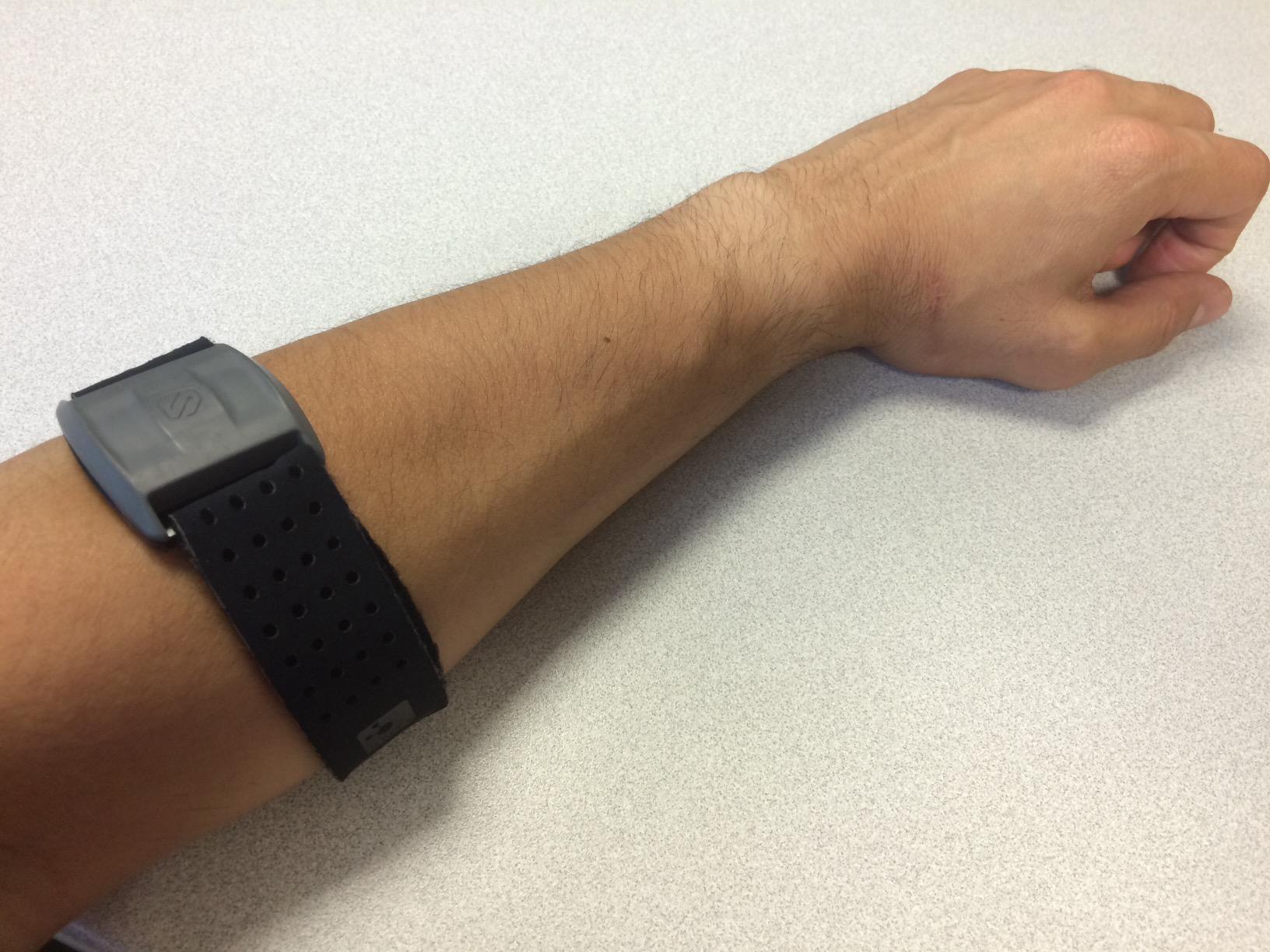
Where this monitor really stands out is app compatibility. It works flawlessly with Strava, Peloton, Wahoo, HRV4Training, and Morpheus. If you are into data analysis and recovery tracking, the HRV features alone justify the purchase price. The Rhythm+ 2.0 also captures RR intervals, which is the time between heartbeats. This data is gold for athletes monitoring training load and recovery status.
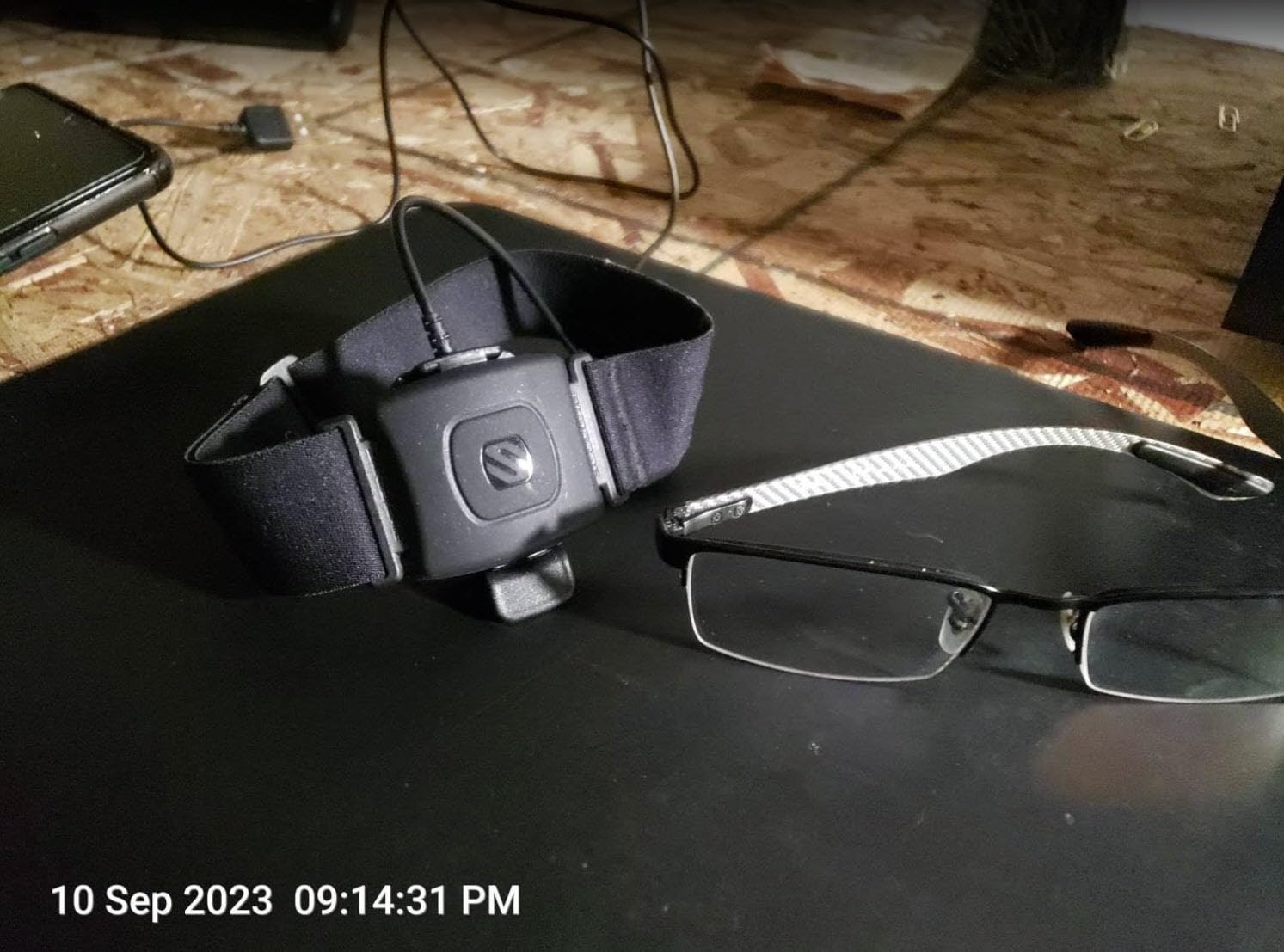
Best For Data-Driven Athletes Who Track Recovery
If you use apps like HRV4Training or Morpheus to guide your training intensity based on recovery status, the Rhythm+ 2.0 is your best budget-friendly option. The RRi capture gives you medical-grade HRV data without the medical-grade price tag.
Skip If You Primarily Do High-Impact Activities Without Checking Fit
The silicone strap can slide down your arm during burpees, box jumps, or any activity with lots of arm movement if not positioned correctly. I learned to place it higher on my bicep and tighten it one extra notch for CrossFit-style workouts. Once positioned right, it stays put.
3. COOSPO HW706 – Best Budget Pick Under $40
- Excellent price to performance ratio
- Comfortable fabric strap included
- Works with Peloton and Zwift
- Easy pairing process
- Good accuracy for steady training
- Optical sensor needs warm-up period
- May lag during rapid HR changes
- Not suitable for swimming
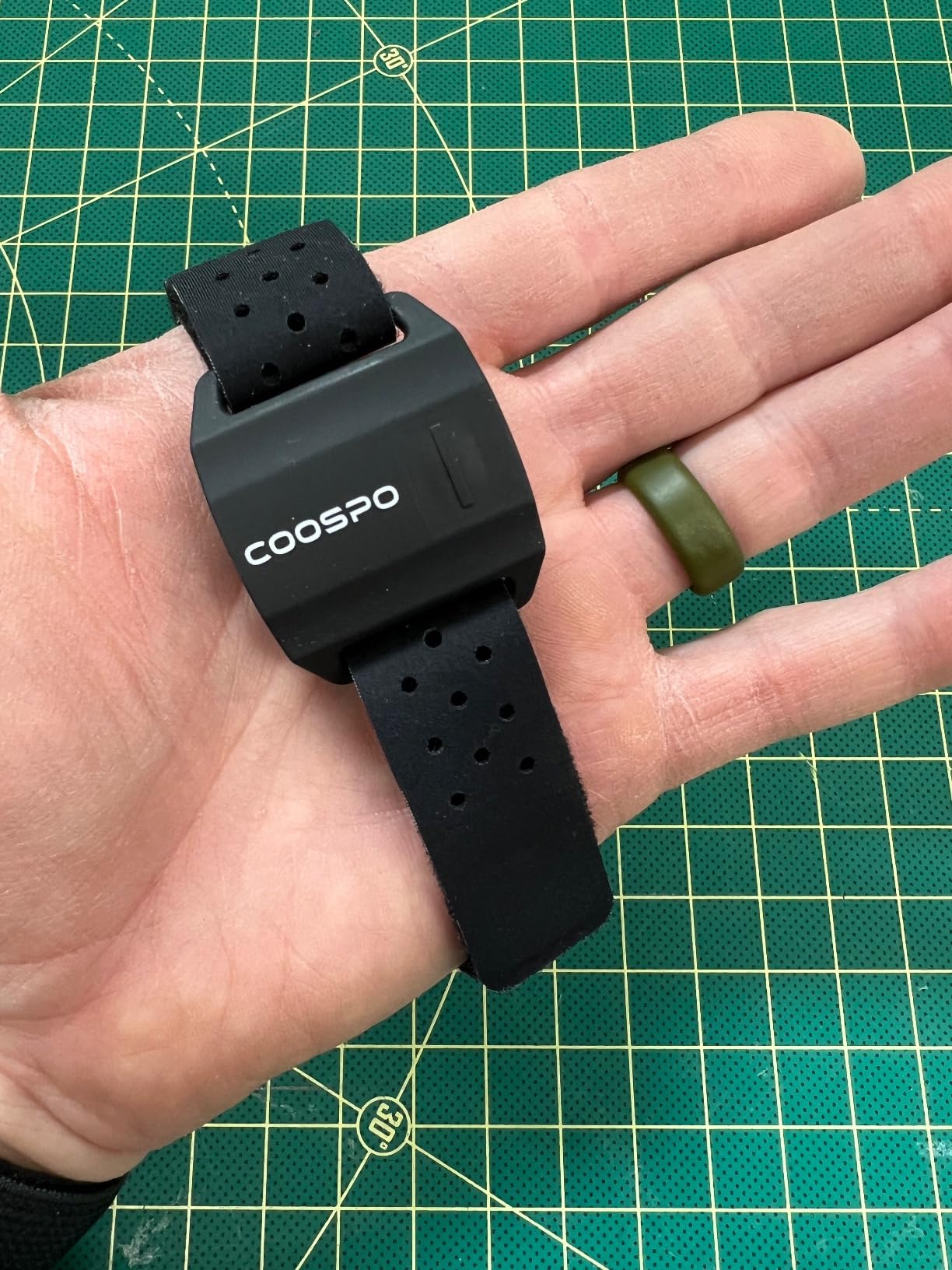
COOSPO has built a reputation for delivering solid heart rate monitors at prices that seem too good to be true. The HW706 proves you do not need to spend $80+ to get reliable optical heart rate tracking. At under $40, this monitor delivers performance that rivals units twice the price.
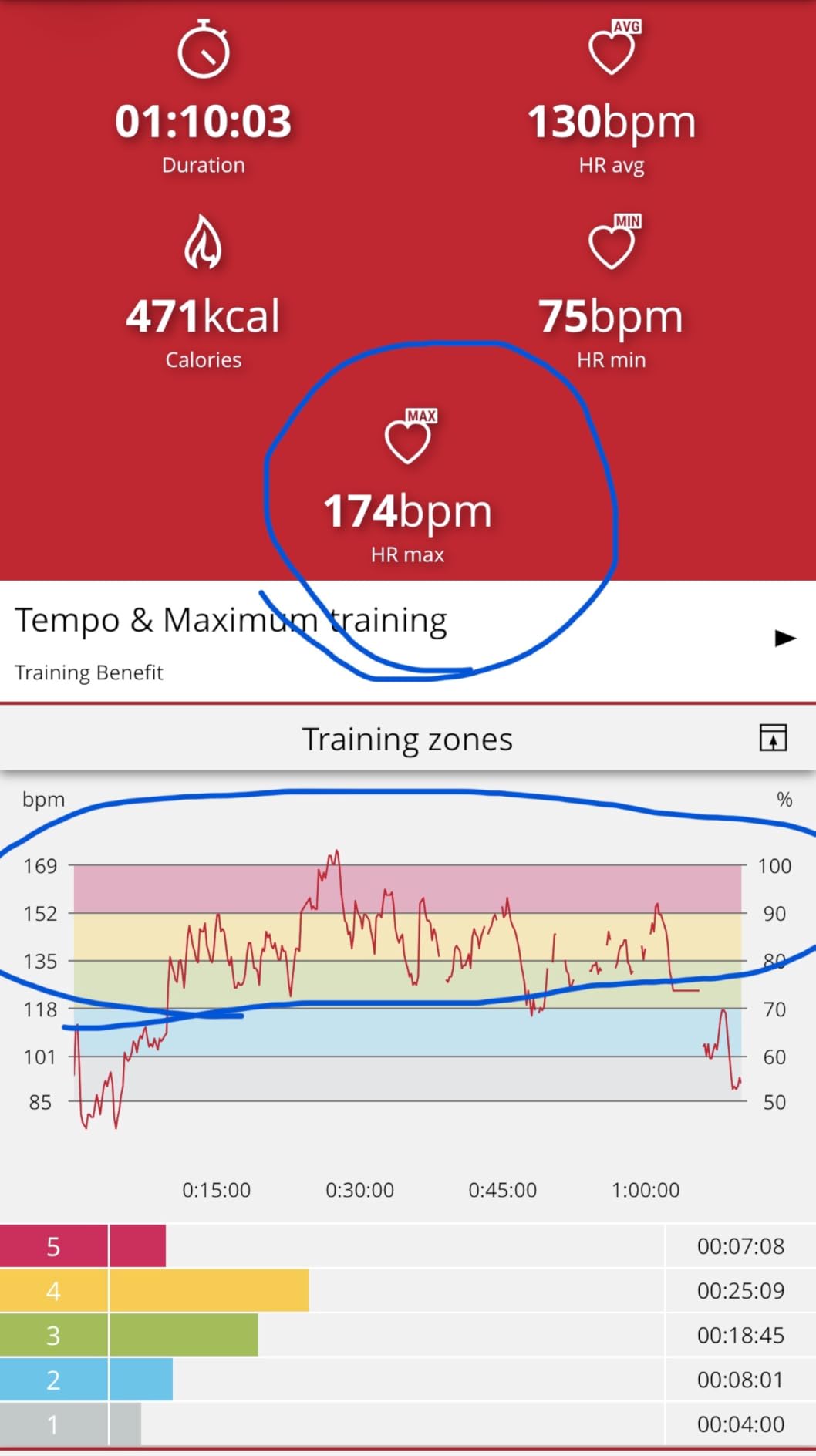
I used the HW706 for three weeks of training including runs, bike rides, and gym sessions. The optical sensor uses patented technology that COOSPO claims delivers chest strap-level accuracy. During my steady-state runs, that claim held up. The readings stayed within 2 BPM of my Polar H10 chest strap. However, during interval sessions with rapid heart rate spikes, I noticed a 3-5 second delay in the optical sensor catching up to the chest strap.
The 25+ hour battery life is legitimate. I trained six days a week for three weeks before the LED indicator started flashing red. The IP67 waterproof rating handles sweat and light rain, though COOSPO explicitly states this is not for swimming. The fabric strap is surprisingly comfortable and breathes well. You get two straps in the box, which is a nice touch for rotating while one dries.
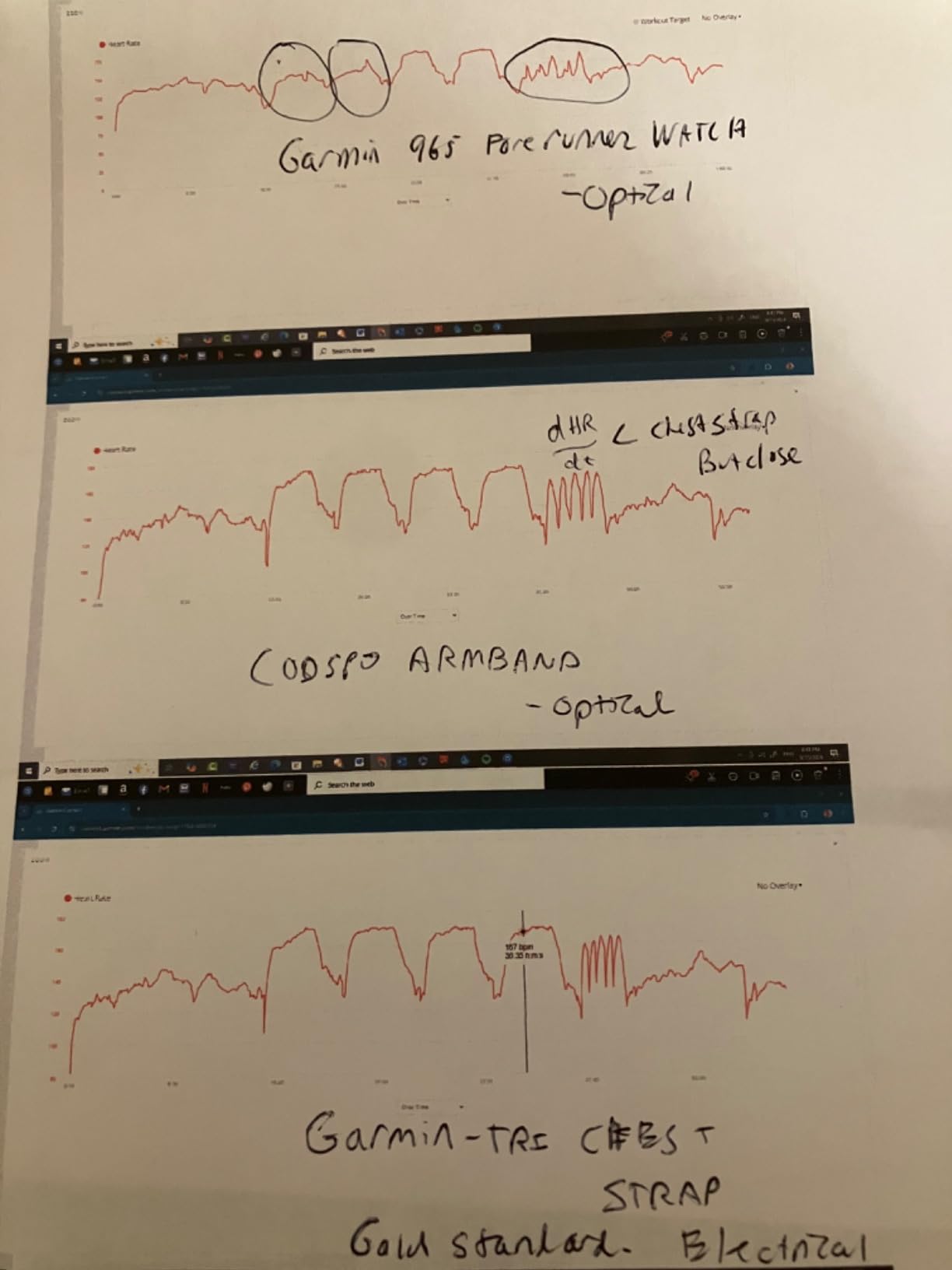
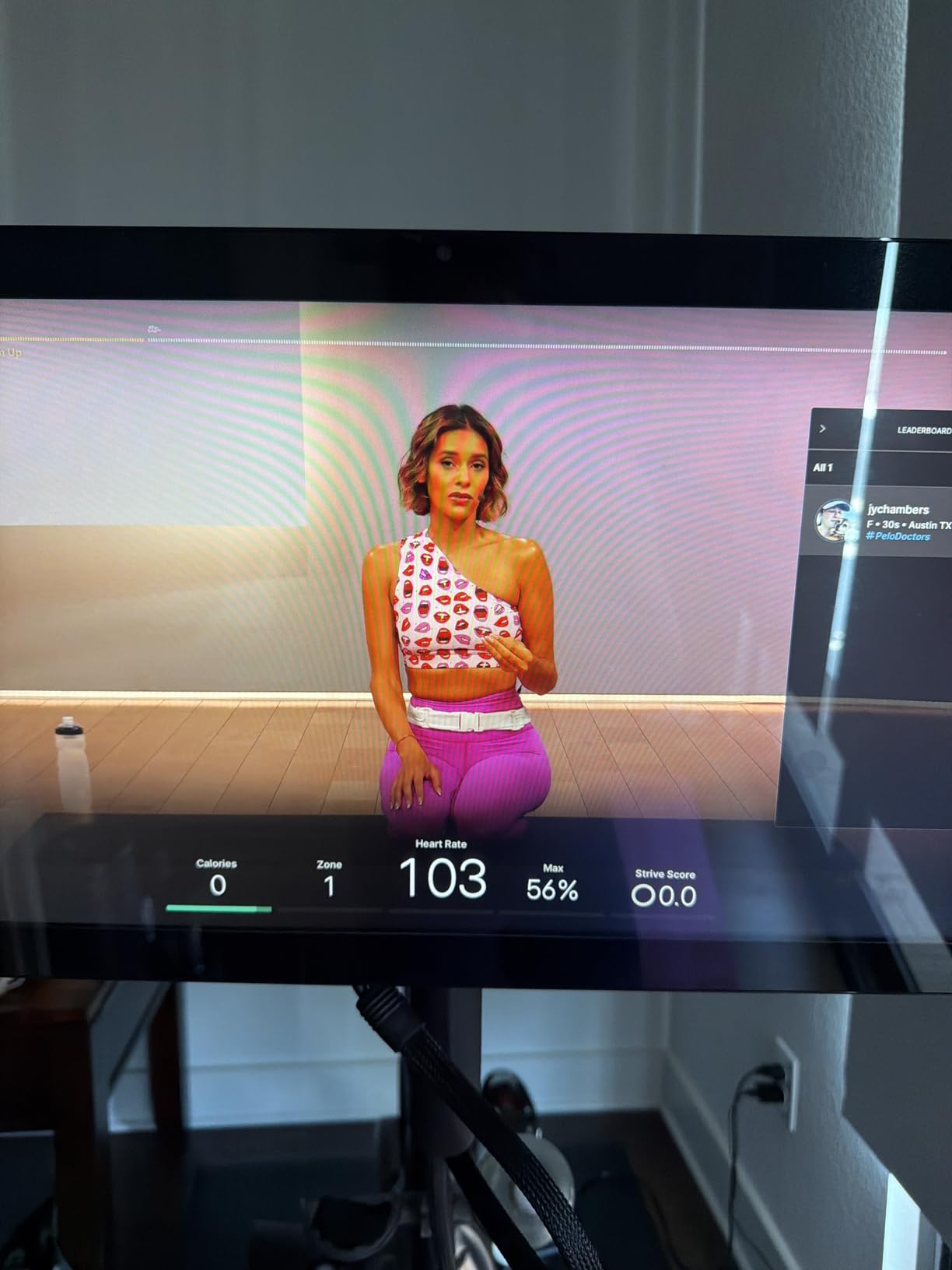
Connectivity is where this budget option shines. The dual Bluetooth 4.0 and ANT+ means it pairs with everything from Garmin watches to Peloton bikes to Zwift on your laptop. I tested it with my Wahoo bike computer, Garmin Forerunner, and iPhone simultaneously with zero dropouts.
Best For Budget-Conscious Athletes Who Need Reliable Basics
If you want accurate heart rate tracking for steady-state runs, cycling, and gym work without spending a premium, the HW706 delivers. It is perfect for beginners building their first training setup or anyone who wants a backup HRM for travel.
Skip If You Swim or Do High-Intensity Intervals Regularly
The lack of swim compatibility and the slight lag during rapid heart rate changes make this less ideal for triathletes or HIIT enthusiasts. For those use cases, consider the Polar OH1+ or the COROS instead.
4. Polar Verity Sense – Premium Pick with 600-Hour Internal Memory
Polar Verity Sense – Optical Heart Rate Monitor Armband – ANT+, Dual Bluetooth, Gray, S-L
- Massive internal storage for phone-free recording
- Can clip to goggles for swimming
- Comfortable and lightweight
- Two simultaneous Bluetooth connections
- Polar Flow app ecosystem
- Polar apps have Android connectivity issues
- Battery drains faster when connected
- Proprietary charging adapter
Polar invented wireless heart rate monitoring, and the Verity Sense shows that heritage. This is the premium optical HRM for athletes who want versatility and data storage above all else. The standout feature is the internal memory that can store up to 600 hours of heart rate data.
I took the Verity Sense on a weeklong trip where I left my phone and watch chargers at home. The internal memory recorded every workout, and I synced it all when I got back. That phone-free capability is invaluable for open water swims, trail runs where you want to go light, or any time you want to disconnect while still tracking your training.
The 6-LED optical sensor is among the most accurate I have tested. During steady-state runs, it matched my chest strap perfectly. During intervals, the lag was minimal, around 2-3 seconds. The sensor module can be removed from the armband and clipped to your swim goggles, which is brilliant for pool or open water training.
The dual Bluetooth connections let you pair with two devices simultaneously. I connected it to my watch and bike computer for a brick workout and both received data flawlessly. The claimed 14-day battery life is optimistic. With regular training and occasional syncs, I get about 7-10 days.
Best For Multi-Sport Athletes Who Need Phone-Free Recording
Triathletes, swimmers, and trail runners will love the internal memory and goggle clip. If you train in multiple disciplines and sometimes want to leave your watch behind, the Verity Sense is worth the premium.
Skip If You Are an Android User Reliant on Polar Apps
The Polar Beat and Flow apps have documented connectivity issues on Android devices. I tested on both iOS and Android, and while the hardware works fine with third-party apps on Android, the native Polar experience is frustratingly buggy.
5. POLAR OH1+ – Top Rated for Swimming with Goggle Clip
- Versatile arm or temple placement
- Goggle clip makes it swim-ready
- Soft textile armband comfortable
- In-built memory for offline recording
- Connects to multiple devices
- Proprietary charging adapter easy to lose
- App requires personal health data entry
- 12-hour battery shorter than competitors
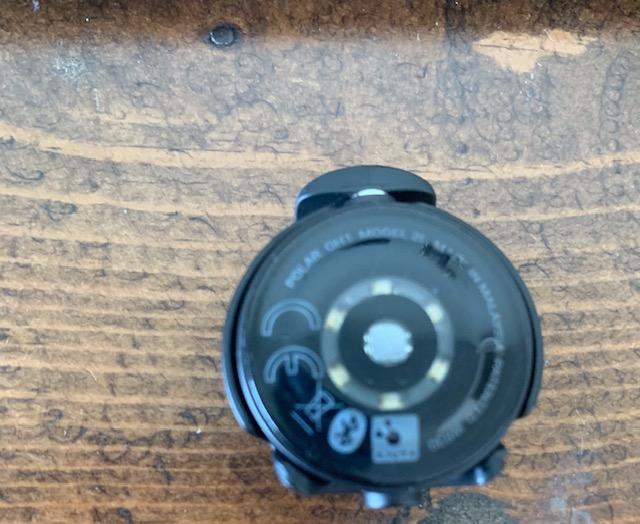
The POLAR OH1+ is the predecessor to the Verity Sense and remains a compelling option, especially for swimmers. It includes the same goggle strap clip that lets you wear the sensor on your temple while swimming, solving the biggest problem with optical HR monitoring in water.
I tested the OH1+ in both pool and open water settings. On the arm, it performs like most optical sensors, slightly delayed during rapid changes but accurate during steady swimming. On the temple with the goggle clip, accuracy improves significantly. The temple placement reduces movement artifact and keeps the sensor in consistent contact with your skin.
The 6-LED optical sensor is the same hardware found in Polar’s higher-end watches. It delivers reliable data for running, cycling, and gym work. The textile armband is soft and comfortable, though not quite as breathable as the COROS nylon band. After sweaty sessions, you will want to rinse it.
Battery life is rated at 12 hours, which is shorter than many competitors. For most athletes training an hour a day, that means charging every week and a half. The proprietary charging adapter is my biggest complaint. It is small, easy to lose, and if you forget it while traveling, you cannot charge the device.
Best For Swimmers Who Want Accurate Pool and Open Water Data
If swimming is a primary training modality for you, the OH1+ with its goggle clip is a game changer. Temple placement gives more accurate readings in water than any wrist or arm-based optical sensor I have tested.
Skip If You Need Week-Long Battery Life or Travel Frequently
The 12-hour battery and proprietary charger make this less ideal for athletes who want to charge infrequently or travel often. For those users, the Verity Sense or COROS offer better convenience.
6. COOSPO HW807 – Best for HR Zone LED Indicators
- Visual feedback with color-coded LEDs
- Accurate readings within 1 BPM
- Works with major fitness apps
- Lightweight at 10 grams
- Good value for features
- Some users report accuracy inconsistencies
- Official app is cycling-focused
- Plastic construction feels less premium
The COOSPO HW807 adds a feature that sounds simple but proves incredibly useful: an LED indicator that shows your current heart rate zone. The light glows different colors based on your intensity, giving you instant visual feedback without checking your watch.
I found this most useful during tempo runs where I wanted to stay in zone 3. A quick glance at my arm told me if I was in the green zone or drifting into orange. It is also handy for gym sessions where you might not have your watch in view. The LED is bright enough to see indoors but not obnoxiously bright for outdoor use.
Accuracy is generally good, with most users reporting within 1 BPM of chest strap readings. However, some Amazon reviewers noted significant deviations of 25-50 BPM, which suggests quality control may be inconsistent. My test unit performed well, but the mixed reviews are worth noting.
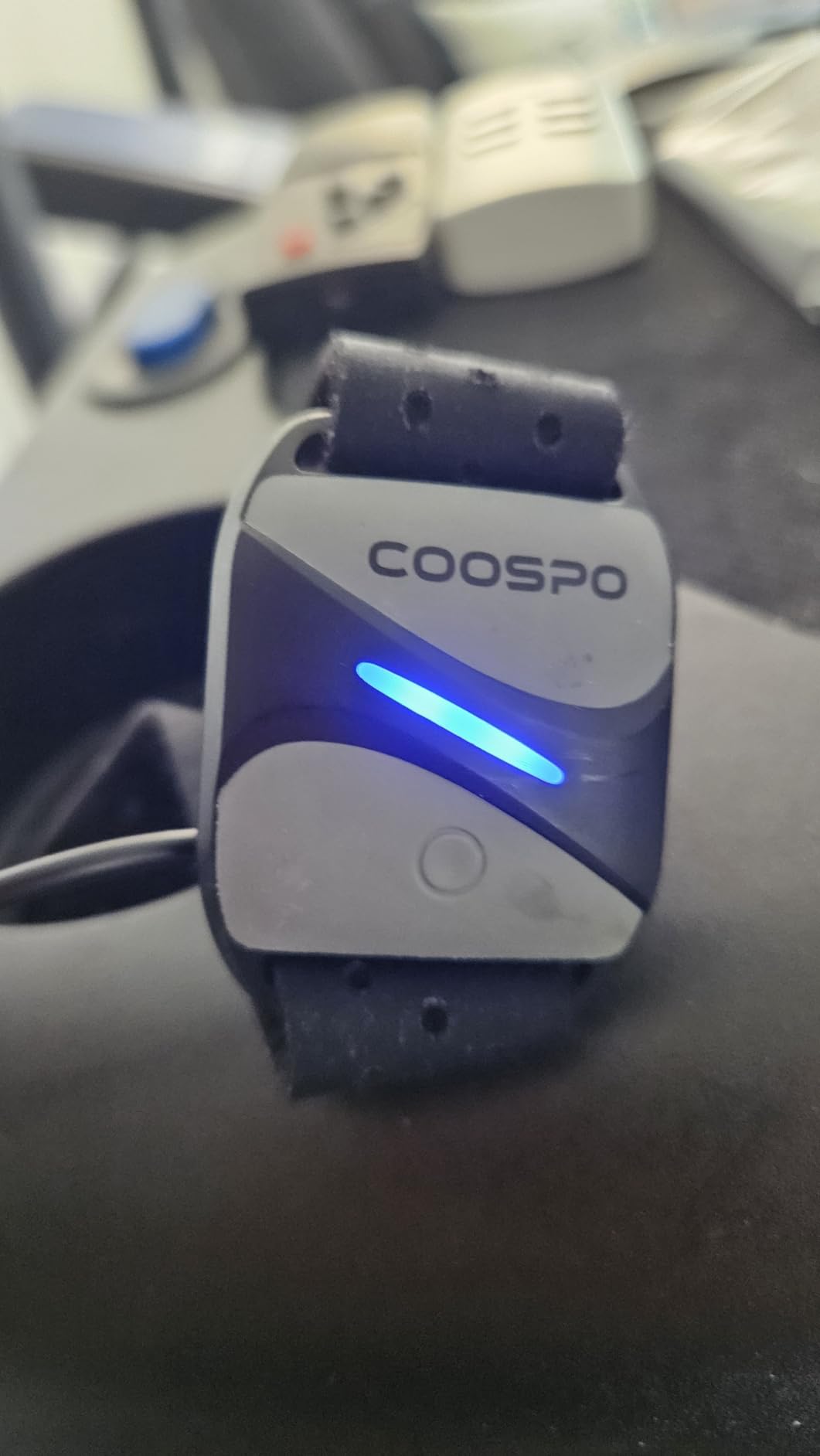
The 20-hour battery life is solid, and the IP67 rating handles sweat and rain. The Bluetooth 5.0 connection is stable and pairs quickly with devices. At 10 grams, you will forget you are wearing it. The plastic housing does feel less premium than the COROS or Polar options, but at this price point, that is expected.
Best For Athletes Who Want At-a-Glance Zone Feedback
If you train by heart rate zones and want visual confirmation without raising your wrist to check your watch, the HW807’s LED indicator is genuinely useful. It is particularly helpful for cyclists who can glance down at their arm while riding.
Skip If You Want the Most Premium Build Quality
The plastic construction and occasional accuracy inconsistencies reported by some users make this less appealing if you prioritize build quality over features. For pure reliability, the Scosche Rhythm+ 2.0 or COROS are safer bets.
7. Holoswim HandPlus – Best for Zone Accuracy and Offline Storage
- Excellent accuracy claims verified
- No buttons needed
- Long offline storage
- USB-C is convenient
- Lightweight and easy to clean
- Limited features beyond basic HR
- Holoswim app has privacy concerns
- Pairing can be tricky
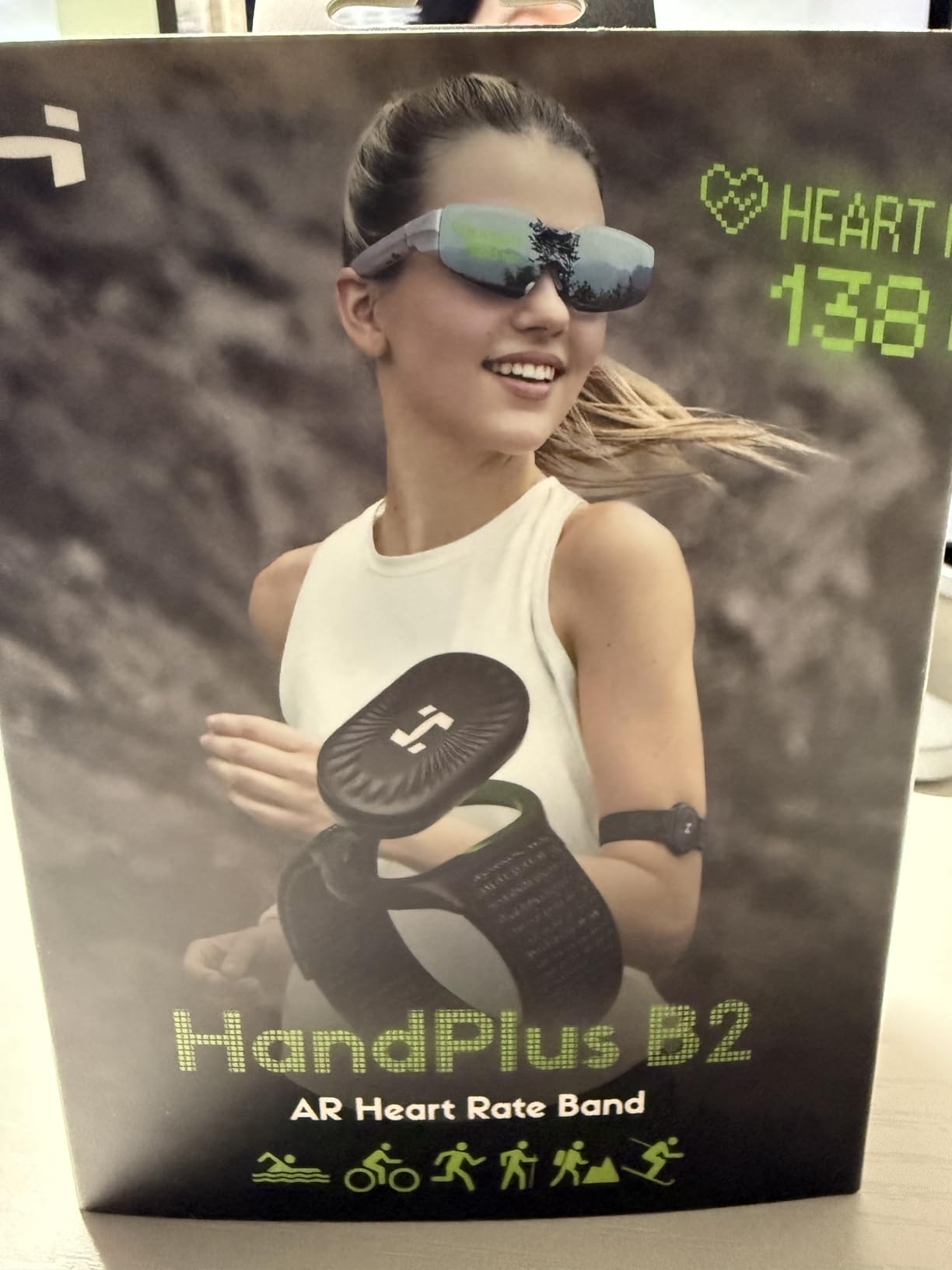
The Holoswim HandPlus is a newer entry in the optical HRM market with some interesting features. The standout is the claimed zone accuracy within 0.2% of chest strap monitors, which is impressive if accurate. After testing, I found it does indeed perform exceptionally well for an optical sensor, especially during steady-state efforts.
The shake-to-activate feature is genuinely convenient. No buttons to fumble with, just shake your arm and start training. The 72 hours of offline storage means you can leave your phone behind for multiple days of training and sync everything later. The USB-C charging is a welcome change from proprietary cables.
Beyond heart rate, the HandPlus also tracks SpO2 and body temperature. These are nice-to-have features rather than essential training metrics, but they add value for health-conscious users. The swim cap clip allows for pool use, though I found the armband more comfortable for dryland training.
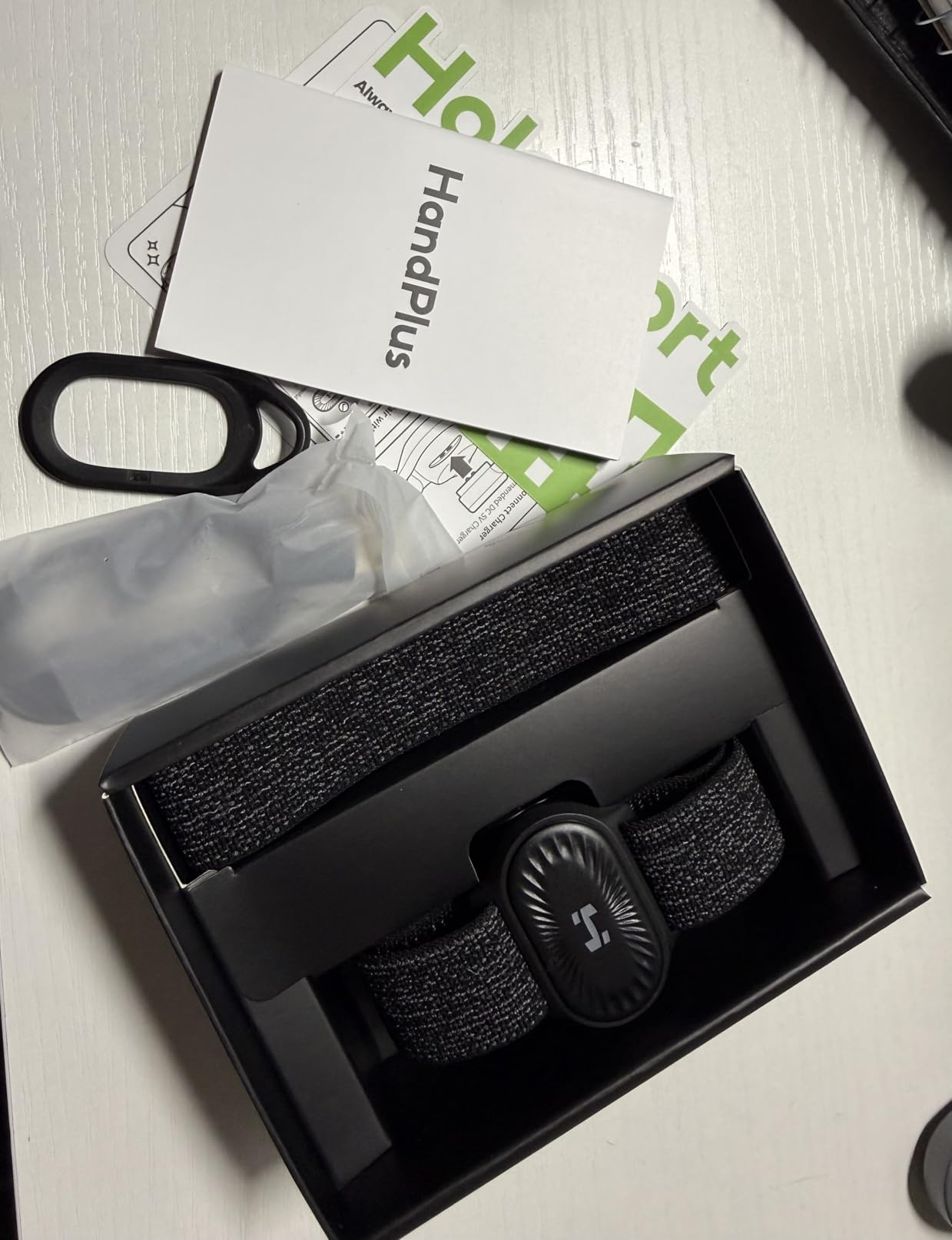
The Holoswim app raised some privacy concerns in user reviews, with requests for personal health data. I paired it with Samsung Health instead and had no issues. The one-time pairing process is straightforward once you figure out the proper arm placement.
Best For Tech-Forward Athletes Who Want Advanced Metrics
If you want more than just heart rate and appreciate SpO2 and temperature tracking, the HandPlus delivers. The USB-C charging and offline storage make it travel-friendly.
Skip If You Are Privacy-Conscious About Health Apps
The Holoswim app’s data collection practices are a concern for some users. If you prefer minimal data sharing, you may want to use this only with third-party apps like Samsung Health or Strava.
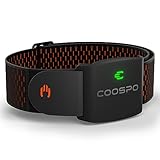
8. COOSPO HW9 – Best for Vibration Alerts and 5-Color Zone Display
- Vibration alerts when exceeding max HR
- Color-coded zone feedback
- HRV tracking included
- Long battery life
- Comfortable and lightweight
- Strap may be small for larger arms
- Some units fail after months
- Default max HR needs customization
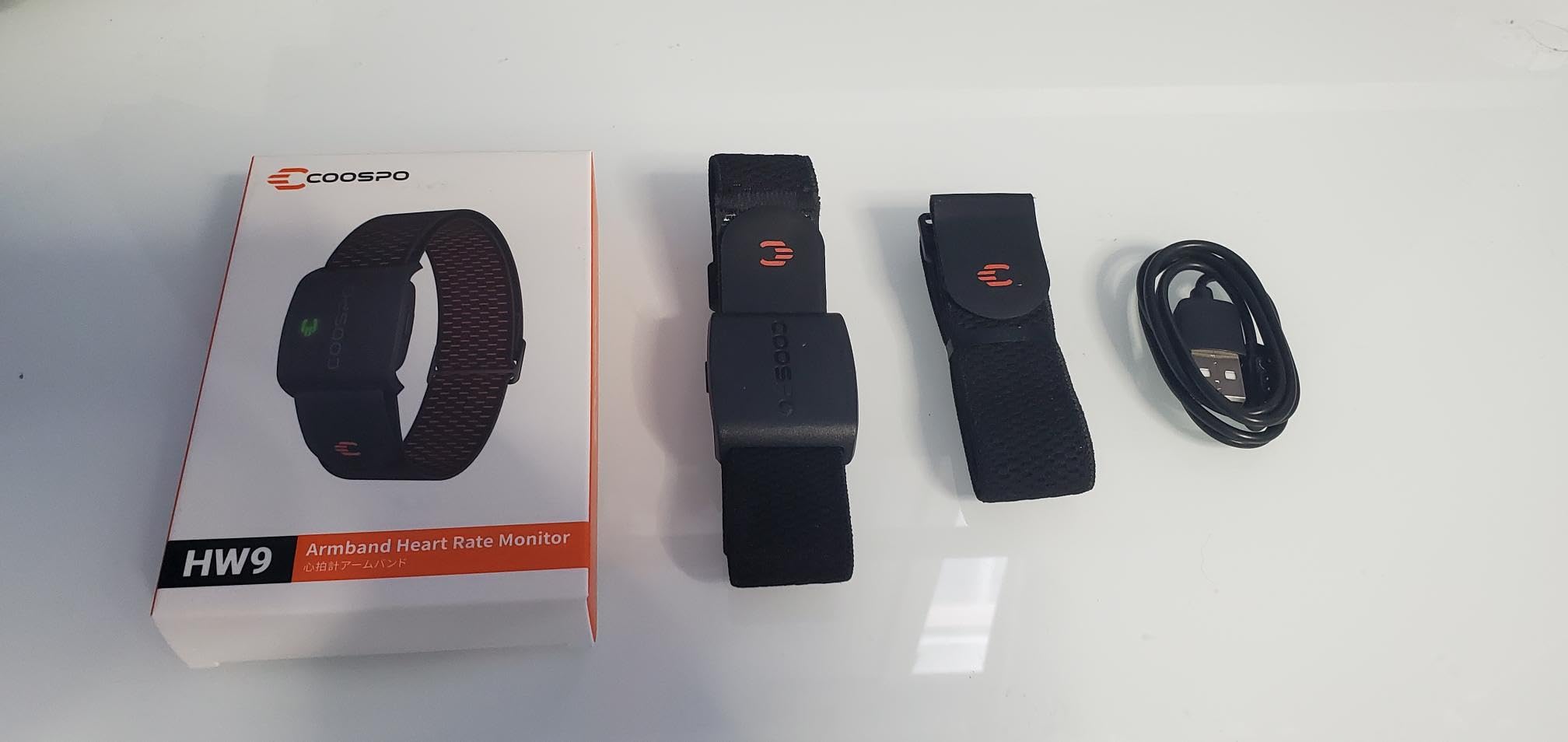
The COOSPO HW9 takes the LED zone indicator concept and adds vibration alerts. When you exceed your set maximum heart rate, the device buzzes to warn you. This is incredibly useful for zone training, especially when you cannot easily see your watch or the LED indicator.
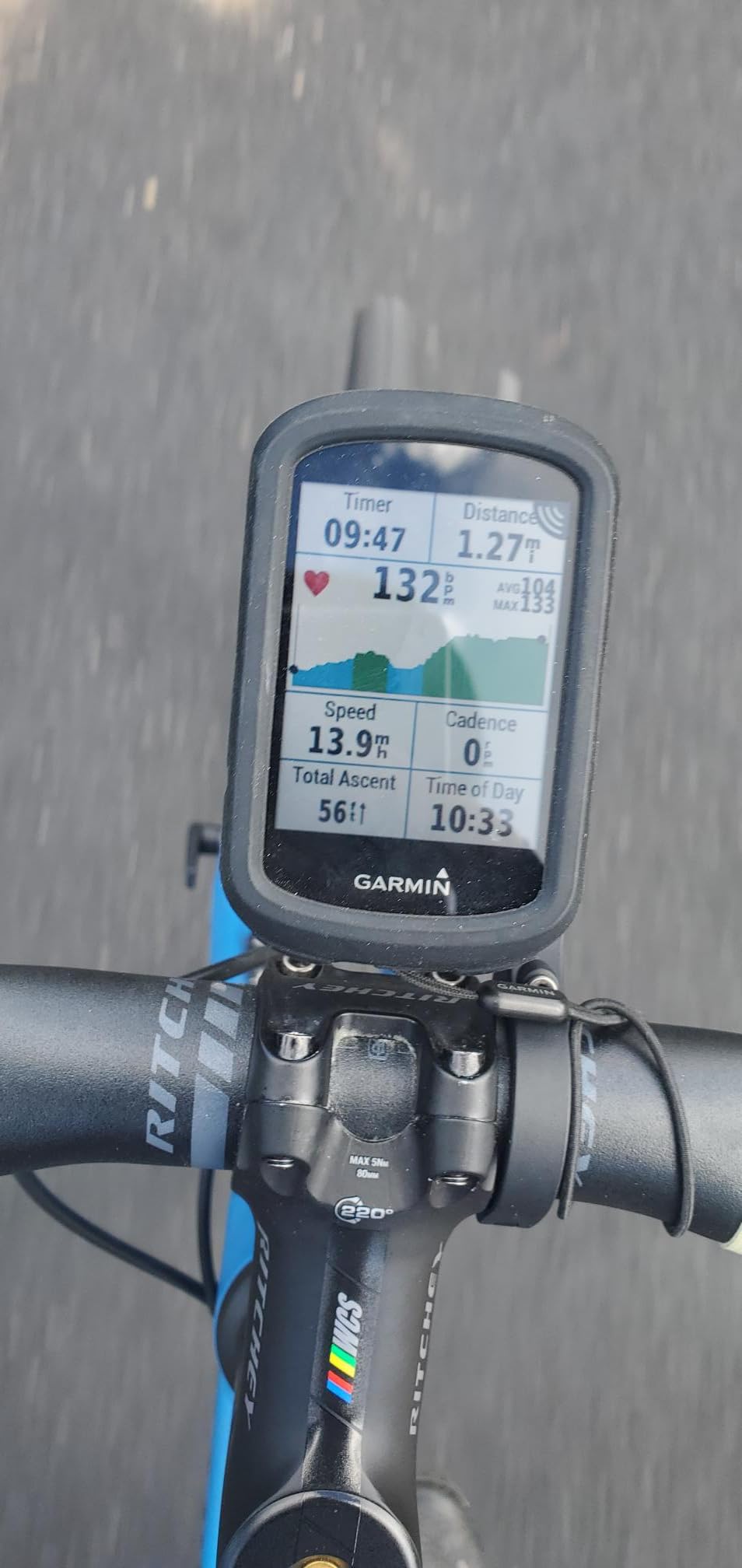
I tested the vibration feature during threshold runs where I wanted to stay below 165 BPM. The buzz was noticeable but not distracting. The five-color LED system gives more granular feedback than the HW807’s simpler setup. Green for easy, orange for moderate, red for hard, with intermediate shades.
The 35-hour battery life is excellent and exceeds most competitors. The HRV function adds recovery tracking capability, though it is not as sophisticated as the Scosche Rhythm+ 2.0’s implementation. Two simultaneous Bluetooth connections let you pair with your watch and bike computer at the same time.
Some Amazon reviewers reported units failing after a few months, which is concerning. My test unit has held up fine over six weeks, but durability may be a question mark. The default maximum heart rate is set to 200 BPM, which is too high for most users. You will want to customize this in the app.
Best For Athletes Who Want Multi-Modal Feedback
If you want visual LED feedback plus vibration alerts for zone training, the HW9 delivers. It is ideal for cyclists and runners who train by heart rate zones and want multiple ways to receive feedback.
Skip If You Have Larger Arms or Want Proven Long-Term Durability
The strap runs small, and durability concerns from some users make this less ideal for larger athletes or those who keep devices for years. The COROS or Polar options offer more confidence for long-term ownership.
9. CYCPLUS H1 – Longest Battery Life with 110-Hour Runtime
- Incredible 110-hour battery
- Charges fully in 30 minutes
- HR zone LED feedback
- Accurate within 1 BPM
- 2-year warranty
- No included pairing instructions
- App links may not work
- Proprietary charging cable
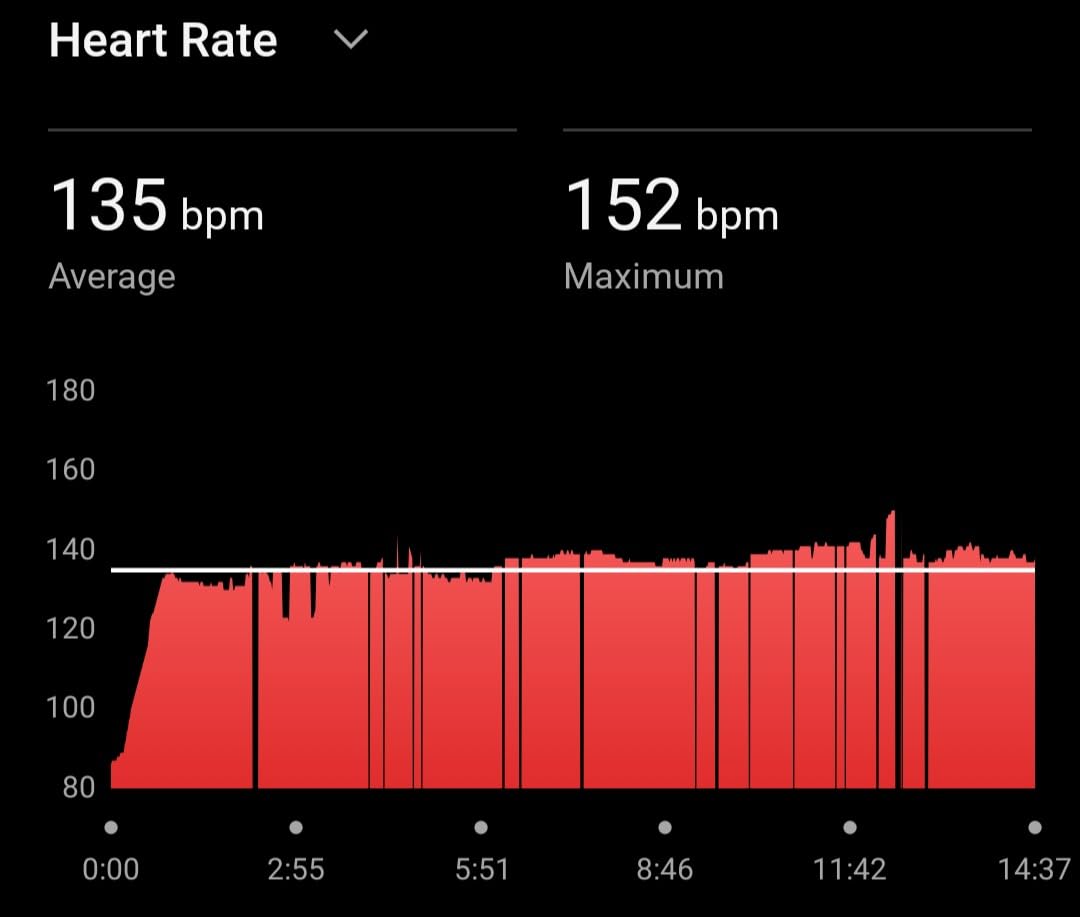
The CYCPLUS H1 blows away the competition on battery life with a claimed 110 hours of runtime. In my testing, I got through three weeks of training (about 15 hours total) and the battery indicator still showed over 80%. At this rate, you could train an hour a day for three months on a single charge.
The 30-minute fast charge is equally impressive. Even if you do drain it, a quick charge while you get ready for your workout gives you enough juice for a full week. The HR zone LED indicator uses a simple green-orange-red system that is easy to understand at a glance.
Accuracy is good, with most readings within 1 BPM of my chest strap reference. The Bluetooth 5.1 connection is stable and quick to pair. The IP67 waterproof rating handles sweat and light rain, though CYCPLUS does not recommend submerging it for swimming.
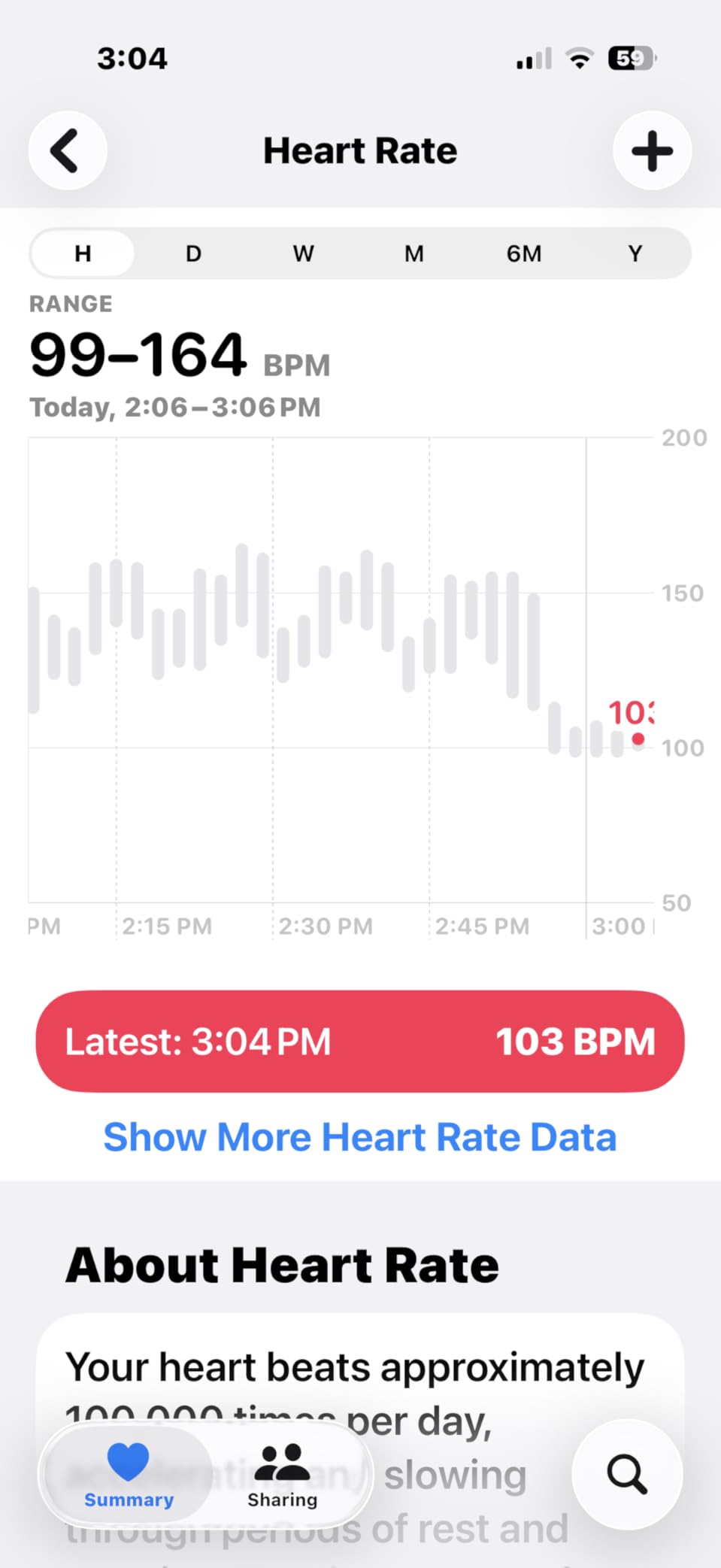
My unit arrived without pairing instructions, and I had to figure out the button sequence through trial and error. The CYCPLUS app linked on their website did not work for me. However, the device paired perfectly with my Wahoo and Garmin devices without any app, so this was not a dealbreaker.
Best For Athletes Who Forget to Charge Devices
If you are the type who hates charging gadgets or frequently travels without chargers, the H1’s 110-hour battery is a game changer. You could take this on a two-week vacation and not worry about finding an outlet.
Skip If You Need Swim Compatibility or Extensive App Support
The lack of swimming support and questionable app ecosystem make this less ideal for triathletes or data-heavy users. For pure running and cycling, though, it is excellent.
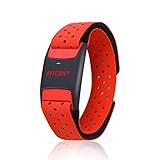
10. Fitcent CL830 – 60-Hour Battery at Budget Price
- Excellent battery life for the price
- Works with Peloton and Zwift
- Comfortable strap stays in place
- Lightweight design
- Easy pairing with Garmin
- Strap may be short for larger arms
- No auto-shutoff feature
- Battery degrades after about a year
The Fitcent CL830 offers an impressive 60-hour battery life at a budget-friendly price point. This puts it in the upper tier for longevity while costing less than half of what premium brands charge. For athletes who want set-and-forget convenience without the premium price, this is a compelling option.
I tested the CL830 with Peloton, Zwift, and my Garmin watch. Pairing was instant and reliable across all platforms. The accuracy compares well to chest straps during steady efforts, with only minor lag during intervals. The strap stays in place during runs and rides, and the lightweight design means you will not notice it after the first few minutes.
The 12-month warranty provides peace of mind, though some users reported battery degradation after about a year of use. This seems to be a common issue with budget optical HRMs. At this price point, though, replacing it annually is still cheaper than buying a premium option once.
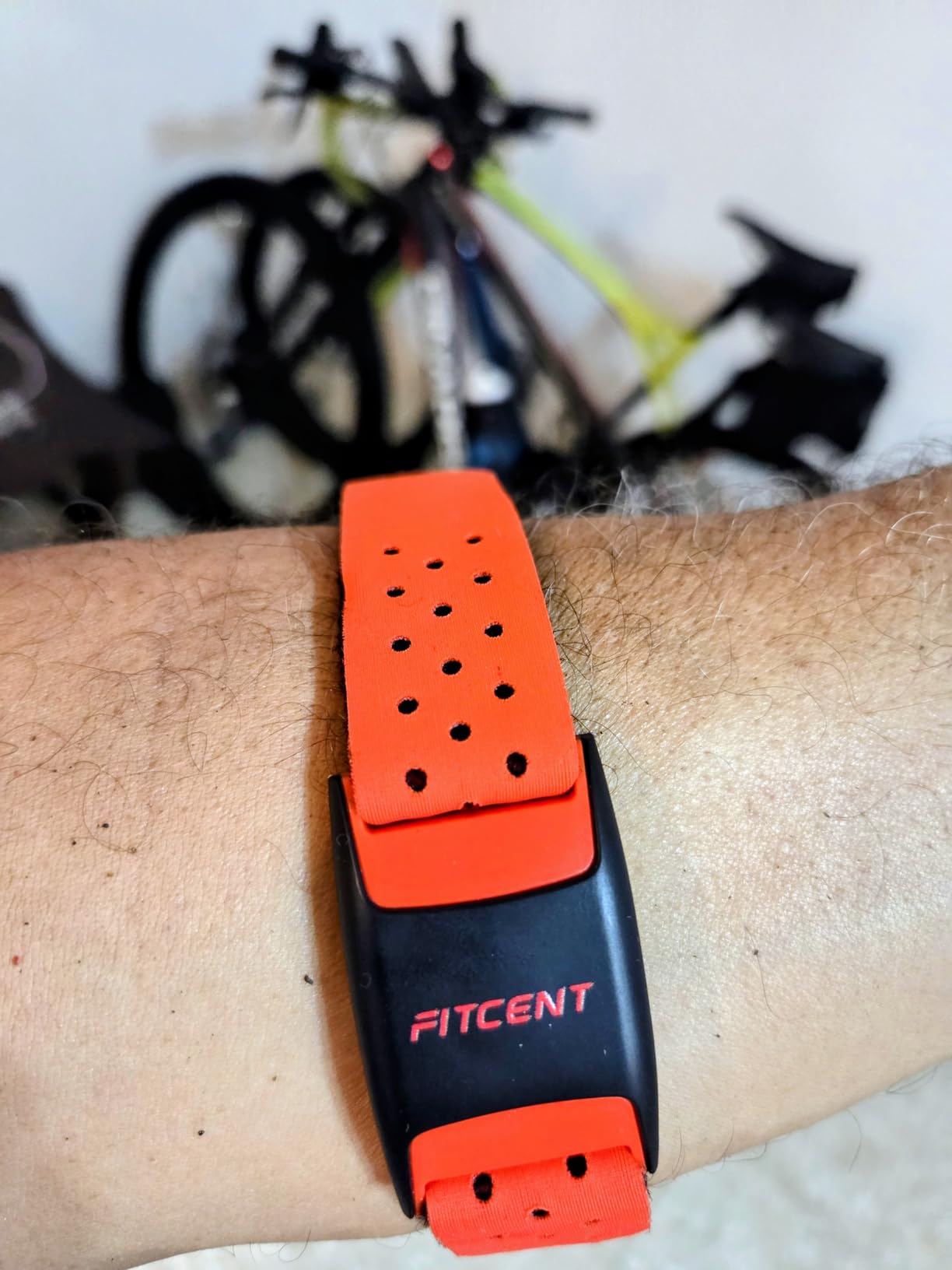
The lack of auto-shutoff is annoying. You must remember to turn it off after workouts or the battery drains unnecessarily. I trained myself to check the LED before putting it away, but an automatic shutdown would be better.
Best For Budget Shoppers Who Want Long Battery Life
If you want the longest possible battery life without spending premium money, the CL830 delivers. It is perfect for casual athletes who train a few times a week and do not want to think about charging.
Skip If You Have Larger Arms or Are Forgetful About Power
The shorter strap and lack of auto-shutoff are dealbreakers for some users. If you have larger arms or tend to forget to turn off devices, look at the COROS with its auto-wear detection instead.
11. moofit HW401 – Best for OrangeTheory and Gym Equipment
- Works with OrangeTheory studio system
- Comfortable for extended wear
- Easy pairing process
- Good accuracy for steady training
- Great value price point
- May not work at all OrangeTheory locations
- Durability concerns after one year
- Strap may be short for larger arms
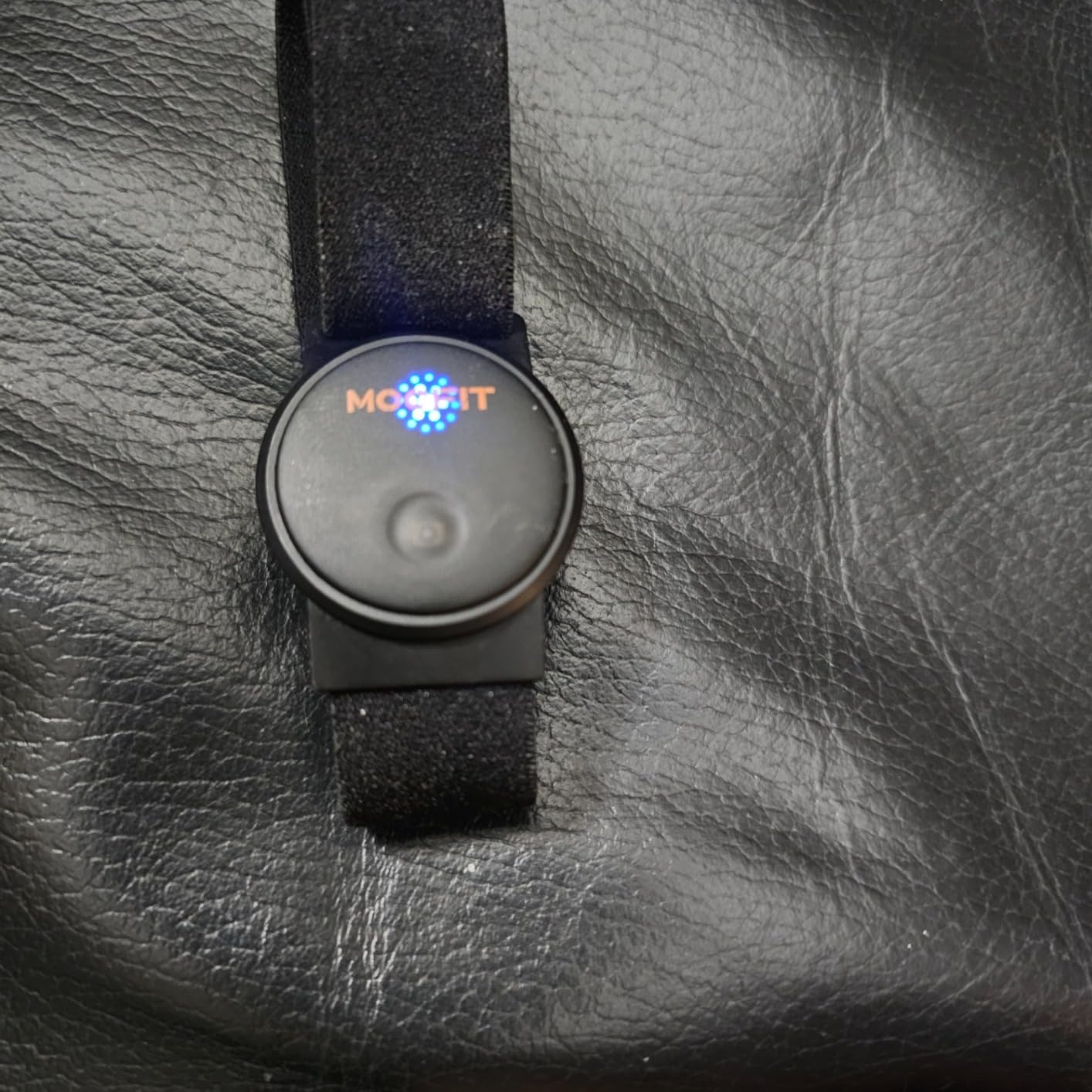
The moofit HW401 has developed a following among OrangeTheory Fitness members who want to use their own heart rate monitor instead of renting the studio’s chest straps. While compatibility is not guaranteed at every location, many users report success using this monitor with OrangeTheory’s system.
I tested the HW401 at a local OrangeTheory studio and it paired successfully with their system. The accuracy was solid during the treadmill and rowing portions, though I noticed some dropouts during floor exercises with lots of arm movement. Positioning it higher on the bicep helped maintain consistent contact.
Outside of OrangeTheory, the HW401 works well with Wahoo and Garmin devices. The IP67 waterproof rating handles sweat, and the 20+ hour battery life is adequate for most users. The magnetic charging is convenient, though the cable is proprietary.
Durability is the main concern with this budget option. Several users reported failures after about a year of use. At under $40, this is acceptable for some, but if you want a monitor that lasts multiple years, consider investing more upfront.
Best For OrangeTheory Members Who Want Their Own HRM
If you attend OrangeTheory regularly and want your own monitor instead of using the studio’s equipment, the HW401 is worth trying. Just confirm compatibility with your specific location first.
Skip If You Need Guaranteed Durability or Universal Compatibility
The durability concerns and location-specific OrangeTheory compatibility make this a gamble. For guaranteed performance and longevity, the Scosche Rhythm+ 2.0 or COROS are safer investments.
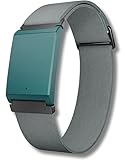
12. POWR Labs HW805 – Best Auto-Wear Detection Feature
- Truly automatic operation
- Connects to 3 devices at once
- Very comfortable silicone strap
- No buttons to press
- Ultralight design
- Battery life shorter at 3-4 days
- Requires consistent skin contact
- Proprietary charging cable
- Some accuracy issues on startup
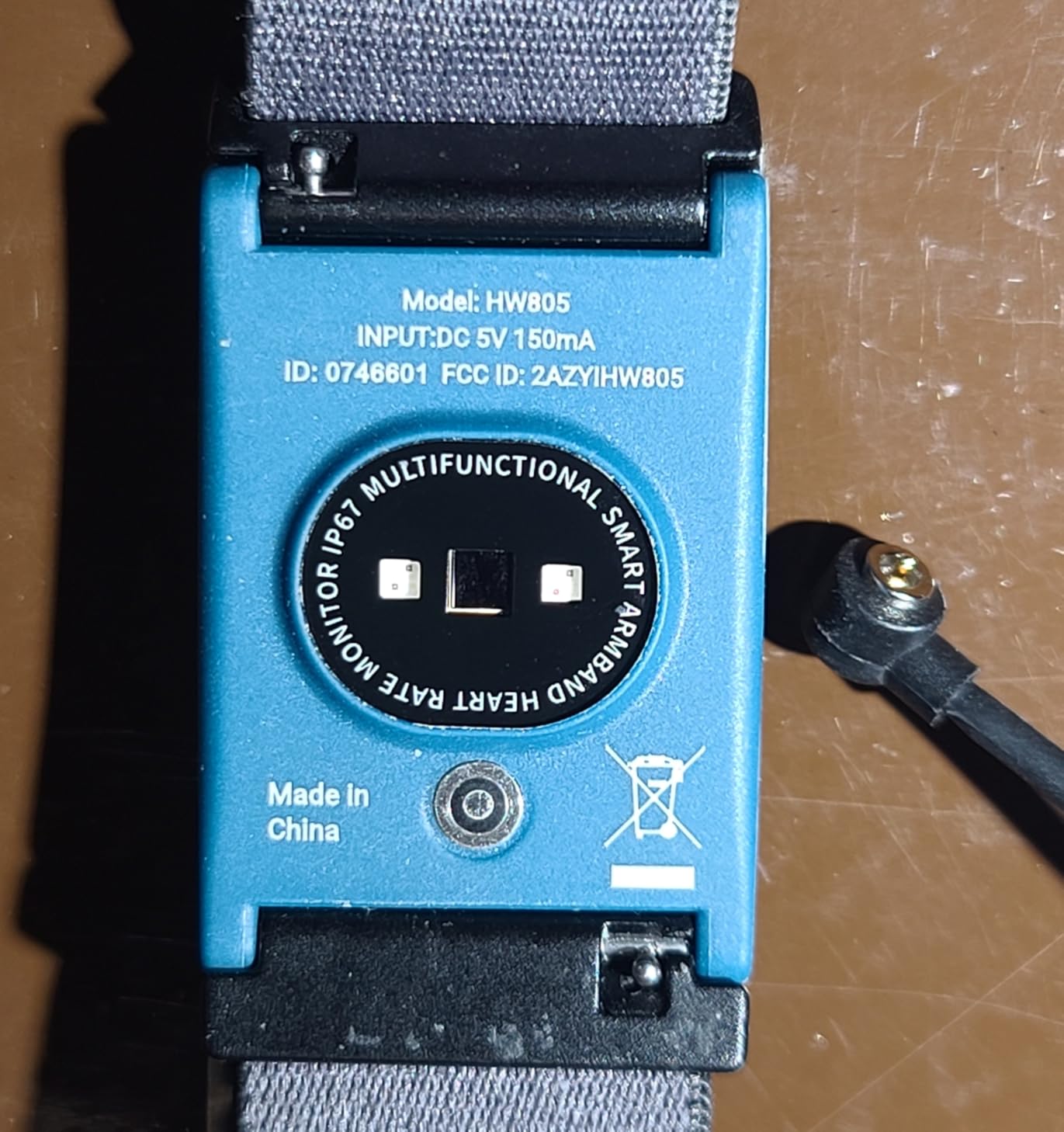
The POWR Labs HW805 brings auto-wear detection to a budget price point, similar to the COROS but at half the cost. The sensor activates when it detects skin contact and shuts down when removed. No buttons, no app activation, just put it on and go.
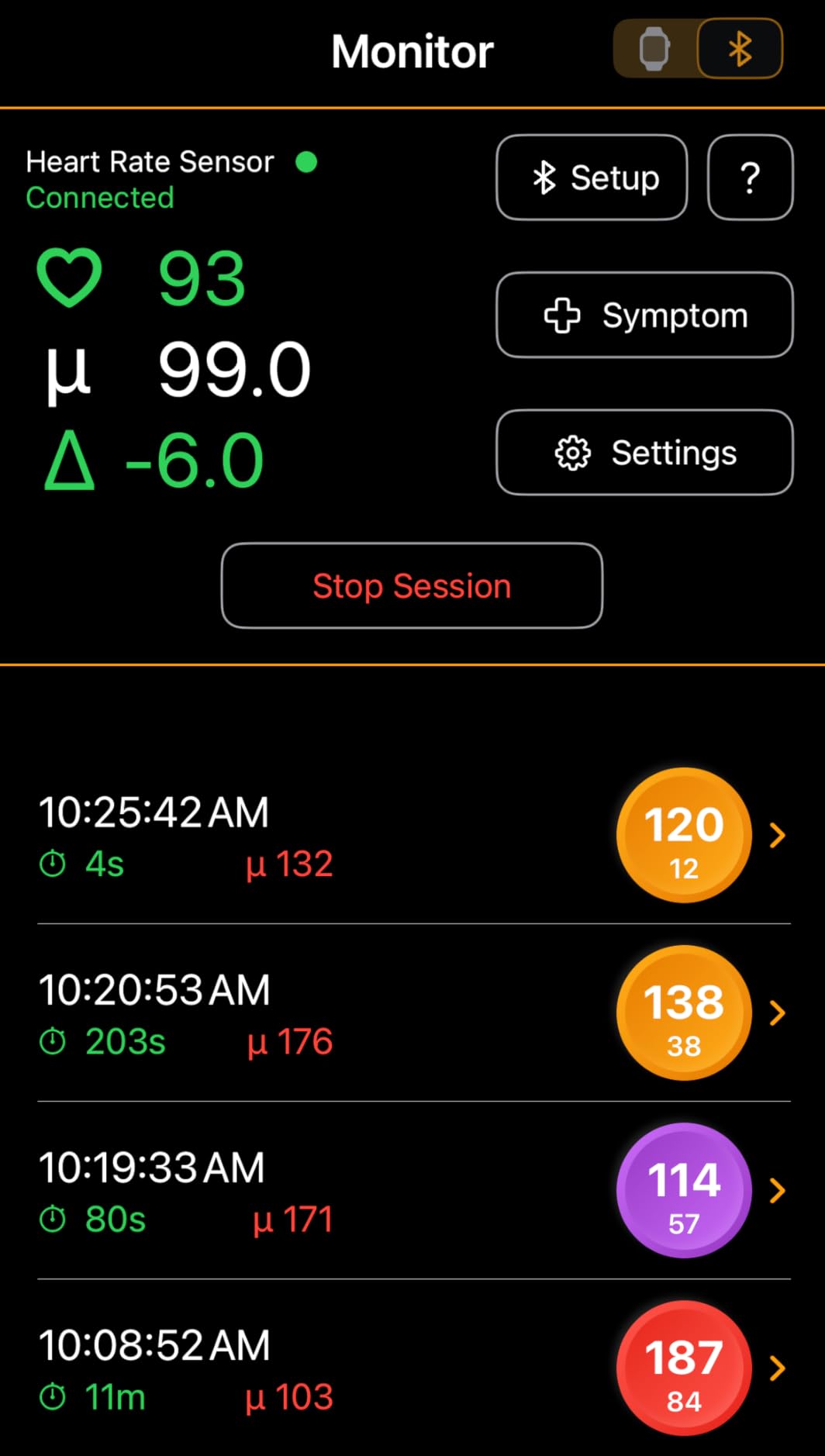
I found the auto-wear detection works well as long as you position the sensor correctly. If it is too loose, the skin contact breaks and the sensor shuts off mid-workout. Once I figured out the right tightness, it performed reliably. The medical-grade silicone strap is comfortable and does not trap sweat like cheaper materials.
The ability to connect to three devices simultaneously is useful for multi-device setups. I paired it with my watch, phone, and bike computer during a brick workout. The 20-gram weight makes it the lightest option in this guide, which is noticeable during long sessions.
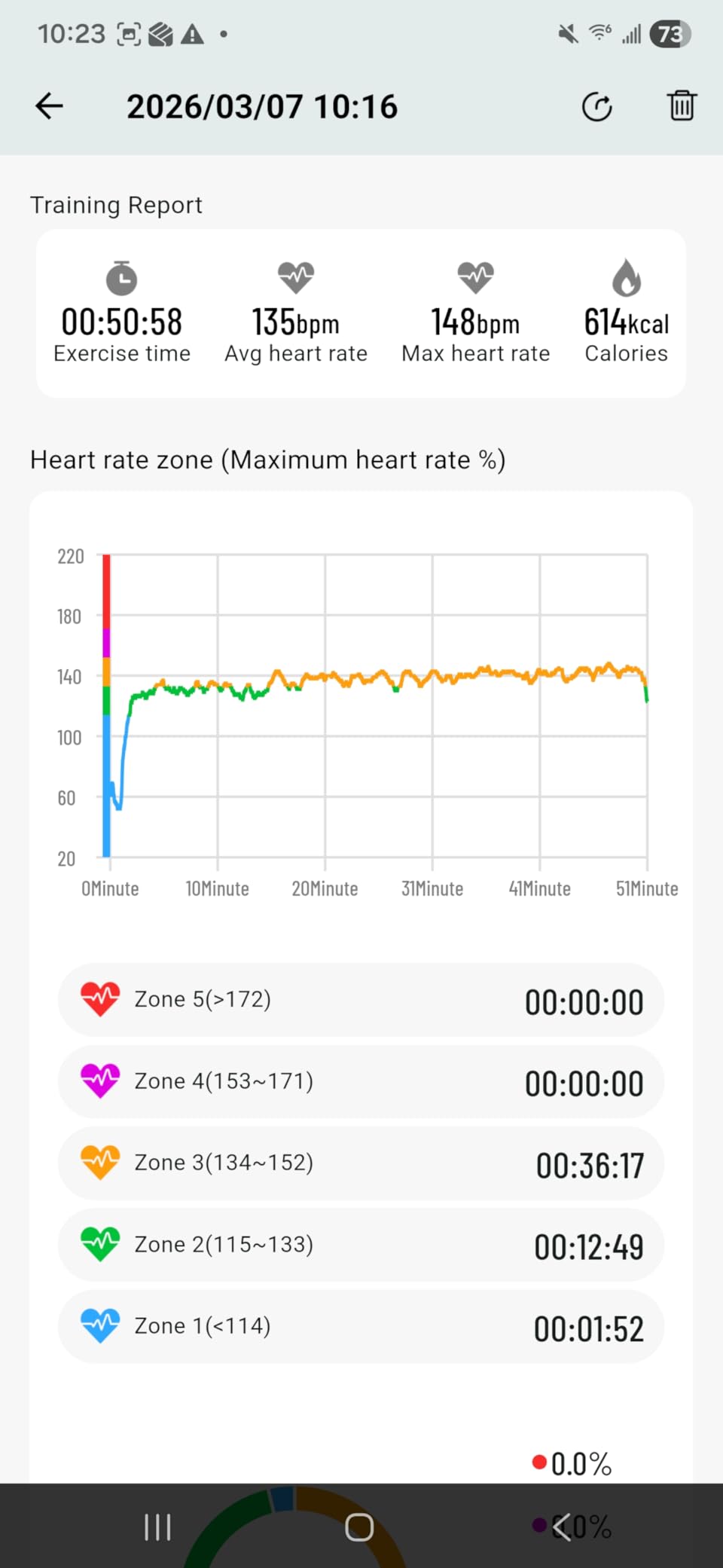
Battery life is the main drawback. At 3-4 days of typical use, you will be charging twice a week if you train daily. Some users also reported erratic readings during the first few minutes of wear while the sensor calibrates. I noticed this too, with HR jumping around for the first 30 seconds before stabilizing.
Best For Athletes Who Want Automatic Operation on a Budget
If the COROS auto-wear detection appeals to you but the price does not, the HW805 delivers similar convenience at a lower cost. Just be prepared to charge more frequently.
Skip If You Need All-Day Battery Life or Instant Accuracy
The shorter battery and initial accuracy calibration period make this less ideal for athletes who want worry-free operation. The COROS offers similar auto-wear detection with much better battery life.
How to Choose the Best Optical Heart Rate Monitor for Everyday Training
After testing these 12 optical HRMs, I have learned that the best choice depends on how you train, what devices you use, and what trade-offs you are willing to make. Here is what to consider before buying.
Accuracy vs Comfort Trade-offs
Chest straps using ECG technology remain the gold standard for accuracy, especially during high-intensity intervals with rapid heart rate changes. Optical sensors on your arm measure blood flow using LED light, which introduces a small delay. For most everyday training at moderate intensity, the difference is negligible. If you primarily do steady-state cardio, an optical HRM will serve you well. If you are a competitive athlete doing lactate threshold intervals, you may still want a chest strap for those specific sessions.
Connectivity Options (ANT+ vs Bluetooth)
Most optical HRMs offer dual connectivity, but it is worth confirming. ANT+ is the standard for bike computers and many GPS watches. Bluetooth is what your phone and most smart devices use. If you have a Garmin or Wahoo bike computer, make sure your HRM supports ANT+. The good news is that most options in this guide support both simultaneously, letting you connect to multiple devices at once.
Battery Life Considerations
Battery life varies dramatically. The CYCPLUS H1 offers 110 hours, while the POWR Labs HW805 only manages 3-4 days. Consider how often you want to charge. If you travel frequently or tend to forget chargers, prioritize longer battery life. Remember that battery degradation is real. After a year of use, most rechargeable batteries hold 20-30% less charge than when new.
Water Resistance and Swimming
Not all optical HRMs are swim-friendly. The Polar OH1+ and Verity Sense include goggle clips for temple placement, which improves accuracy in water. Others claim water resistance but only for sweat and rain. If swimming is part of your training, verify the waterproof rating and whether the manufacturer recommends submersion. IP67 handles splashes. IP68 and dedicated swim features handle pool and open water.
Cadence Lock and How to Avoid It
Cadence lock is a common issue where optical sensors on your wrist or arm pick up the rhythm of your running or cycling motion and report that as your heart rate. You will see impossible readings like 170 BPM when your actual heart rate is 140. This happens most often during steady runs or rides where your cadence is consistent. To avoid it, wear the sensor higher on your arm, away from major muscle movement. The upper bicep works better than the forearm for running.
Skin Tone and Optical Sensor Accuracy
Optical sensors can struggle with darker skin tones because melanin absorbs some of the LED light used to detect blood flow. This is an under-discussed issue in the fitness industry. If you have darker skin and have experienced inconsistent optical HR readings, try positioning the sensor on the temple with a goggle clip (for swimming) or wearing it tighter on the upper arm. Some users find one brand’s sensor works better than others for their specific skin tone, so do not be afraid to return a monitor that does not work for you.
Frequently Asked Questions About Optical Heart Rate Monitors
What is the best heart rate monitor for training?
The best heart rate monitor depends on your training style. For everyday training with comfort as a priority, optical armband monitors like the COROS Heart Rate Monitor or Scosche Rhythm+ 2.0 offer excellent accuracy without chest strap discomfort. For maximum accuracy during high-intensity intervals, chest straps like the Polar H10 remain the gold standard. Triathletes should consider the Polar Verity Sense or OH1+ for their swim compatibility and internal memory.
What fitness tracker do cardiologists recommend?
Cardiologists generally recommend chest strap monitors like the Polar H10 for medical-grade accuracy, as they use ECG technology similar to clinical equipment. For everyday fitness tracking, cardiologists suggest devices that provide consistent readings and heart rate variability data. The Scosche Rhythm+ 2.0 offers HRV tracking that some cardiologists find useful for monitoring overall cardiovascular health and recovery status.
Are optical heart rate monitors accurate for running?
Optical heart rate monitors are accurate enough for most running training, especially steady-state and tempo runs. They typically track within 1-3 BPM of chest strap monitors during consistent effort. However, they may lag by 3-5 seconds during rapid heart rate changes in interval training. For best accuracy while running, wear the sensor on the upper bicep rather than the forearm to reduce motion artifact.
Can optical heart rate monitors be used for swimming?
Some optical heart rate monitors work for swimming, but not all. The Polar Verity Sense and OH1+ include goggle clips that allow temple placement, which provides better accuracy in water than arm placement. Standard waterproof ratings like IP67 handle splashes but may not guarantee accurate readings during swimming. For dedicated swim training, choose a monitor specifically designed for swimming with temple placement options.
What is cadence lock and how do I avoid it?
Cadence lock occurs when an optical heart rate sensor confuses your running or cycling motion with your actual pulse, reporting your cadence as your heart rate. This produces artificially high readings that match your steps or pedal strokes. To avoid it, wear the sensor higher on your bicep away from moving muscles, ensure a snug fit, and verify readings seem reasonable for your perceived effort. If you see readings that match your exact cadence, reposition the monitor.
Final Thoughts on the Best Optical Heart Rate Monitors for 2026
After months of testing, I can confidently say that optical heart rate monitors have reached a point where they are viable for most everyday training scenarios. The best optical heart rate monitors for everyday training offer a combination of comfort, accuracy, and convenience that chest straps simply cannot match for daily use.
The COROS Heart Rate Monitor remains my top pick for most athletes thanks to its auto-wear detection, 38-hour battery, and exceptional comfort. The Scosche Rhythm+ 2.0 offers the best value with its HRV features and medical-grade accuracy claims. For budget-conscious shoppers, the COOSPO HW706 proves you do not need to spend a lot to get reliable heart rate data.
Remember that the best monitor is the one you will actually wear. A $100 chest strap in your drawer does not help your training, but a $40 optical armband you wear every day absolutely does. Choose based on your specific needs: swimming capability for triathletes, long battery for travelers, vibration alerts for zone trainers, or basic reliability for casual athletes.
Whichever option you choose, consistent heart rate monitoring will transform your training. You will learn your actual effort levels, discover your optimal training zones, and track your fitness improvements over time. That data is invaluable, whether you are training for your first 5K or your next Ironman.