
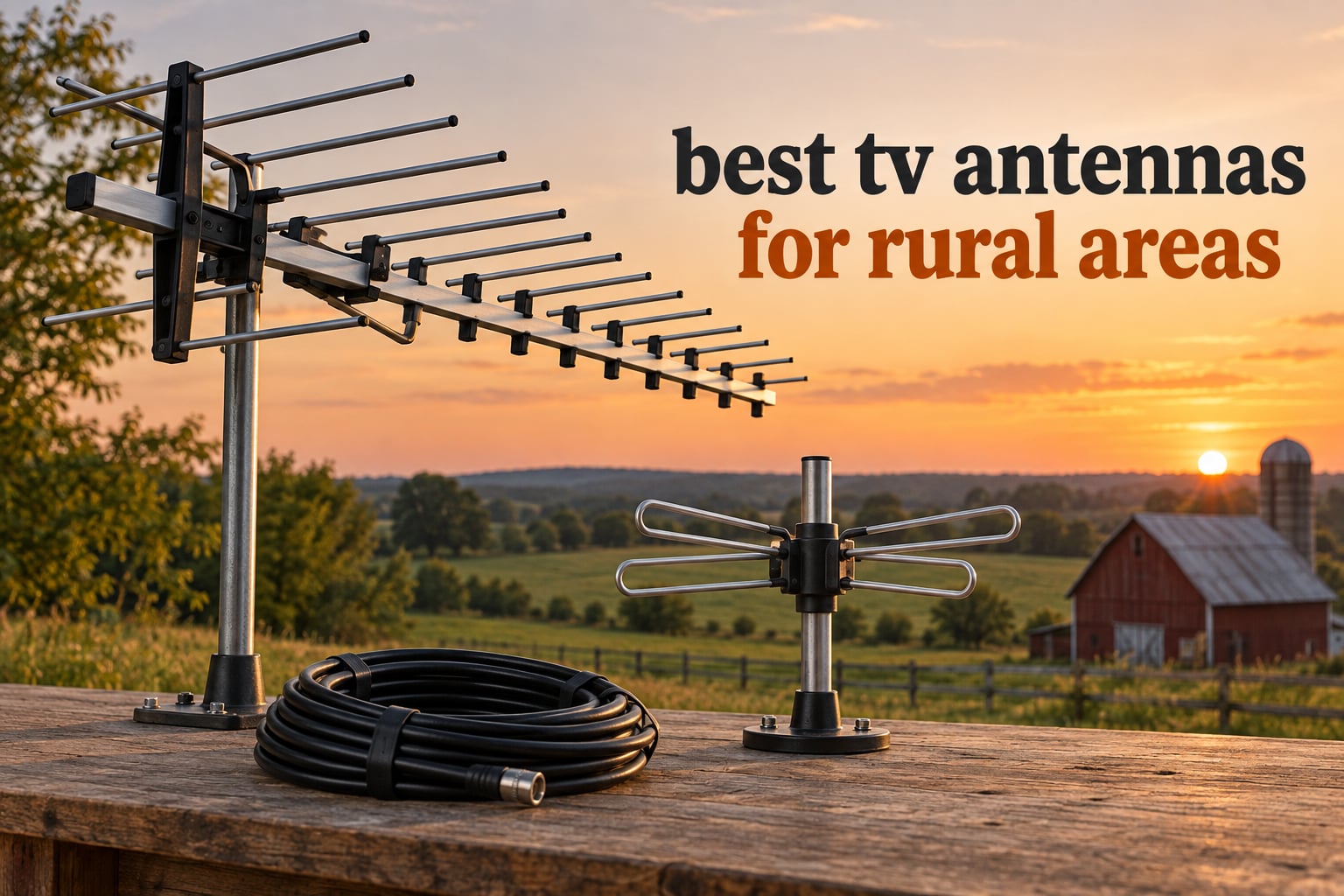
Rural households are usually 30 to 100 miles from a broadcast tower, and that distance is the single fact that decides what kind of antenna will work. A high-gain directional outdoor antenna mounted on a mast, fed by quality RG-6 coax, pulls in stations that indoor sticks and cheap amplified paddles simply cannot reach. The best TV antennas for rural areas in this guide are outdoor-first, most of them non-amplified, and every one of them is a real directional design rather than a plastic panel with a marketing number on the box.
We spent weeks reading specifications, drilling through customer review data and comparing element layouts, beam patterns and mounting hardware across twelve popular outdoor antennas. What stood out was how little the range claims in the marketing copy match what owners actually report, and how often the difference between a good antenna and a bad result is just height and aiming accuracy.
This guide covers long-range Yagi designs, multi-directional loop antennas, bowtie arrays, motorized rotors and omnidirectional options, plus the mounting and amplifier decisions that trip people up. If you have never installed an antenna before, start with the distance framework below so you do not buy more hardware than you need, or less.
Related reading for the rest of the property: our picks for the best driveway gate openers for rural properties and the best well pumps for rural homes cover the other half of running a place out in the country.
Table of Contents
How to Get Better TV Reception in Rural Areas
Most reception problems are not antenna problems. They are aiming, height and cable problems, and the order you fix them in matters. Work through these steps in order and you will usually know within one afternoon whether you need better hardware.
- Find your towers first. Enter your ZIP code on AntennaWeb, then cross-check the same address on the FCC DTV map. Note the distance to each tower and its azimuth in degrees, and whether each station sits in the VHF-Hi band or the UHF band.
- Sort stations by band. Write down how many of your local stations are UHF versus Hi-VHF. If your main network affiliates run on channel 7 to 13, an antenna with no Hi-VHF elements will never show them, no matter how good the UHF gain is.
- Decide directional or omni. If every tower sits within a 60-degree wedge, a directional antenna concentrates all of its gain into that wedge. If towers surround you, an omnidirectional or wide multi-directional design is the better spend.
- Get it outside. An attic install works when the roof pitch is low and the tree cover is thin. A metal roof, foil-backed insulation or a deep attic cuts signal hard, and moving to a roof or a pole mount can be the difference between 12 channels and 40.
- Use real RG-6 and keep the run short. Every 100 feet of cable costs you signal. A 200-foot run of thin RG-59 can eat more signal than 20 extra miles of distance, and a preamplifier mounted at the antenna end compensates for the loss.
- Aim in small increments and rescan. Rotate five degrees at a time and rescan after each move. Wide-beam antennas forgive sloppy aiming; narrow Yagi designs do not.
- Ground the mast and coax. A bonded ground block and a mast-to-coax bond protect both the antenna and the house from lightning, and it is required by code in most areas.
Forum regulars in r/cordcutters consistently steer people away from cheap amplified antennas and toward Winegard, Channel Master, Antennas Direct and Televes designs for real fringe reception. They repeat one rule more than any other: mount height and line of sight beat amplifier wattage every single time.
Top 3 Picks for Rural TV Antennas in 2026
The three antennas below cover the majority of real rural situations. The GE is the one to buy if you have never installed an outdoor antenna, the ClearStream 2V is the sweet spot for most households, and the ClearStream 4V is the step up for wide Hi-VHF and UHF spreads.

GE Outdoor HD Digital TV Antenna
- Passive Yagi design
- no power needed
- 70+ mile claim
- J-mount included
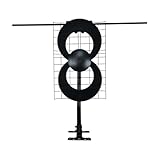
Antennas Direct ClearStream 2V
- Double-loop design
- 60+ mile claim
- Hi-VHF plus UHF
- 20 inch mast

Antennas Direct ClearStream 4V
- Four loop elements
- 43 degree pattern
- 70 mile claim
- Hi-VHF kit
Best TV Antennas for Rural Areas at a Glance in 2026
This table lists every antenna in the guide with the design decision that actually matters for it. The claimed ranges are manufacturer figures, not our measurements, and several of them are inflated well past what owners report in practice.
| Product | Specifications | Action |
|---|---|---|
| GE Outdoor HD Digital TV Antenna |
|
Check Latest Price |
| Antennas Direct ClearStream 2V |
|
Check Latest Price |
| Antennas Direct ClearStream 4V |
|
Check Latest Price |
 Antennas Direct DB8e Bowtie Antennas Direct DB8e Bowtie |
|
Check Latest Price |
 Winegard HD7694P Yagi Winegard HD7694P Yagi |
|
Check Latest Price |
 Five Star Extended Yagi Five Star Extended Yagi |
|
Check Latest Price |
 PBD Amplified Outdoor Antenna PBD Amplified Outdoor Antenna |
|
Check Latest Price |
 Five Star Amplified Rotating Antenna Five Star Amplified Rotating Antenna |
|
Check Latest Price |
 PIBIDI UHD-3942 Rotating Antenna PIBIDI UHD-3942 Rotating Antenna |
|
Check Latest Price |
 CEKAY All-Metal Yagi CEKAY All-Metal Yagi |
|
Check Latest Price |
 PIBIDI UHD-8903 Antenna PIBIDI UHD-8903 Antenna |
|
Check Latest Price |
 1byone 360 Degree Omni Antenna 1byone 360 Degree Omni Antenna |
|
Check Latest Price |
1. GE Outdoor HD Digital TV Antenna – Best Overall and Best for a First Outdoor Install
- Pulls 70-100+ channels at 40-60 miles with clear line of sight
- No power supply to run outdoors
- J-mount and all hardware in the box
- Limited lifetime replacement pledge
- Tedious assembly with thin instructions
- Coax cable is not included
- Very directional so 5 degrees of aim matters
We picked the GE Outdoor HD Digital TV Antenna as the top pick because it is the rare budget-priced outdoor antenna with a real passive Yagi-style element layout and no amplifier pretending to do the work. Nothing on the roof draws power, nothing fails in an ice storm because of a power supply, and the 3-pound weight is easy to handle on a ladder.
Owners report 70 to 100-plus channels at 40 to 60 miles when the line of sight is open. Jasco rates it for 70-plus miles, and while that is a marketing figure rather than a measurement, the review data backs up real-world performance far better than most claims in this category.
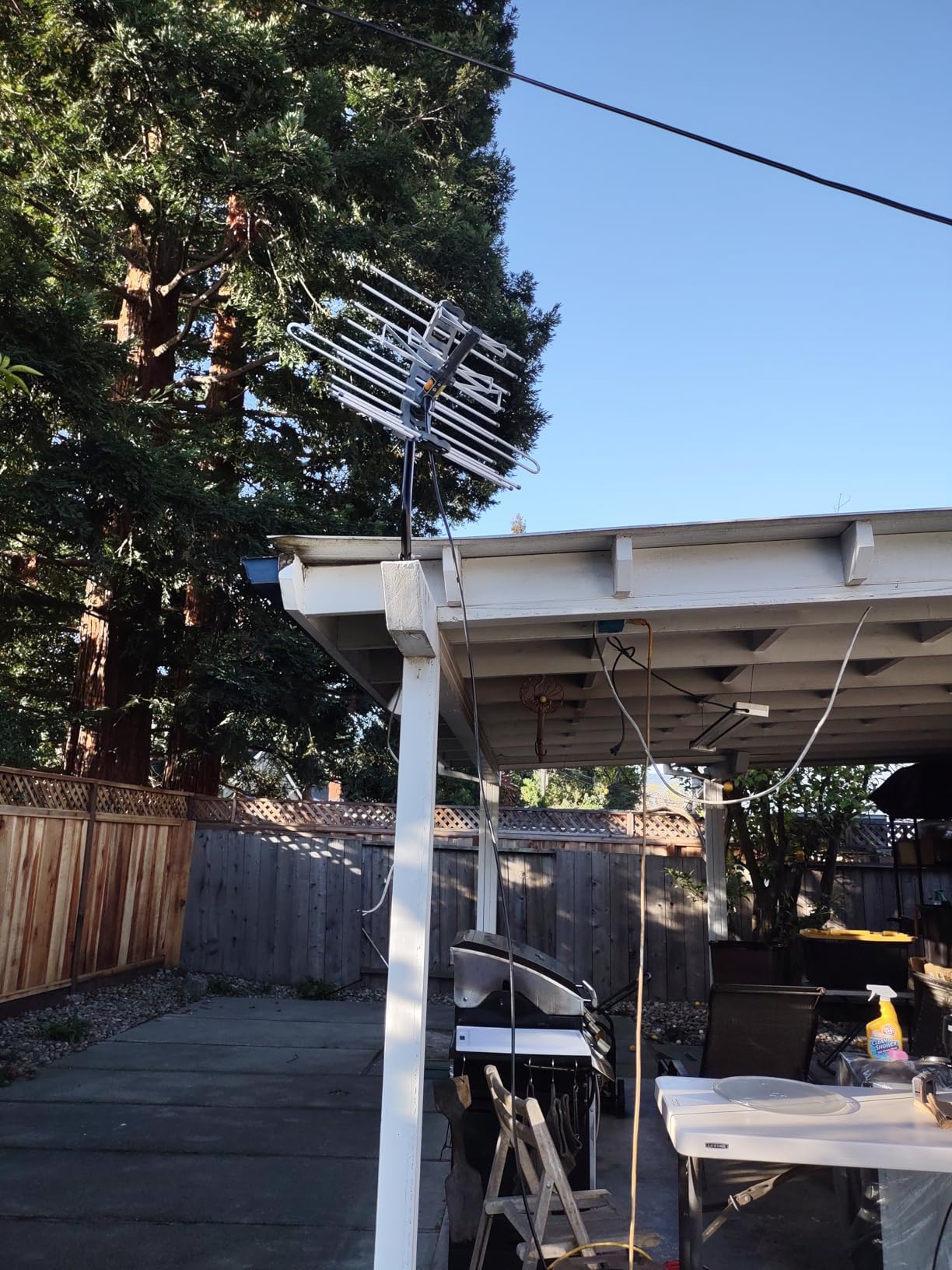
What makes this antenna work in rural settings is the trade it makes. It gives up amplification entirely, which means it cannot rescue a hopeless signal, but in exchange it delivers a clean passive gain figure that stays stable in bad weather. Reviewers who paired it with a distribution amplifier and proper RG-6 coax rather than RG-59 report the best results.
A second wave of owners added the same warning: this is a highly directional design. Rotating it five degrees in the wrong direction can drop a dozen channels, so the aiming work is not optional.
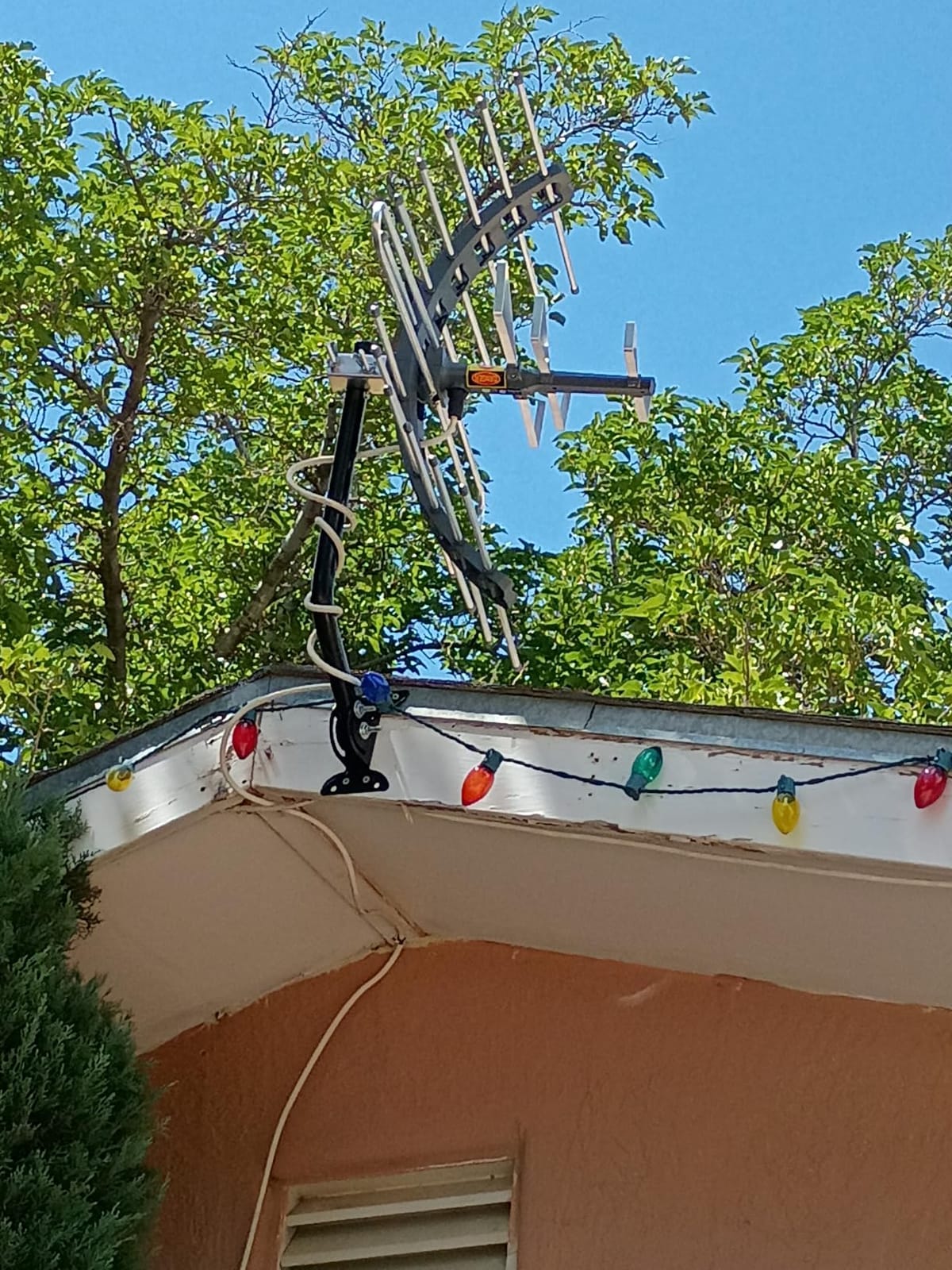
How to install it without losing a weekend
Assembly is the main complaint, and it is fair. The element-to-boom bolts are fiddly and the printed instructions are small, so budget an hour and work from a video walkthrough on a phone rather than the paper sheet.
Two practical notes before you climb. The coax connector sits under the boom rather than at the back, which is not obvious from product photos, and no coax cable ships in the box, so buy RG-6 separately in the length you actually need. Everything else about the mount is genuinely good, and the included J-mount handles roof, wall and attic positions.
Who should skip it
Skip this antenna if your towers are spread across more than one direction, because a single fixed aim will not cover a split signal. You also want a different product if your nearest tower is beyond 70 miles with terrain in the way, or if your local stations include a strong Hi-VHF affiliate that needs a dedicated element array.
And if you plan to run coax to a building far from the house, plan on adding a preamplifier at the antenna. A passive design with a 200-foot run needs that help more than any other antenna in this guide.
2. Antennas Direct ClearStream 2V – Best Multi-Directional Pick for Attic or Wall Mounts
- Punches above its size at 40-50 miles
- Reflector rejects rear interference
- Light 2 pound body suits chimney and balcony mounts
- Multiple owners report 8+ years of service
- VHF performance limited by a single dipole
- Instructions lack a clear assembly flow
- J-mount droops when the bolts are loosened
The ClearStream 2V is the antenna we recommend to anyone who wants a wide capture pattern without the cost or the windage of a full bowtie array. Two loop elements cover UHF and Hi-VHF, and the included reflector adds forward gain while rejecting whatever is happening behind the mast.
Channel counts in the reviews beat the stated range regularly, with owners reporting 40 to 140 channels from 40 to 50 miles out. The 60-plus mile figure Antennas Direct prints is a marketing number that means exactly what every other claim in the category means, so treat it as a claim and not a promise.
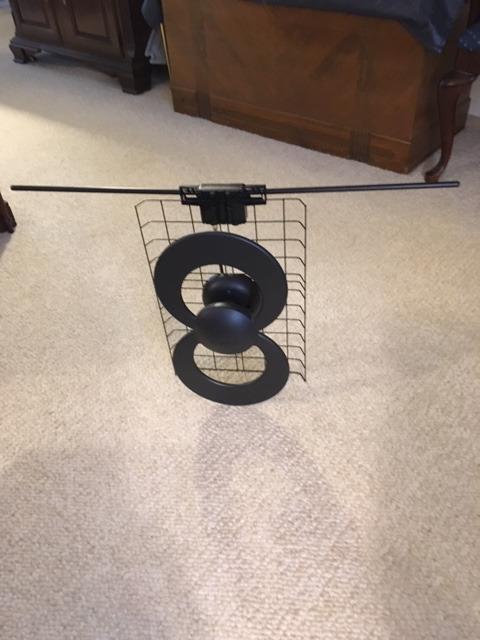
Long-term owners are the most enthusiastic group for this model, and the pattern in their reports is consistent. What decides the outcome is mounting height and line of sight, not the antenna. Several describe adding a preamplifier and splitting the UHF and VHF elements toward separate tower clusters, which roughly doubled their channel count.
That detail matters more than it sounds. Because the 2V is multi-directional, you can physically aim the two element groups differently, which gives you a cheap version of the two-tower setup that costs real money in a dedicated antenna combiner.
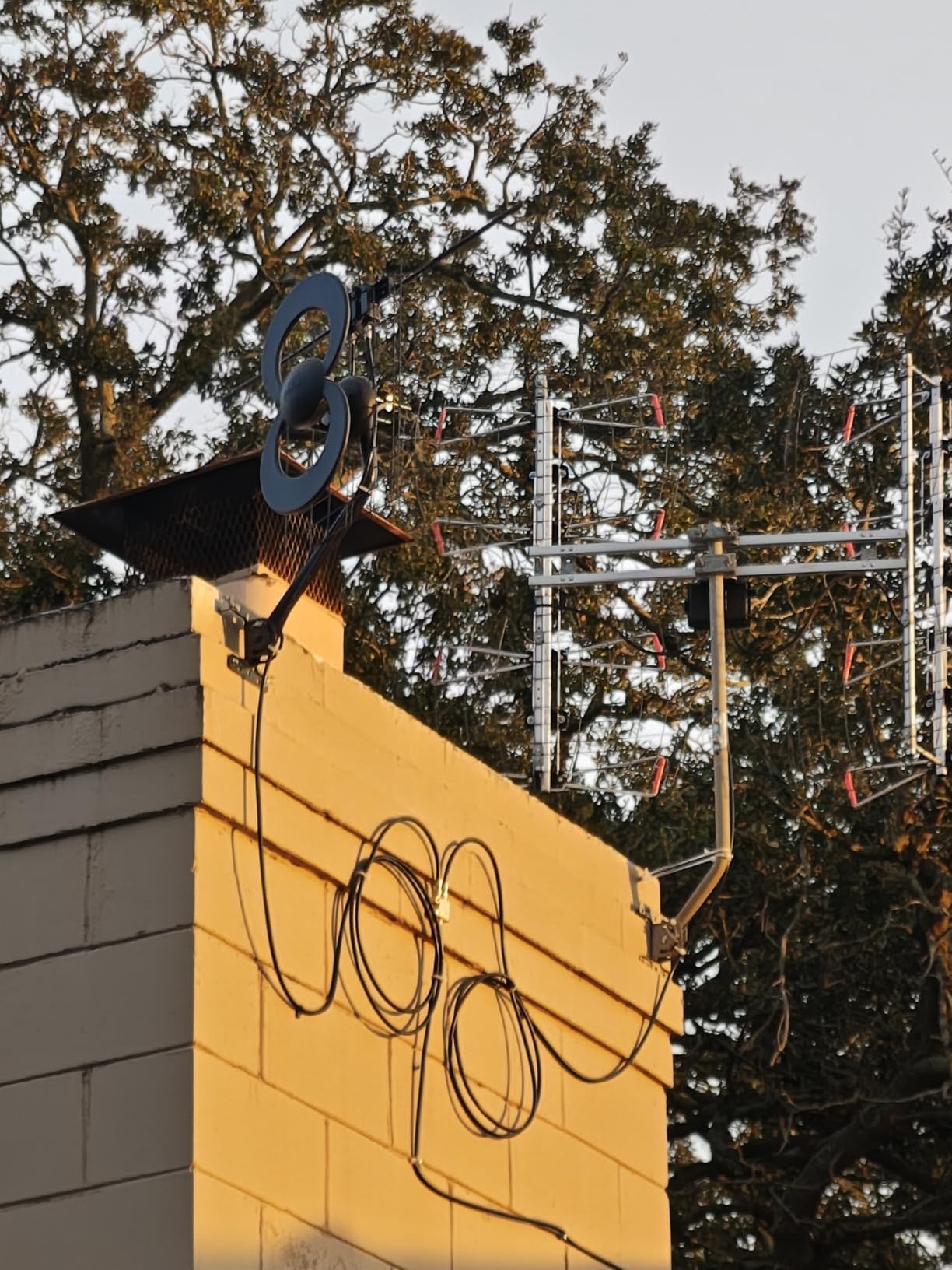
Why the 20-inch mast matters more than the range number
The included mast and pivoting base accept vertical or horizontal surfaces, so you can put the antenna on a chimney, a side wall, a balcony rail or a pole without buying hardware. The pivoting base is also what lets you re-aim the two element groups independently once you know where your towers sit.
There is a catch that owners complain about repeatedly. The base is stable on a wall or roof and unstable if you try to use the antenna freestanding, and the mast will droop if you loosen the bolts to fine-tune aim. Tighten fully, then make small antenna adjustments rather than large ones.
Where the Hi-VHF ceiling is
The VHF performance is held back by a single high-band dipole, which is the one weak spot long-term owners mention. If your local stations include several channel 7 to 13 affiliates, this antenna gets you the strongest one and may leave the rest behind.
For a household that mostly wants UHF networks plus one or two Hi-VHF affiliates, that trade is fine. For a market where every major network affiliate runs on Hi-VHF, step up to the ClearStream 4V or the Winegard Yagi instead.
3. Antennas Direct ClearStream 4V – Most Compact for Multi-Directional Stability
- Four element array captures a wider set of UHF and Hi-VHF channels
- Reflectors add forward gain and suppress rear interference
- Lifetime manufacturer warranty on the antenna
- Mast reflectors and Hi-VHF kit included
- Costs more than a two-element loop
- Needs careful aiming and sometimes a pre-amp
- Some owners match it with the cheaper 2V
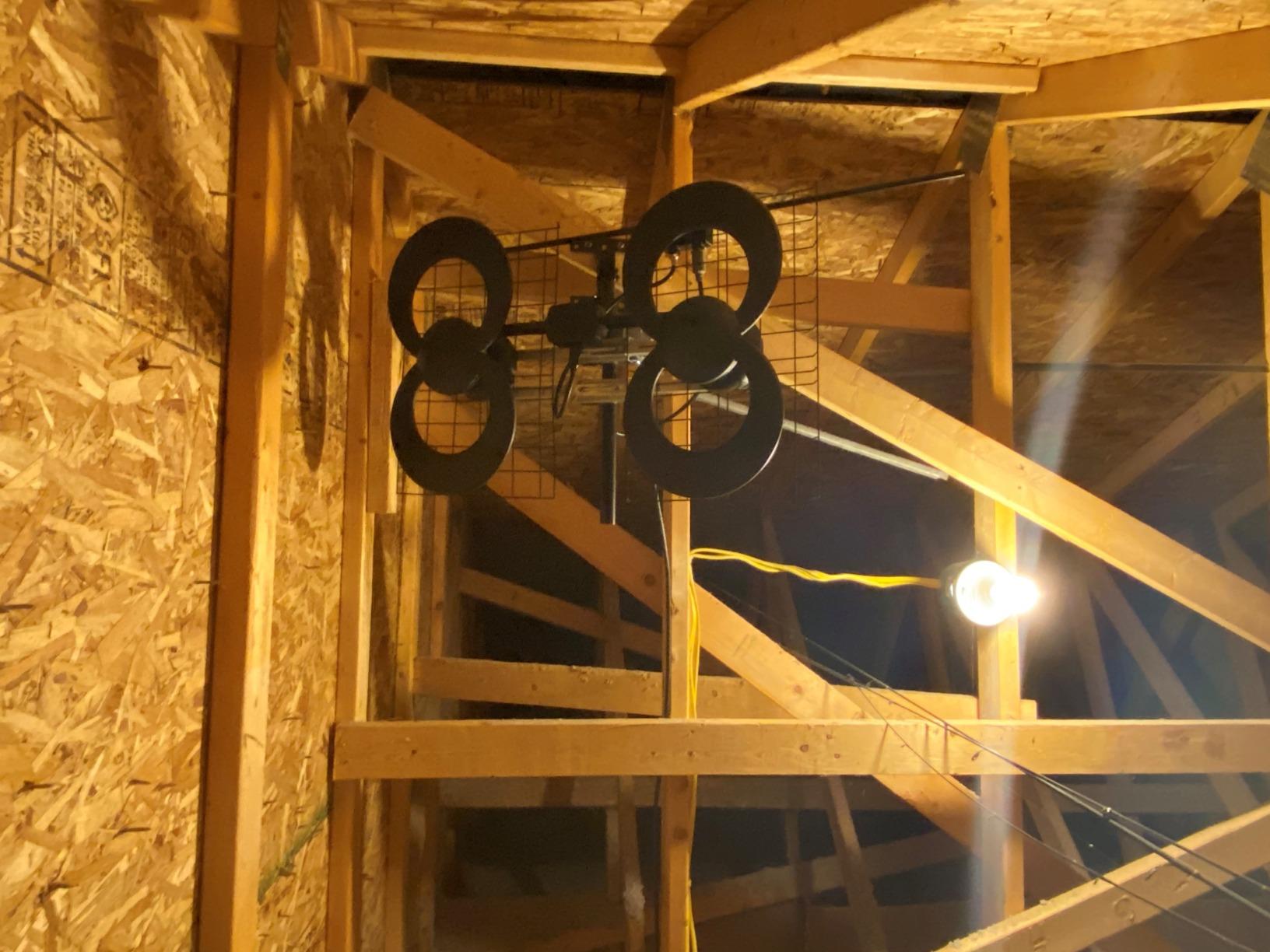
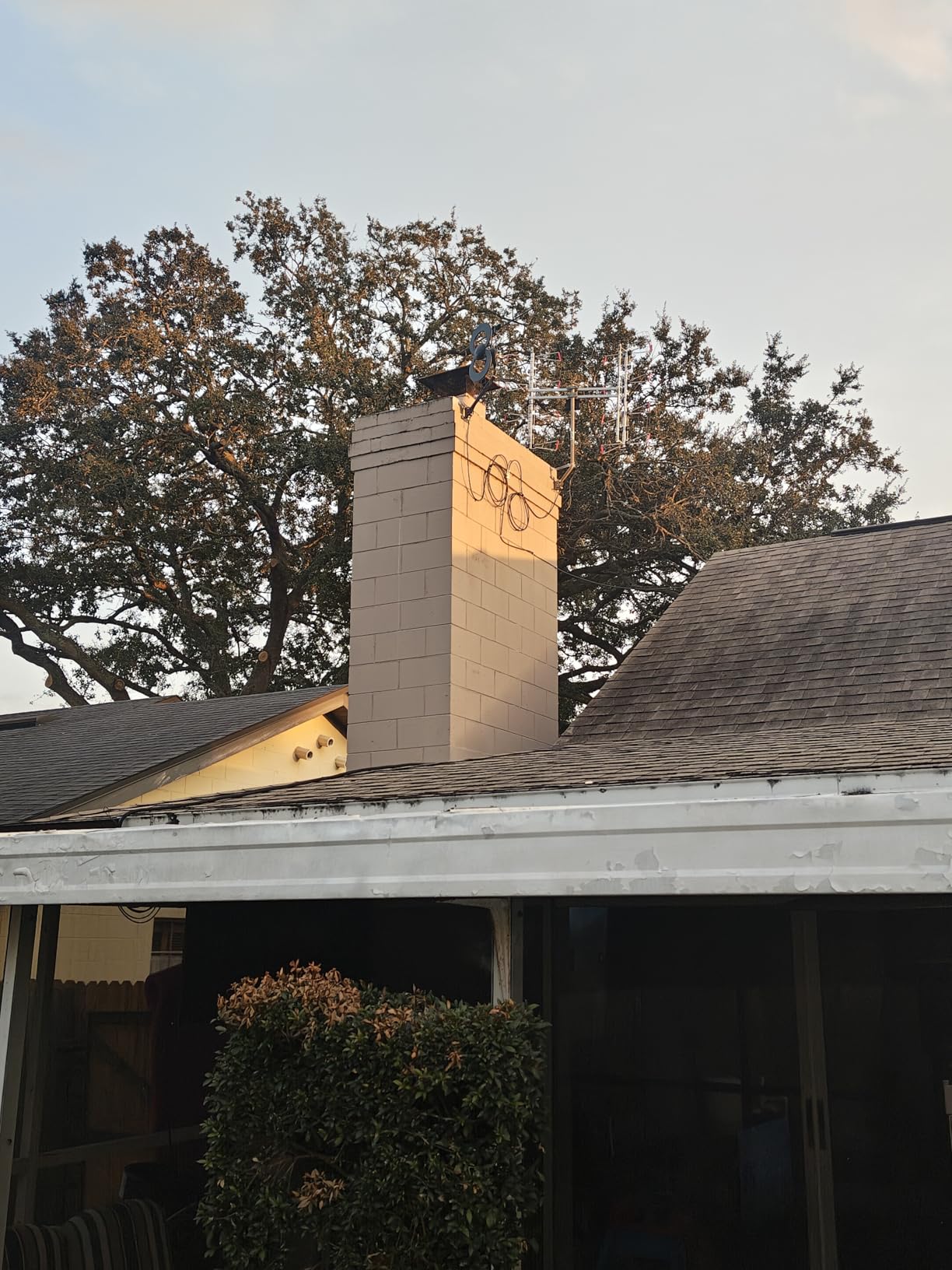
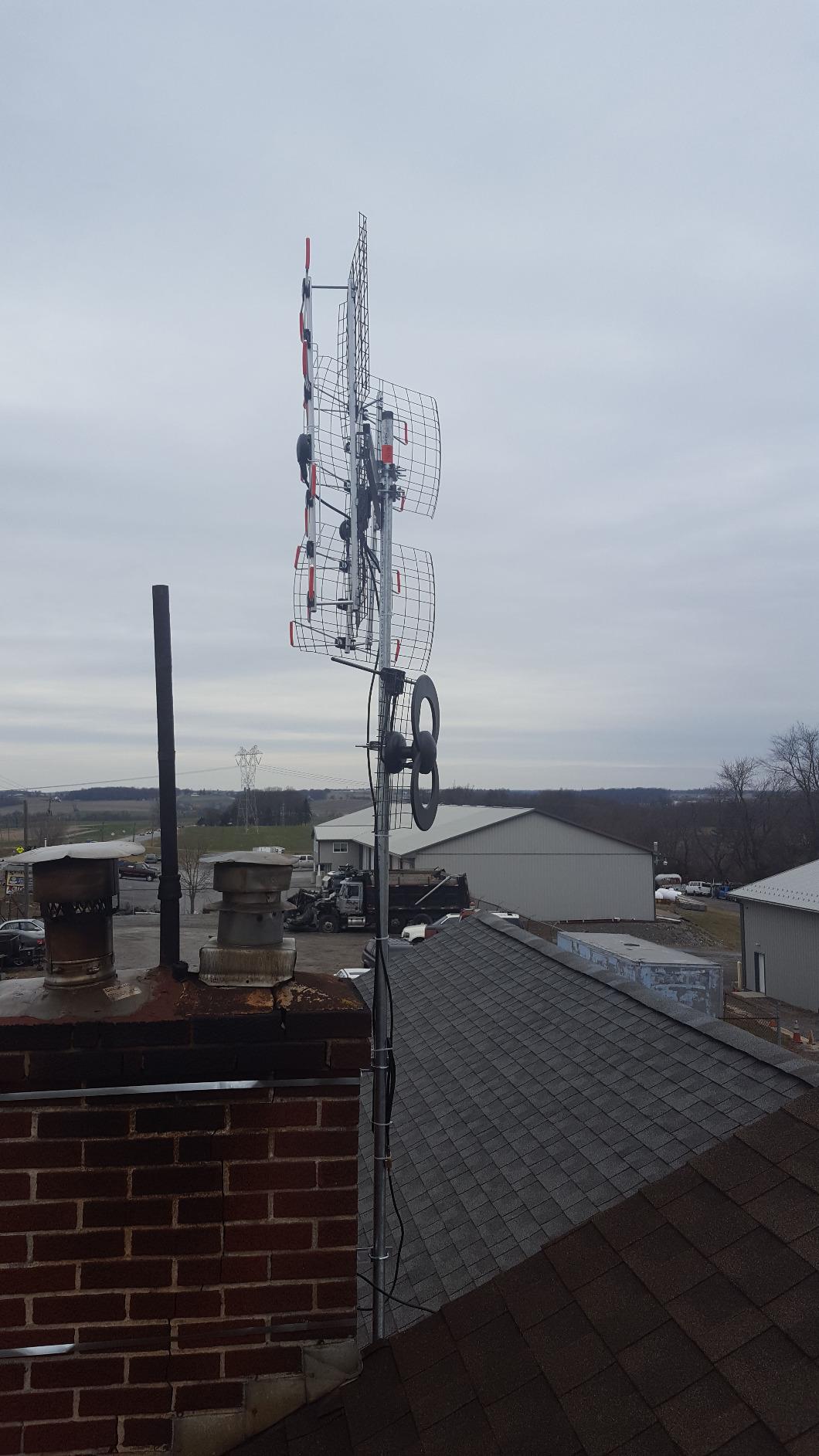
The ClearStream 4V is the same design philosophy as the 2V with two more loop elements and a wider 43-degree horizontal reception pattern. That wider cone is the point: it holds channels through wind, foliage movement and small aiming errors better than a single-pair Yagi.
It weighs 4.1 pounds and ships with the reflectors, the Hi-VHF kit, a 20-inch mast with a pivoting base and all-weather mounting hardware. NextGen TV, 4K, 8K UHD and 1080p are all covered.
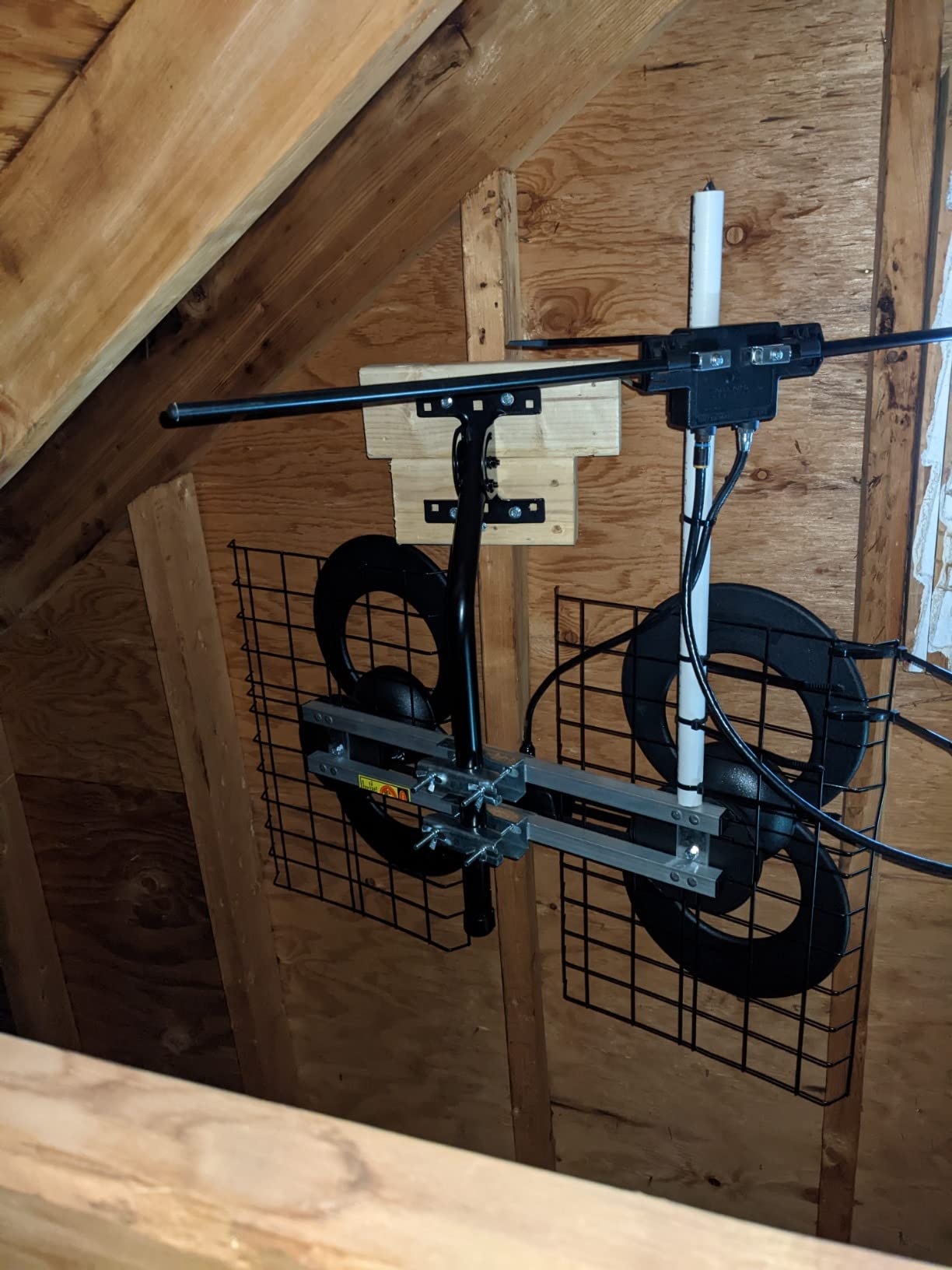
Reviewers describe stable multi-directional capture as the consistent theme, which is exactly what a rural install needs when the trees move in October and half your channels disappear. The reflectors do most of that work, blocking signals and noise arriving from behind the array.
The honest caveat is cost. Buyers pay more for these four loop elements than for a two-element version, and a handful of comparative reviews note that the 2V matched or beat it from the same mounting position in their area. That is a real result, not a defect, and it is worth testing before you upgrade.
When the extra two elements pay off
They pay off when your tower group spans a wide angle, when a good share of your stations are Hi-VHF, or when your site sits in a valley with partial obstruction rather than clean line of sight. In those cases the wider pattern catches stations a 2V simply aims past.
They do not pay off when every tower is in one tight direction and your current antenna already locks every channel in your list. In that narrow case a long Yagi concentrates more gain per element, and you would be paying for width you cannot use.
Pre-amp expectations and aiming
A fair number of owners add a preamplifier to hold weak stations that the 4V finds but cannot fully stabilise. That is a normal pairing for a 70-mile claim, because the design has no built-in amplification of its own.
Plan on the aiming effort the element count demands. Four elements narrow your usable cone compared with a single pair, so rotate in small steps and rescan each time rather than swinging the antenna around and guessing.
4. Antennas Direct DB8e 8-Element Bowtie – Best Raw Gain for Foliage and Valleys
Antennas Direct 8-Element Bowtie UHF Outdoor HDTV Antenna, Multi-Directional, 70+ Mile Range, 4K 8K UHD NEXTGEN TV – w/All-Weather Mounting Hardware
- Highest gain figure in the group at 17.4 dB
- Elements rotate individually toward different tower clusters
- Ten pound hardware-heavy build resists wind
- Lifetime manufacturer antenna warranty
- UHF only so Hi-VHF stations need separate handling
- Fifty inch element and 10 pound weight make mounting a two-person job
- Costs more than most directional designs here
The DB8e is the brute-force option. It carries 17.4 dB of gain across the 470 to 608 MHz UHF band, which is the highest gain figure in this roundup and the reason it keeps working where trees, hills and terrain edges are eating everything else.
It is also physically large at 50 inches wide and 10 pounds, and the patents cover multi-directional elements on brackets that rotate individually. That bracket feature is what makes it genuinely useful for split-signal households rather than just a single-direction gun.
Review feedback centres on mounting logistics and the UHF-only trade-off rather than reception failures. In other words, when this antenna does not perform, the cause is usually the site or the aim, not the hardware. That is a good problem to have, because both are fixable.
It carries a lifetime manufacturer antenna warranty, and the all-weather mounting hardware plus adjustable mast clamp are included. NextGen TV, 4K, 8K UHD and 1080p are all supported.
When 17.4 dB is the difference
Raw gain matters when the signal is arriving but is not clean. Heavily foliated properties, homes in a valley with a ridge between them and the tower, and long coax runs are all cases where a few extra decibels turn an unstable picture into a locked one.
It does not matter when the station is not arriving at all. No amount of gain creates a station that is blocked by terrain, so run the AntennaWeb check first and confirm your stations are actually receivable before committing to a heavy mount.
Planning a two-person install
Budget for a second person. At 50 inches across and 10 pounds, holding the array level while tightening the mast clamp is not a solo job on a ladder, and dropping it can bend elements that then need straightening before the pattern is right.
Check for Hi-VHF stations before you buy. This is a UHF-only design, so if your market runs its network affiliates on channels 7 to 13, you will need a second antenna and a combiner rather than a re-aim.
5. Winegard HD7694P Heavy-Duty Yagi – Best Heavy-Duty Steel Build
- Zinc-plated steel chassis made in the USA
- Directional gain holds a steady picture in wind
- No power connection needed at the antenna
- Range claim is honest next to inflated competitors
- Highest cost in the roundup
- Smaller capture area than large multi-element arrays
- Non-amplified design needs a clean line of sight
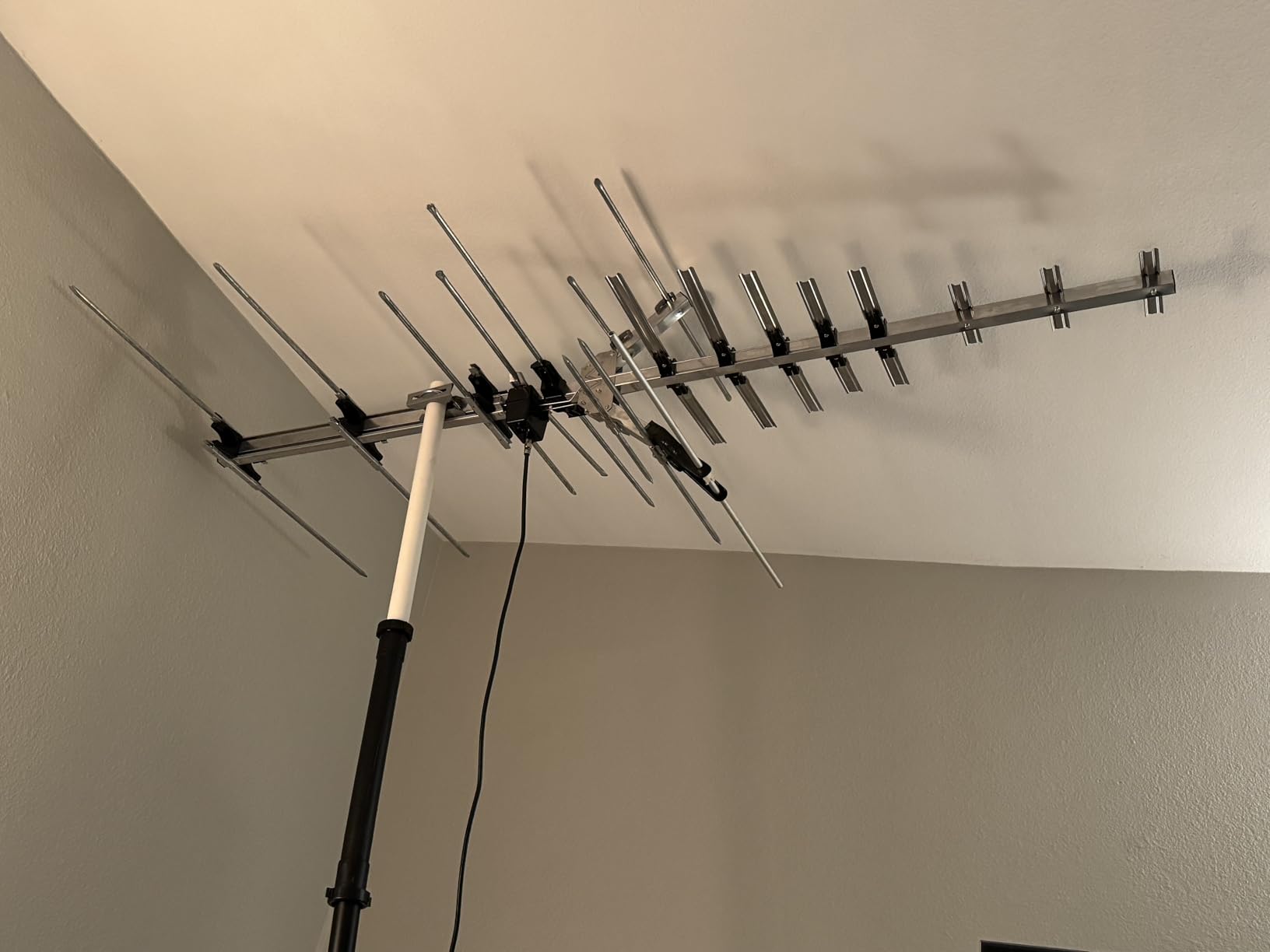
The Winegard HD7694P is the one to buy if your antenna has to survive a real winter. The zinc-plated steel construction resists corrosion, and at 6.7 pounds it is built like a piece of infrastructure rather than a consumer accessory.
It is also the only antenna here whose published range claim is modest. Winegard states up to 45 miles, and review owners single out that honesty as the reason they bought it, complaining that most competitors advertise 200 to 500 mile numbers that nobody verifies.
Mechanically, it is a non-amplified directional Yagi with Hi-VHF and UHF elements, so there is no power connection at the antenna and no power supply to fail. It is NextGen TV and 4K Ultra HD compatible, and it pairs with the RV Halo Channel Finder app for placement and aiming.
Review sentiment is heavily skewed positive, with owners who value the durable American-made steel chassis over headline range numbers. The complaints are about price, about needing a rotor for multiple tower directions, and about requiring a clean line of sight.
Why a lower number is a better number
Realistic range claims matter because they set expectations correctly. A 45-mile directional Yagi with clean line of sight will deliver, while a 200-mile claim on a plastic panel tells you nothing about where the usable limit is.
Forum hobbyists consistently recommend Winegard models for exactly this reason, alongside Channel Master, Televes and Antennas Direct. People who have fought reception problems for years stop trusting inflated numbers and start reading gain figures and element counts instead.
Where it needs help
Because it is non-amplified and narrow, add a preamplifier at the antenna if your coax run is long, and add a rotor if your towers are not all in one direction. Neither is a flaw; they are the standard accessories for a directional Yagi at this class.
It is also the most expensive antenna in the roundup, so justify it on build quality and service life if your climate is harsh. If your winters are mild and the roof is reachable, a lighter design gets you most of the way for a good deal less.
6. Five Star Extended Yagi Antenna – Most Versatile for 60-70 Mile Reaches
- Metal construction holds up better in wind than plastic antennas
- Big channel jumps such as 34 to 86 channels reported
- Coax cable and mounting pole included
- Light enough to carry up a ladder
- The 200 mile claim is unrealistic with real reach near 60-70 miles
- Plain steel hardware and wing nuts will eventually rust
- Weak instructions and a single u-bolt mount makes aiming hard
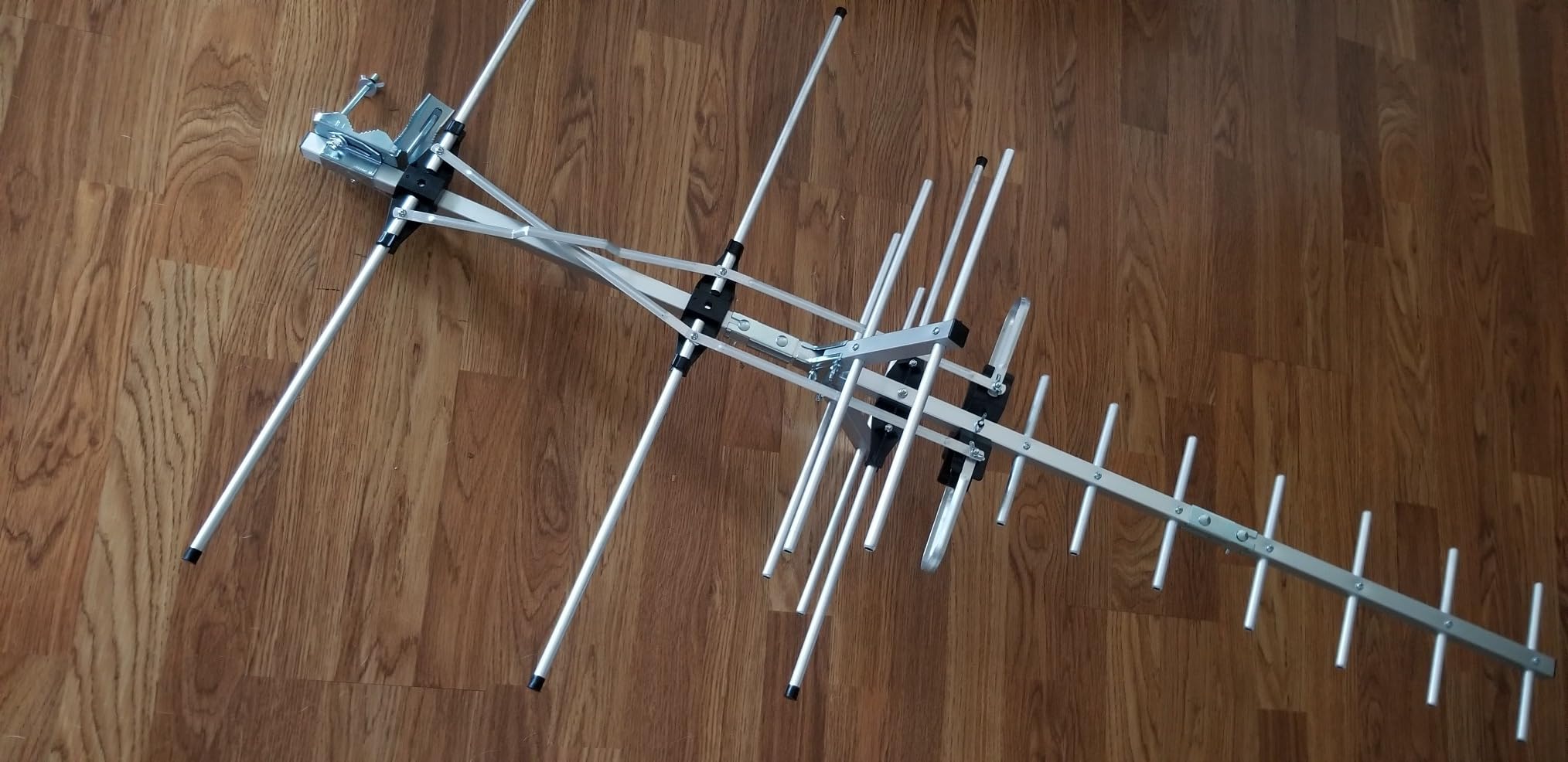
The Five Star extended Yagi is our budget pick because it is a metal directional antenna with extended element length, a 40-foot coax run and a 20-inch mounting pole in one box. For most rural households 40 to 60 miles from a tower, that is a complete install without a second purchase.
It receives VHF and UHF, and it doubles as a Radio and FM antenna, which is a small bonus for outbuildings and shops. It is partly pre-assembled, so you are bolting the boom together rather than wiring elements from scratch.
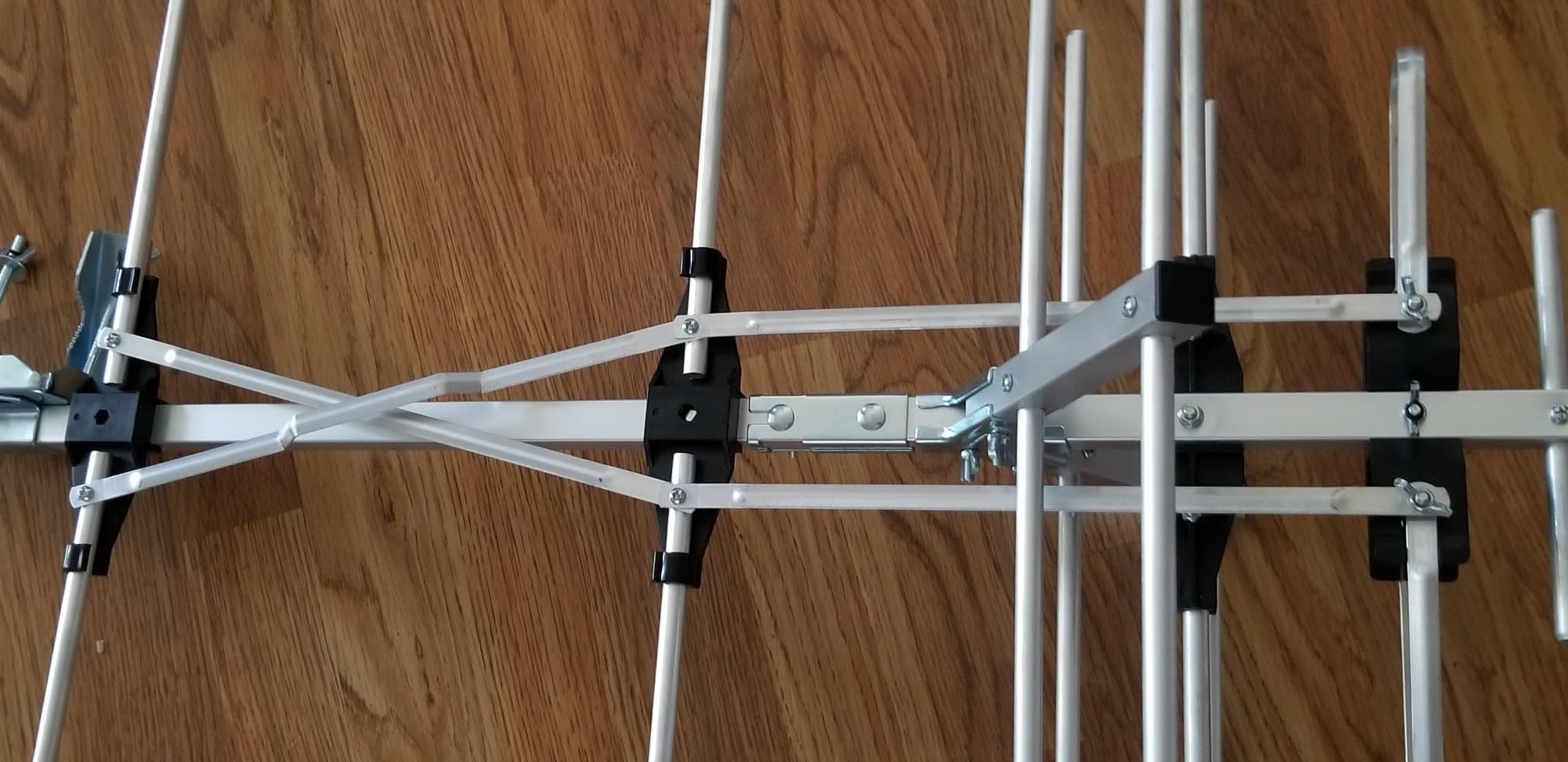
Owners report large jumps in channel count, including one move from 34 to 86 channels. That kind of result comes from directional gain pointing at a cluster, not from the marketing number, and the build holds up better in wind than plastic antennas of the same size.
Reviewers also call the 200-mile and satellite marketing misleading, estimating real reach around 60 to 70 miles over flat terrain. Treat the number as decoration and the antenna as a solid 60 to 70 mile design.
What the single u-bolt mount does to aiming
The mount is the weak point. One u-bolt means fine aiming requires loosening hardware, and the antenna droops while it is loose, which makes precise alignment frustrating rather than impossible.
Work around it by aiming from the ground. Set the antenna roughly, rescan, then tighten and adjust in small increments. A fixed directional aim that lands within five degrees will hold far more channels than a loose mount that wanders in the wind.
Rust and paperwork before you commit
The hardware is plain steel with stamped wing nuts, and owners note that it will eventually rust. If your antenna is on a roof in a wet climate, plan on replacing the fasteners with stainless hardware in the first year.
Assembly instructions are also weak, and owners recommend the manufacturer tutorial video. The partly pre-assembled design still needs some bolting, so set aside an hour and watch the video before you start.
7. PBD Amplified Outdoor Antenna – Best Motorized Rotation for Two Tower Directions
PBD Amplified Outdoor TV Antenna for Local Channels, 360° Remote Rotation
- Remote rotation avoids climbing a ladder to re-aim
- Dual TV outputs run two sets without a splitter
- Complete kit with 40 ft RG6 pole and hardware
- Strong reports from 30-60 mile tower distances
- Lightweight plastic construction feels flimsy during assembly
- Single-button remote means finding direction by trial
- Rotor can stick and need manual adjustment
The PBD amplified antenna is the most-reviewed product in this roundup by a wide margin, and the reason is its motorized 360-degree rotation. For households with towers in two directions, it turns the most common rural frustration, a split signal where you get half your channels, into a remote-control problem.
It has a built-in high-gain low-noise amplifier, dual TV outputs so you do not need a splitter, and it is NextGen TV ATSC 3.0 ready. The box includes 40 feet of RG-6 coax, a mounting pole and an installation guide.
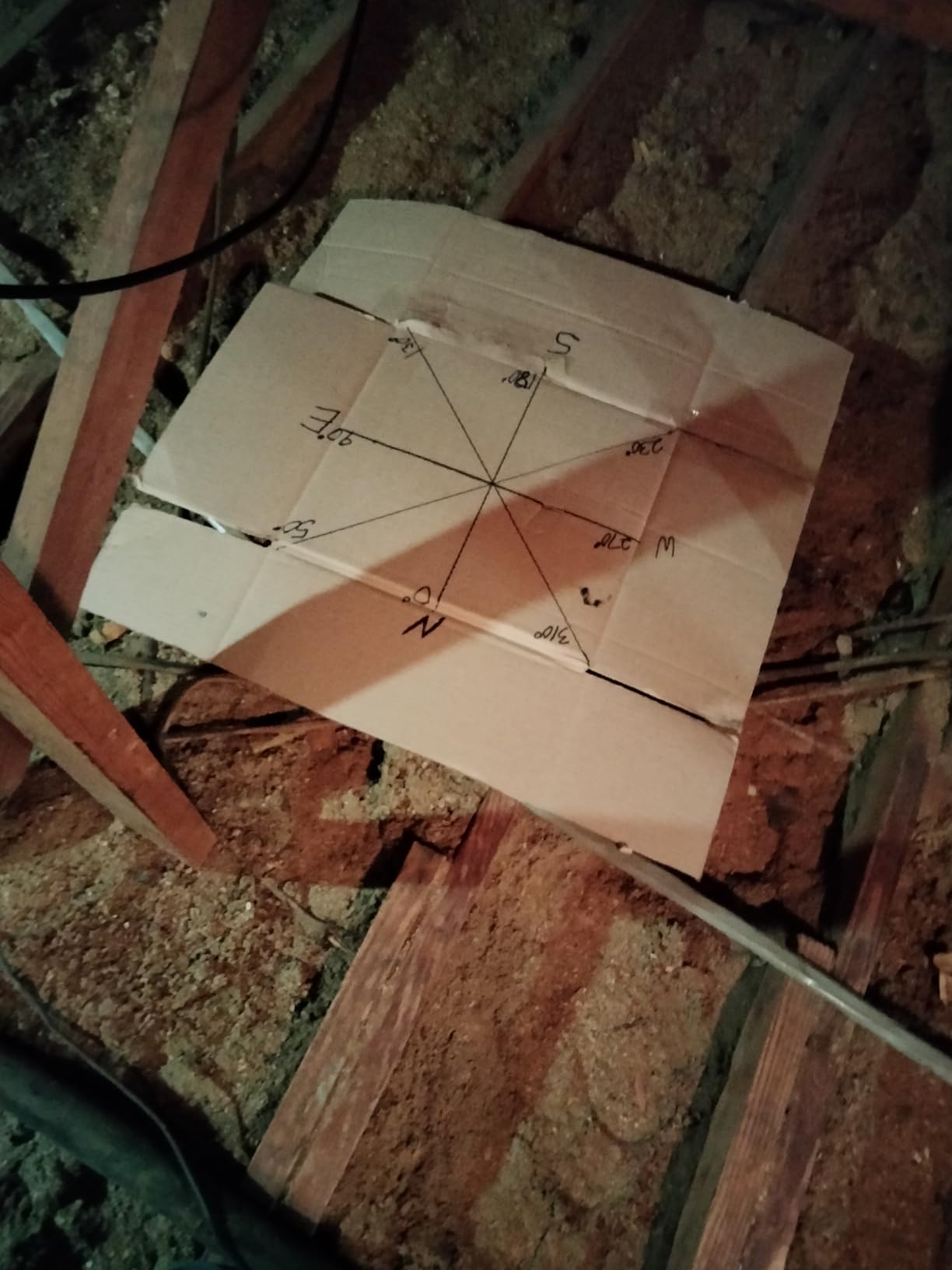
Owners widely report dramatically more channels after installing, often in an attic. The consistent finding across those reviews is that height and line of sight matter far more than the amplifier, which is exactly the point people miss when they assume more amplification solves a rural problem.
The mounting hardware and rotor mechanics draw most of the complaints. The bundled coax is dual-shield rather than quad-shield, which is a downgrade from what you would buy yourself, and the rotor itself sticks under load more than it should.
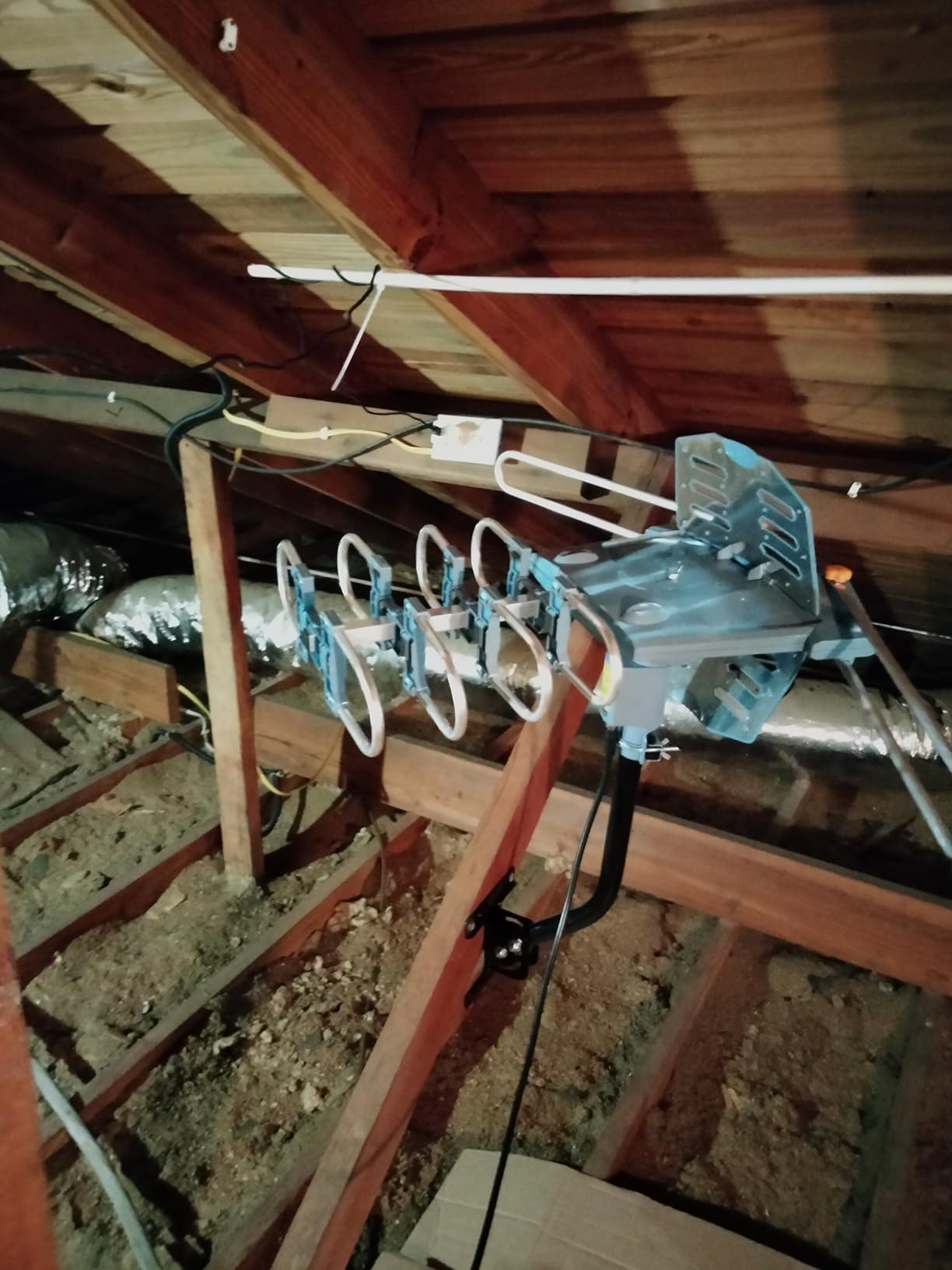
Why rotation beats gain for a split signal
When your towers sit in genuinely different directions, a fixed antenna must compromise. Point it at the closer cluster and the distant one drops out; point it at the distant one and you lose the strong local stations. A rotor removes the compromise by letting you aim at each cluster in turn.
The limitation is the remote itself. A single rotate button means you discover the correct heading by rotating and rescanning rather than by entering an azimuth, so budget time for that calibration the first afternoon.
Where the amplifier and the plastic let you down
The build is mostly plastic and feels flimsy in the hands during assembly, which is a real concern on a mast in an exposed location. The rotor can also stick and need manual adjustment, so treat the mechanism as something to check seasonally.
Replace the bundled coax with a proper quad-shield RG-6 run if you can. You are paying for a good antenna here, and the cable is the one component where spending a little more reliably helps.
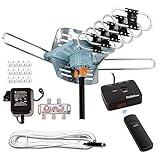
8. Five Star Amplified Rotating Antenna – Best for Feeding Five TVs
- Remote rotation makes channel fine-tuning easy from indoors
- Runs two TVs directly or up to five with the included splitter
- Automatic gain control reduces noise on marginal signals
- 40 ft RG6 and control hardware included
- Mounting pole is not included in the standard kit
- Remote needs AAA batteries that are not supplied
- Moderate 4.1 average rating with 10 percent one-star reviews
This Five Star kit is built around one job: getting signals to several TVs. It has two TV outputs plus an included four-way splitter, so it can serve up to five screens in one house. Few other kits in this guide solve multiple-TV distribution that cleanly.
It also has a full band DTV, VHF and UHF receiver covering 45 to 860 MHz, a built-in high-gain low-noise amplifier with an automatic gain control smart chip, and 360-degree motorized rotation with a wireless remote and control box.
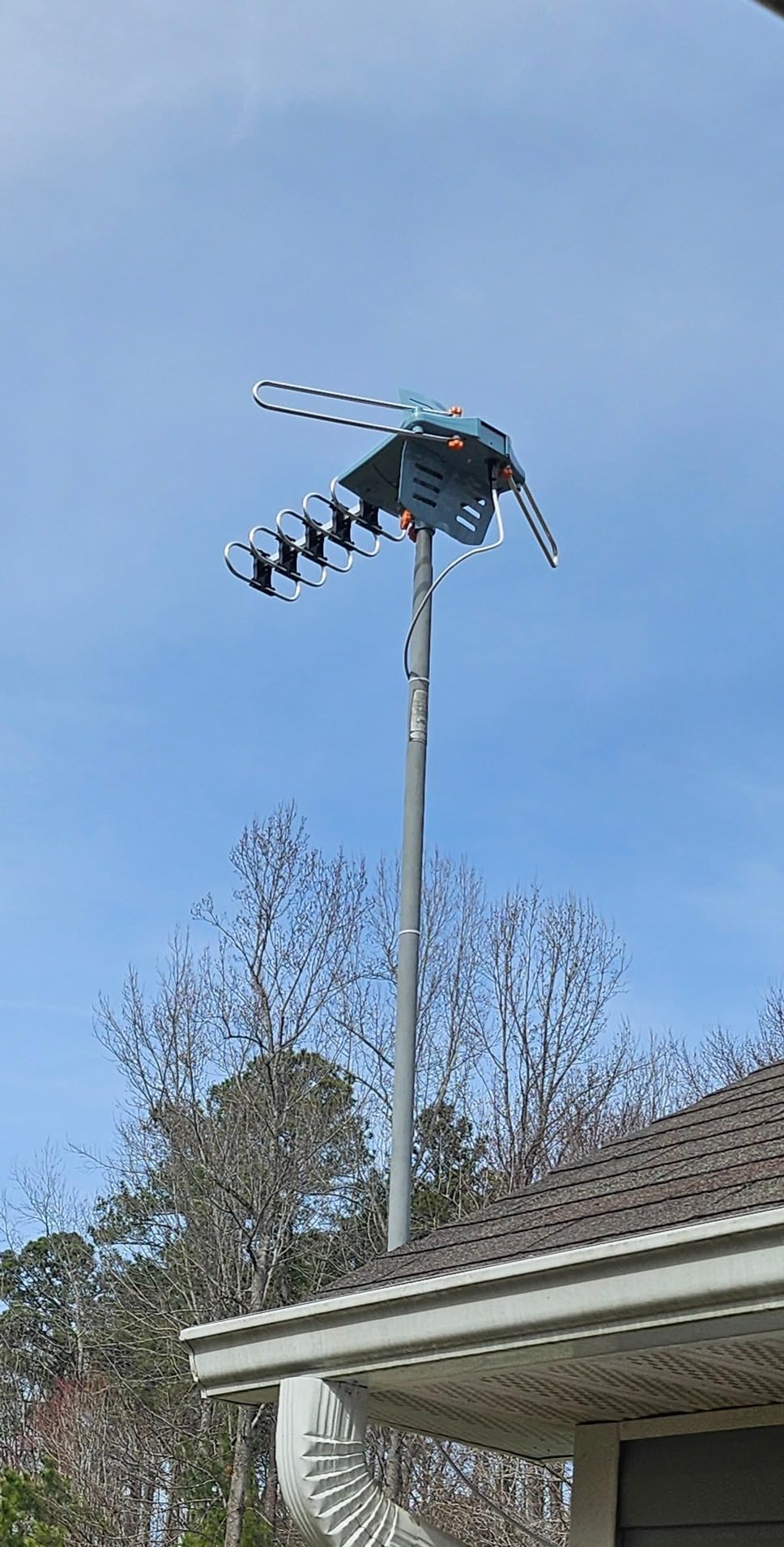
The automatic gain control chip is the technically interesting part. Instead of pushing a fixed amount of gain, it backs off when the signal is strong, which is the correct behaviour and the reason the amplifier does not add as much noise as fixed-gain kits of the same type.
Reviewers like the motorized convenience and multi-TV support, but rate it below the other picks here. The gripes are consistent: the mounting pole is not included, the remote batteries are not included, and the rotor will not turn reliably if extra coax runs are added upstream of the control box.
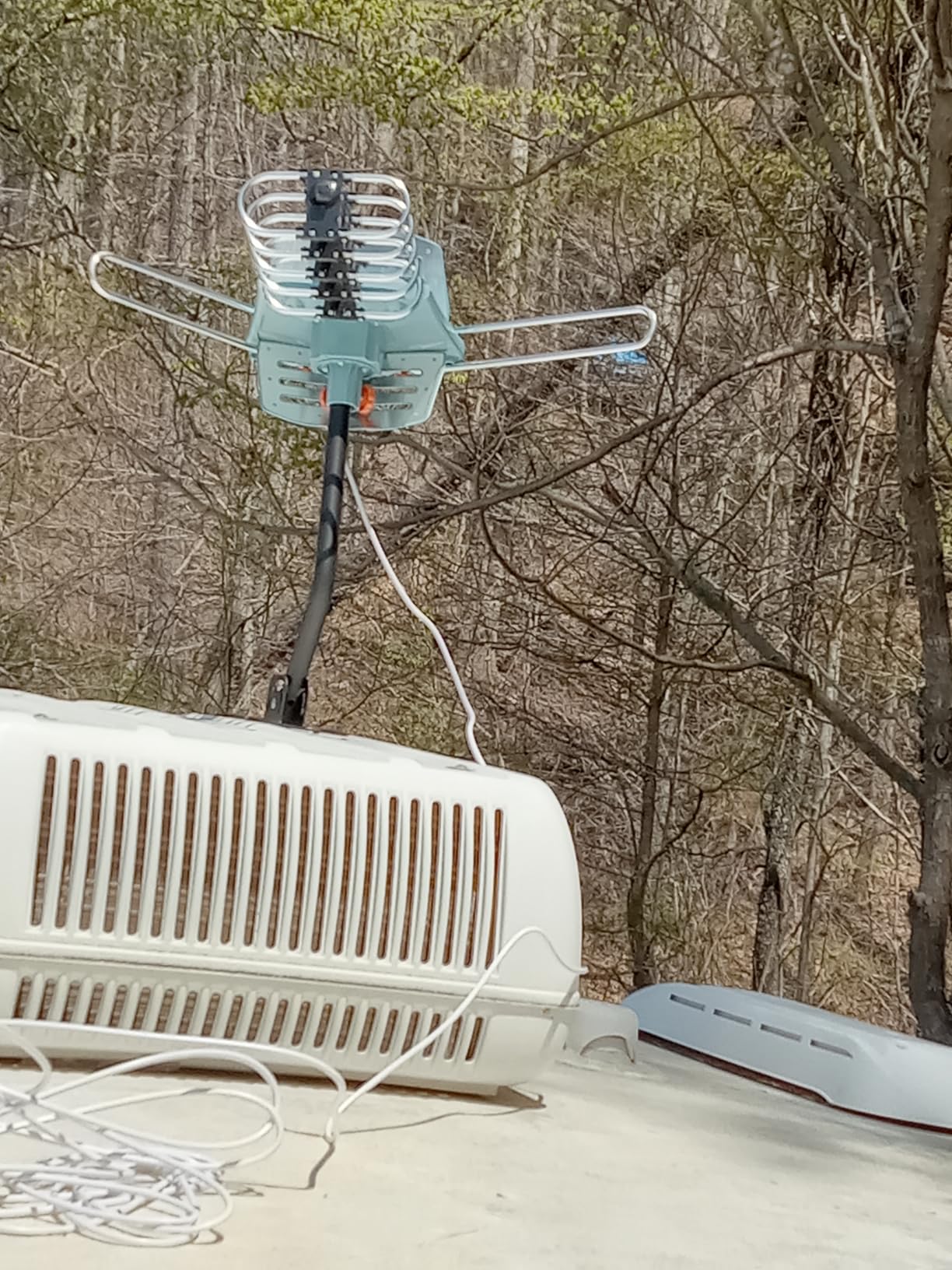
Planning for five TVs
Every extra split costs signal, so five TVs on one antenna is realistic only if the channels are arriving strongly before the split. Count backwards from your weakest channel: if it is marginal at the antenna, a four-way splitter will not save it.
For a home with two or three TVs, the simpler dual-output models are a better value. This kit earns its place when the bedrooms and the workshop genuinely need their own feeds.
What to buy before you mount it
Add a mounting pole and a pack of AAA batteries to the order. The pole omission is the most common surprise, and a mast is not something you should improvise with a length of conduit.
Also plan the coax routing so the rotor gets a clean, short run to the control box. Multiple owners report the motor refusing to move when extra coax is spliced in upstream, so keep the control box as close to the antenna as the run allows.
9. PIBIDI UHD-3942 Rotating Antenna – Best for RVs, Boats and Lightweight Setups
PIBIDI Amplified TV Antenna for Attic/Outdoor, 360° Remote Rotation
- Aim at towers without climbing back up to the roof
- Open-reflector design holds signal in windy weather
- Lightweight and compact for moving between locations
- Included RG6 is good quality and the controller is low profile
- Rotor has been reported to drift or move on its own
- Initial units occasionally arrive with a dead power LED
- Only a 1-year warranty
The PIBIDI UHD-3942 is the rotating antenna to consider if your antenna lives somewhere awkward, such as a camper, a boat or a pole at the far end of a long property. The compact, lightweight design is easy to reposition between locations, and the low-profile controller can live indoors.
It tunes across VHF 170 to 230 MHz and UHF 470 to 860 MHz, with automatic gain control, a high-gain low-noise amplifier and an LTE interference filter. The box includes the antenna, remote, 40 feet of RG-6 and a mounting pole.
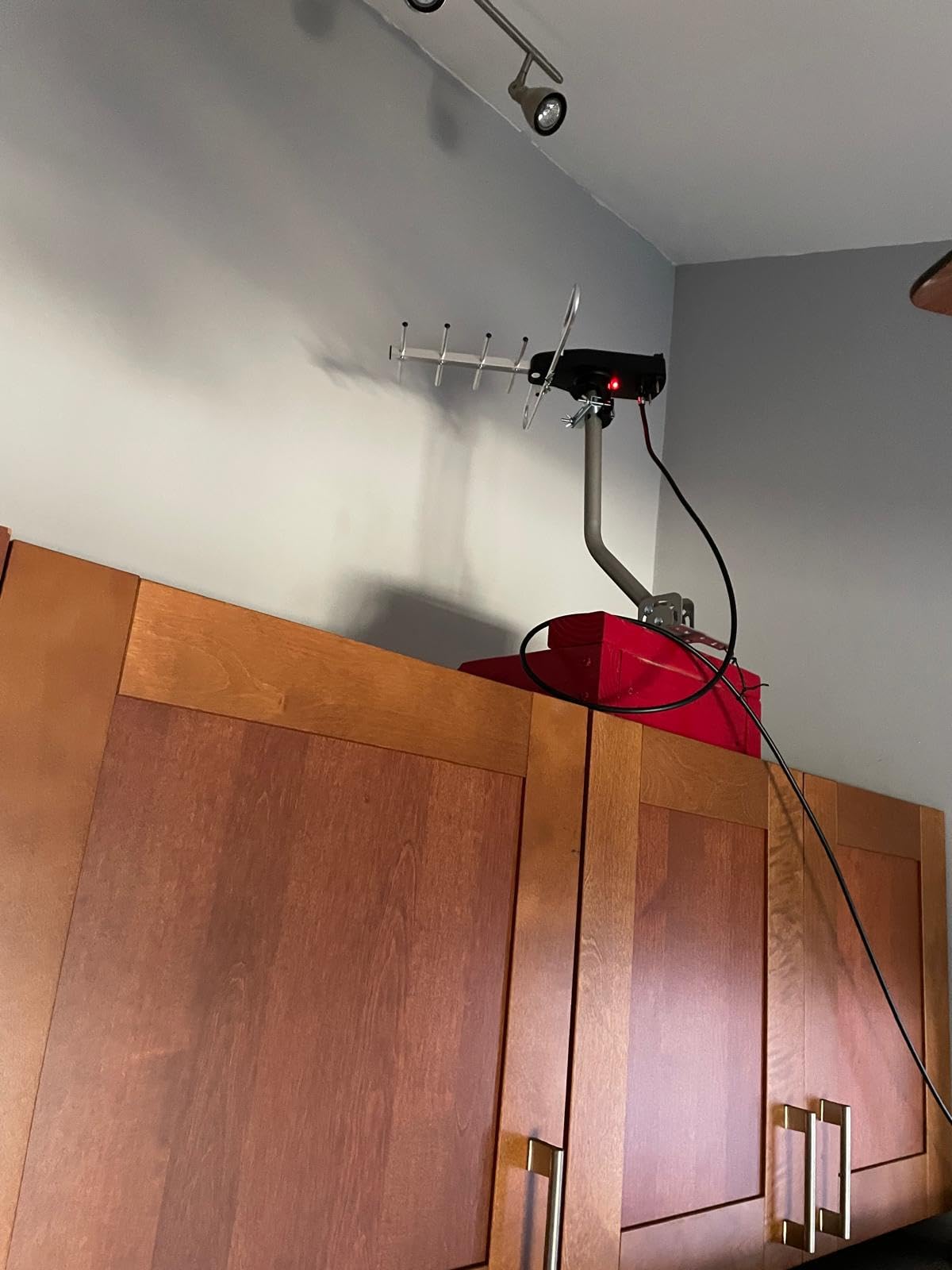
Owners in rural and tree-lined locations report large channel gains, including ranges of 30 to 55 channels at 40 to 70 miles. The open-reflector design is credited with holding signal in wind where older rotors have failed.
The dominant complaint is the motor itself. Owners report the rotor drifting or moving without remote input, and some units arriving with a dead power LED. Reception results are good; the mechanism is the weak link.
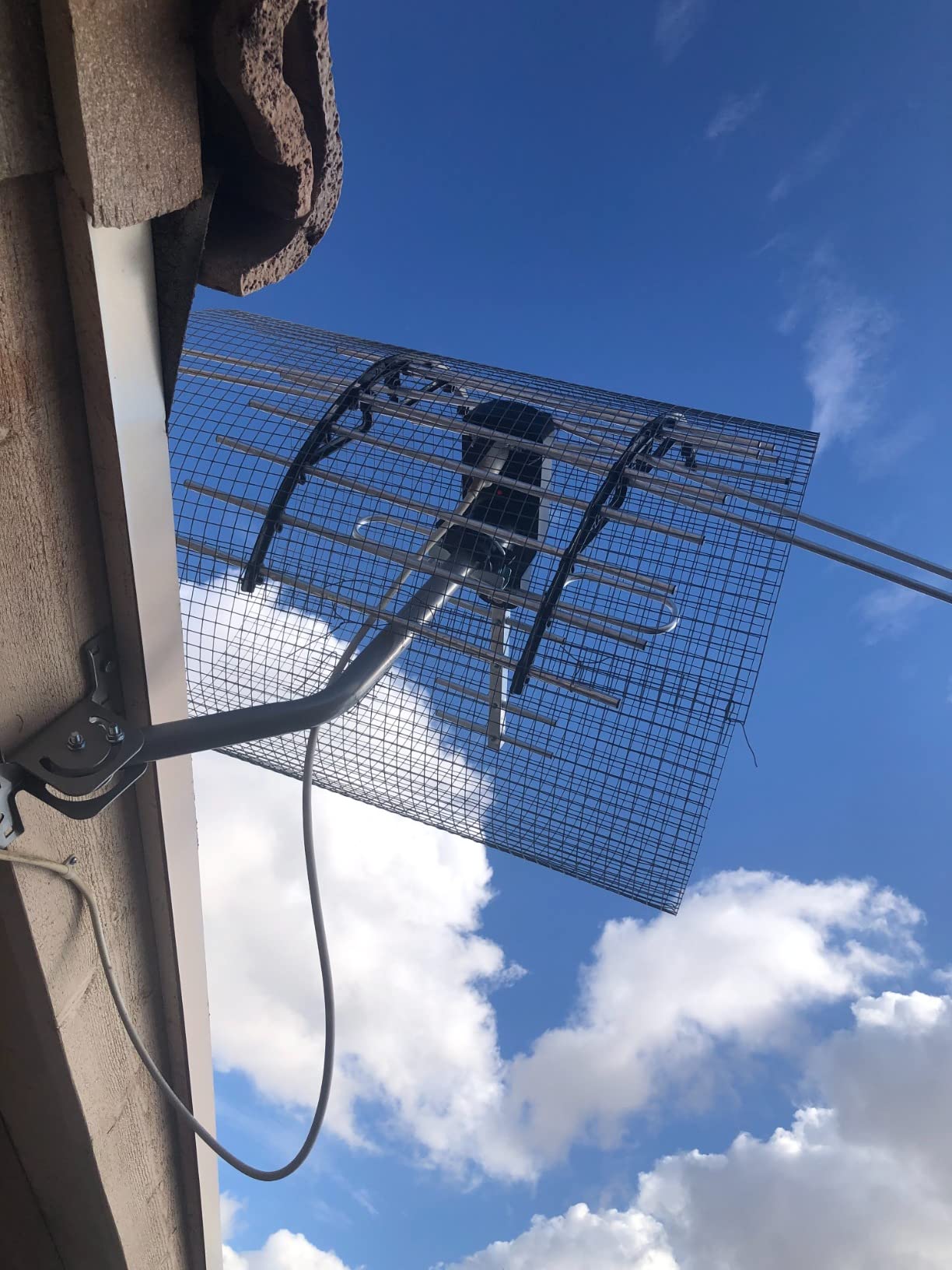
Why a rotator suits mobile setups
On an RV or a boat your tower direction changes constantly, and a fixed antenna means re-aiming every time you move. Remote rotation turns that into a button press, which is the difference between a usable mobile antenna and one you leave folded in a locker.
The included pole and 40 feet of RG-6 are also a real advantage here, since permanent installations come with permanent cable. Check the mounting surface carefully on a vehicle, where vibration loosens fittings far faster than wind does.
Watching the rotor
Test the motor before you climb. Power it up on the ground and confirm it holds position, because a rotor that creeps while you are on a ladder is a genuine safety problem, not just an annoyance.
Note the one-year warranty and the reports of cheaper-feeling parts. If the antenna lives somewhere exposed, the low price is easier to justify than it would be on a roof where hardware quality determines how long the install lasts.
10. CEKAY All-Metal Yagi – Best Starter Yagi with Cable and Mount Included
- Lowest cost in the roundup with a genuine Yagi design
- All-metal body outlasts plastic antennas in weather
- 40 ft RG6 cable and J-mount in the box
- Mostly pre-assembled so setup needs no tools
- Smallest review base here at 551 ratings
- Only a 1-year warranty
- No amplification so marginal stations need a pre-amp
The CEKAY is the value entry point in this guide. It is a genuine directional Yagi design covering 170 to 860 MHz, built entirely from metal, and the box includes both a 40-foot RG-6 cable and the J-mount. There is no second shopping trip required.
It is mostly pre-assembled, so installation needs minor assembly and no tools. Rated for heat, rain, wind and snow, and NEXTGEN TV ATSC 3.0 compatible, it covers the basics without any plastic parts to degrade.
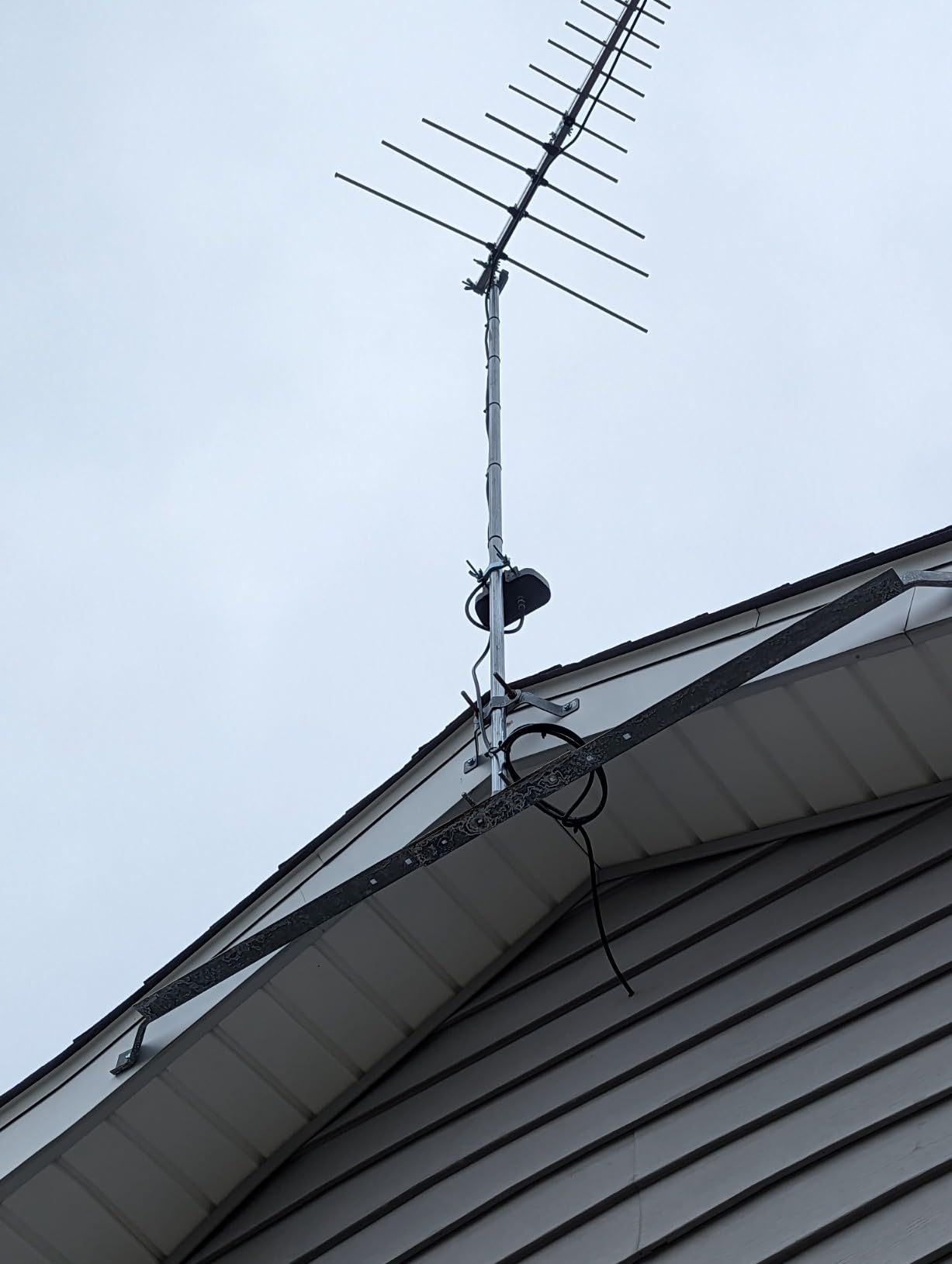
At 4.4 stars, this is the highest-rated product in the roundup, though that comes from the smallest review base at 551 ratings. Feedback centres on solid directional gain for the money and the convenience of the included cable and mount, with a 69 percent five-star share.
The limitation is obvious and physical. With no amplification at all, a marginal station that is almost there will stay almost there, and adding a preamplifier at the antenna is the natural next step for anyone beyond 40 miles.
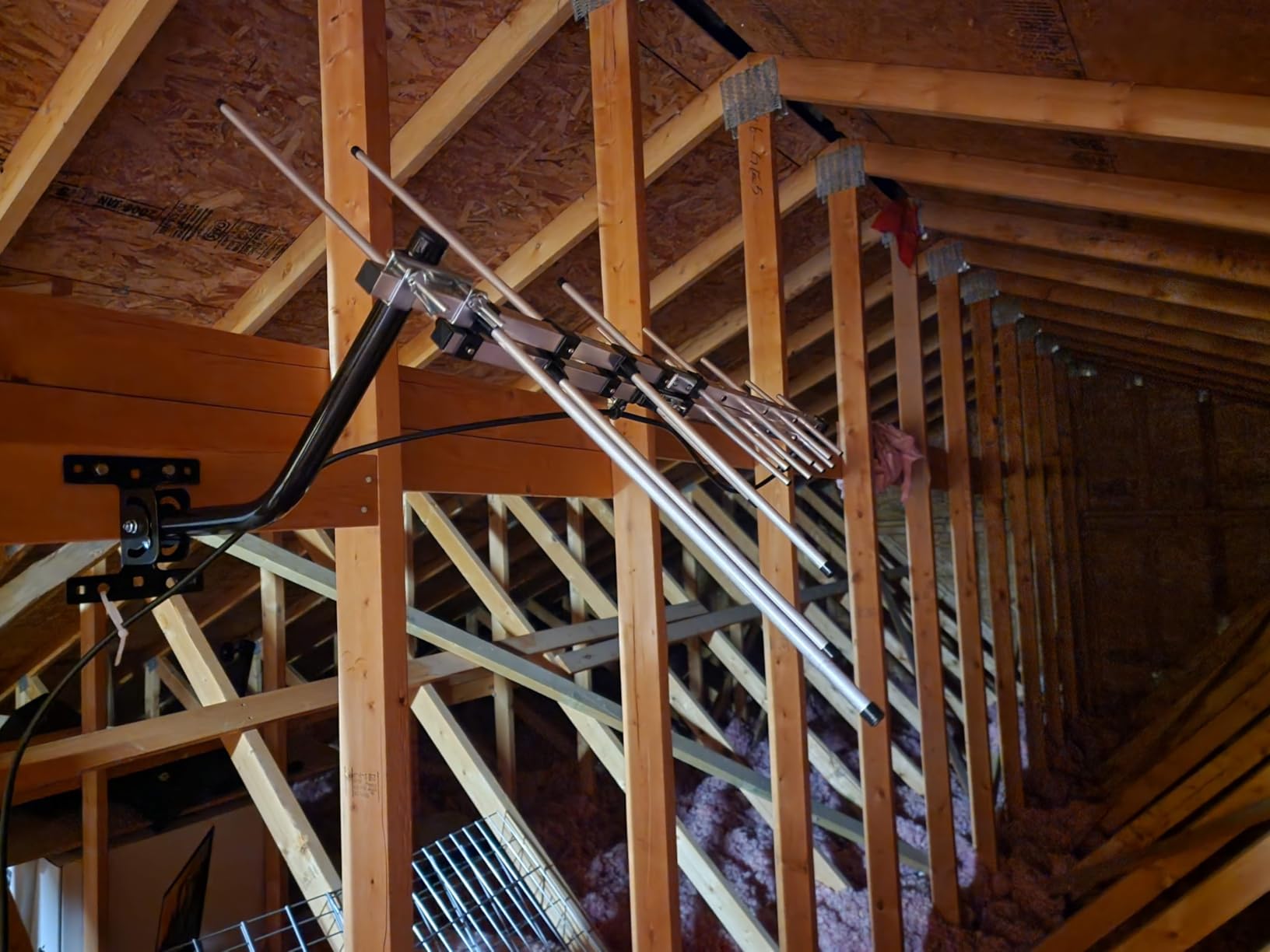
Why a metal Yagi at this price is unusual
Most antennas at this cost point are amplified plastic panels that add noise rather than gain. A passive metal Yagi puts its effort into element length and spacing, which is the part of reception that actually determines whether a distant station locks.
That makes this the honest budget choice for a household 30 to 50 miles out with a clear view. It is also the one we would most want to see more long-term data on, given the review base.
When to step up instead
Move up to the Five Star extended Yagi or the GE if you need a longer run of coax, a sturdier mount, or a longer warranty than one year. The CEKAY is the antenna to start with, not the last one you buy.
Add a preamplifier only if your scans come up short after mounting. Pairing a passive antenna with a good low-noise preamp at the mast is the standard fringe-area setup and it costs far less than replacing the antenna itself.
11. PIBIDI UHD-8903 Extended Element Antenna – Best Fixed-Direction Gain Per Dollar
PIBIDI Outdoor TV Antenna, Long Range UHF/VHF for Local Channels, 4K/1080P
- Pulls 60-85 channels with a fixed no-rotation design
- All-metal build holds picture in bad weather without re-aiming
- Light enough to carry up to a roof for manual adjustment
- Mostly pre-assembled so installation takes minutes
- The 200 mile figure requires a separately sold booster
- No built-in rotator so aim changes mean climbing back up
- Smallest review base here at 397 ratings
The PIBIDI UHD-8903 is a fixed directional antenna with extended, larger elements across VHF 170 to 230 MHz and UHF 470 to 790 MHz. It delivers a surprising amount of gain for a mostly pre-assembled design that needs no tools, and it is grounded and lightning protected.
Reviewers report 60 to 85 channels from a fixed, no-rotation setup, plus a stable picture in bad weather without any re-aiming. It is also light enough to carry to a roof if you decide to adjust the direction yourself.
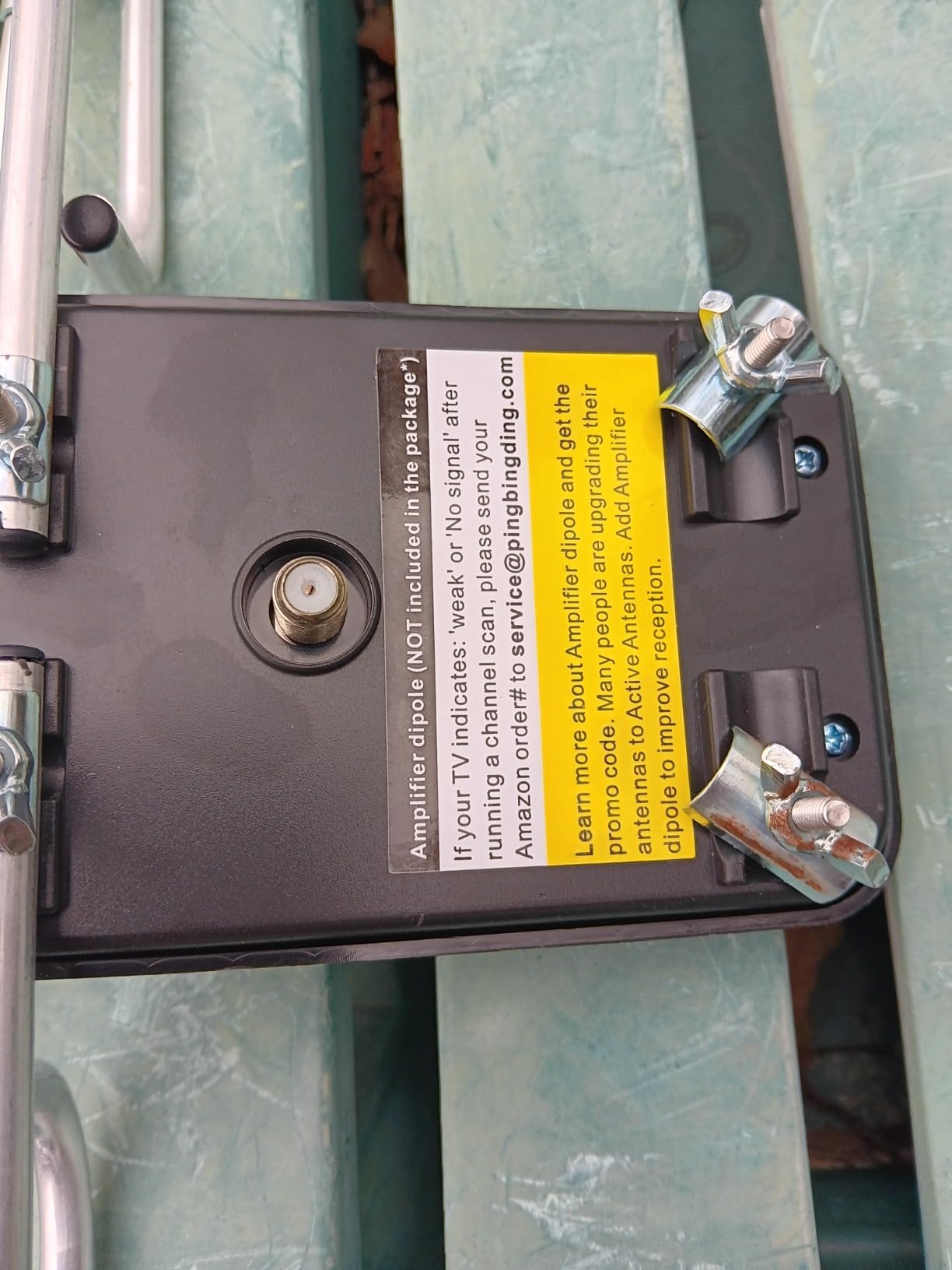
The critical detail is buried in the marketing. The headline 200-mile figure only holds with the optional amplifier sold separately, and that booster is not in the box. Multiple reviews flag exactly this, and it is the one thing you should know before ordering.
Compare that with the competitors in this category, several of whom ship an amplifier as standard and still underperform. A fixed passive antenna with honest performance at realistic distances is a legitimate choice, particularly if your towers all sit in one direction.
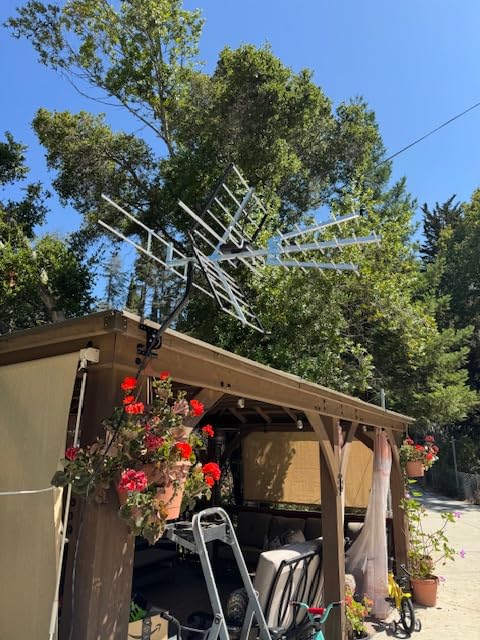
Fixed aim versus motorized aim
A fixed antenna has real advantages over a rotor. There is no motor to fail, no control box to power, nothing to drift in wind, and no reason to climb a ladder twice a year. If your towers sit in one direction and you have confirmed it on AntennaWeb, fix it and forget it.
The trade is loss of flexibility. Changing your aim later means climbing back up, and if you are undecided between two tower clusters, buy a rotating model instead of planning a second roof visit.
Quality checks before you mount
Inspect the elements on arrival. One owner received a bent element that needed straightening, and a bent element permanently distorts the pattern in a way that is hard to diagnose later.
Note the one-year warranty and the smallest review base in the guide at 397 ratings. That is thin long-term data, so keep the mounting simple and avoid a high mast where a bent or loosened element would be awkward to service.
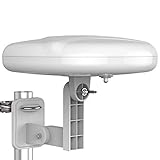
12. 1byone 360 Degree Omni-Directional Antenna – Best for Never Touching the Antenna Again
1byone Outdoor TV Antenna, 360°Omni-Directional Reception, 100+ Miles Range
- No manual rotation needed for any tower direction
- Built-in pre-amplifier and LTE filter help with long runs
- Moisture-proof flame-retardant body suits outdoor use
- RG6 coax and mounting accessories included
- Only one TV output so extra screens need a splitter
- Compact element size limits gain versus larger arrays
- 3.8 average rating with 18 percent one-star reviews
The 1byone is the only pure omnidirectional antenna in this guide, and that is both its reason to exist and its limit. It sees 360 degrees of UHF and VHF with no rotation, no aiming and no motor, so you mount it once and never touch it again.
It includes a built-in preamplifier and a 4G LTE interference filter, plus RG6U coax and mounting hardware. The body is moisture-proof and flame retardant, and it is marketed for home, RV, attic and marine use.
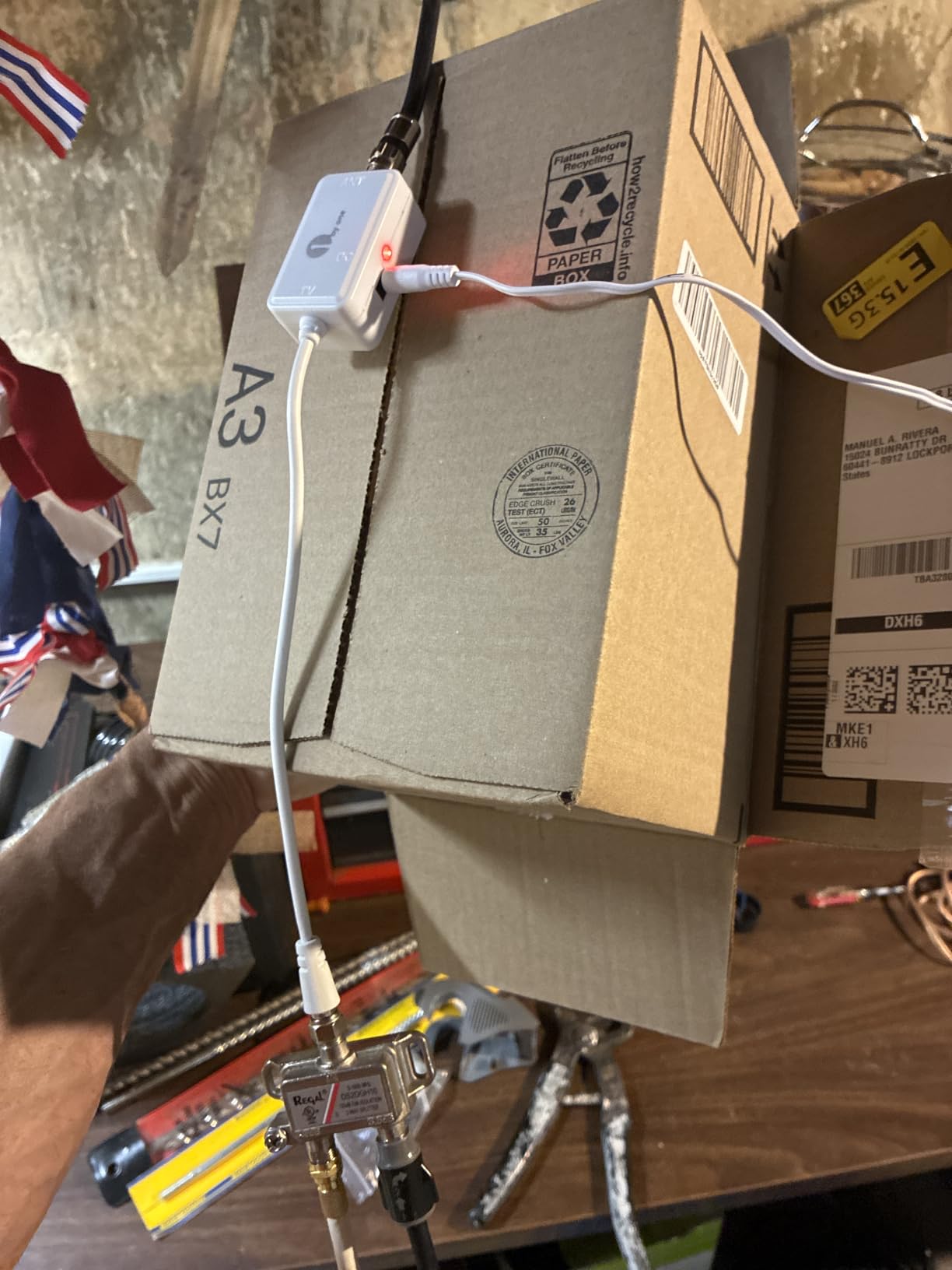
With over 10,700 ratings, the review data here is unusually deep, and it is not flattering. The 3.8 average splits roughly 53 percent five-star against 18 percent one-star, which tells you a large group of owners got exactly what they needed and another group got nowhere near their 100-mile claim.
The pattern in the negative reviews is consistent. The element array is physically small, so it delivers much less gain than a comparable Yagi or bowtie, and on very distant towers an omni simply spreads its energy too thinly. Amplification cannot replace the gain it is trying to substitute for.
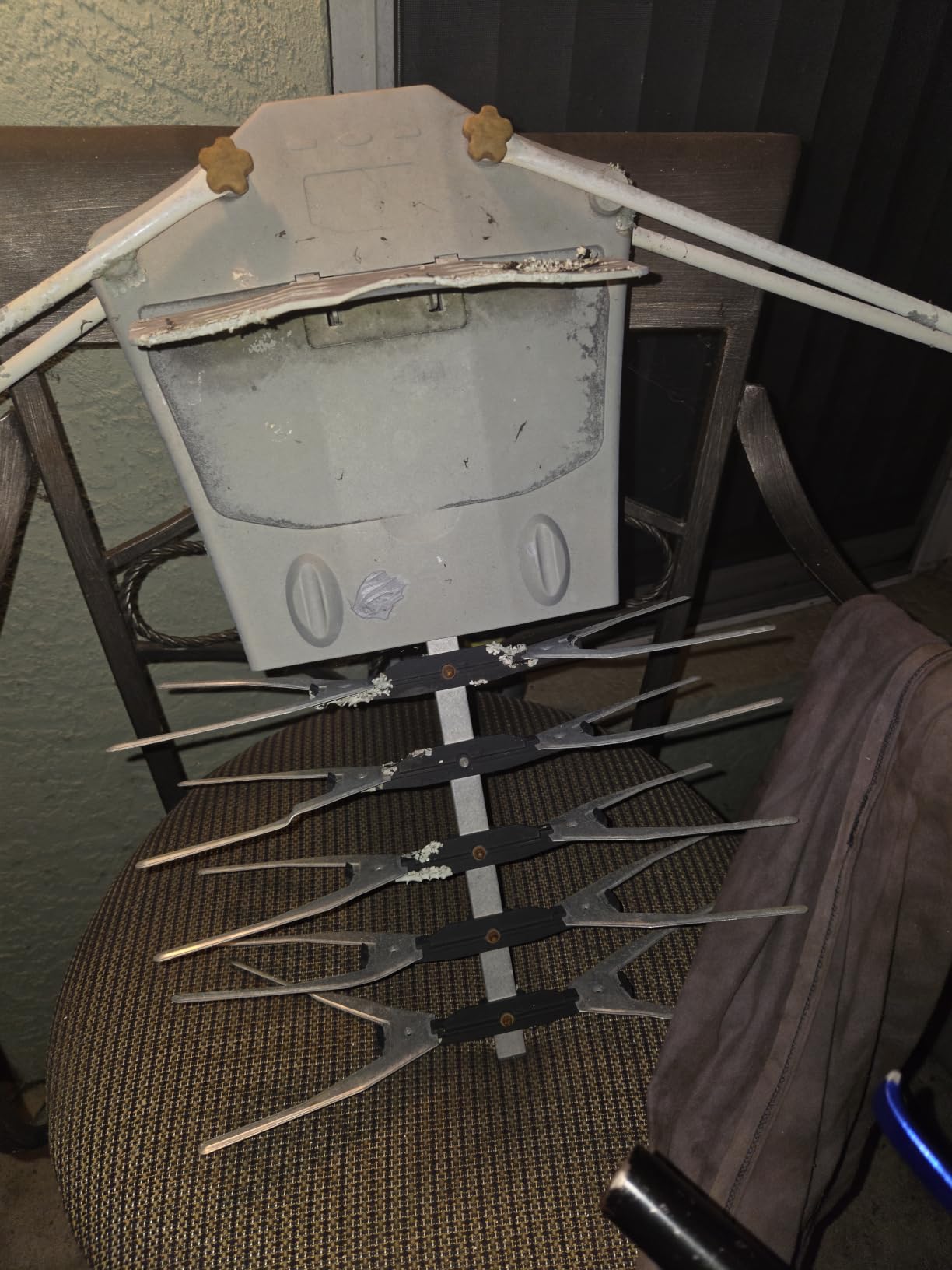
Where omnidirectional is genuinely the right answer
Omni designs win when towers are spread in every direction, when you cannot climb a roof safely, or when you expect to move the antenna between an RV, a boat and a cabin. A fixed 360-degree pickup needs no calibration, which is exactly what some households need.
They also work fine when you are within 15 to 25 miles of a tower. At that distance there is signal to spare, and the simplicity beats a narrower antenna that would need careful aiming.
When to choose gain instead
Skip this antenna beyond 40 miles, or if your main network affiliates are on Hi-VHF and the element array does not cover them. Both cases call for a directional design with real element length.
Also note the single TV output. Running a second screen means adding a splitter, which costs more signal on an antenna that already has less to give. For multi-TV homes, the dual-output PBD or the five-TV Five Star kit is the better starting point.
Choosing the Right Antenna for Your Distance to the Tower
Distance is the first filter, but it only works once you separate two numbers people constantly mix up. Distance from the tower drives how much gain you need. Length of coax run drives how much gain you lose. A 200-foot coax run can cost more than 20 extra miles of distance, and confusing the two leads to buying the wrong antenna.
Here is the framework we use, based on the distance bands that come out of real installs. Under 15 miles, almost anything works. Between 15 and 30 miles, you need real element length and a clean aim. Between 30 and 50 miles, gain and height matter more than any amplifier. Beyond 50 miles, terrain starts to decide the outcome more than the antenna does.
For the 0 to 15 mile band, a compact multi-directional antenna such as the ClearStream 2V or even the 1byone omni is enough, and an attic mount is realistic. For the 15 to 30 mile band, the GE Yagi, the CEKAY Yagi or the Five Star extended Yagi are the right class, and roof or pole mounting starts to matter.
For the 30 to 50 mile band, high-gain multi-directional designs earn their place, so the ClearStream 4V or the DB8e bowtie. Beyond 50 miles, the DB8e or a Winegard steel Yagi on a tall mast with a preamplifier at the antenna is the realistic ceiling for most households, and terrain can still end the attempt entirely.
Answering what antenna gives you the most channels: a high-gain directional wins when every tower sits in one direction, because all of the gain goes to a single cluster. An omnidirectional wins on total count when towers surround you, because it is always pointed at everything at once. There is no universal winner, only the one that matches your tower map.
Before you spend anything, spend ten minutes on AntennaWeb with your ZIP code. Note the distance and azimuth of each tower, count your UHF versus Hi-VHF stations, and check whether they cluster in one direction. That single exercise eliminates most return shipping, and it is the answer to the question forum users ask most often.
Antenna Types Explained: Yagi vs Multi-Directional vs Omni
Four designs cover nearly every rural install, and understanding the difference is what lets you spend well.
Yagi antennas use a single driven element with reflectors behind and directors in front, concentrating gain into one narrow beam. That concentration is why passive Yagi designs such as the GE, the CEKAY and the Winegard can out-pull amplified plastic panels at the same price. The cost is aiming: a narrow beam means a small aim error costs you channels.
Multi-directional and bowtie designs spread elements across a wider cone, the ClearStream loops at about 43 degrees and the DB8e wider still. You give up some peak gain for a beam that tolerates wind, foliage and imprecise aiming, and on the DB8e each element rotates independently, which is how it handles a split signal.
Omnidirectional antennas look equally in all directions and need no aiming, which is the 1byone at the end of this guide. They are the right answer for a 360-degree tower situation and the wrong answer for a single distant cluster, because the same energy is spread across the whole circle.
Log-periodic antennas cover a wide range of frequencies in a compact package and are the design used by most professional installers for multi-channel rural sites. None of the products in this roundup uses one, and that is a limitation of the category rather than of the technology.
One more term worth understanding is Hi-VHF, the band from channels 7 to 13. Many of the network affiliates you actually want sit there, and a surprising number of budget antennas have no element tuned for it. That is the single most common reason a household reports getting some channels but not others.
Amplifiers: When They Help and When They Make It Worse
An amplifier is a powered box, not a more powerful antenna. It raises the strength of everything arriving at it, including noise, and it cannot recover a station that never made it through the air.
It helps in two situations. The first is a long coax run, where signal loss inside the cable is the problem and a preamplifier at the antenna end compensates for it. The second is a splitter feeding several TVs, where each split takes signal away.
It hurts in one situation that dominates the complaints we read. On a marginal signal, a high-gain amplifier boosts the noise floor along with the station, and the receiver ends up with a worse signal-to-noise ratio than it started with. If the preamp is the last stage of the chain rather than the first, it can amplify noise generated in the cable itself and make a picture that was watchable unwatchable.
The placement rule explains most of it. A preamplifier belongs at the antenna, before the long run, so it boosts the signal before the cable degrades it. A distribution amplifier belongs after the run, at the splitter, to overcome cable and split losses. Putting a big amplifier at the wrong end of the chain is how people convince themselves amplification does not work.
Automatic gain control is the feature worth paying extra for, and the Five Star amplified kit has one. It reduces gain when the incoming signal is already strong, which limits the noise-boosting problem without you touching a dial.
Our rule of thumb: mount the antenna well, run quality RG-6, and add amplification only when a specific problem calls for it. Owners in r/cordcutters reach the same conclusion repeatedly, steering newcomers away from amplified antennas and toward passive designs from Winegard, Channel Master, Televes and Antennas Direct for real fringe reception.
Installation: Roof vs Attic vs Pole Mount and the Coax Run
Roof and pole mounts are worth the effort when the signal is marginal, and the difference is usually dramatic. Every foot of height clears more obstruction, and a roof or pole antenna can see over a treeline that an attic antenna cannot.
Attic installs are still worth trying first because they are free and reversible. They work when the roof pitch is low, the trees are distant and there is no metal. They fail on metal roofing, foil-backed insulation and deep attics, and those are exactly the buildings common on rural properties, including metal barns and outbuildings.
A pole mount is the sweet spot for most people. It puts the antenna above the roofline, keeps you off the shingles entirely, and a tripod or mast clamp keeps the installation simple. Aim from the ground as much as you can.
Coax quality and run length matter more than most buyers expect. Buy quad-shield RG-6, keep the run as short as the property allows, and avoid tight bends and staples that pinch the jacket. A 200-foot run of good cable in one piece is better than 50 feet of good cable spliced to 150 feet of thin cable.
Grounding is not optional. Bond the mast to the coax with a ground block, run a proper ground wire to a code-compliant ground rod, and follow local requirements. This protects the house from a lightning strike, which is a real risk on the tall isolated masts that rural installs use.
Finally, scan after every change. Re-scanning takes a minute and is the only way to know whether a mount adjustment helped. If you cannot get a full channel list, work through one variable at a time, starting with height, then aim, then cable, and only then the amplifier.
For other parts of a rural property, our guides to outdoor rugs for high traffic areas and area rugs for high traffic areas cover the indoor side of country living.
Frequently Asked Questions
What is the best outdoor TV antenna for rural areas?
For most rural households the best outdoor TV antenna is a passive directional Yagi or a multi-directional loop design mounted outdoors and fed with RG-6 coax. Our top pick, the GE Outdoor HD Digital TV Antenna, wins because it needs no power at the antenna and includes a J-mount. If your towers sit in more than one direction, choose a multi-directional or motorized design instead of a single narrow beam.
How can I get better TV reception in rural areas?
Check your tower distance and azimuth on AntennaWeb and the FCC DTV map, note whether your stations are UHF or Hi-VHF, and get the antenna outside the attic. Use quality RG-6 coax, keep the run short, add a preamplifier at the antenna if the run is long, aim the antenna in small increments while rescanning, and ground the mast. Height and line of sight matter more than amplifier power.
Which outdoor TV antenna has the best long range reception?
The Antennas Direct DB8e delivers the highest gain figure in our roundup at 17.4 dB across the UHF band, which makes it the strongest choice for foliage-obstructed and valley sites. The Winegard HD7694P is the alternative for long-range durability, using steel construction and a conservative 45 mile claim rather than inflated marketing. Terrain, not the antenna, is the limiting factor beyond roughly 50 miles.
What TV antenna gives you the most channels?
A high-gain directional antenna gives you the most channels when every tower sits in one direction, because all of its gain is concentrated into that cluster. An omnidirectional antenna wins on total count when towers surround you, since it is always pointed everywhere at once. The right answer comes directly from your tower map, so check AntennaWeb before buying rather than trusting a brand name.
Do I need a preamplifier for a rural TV antenna?
You need a preamplifier when the problem is the cable run, not the antenna. A preamplifier mounted at the antenna boosts the signal before a long RG-6 run degrades it, which is why it belongs at the mast. A distribution amplifier goes after the run at the splitter. On a marginal signal, a high-gain amplifier also boosts noise and can make reception worse, so add one only for a specific problem.
Are the 500 mile TV antenna claims real?
No. Claims of 200, 275, 420 and 500 miles are marketing figures, not measured performance, and owners consistently report realistic reach of 60 to 70 miles for good directional antennas over flat terrain. The Five Star extended Yagi advertised at 200 miles draws this criticism directly in its reviews, and the PIBIDI UHD-8903 only reaches its 200 mile figure with a separately sold booster. Judge antennas by element length, gain in dB and pattern width instead.
Why do I receive some channels but not others?
The most common cause is band coverage. Many budget antennas cover UHF well but have no element tuned to Hi-VHF, which is the band that carries channels 7 to 13, so the major network affiliates disappear while weaker UHF stations still tune in. The other causes are an aim error on a narrow-beam antenna, too much coax loss, and interference from a nearby cellular tower, which an LTE filter solves.
Will an indoor TV antenna work in a rural area?
Rarely, unless you are within about 15 miles of a tower with an open view. Indoor antennas lose most of their signal through walls, roofs and foliage before it ever reaches the elements. Members of r/cordcutters report occasional indoor wins in rural apartments, but the consistent advice from experienced users is that rural households need an outdoor mount to get a stable channel list.
The Verdict for Rural TV Antennas in 2026
After working through twelve outdoor antennas, the best TV antennas for rural areas in 2026 come down to one decision: match the antenna to your tower map. The GE Outdoor HD Digital TV Antenna takes the top spot because it is a real passive Yagi design with no power at the antenna, an included J-mount and the deepest review base of any pick here, which makes it the safest first outdoor install in the guide.
Move up to the Antennas Direct ClearStream 2V if you want a wider capture pattern and the ability to aim UHF and Hi-VHF elements separately, or to the ClearStream 4V when a wider 43-degree cone and stronger reflectors are worth the extra spend. Go to the DB8e bowtie when 17.4 dB of gain is the only thing standing between you and a stable picture, and pick the Winegard HD7694P when a steel chassis that will last a decade matters more than a headline range number.
Avoid buying on range claims. Every antenna in this roundup advertises between 45 and 200 miles, and owners consistently report realistic performance of 60 to 70 miles for the good ones. Check AntennaWeb first, mount the antenna outside, run real RG-6, and add a preamplifier only where a specific problem calls for one.
Updated for September 2026. We compared specifications, element layouts and mounting hardware across twelve antennas and read the customer review data behind every claim above, so you can pick with the same information the manufacturers hope you will not read.