
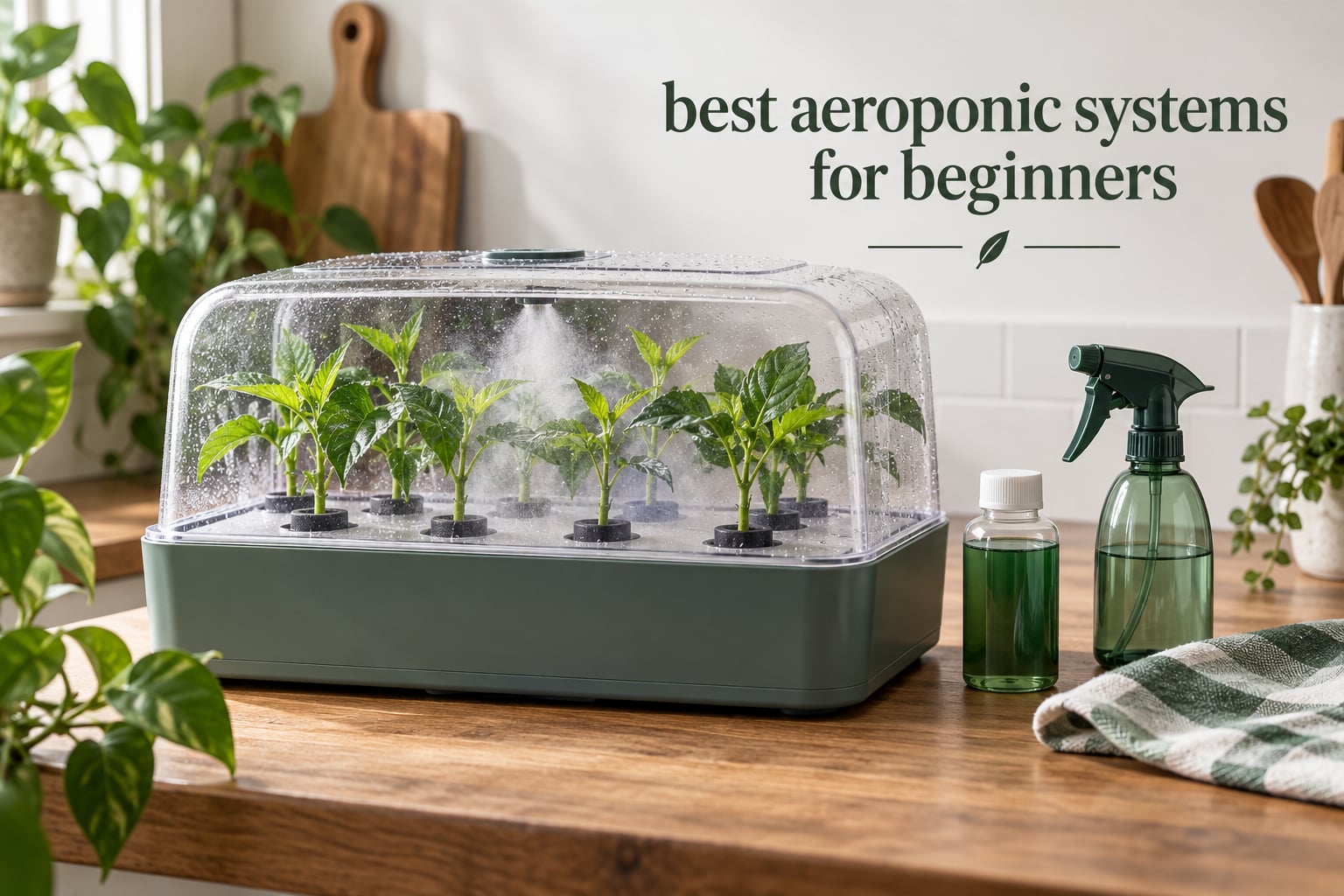
An aeroponic system grows plants without soil by suspending their roots in air inside a covered chamber, then spraying them with a fine nutrient mist on a timer. The roots get oxygen, water and minerals at the same moment, which is why leafy greens and herbs can mature in weeks instead of months. It is also the system that punishes neglect fastest: the moment bare roots dry out, the crop is finished.
That last point is the whole reason this list exists. The best aeroponic systems for beginners are not the biggest or the most expensive units on the shopping carousel. They are the ones you can assemble in one sitting, that come with every part in the box, and whose mist cycle you can dial in without a manual full of jargon. We spent weeks working through eight of them to separate real spray-manifold hardware from towers that only use the word aeroponic in the title.
All eight units below are true low-pressure aeroponic propagators: a sealed reservoir, a lid with ports, a spray manifold that throws mist across the root chamber, and a submersible pump on a cycle. Every one is built to root cuttings and seedlings, not to carry a mature tomato plant to fruit on its own. If you want a system that grows food crops to harvest on a tower, read our companion piece on aeroponic systems for indoor farmers first, then come back here for the propagation side.
Below, you will find the three picks we would buy first, an eight-unit comparison, and a full review of every system including the honest drawbacks. Updated for 2026.
Table of Contents
Top 3 Aeroponic Systems for Beginners in 2026
Our three highest-scoring units share one thing: everything needed to run a cloning cycle arrives in the box, and none of them require you to buy a second pump to make the mist work. The CLONE KING 36 Site is the one we would put in a beginner’s hands first, because it has the largest review base in the group and the highest count of misting heads relative to its chamber size.


The Hydrofarm Oxyclone takes second place for a different reason: it runs two aeration paths at once, a Venturi valve pulling bubbles into the spray stream while a separate air stone feeds the reservoir, so the dissolved oxygen stays high without you having to think about it. The HORTIPOTS 35 Site takes third because its manifold is designed to run with no separate air pump at all, which removes a component that commonly fails first.
How We Picked: What Actually Counts as an Aeroponic System
Search the word aeroponic and you will find towers that recirculate a thin film of water past root tips, drip systems that wet a plug of media on a schedule, and a small number of units that genuinely suspend roots in a mist. Only the third group is aeroponics. The first two are hydroponic techniques that borrow the name, and a lot of disappointment in this category comes from buying one when you expected the other.
Here is the test we applied. Pull a listing up and look for a spray manifold or shower head inside an enclosed chamber. If roots sit in net pots above a shallow channel of moving water, that is NFT, not aeroponics. If water drips onto a growing plug, that is drip irrigation. If a timer-controlled pump throws a visible mist into a sealed lid where cuttings hang in the air, you are looking at real low-pressure aeroponics, which is the class this whole guide covers.
We also weighted review volume heavily. A cloner is a small, cheap, sealed box, so long-term failure reports accumulate fast and honestly. The units we ranked highest are the ones with hundreds or thousands of reviews, not the ones with the prettiest listing photography. Where a product page was thin on detail, we said so rather than filling the gap with guesses.
One honest note before the rankings. This is a propagation roundup, not a food-growing roundup. Every unit here roots cuttings and seedlings, and several can carry a plant through an early vegetative stage. Producing a full harvest of tomatoes or peppers is a different commitment with different hardware, which is why we point you elsewhere for that.
All 8 Systems at a Glance in 2026
Here is the master comparison. Use it to narrow the field by site count, insert size and whether the unit runs a separate air pump, then read the full review for the two or three that still make your shortlist.
| Product | Specifications | Action |
|---|---|---|
| CLONE KING 36 Site Cloner |
|
Check Latest Price |
| Hydrofarm Oxyclone OX20SYS |
|
Check Latest Price |
| HORTIPOTS 35 Site Cloner |
|
Check Latest Price |
 HORTIPOTS 24 Site Cloner HORTIPOTS 24 Site Cloner |
|
Check Latest Price |
 DL Wholesale Psycloner Pro 35 Site DL Wholesale Psycloner Pro 35 Site |
|
Check Latest Price |
 EZ Clone 16 Cutting System EZ Clone 16 Cutting System |
|
Check Latest Price |
 PowerGrow 21-Site Bucket Cloner PowerGrow 21-Site Bucket Cloner |
|
Check Latest Price |
 HORTIPOTS 70 Site Cloner HORTIPOTS 70 Site Cloner |
|
Check Latest Price |
1. CLONE KING 36 Site Aeroponic Cloning Machine: Best Overall for Beginners
CLONE KING 36 Site Aeroponic Cloning Machine. Expect 100% Success Rates!
- Everything included in the box
- 13 misting heads for the chamber size
- Highest review count in the group at 1867
- Simple assembly with written instructions
- Inserts supplied in one color only
- Pump must stay submerged to avoid damage
- Fixed 36 site footprint with no spare capacity
We started with this one because 1867 reviews at a 4.5-star average is the deepest evidence base in the group, and for a sealed reservoir box that matters. Reviewers repeatedly describe consistent rooting across cycles rather than one good batch, and the star distribution backs that up with 76% five-star. It is not the flashiest design, but it is the one where the failure reports are boring.
What you get is a 36-site lid, a reservoir, a spray manifold fitted with 13 spray heads, a 317 GPH submersible pump, and a set of clone inserts. Thirteen heads for a chamber that size is the detail that separates it from cheaper rigs, because mist coverage is even coverage, and even coverage is what keeps outer sites from lagging behind the centre of the tray. Assembly is genuinely a single-evening job with the instruction guide that comes in the box.
The plastic is food-grade ABS and the unit weighs 5 pounds, so it is easy to carry between rooms when you want to move a batch somewhere brighter. The reservoir footprint is square, roughly 13.75 inches on a side, which fits a normal shelf or a grow tent corner without drama. It is rated for indoor and outdoor use, so a warm patio in summer is a legitimate destination for it.
The honest limitations are worth stating plainly. Inserts are supplied in a single colour, which is cosmetic but does mean you cannot colour-code varieties. The pump must remain submerged, and a misting pump that runs dry is the most common way these units get damaged. There is no capacity headroom either, so a second batch has to wait for the first one to come out.
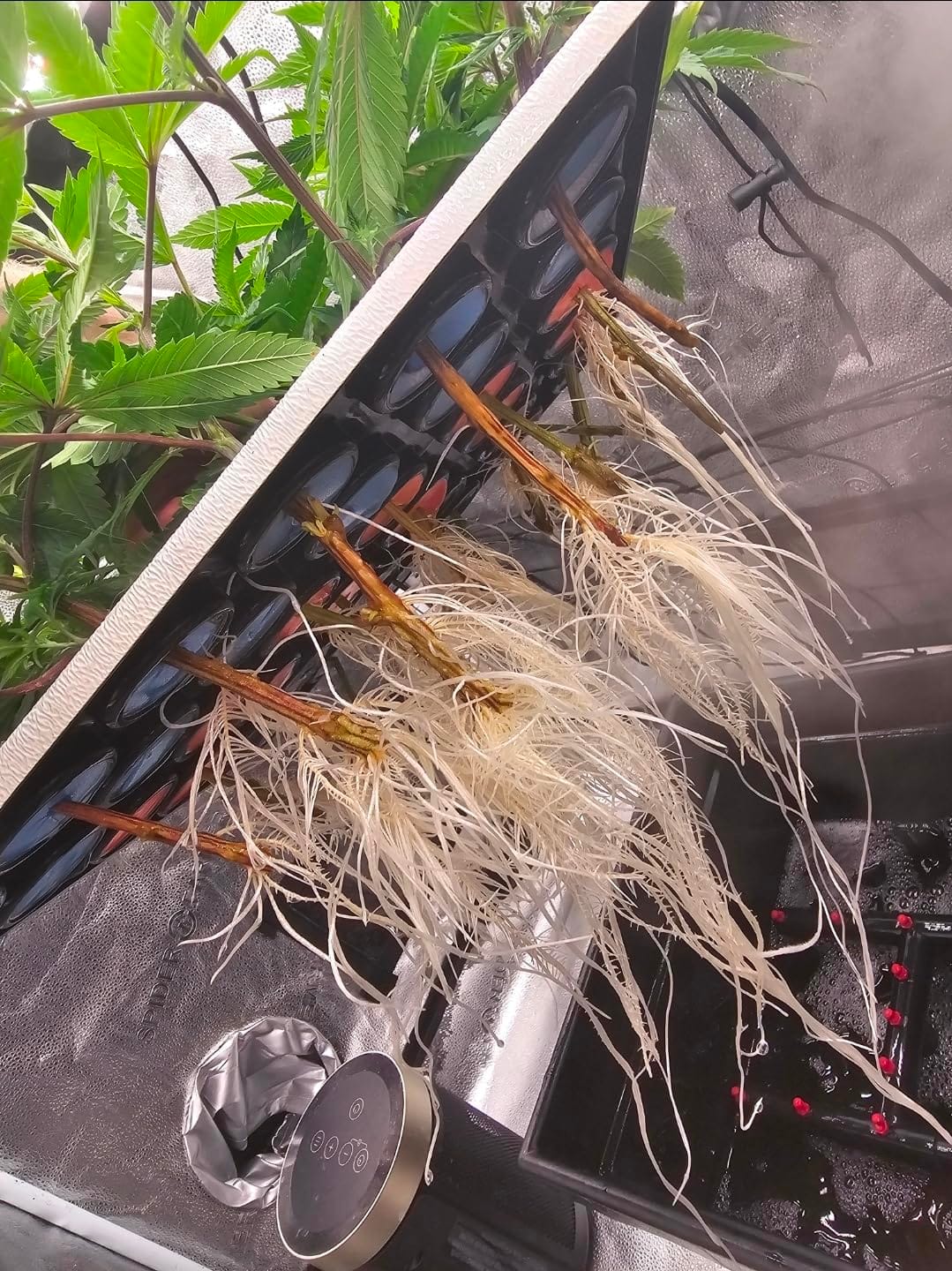
What we liked about the cycle behaviour
Because the manifold distributes 13 spray heads across the chamber, the on-time can stay short without starving the edge sites. That is the whole point of the design. Short bursts at good coverage mean the pump runs cool and the roots stay wet without sitting in a saturated chamber that invites rot.
For a first-timer, this is the unit where mist timing tuning feels forgiving. Even if you set the duty cycle a little too short, the coverage is broad enough that no single site is left in dry air.
Where it falls short for a first-time buyer
It is a propagator, so plan to transplant rather than harvest from the unit. A cutting rooted here needs soil or a larger system of its own to reach maturity, and a 36-site tray will not hold that many plants for more than a few weeks before crowding sets in.
The insert situation is the other real constraint. Buying additional inserts later means matching a specific size and colour that may not be stocked everywhere, so measure before you plan a second batch.
2. Hydrofarm Oxyclone OX20SYS 20 Site: Best Compact Recirculating Cloner
- Dual aeration through Venturi valve and air stone
- Compact rectangular footprint
- 20 collars included
- BPA-free pumps with one year warranty
- Smallest site count among the multi-unit rigs
- Two pumps plus tubing means more parts to clean
- Air stone and extra tubing add setup steps
Hydrofarm is a long-established hydroponics name and this is the unit we would put on a cramped shelf. At 13.75 by 10.75 by 6.25 inches it is a genuinely flat rectangle, and the 1.75 gallon reservoir is matched to 20 sites rather than oversized. Reviewers buy it for aeration, and the 4.3-star average across 1263 reviews supports that focus.
The aeration story is what separates it. An attached Venturi valve draws bubbles into the mist stream while the 160 GPH submersible pump provides turbulence, and a separate Active Aqua air pump pushes oxygen through a 4-inch round air stone at 3.2 litres per minute. Two independent oxygen paths mean the root chamber stays oxygenated even if one of the two components is underperforming, which is a genuine reliability argument in a sealed box.
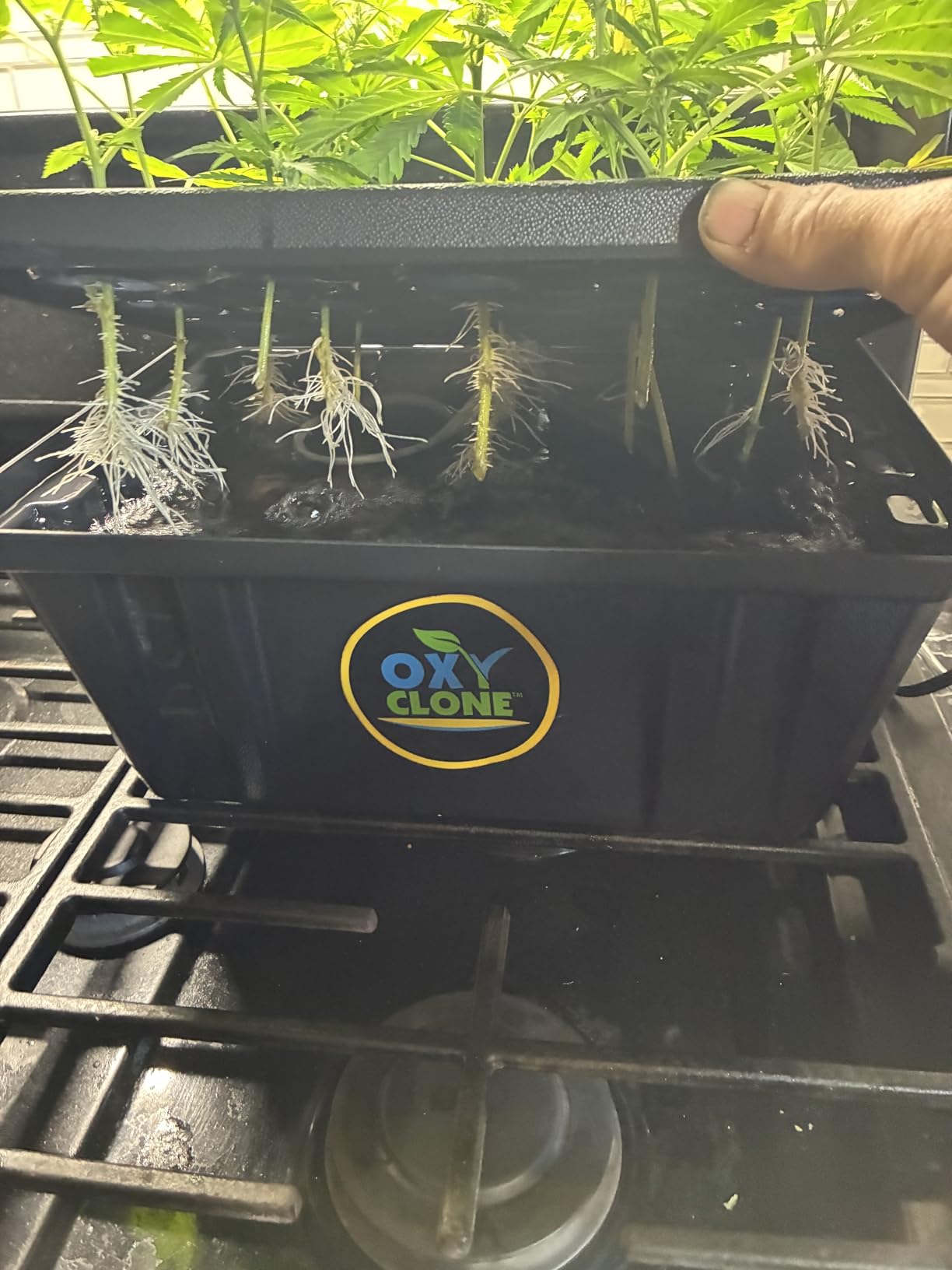
Everything you need is in the kit: 20-site reservoir and lid, 20 blue oxyCERT collars, the submersible pump, the single-outlet air pump, 3 feet of quarter-inch clear tubing and the air stone. Both pumps are BPA-free and the unit carries a one-year manufacturer warranty. The whole thing weighs 5.3 pounds.
Two more details worth knowing. A Venturi fitting that runs dry loses its bubble draw almost silently, so keep an eye on reservoir level. And the 20-site capacity is the real limit here, so this is a sequential cloner rather than a batch one.
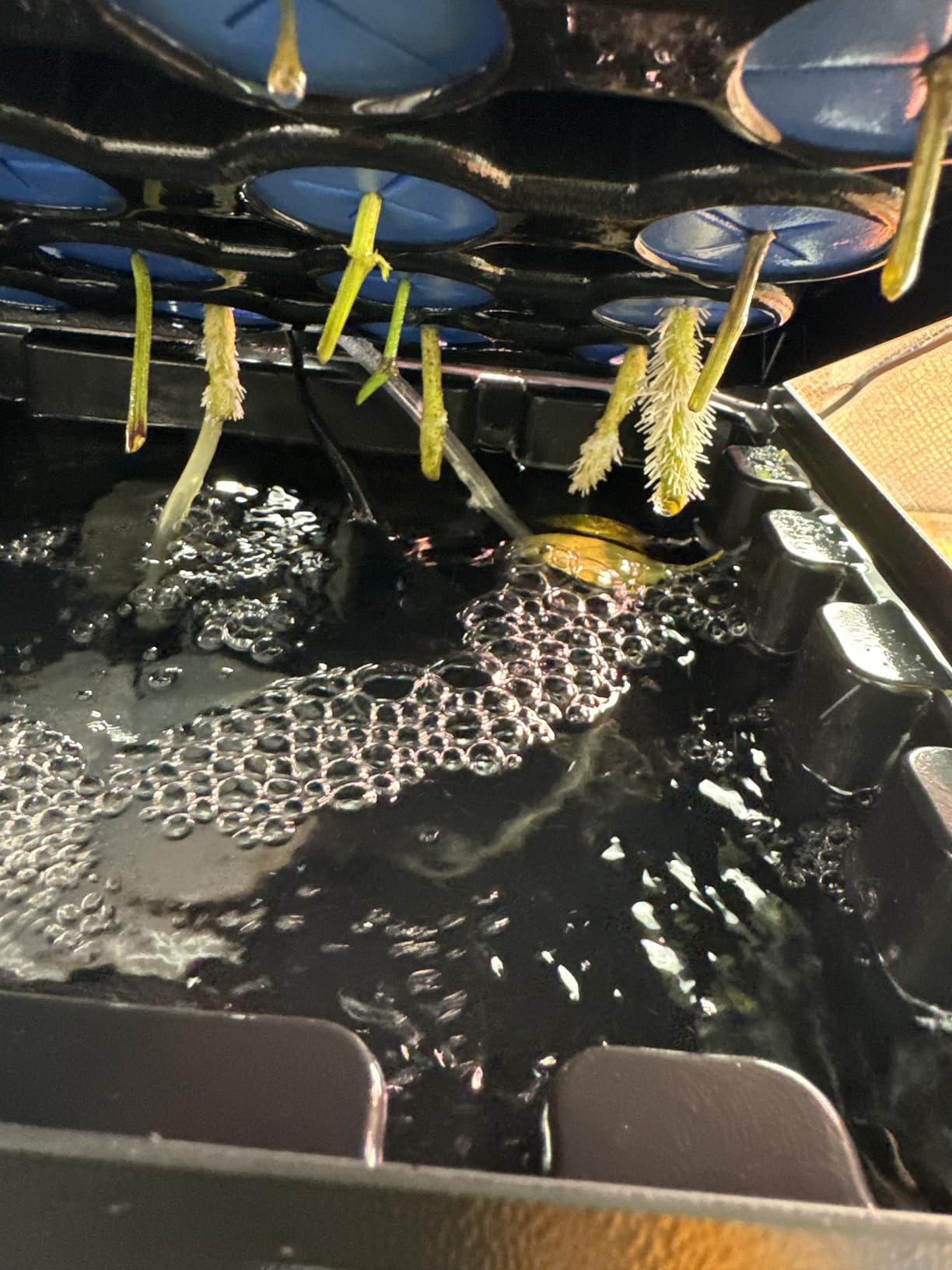
Why dual aeration matters for beginners
Roots in a sealed, dark, wet chamber are exactly the conditions where oxygen becomes the limiting factor. Running a submerged pump alone can leave the water at the far corners of the tray under-oxygenated. The air stone covers that gap, and because the two systems are independent, a single failed part is a warning sign rather than a lost crop.
That redundancy is why this unit keeps working for people whose first attempts failed on other designs. It also means the noise floor is higher than a single-manifold rig, something to weigh if the unit sits in a bedroom rather than a garage or garden room.
Where the small capacity bites
Twenty sites is a small batch. If you want to root a full tray of lettuce starts, a full propagation round of herbs, or anything approaching a home grow operation’s seedling demand, you will run this unit back to back for weeks. Buyers moving up from 20 sites typically cite the same thing: not quality, just throughput.
The extra tubing and air stone also mean more surfaces to keep clean. Biofilm in a quarter-inch line is invisible until flow drops, and that is a maintenance habit the single-manifold designs simply do not require of you.
3. HORTIPOTS 35 Site Aeroponic Cloner: Best No-Air-Pump Starter Rig
- Runs without a separate air pump
- Free foldable humidity dome included
- UL-listed pump with pre-filter housing
- Sold worldwide since 2016
- 1.625 inch inserts are not interchangeable with 2 inch collars
- Some users report mist escaping at lid seams
- Thin discs can let light into the reservoir
This is the design we would actually recommend to someone who has never run a sprayer before. The manifold is patent-pending and engineered to move enough air on its own, with venting in the top lid handling gas exchange. Removing the air pump removes the component that fails first in most builds, and it removes a step from setup.
At 4.2 stars across 614 reviews it sits mid-pack on rating, but the complaints are cosmetic and fixable rather than fatal. Buyers consistently mention the pre-filtered UL-listed pump and the free foldable clear humidity dome, which reduces leaf transpiration during the first hours when a cutting has no roots to drink with yet. The manufacturer states rooting in 4 to 10 days.
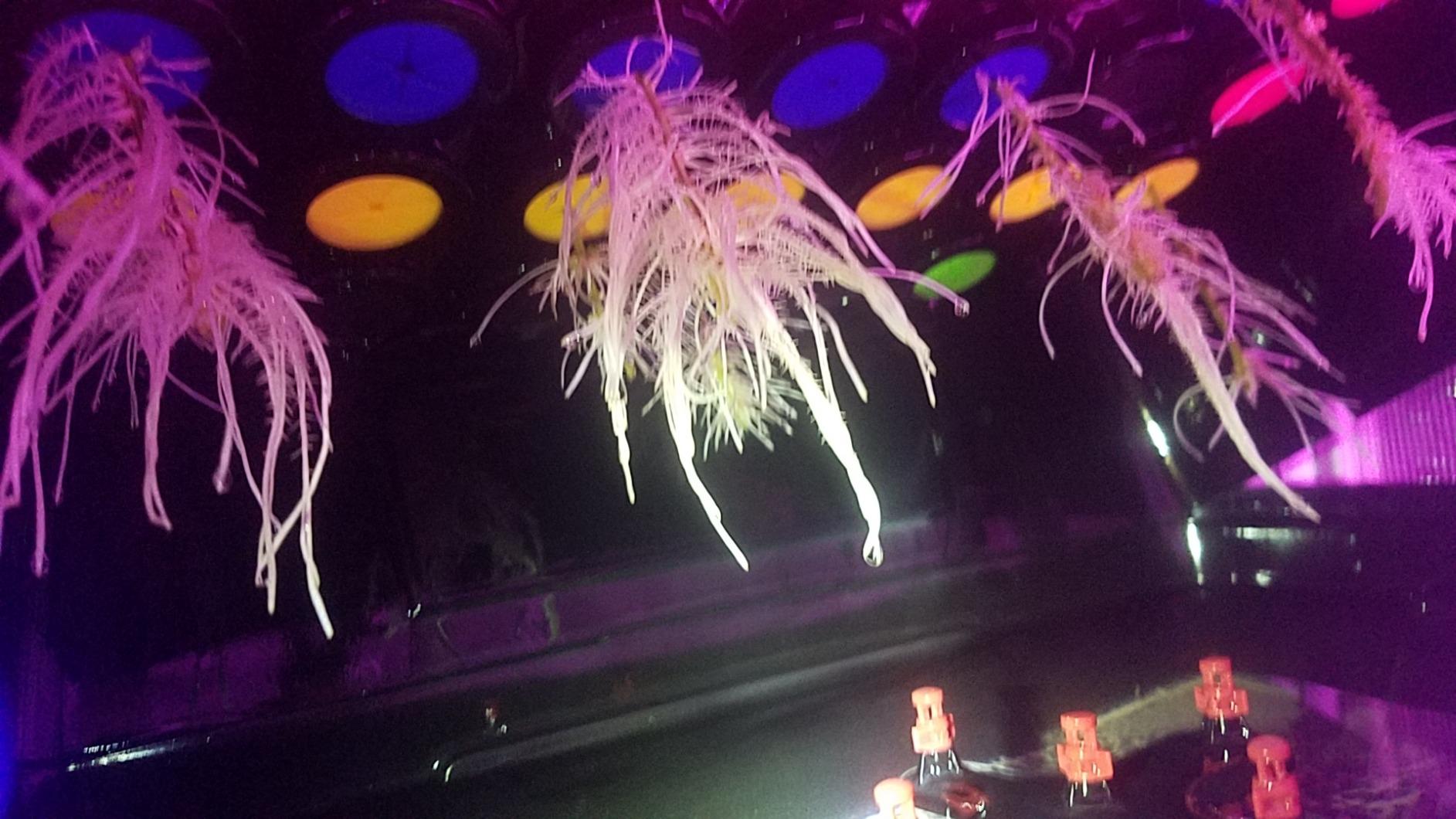
Capacity is 35 sites on 1.625-inch neoprene inserts, and the unit is built from new ABS and PP. It is rated for indoor use with partial sun and year-round planting. One practical note: this design has been produced and sold in volume worldwide since 2016, so replacement inserts for this specific size are widely available even though they are not the most common size on the market.
Reviewers do report mist escaping through lid seams on some units and light reaching the reservoir through the moulded discs. Both are real. The seam issue is usually a seating problem resolved by checking the lid gasket, and the light issue is addressed the same way every aeroponic grower addresses it: keep the reservoir covered.
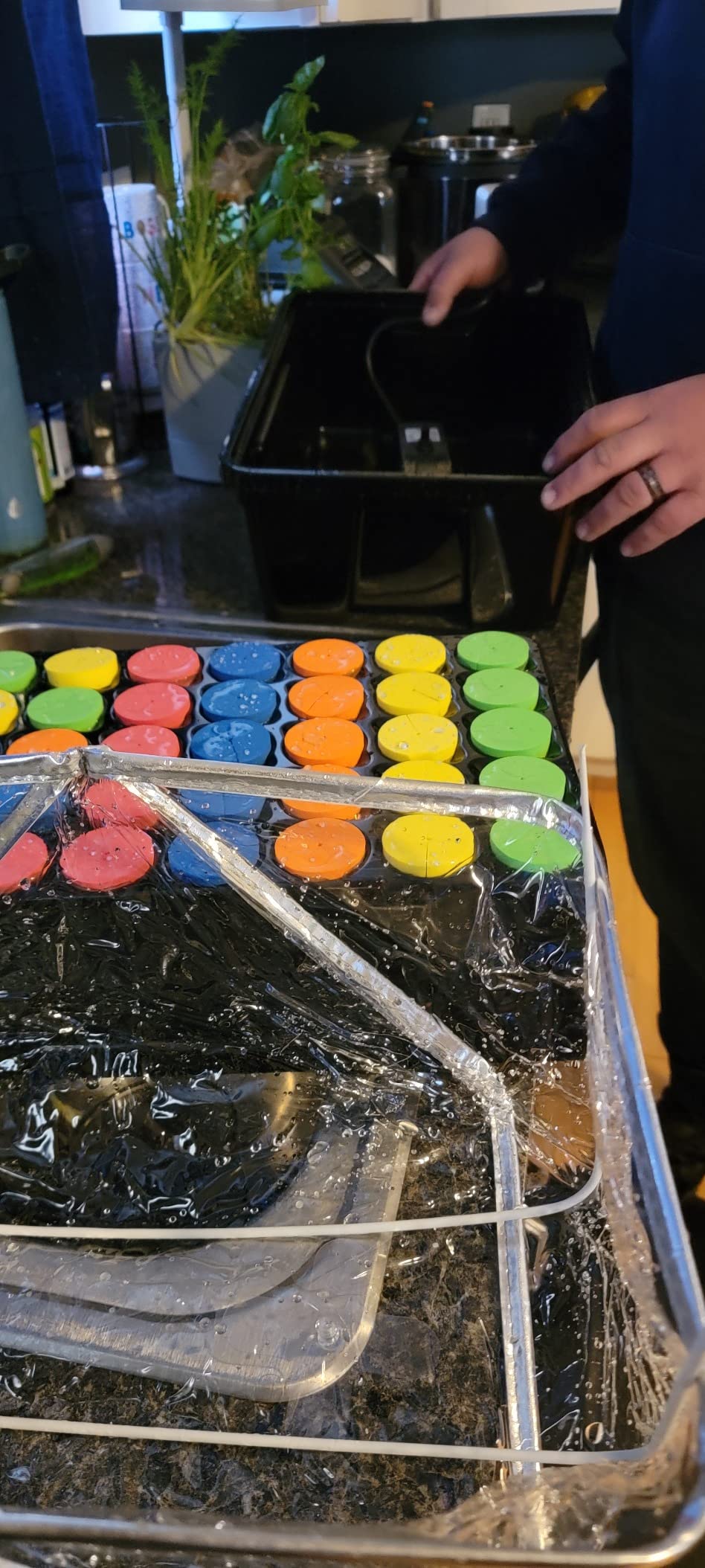
Why one pump is genuinely easier to run
Every pump is a failure point, and every extra hose is a place where biofilm starts. A single-manifold design has one motor, one impeller to keep clean and one electrical connection. For a beginner running a system unattended on a timer, fewer components means fewer reasons for the whole thing to stop while you are asleep or at work.
The venting lid is doing real work here. It lets gas exchange happen at the top of the chamber, which is where stale air collects, so the root zone gets oxygen without a second pump pushing bubbles into the water.
Where the 1.625 inch insert size costs you
This is the real trade-off. The 1.625-inch neoprene inserts are not interchangeable with the far more common 2-inch collars, so if you already own a box of standard collars, this unit will not accept them and vice versa. Plan your insert purchase before you start, because retrofitting a different size is not possible.
Light ingress is the second thing to plan for. If you are counting on the included dome to do all the work, keep an eye on the seams, because any gap lets light hit the water and light plus nutrients means algae.
4. HORTIPOTS 24 Site Cloner with 2 Inch Collars: Best Standard Collar Fit
Aeroponic Cloner Machine 24 Site for Cuttings Rooting Using 2 inch Neoprene Inserts or 2 inch Clone Collars
- Uses widely available 2 inch clone collars
- Humidity dome included
- Pre-filtered UL-listed pump
- No separate air pump required
- Thin black housing can leak at the lid seam
- 2 inch plugs can sit loosely and splash cuttings
- 120V pump reported to overheat on 220V supplies
Same engineering idea as the 35-site, different collar standard. This one takes the 2-inch clone collars that most growers already own, and if you have a box of them in a drawer, that alone can decide the purchase. Reviewers report strong rooting, often within about three weeks, across 471 reviews at 4.2 stars.
The layout uses multi-outlet venting in the top lid instead of a separate air pump, so the parts list stays short. A UL-listed pump with a pre-filter housing keeps debris out of the manifold, which is the single most effective anti-clogging measure available at this price level. The construction is BPA-free ABS and PP, and the unit weighs 2.08 kg.
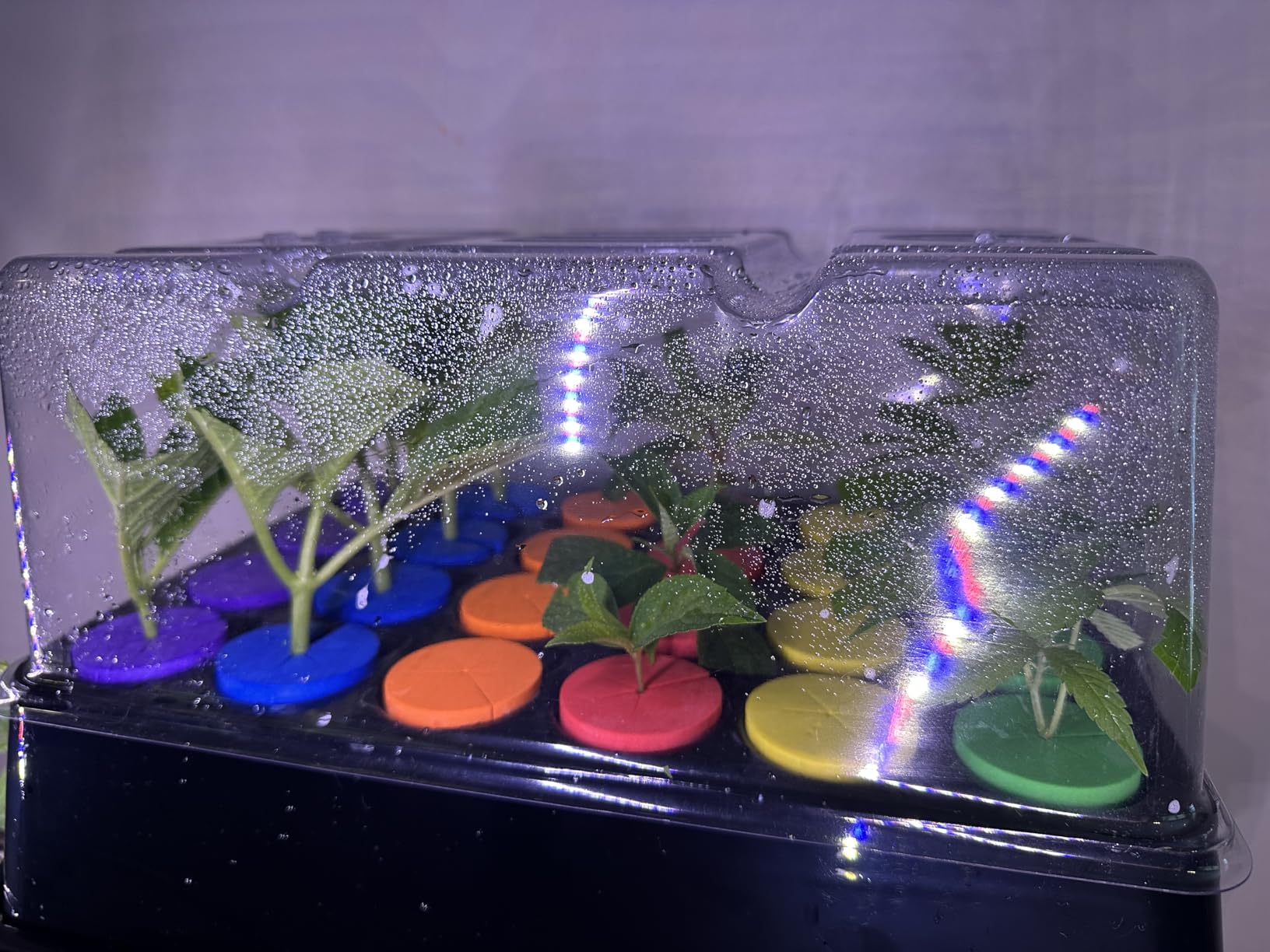
Two practical notes before you commit. The pump is a 120V unit, and buyers outside North America report it overheating on 220V and 240V supplies. If that describes your setup, a voltage converter is not a substitute for a correctly rated pump. Second, the unit does not include a pH meter or dosing equipment, which most growers add separately within the first week.
On build quality, the recurring theme in reviews is that the black housing is thin and can leak a little at the seam where the lid meets the reservoir. Reviewers also mention that 2-inch plugs can sit loose in the ports and let solution splash onto cuttings. Both are setup problems you can manage, but you should know about them before the first cycle.
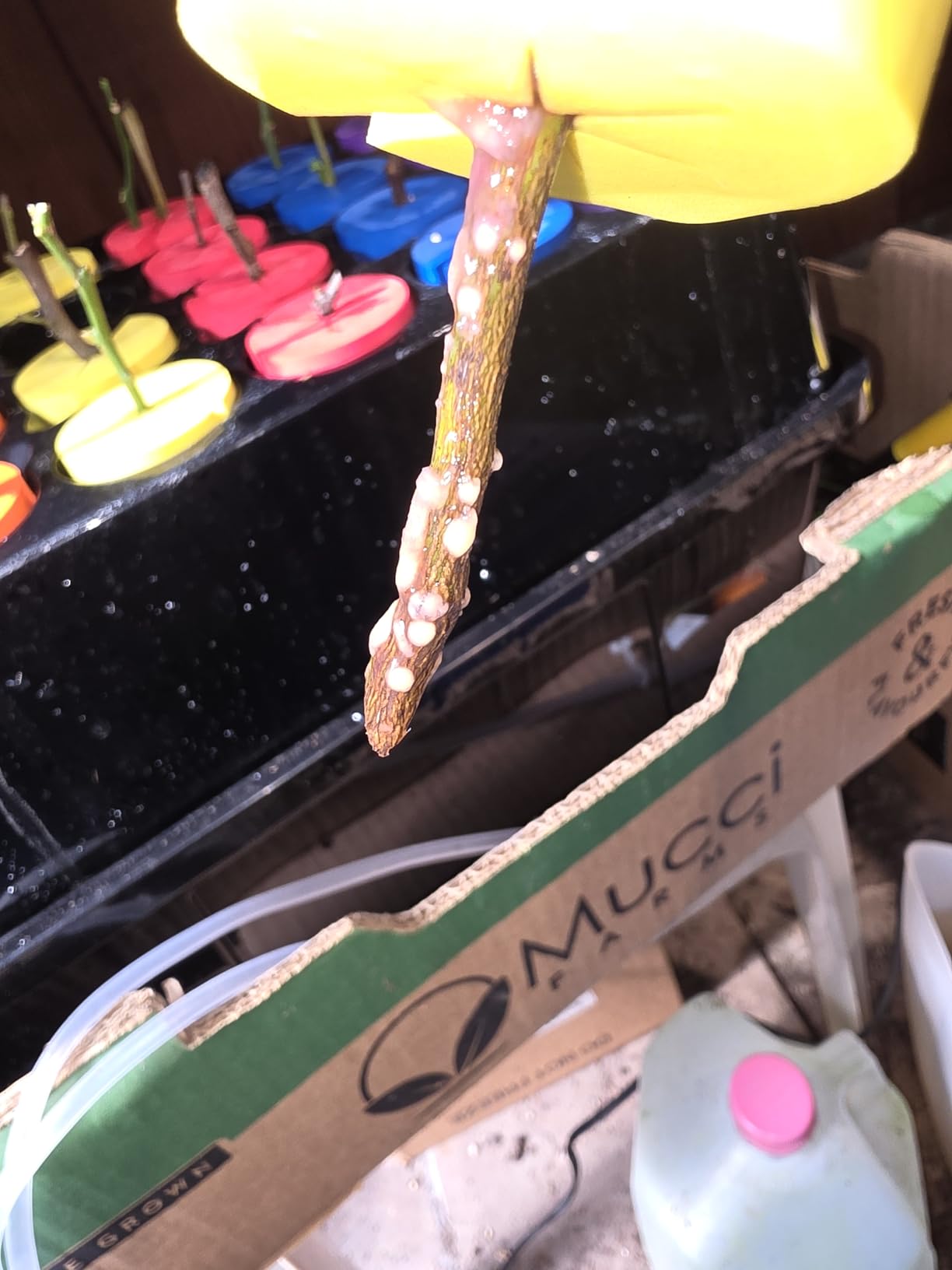
When 2 inch collars are the deciding factor
Collar compatibility is unglamorous and decisive. The 2-inch size is the most widely stocked clone collar on the market, which means cheaper consumables, more replacement options and no need to buy a whole new box of inserts to trial a different medium. For a first system this is a meaningful practical advantage.
The loose-plug issue also has an easy fix. Trim the collar to length so it sits snug in the port, and the splash risk drops sharply. Most growers do this once and never think about it again.
Where the thin housing gets annoying
Seam leakage on a rigid plastic tray is the most common complaint in this category, and this unit is not exempt. It is not a flood, but a wet shelf under a propagating tray is exactly the kind of quiet problem that leads people to abandon a system in month two.
Check the seam dry after the first full cycle. If it weeps, the fix is usually the lid sitting slightly proud, and a thin layer of food-safe silicone on the gasket line resolves it permanently.
5. DL Wholesale Psycloner Pro 35 Site: Best Space-Saving Multi-Option Rig
Psycloner Pro Clone Machine, Aeroponics System, Cloner for Plant Cuttings, Propagation + Bonus (35 Site)
- Compact design holds a high site count for its size
- Humidity dome included
- ABS tray blocks light and adds evaporative cooling
- Sets up in minutes
- Flimsy ABS warps in a dishwasher and then leaks at the lid
- Some units cracked near the pump cord
- 120V pump only and no replacement parts offered
This is the one to buy if you want one design that scales. The same unit is offered in 35, 70 and 140 site configurations, so the compact 35-site version is genuinely a stepping stone rather than a dead end. At 372 reviews and 4.0 stars it has the lowest average in this group, and the complaints explain exactly why.
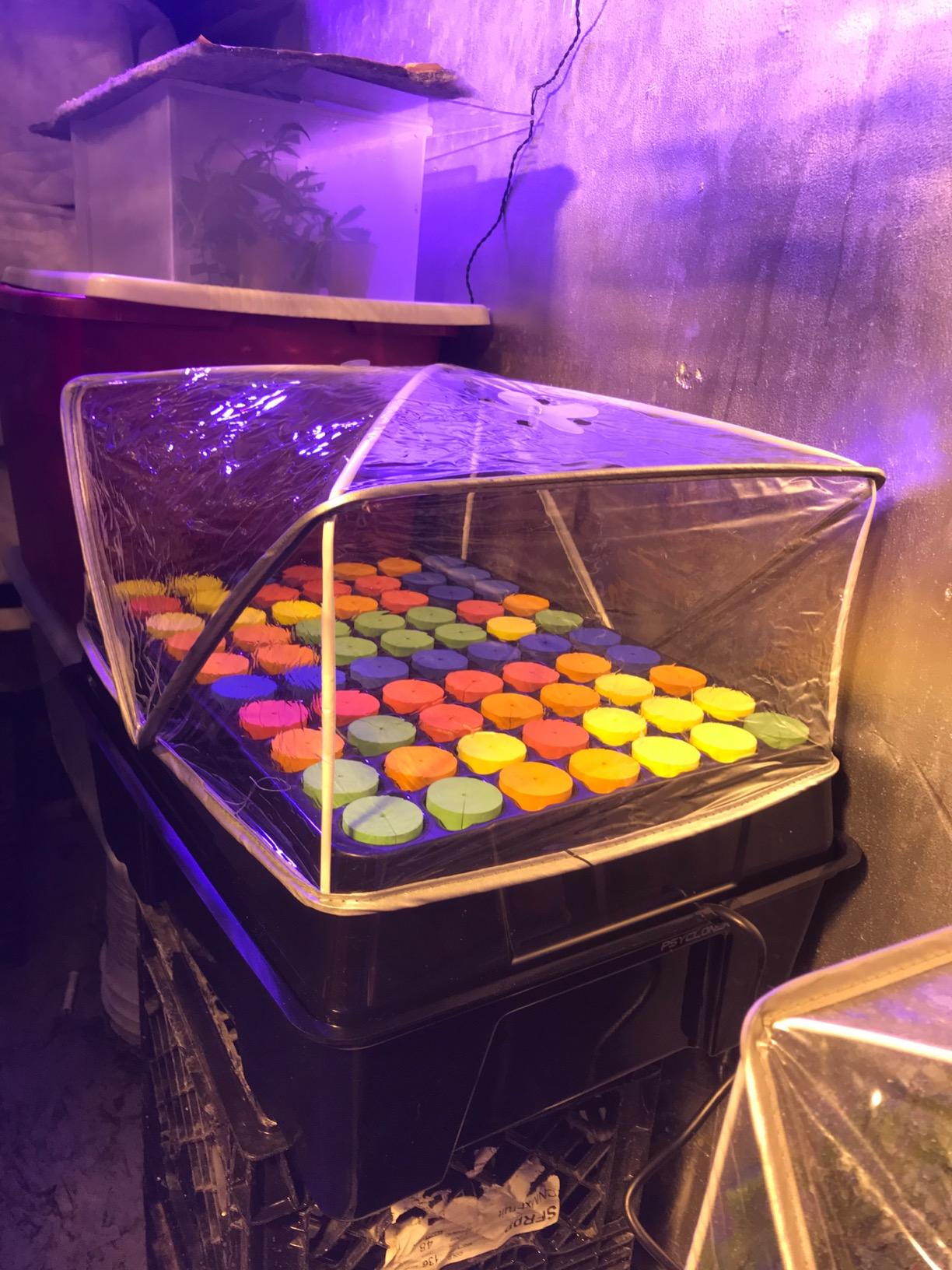
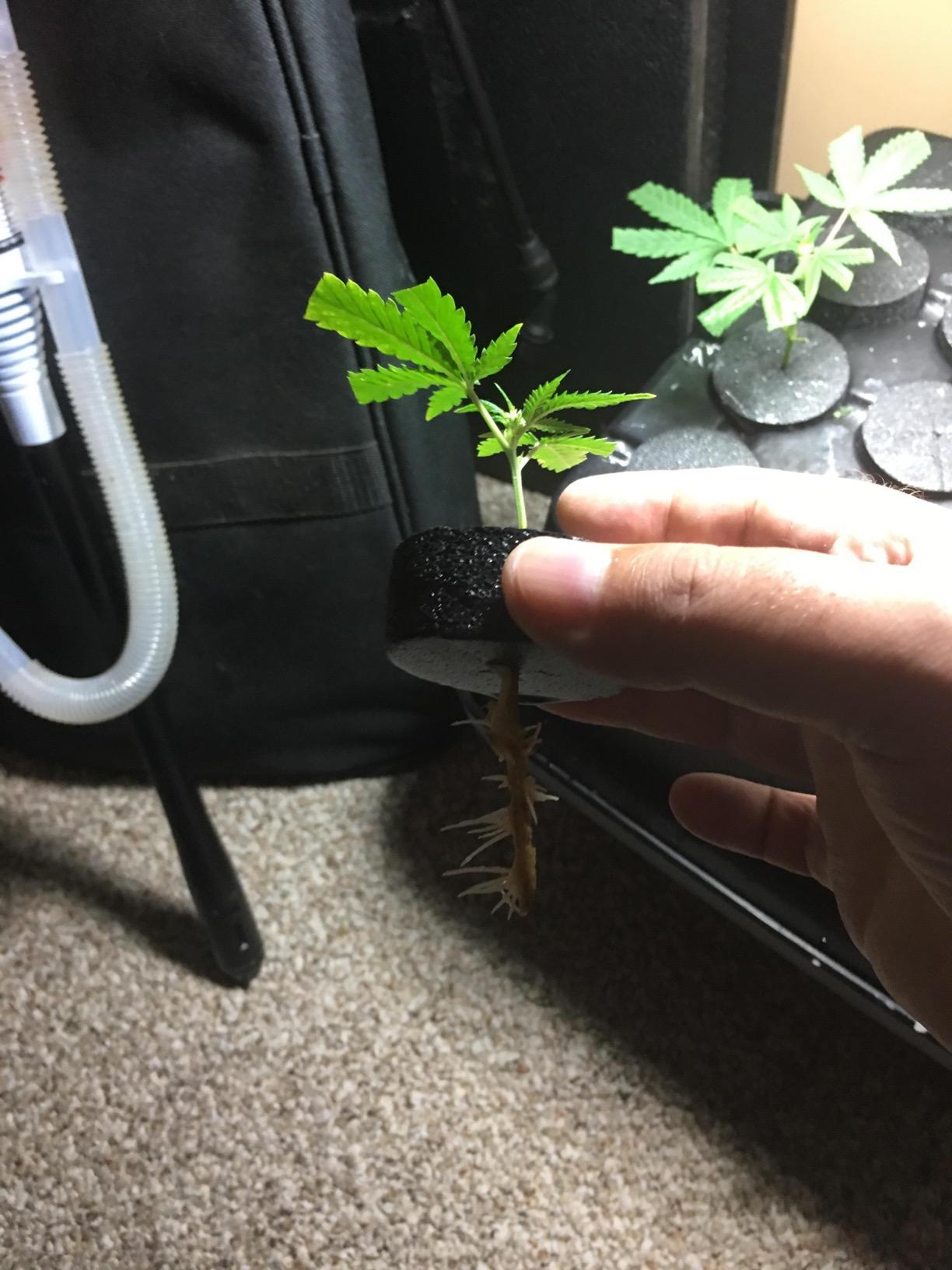
What works is the engineering detail. The ABS propagation tray blocks light from the root zone and promotes evaporative cooling, which is a meaningful heat-management benefit in a warm room. The spray manifold is designed specifically for water delivery to cuttings, and the included humidity dome helps prevent transplant shock. Reviewers report 3 to 4 inch roots in roughly 13 days when using rooting gel and fungicide.
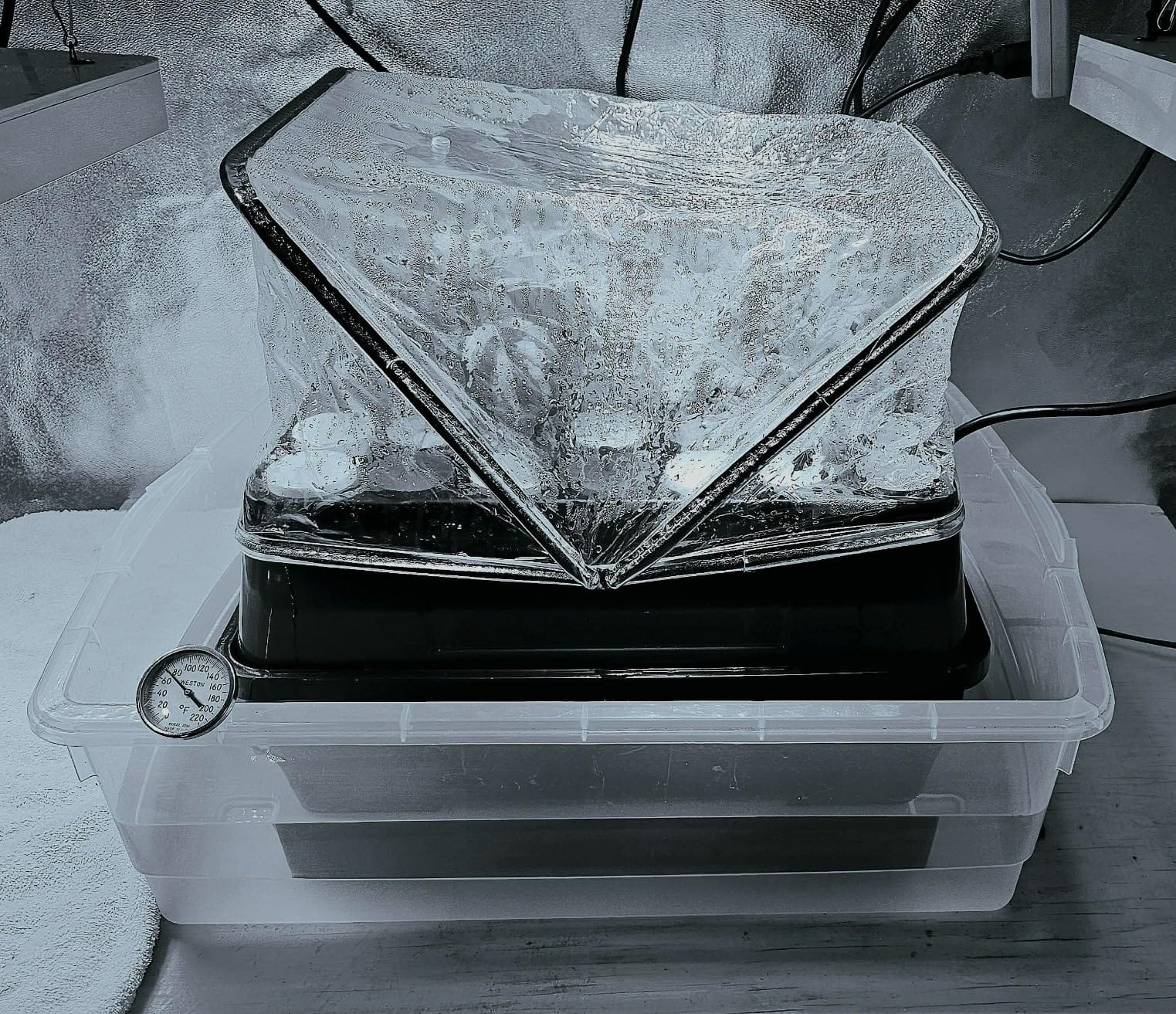
Setup is quick and needs no special expertise, and at 2.12 kg the unit is light enough to move between a windowsill and a shelf. The included components are neoprene inserts and the humidity dome, and the manufacturer notes high moisture needs and full sun exposure.
Now the honesty section. The ABS is thin, and reviewers report it warping in a dishwasher, which then causes the lid to seat improperly and leak. Some units cracked at the corner near the pump cord within days of gentle use. The pump is 120V only, and replacement parts are not offered, so a defective unit has to be returned whole.
Why the light-blocking tray is a real feature
Algae needs light and nutrients, and a hydroponic reservoir supplies both. A tray that genuinely blocks light removes the first requirement, which is why this design earns its place despite the durability complaints. The evaporative cooling effect is a bonus that matters more in summer than most product descriptions suggest.
Buyers who report the best results treat the dome as a temporary acclimation cover rather than a permanent lid, and keep the reservoir itself covered even when the chamber is clear.
Where the durability complaints will get you
Thin plastic is the crux. Warping from heat or a wash cycle changes how the lid seats, and a lid that does not seat properly is a mist that escapes and a chamber that dries unevenly. Reviewers also report mist pooling where the dome flap bows out.
Given that no replacement parts are offered, treat this as a unit you keep in a stable, cool location rather than one you shuttle around. If you want portability, a heavier tray is the better trade.
6. EZ Clone 16 Cutting Cloning System: Best Small-Batch Made in USA Cloner
- Made in the United States by Hawthorne Hydroponics
- Highest five-star share in the group at 79 percent
- Lowest one-star share at 6 percent
- Compact 16 site footprint
- Smallest site count in the group
- Product page lists sparse technical detail
- Heaviest listed weight relative to capacity at 8 pounds
The rating distribution here is the standout. With 273 reviews at 4.5 stars, 79% of buyers gave five stars and only 6% gave one star, which is the most favourable spread of any unit we tested. For a first purchase, that shape of feedback matters more than the average alone, because it says the product is not polarising.
It is made in the United States by Hawthorne Hydroponics, a company with a real track record in the hydroponics trade. Dimensions are 14.3 by 14.7 by 12.3 inches with a package of 16 by 15 by 15 inches, and it weighs 8 pounds. Sixteen cuttings per cycle is a small batch, but it is a sensible size for a household that wants to refresh a herb garden rather than supply seedlings.
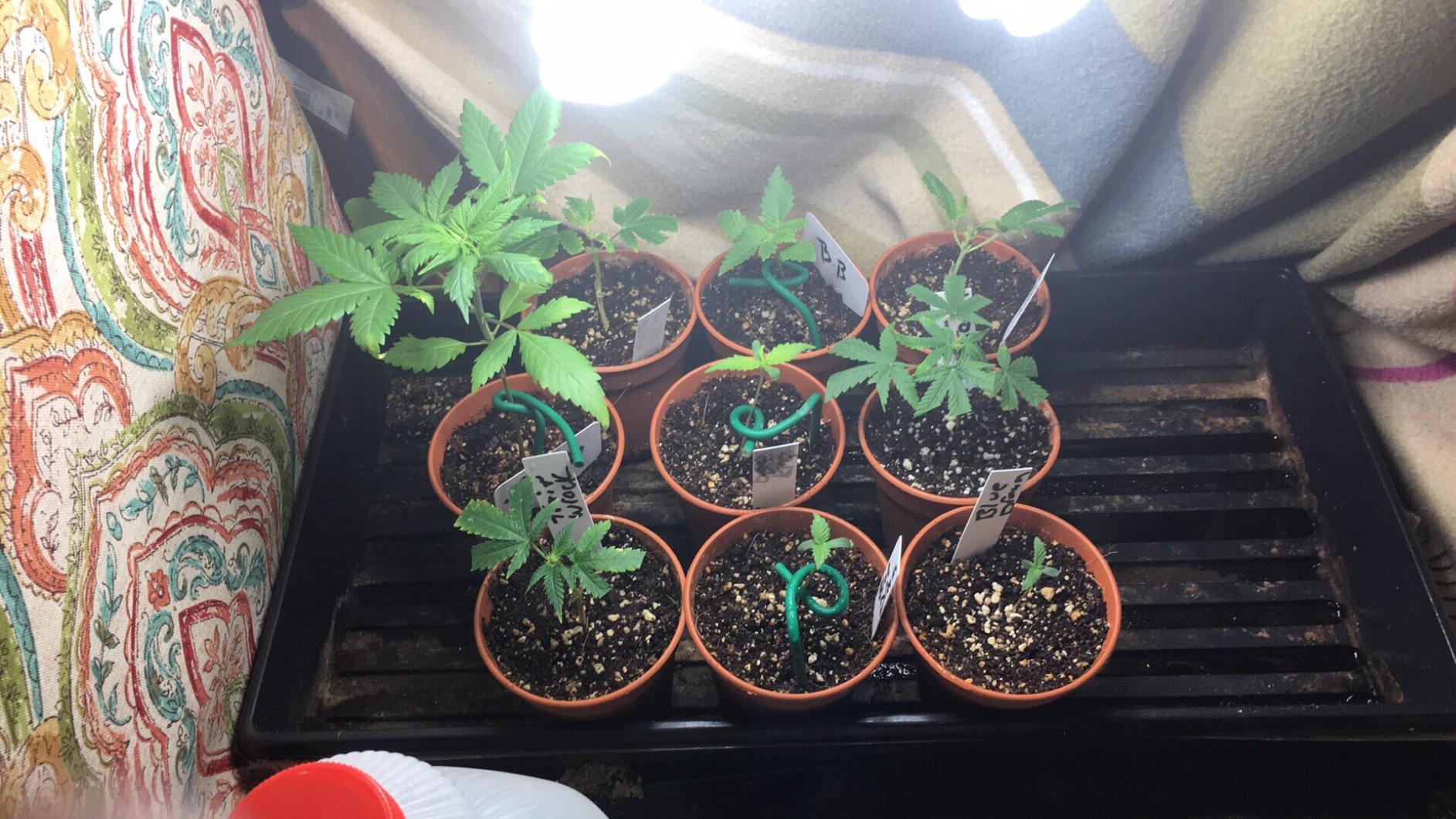
I want to be straightforward about the research side. The product page is thin on aeration and capacity detail beyond the site count, so if the specific question is how the mist is distributed, the listing does not say. That is a genuine gap in the documentation, and it is one of the reasons this unit ranks sixth rather than higher despite the strong rating.
Eight pounds is heavy for a 16-site unit and is the most obvious oddity in the specification set. It probably reflects the reservoir and lid materials, but it does mean this is not the rig you carry between rooms.
When 16 sites is exactly right
Small batch capacity is not a flaw if your goal is steady replacement rather than scale. A 16-site unit roots a full cutting of basil, mint or a lettuce start set, takes two to three weeks, and then you start again. For a kitchen-counter herb habit, that cycle is genuinely sufficient and it is far less expensive in consumables than a large rig running at a fraction of capacity.
US manufacture and a documented distribution also make this the easiest unit to return or replace if something goes wrong, compared with the thinner unbranded builds in the same category.
Where documentation is the weak point
Buying a misting system with an undocumented manifold is a real risk. If you cannot confirm spray coverage or pump output before assembly, you are relying on trial and error to find the duty cycle, and trial and error on roots is expensive in lost cuttings.
Our advice is to ask the manufacturer for the pump rating and cycle recommendation before you commit, and to keep a close eye on the first two cycles. The owner feedback suggests the hardware performs; it is the paperwork that is missing.
7. PowerGrow 21-Site Bucket Cloning Kit: Best Budget DIY Entry Point
Plant Cloning Machine – Deluxe 21-Site Bucket Cloner Kit by PowerGrow Systems
- Lowest entry point in the group by a wide margin
- Bucket format avoids the seam leaks reported on rigid trays
- 360 degree nozzles for even coverage
- Complete kit including cloning gel
- Smallest capacity among the rigid-format units
- Bucket and lid design is taller vertically than tray cloners
- Not ideal for a tight shelf with a low clearance
This is the route most forum regulars describe as the easiest way into the hobby, and the reason is right here in the format. A bucket reservoir has no lid-to-reservoir seam to fail, so you avoid the single most common complaint in this entire category. The 21-site lid accepts standard clone collars, and 360-degree spray nozzles cover the cutting from every side rather than from one direction.
Everything is in the kit: bucket, 21-site lid, clone collars, pump and cloning gel. At 159 reviews and 4.2 stars the review base is the smallest here, but the star split is reasonable with 64% five-star and 7% one-star. PowerGrow Systems has been producing for a long stretch, and the unit is made in the USA.
Why the bucket format is the smart budget choice
Every leak complaint in this roundup traces back to the same weak point: a rigid tray with a seam that does not seal properly. A bucket has one continuous moulded wall and a lid that sits in the rim, so there is no joint to weep. If you are buying on a budget and you are new, this is the single decision that reduces your odds of a damp shelf.
Adding your own bucket also means you can scale the water volume later without buying a new machine, and a common trick is to use a second bucket as an opaque cover, which blocks light and slows evaporation.
Where the trade-offs show up
Twenty-one sites is a modest capacity, and because the bucket is deeper than a flat tray, the unit is less compact vertically. Measure your shelf clearance before buying, since a low cupboard will rule it out even though the footprint looks small at 12 inches square.
Bucket systems also make it easier to overwater by instinct. The plant is misted by a pump, not soaked, so leave headroom and keep the pump submerged; running a bucket cloner with the waterline above the pump inlet is the classic rookie error.
8. HORTIPOTS 70 Site Aeroponic Cloner: Best for Large Propagation Batches
HORTIPOTS Cloning Machine Aeroponic Cloner System 70 Site for Plant Cuttings Using 1.625 inch Neoprene Clone Inserts (1-5/8 inch)
- Largest site count in the group at 70
- Best five-star share among the HORTIPOTS models at 72 percent
- Manifold design avoids a separate air pump
- UL-listed pump with pre-filter housing
- Uses 1.625 inch inserts rather than standard 2 inch collars
- Bulkier at 8.3 pounds and needs real floor space
- Lowest review volume in the group at 146
Seventy sites is the largest capacity in this roundup, and it is the one unit here that meaningfully changes what a household can propagate in a single run. At 4.3 stars it matches the Hydrofarm on rating, and its 72% five-star share is the strongest of the HORTIPOTS line, with only 2% two-star reviews. The 146-review base is the smallest here, so long-term durability is less well documented than elsewhere.
The engineering is the same family as the smaller HORTIPOTS units: 100% new ABS engineering plastic, a patent-pending spray manifold that runs without a separate air pump, a UL-listed pump with pre-filter housing to stop manifold clogging, and a free foldable clear humidity dome. The manufacturer states rooting in 4 to 10 days. The unit is floor-standing, rectangular and rated for indoor use.
When 70 sites justifies the bulk
The case for a unit this size is throughput. If you are propagating herbs for a market garden, replacing a large planting each spring, or running a rotation where a small cloner would mean a queue of three-week waits, the capacity pays for itself in time saved. A single 70-site run can cover a full crop block in one cycle.
It is also the unit to choose if you are already committed to 1.625-inch inserts, since the 70-site model shares that collar standard with the 35-site version and lets you move up without changing consumables.
Where the size and the review base bite
Eight and a third pounds plus a floor-standing footprint means this is a piece of equipment, not a shelf accessory. It needs a corner with headroom and somewhere for the dome to fold without touching anything.
With only 146 reviews, the evidence base is thin for a purchase at the top of the size range. Long-horizon claims are not well supported by user reports, and the same 1.625-inch insert limitation applies here as on the smaller sibling model.
Aeroponic Buying Guide: Pressure Class, Sizing and Your First 60 Days
Low pressure, fogponics or high pressure: which class do you actually need?
Three pressure classes exist, and only one of them matters for a first purchase. High-pressure aeroponics uses a pump powerful enough to atomise solution into a true fog at 60 to 100 PSI, held in a sealed chamber so the whole atmosphere stays saturated. It is the fastest method and it is also finicky, expensive and unforgiving of a missed cycle. Almost nobody should start here.
Fogponics sits in the middle. A dedicated atomiser nozzle generates a standing fog inside the chamber, and because the fog is continuous rather than pulsed, the controller manages a single delicate device instead of a timed manifold. Elegant, but the nozzle is expensive and blocks easily.
Low-pressure aeroponics is the class every unit in this roundup belongs to. A modest submersible pump lifts solution to a manifold that throws a coarse spray into a covered chamber on a timer. The control surface you need is a cycle timer, and a clogged spray head is a five-minute fix with a bottle brush. For a beginner, that simplicity is the entire argument.
Spray cycle timing: the numbers community operators actually use
Cycle timing is the most repeated question in the aeroponics communities and almost no commercial page publishes an answer. The two settings that come up constantly are 10 seconds on and 4 minutes off, and 30 seconds on every 5 minutes. Both work; the difference is chamber size and how much mist your particular manifold throws.
Start conservatively. Set the on-time short and the off-time long, run a cycle with no plants in the chamber, and look at whether the mist reaches the outer ports. Once it does, add a small amount of on-time. Roots must never fully dry, but a permanently saturated chamber invites root rot, so the goal is wet-but-air-exposed rather than dripping.
Never run the pump continuously. That single rule appears in every forum thread we reviewed, and it is the reason experienced growers always specify a duty cycle rather than leaving a pump on. Continuous misting suffocates the root zone and wastes power for no growth gain.
pH, nutrients and the daily two-minute check
Aeroponic roots have no soil buffer, so they react to nutrient concentration immediately. Aim for a pH between 5.5 and 6.5, and use a proper meter rather than litmus strips, which cannot resolve a one-point swing in a solution this dilute. A two-part mineral blend at A and B dosing is the standard approach; add part A and part B separately, never premixed, because combining concentrates causes nutrient lock-out.
Make the daily habit three checks. Confirm the pump is submerged and running. Look at the roots, which should be pale white to cream. Check the water level and top it back up, because every litre of evaporation is concentrated nutrient left behind. Weekly, check pH and top up with plain water rather than nutrient solution, which is how most first-timers accidentally overfeed.
Watch root temperature too. Community growers aim to keep reservoir water under 30C, and in a warm room that means shading the reservoir, keeping the lid on and improving airflow around the unit. Hot water plus wet roots is the fastest route to root browning.
Sizing your system and choosing what to grow first
Match the site count to throughput, not to ambition. A 16 to 24 site unit is plenty for a household herb habit. A 35-site unit covers a serious home propagation programme. A 70-site unit is for people who need a crop block of cuttings, and it demands floor space to match.
For year one, stay with leafy greens and herbs. Lettuce, basil, mint, kale and leafy chard root reliably in aeroponic propagators and tolerate the small imperfections of a first setup. Avoid starting with fruiting crops that need months of root development before they do anything, and be cautious with anything demanding a specific photoperiod indoors.
Plan the light before you plant. Propagation chambers block light by design, so a unit that stays domed does not need a grow light. The moment you take cuttings to a clear chamber for early vegetative growth, a LED grow light becomes the limiting factor. For indoor setups, our guide to indoor farmer systems covers that side in more depth.
Budget beyond the unit itself. A pH meter, a two-part mineral blend, clone collars, a humidity dome if one is not included, and a grow light for the clear-chamber stage are all required purchases, and forgetting the pH meter is the most common beginner budgeting error. Electricity is a minor line by comparison: these are small submersible pumps rather than lighting loads, so the running cost is dominated by whatever grow light you add.
Frequently Asked Questions
What is the easiest hydroponic system for beginners?
For most first-timers the easiest route is a low-pressure aeroponic cloning system with a sealed reservoir, a spray manifold and a submersible pump on a timer. There is no electronics to configure, no soil to manage and every part arrives in the box. A 16 to 24 site unit is enough to learn on, because the skills you build are the same ones a larger system requires.
Which aeroponic garden system is the best?
The CLONE KING 36 Site Aeroponic Cloning Machine is our top pick for beginners, with 13 misting heads covering a 36 site chamber and a 317 GPH pump included. It has the largest review base in our testing at 1867 reviews and a 4.5 star average. The Hydrofarm Oxyclone OX20SYS is the runner-up where compact size and heavy aeration matter most.
What are the downsides of aeroponic farming?
The main downsides are constant attention and total unforgiveness. Bare roots dry out in minutes, so a failed pump or a missed cycle kills a crop quickly. You must check water level, pump function and pH daily, keep spray heads clear, manage root temperature in warm conditions, and most units propagate rather than feed a plant all the way to harvest.
Which is better, NFT or DWC?
Neither suits a first aeroponic-style build as well as a low-pressure spray system. NFT runs a thin film of nutrient water past bare root tips, DWC suspends roots in an aerated reservoir of water, and low-pressure aeroponics mists roots inside a sealed chamber. If your goal is propagation, an aeroponic cloner roots cuttings faster because the mist delivers oxygen and nutrients at once.
What are the key differences between an aeroponic tower and a hydroponic tower?
A hydroponic tower recirculates water through a central column, wetting growing media in stacked net pots. An aeroponic system sprays a mist into an enclosed chamber where roots hang in air with no media contact. Towers suit food crops to harvest, while aeroponic spray chambers are built for rooting cuttings and seedlings, which is why almost every true aeroponic unit sold for home use is a propagator.
What is the recommended reservoir size for hydroponics?
Match reservoir volume to plant count rather than to a fixed number. A rule of thumb is roughly one to two litres of working solution per growing site, so a 24 site cloner suits a reservoir around 25 to 40 litres and larger food-growing systems need considerably more. Under-sizing is the usual cause of a pump running dry, so leave yourself a generous margin.
What is the best type of pump for hydroponic systems?
Use a small submersible utility pump rated in the low hundreds of gallons per hour, matched to the vertical lift from reservoir to manifold. A pre-filtered pump is worth paying for because it keeps debris out of the spray heads. Avoid anything that must run dry, since a misting pump that loses its prime or overheats is the most common failure in these systems.
How often should I run the pump on my hydroponic system?
Run the pump on a duty cycle, never continuously. The two settings growers use most are 10 seconds on with 4 minutes off, and 30 seconds on every 5 minutes. Start with the shorter on-time, confirm mist reaches the outer ports with an empty chamber, then increase gradually. Roots must stay damp but never sit in a saturated, oxygen-poor chamber.
What are three plants that are not recommended for hydroponics?
Large root crops such as potatoes, beets and carrots need a real growing medium that aeroponic chambers cannot provide. Deep-rooted fruiting plants like tomatoes also struggle in small propagation units, and full-sun outdoor plants such as peppers and cucumbers demand far more light than a domed chamber allows. Start with lettuce, basil, mint and kale instead.
Do aeroponic systems need grow lights?
A domed propagation chamber blocks light, so it needs no grow light. Once you transfer rooted cuttings into a clear chamber for early vegetative growth, a full-spectrum LED grow light becomes the limiting factor indoors. If the unit stays under its humidity dome for the first 10 to 14 days, you can add lighting afterwards without holding up the cycle.
The Best Aeroponic Systems for Beginners: Final Verdict
Eight systems, one clear winner. The CLONE KING 36 Site Aeroponic Cloning Machine earns the top spot on evidence rather than features: the largest review base in the group, a star distribution with 76% five-star, thirteen misting heads across a 36 site chamber, and a 317 GPH pump in the box. The Hydrofarm Oxyclone OX20SYS is the pick when shelf space is tight and you want the strongest aeration, and the PowerGrow 21-Site Bucket Kit is the cheapest honest way into the hobby.
Whichever you pick, the same three habits decide whether you enjoy it: run the pump on a duty cycle rather than continuously, keep bare roots damp without saturating them, and check the water and pH every day. Get those right and the hardware choice matters far less than the marketing suggests. If you are still comparing formats, our breakdown of the eight best aeroponic systems for indoor farmers covers the food-growing side of the category.