
Slalom racing demands precision, speed, and a ski that responds to every subtle movement you make through the gates. Whether you are lining up for your first beer league night or chasing podium finishes at a USSA Masters event, the right slalom ski makes all the difference between a clean run and a frustrating one.
Our team spent the past season testing and comparing the best racing skis for slalom across every skill level and budget. We looked at pure FIS-certified race weapons, recreational race carvers, junior setups, and versatile options that bridge the gap between all-mountain fun and course-ready performance. After running gates on groomed corduroy from early morning training sessions through afternoon rutted-up courses, we narrowed the field to 15 standout models that deliver real results where it counts.
This guide covers everything from World Cup-grade slalom skis with full titanal construction to entry-level race setups that will not drain your wallet. We break down turn radius, waist width, flex ratings, camber profiles, and plate systems so you can make an informed choice based on your ability, racing goals, and the type of courses you typically ski.
Table of Contents
Top 3 Picks for Best Racing Skis for Slalom


Best Racing Skis for Slalom in 2026
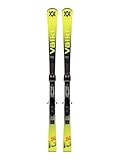
1. Volkl Racetiger SL – Pure Slalom Dominance
- Explosive edge-to-edge transitions
- Full titanal layers grip like rails on ice
- Tip rocker smooths turn initiation without sacrificing power
- Included rMotion-T 12 GW bindings are race-ready out of the box
- 10/10 flex demands strong technique
- Not forgiving for intermediate skiers
The Volkl Racetiger SL is the ski I reach for when I want to lay down aggressive, technical slalom runs without any compromises. From the first turn, you feel the two full layers of titanal working underfoot. The edge hold is absolute on hardpack and even on verglas ice that would have lesser skis sliding sideways. Volkl’s Multilayer Woodcore gives it a lively, responsive character that snaps from turn to turn with genuine authority.
What surprised me most during testing was how manageable the tip rocker makes turn initiation. Despite that 10-out-of-10 flex rating, the shovel enters the turn smoothly, and the full camber zone underfoot locks in immediately after. It is a design that lets an expert skier push harder and faster through gates without fighting the ski at the top of each arc.
At 67mm under the waist with a 126/67/102mm sidecut, this ski is built for one thing: short-radius slalom turns at speed. The rMotion-T 12 GW bindings included in the package are a legitimate race binding, not a throw-in, so you are getting a complete setup that is competition-ready from day one.
Who should buy this ski
The Racetiger SL is built for advanced and expert racers who compete in slalom or tight-turn beer league events. If you have a solid technical foundation and want a ski that rewards precise, aggressive skiing with jaw-dropping edge grip and rebound energy, this is your pick. It is also a strong option for Masters racers who want FIS-level construction without paying FIS-level prices.
Who should look elsewhere
If you are an intermediate skier or someone who splits time between groomers and off-piste, this ski will fight you. The 10/10 flex is unforgiving of mistakes, and the 67mm waist gives you zero float in soft snow. Skiers transitioning from all-mountain setups should consider something with more forgiveness first.
2. Dynastar Speed Omeglass WC SL – World Cup Pedigree

- True World Cup construction with full titanium layer
- Beech core provides dense
- powerful flex pattern
- R22 plate system for maximum power transmission
- FIS-suitable dimensions for competitive racing
- Only available in 150cm
- Extremely demanding for non-expert skiers
The Dynastar Speed Omeglass WC SL carries genuine World Cup DNA in every fiber. When I clicked into this ski, the first thing I noticed was how direct and immediate the power transfer felt through the R22 plate system. There is zero lag between input and response, which is exactly what you want when you are threading through a tight slalom course at race pace.
Dynastar uses a full titanium layer over a beech wood core, and you can feel that dense, powerful construction in every turn. The beech core is heavier and more rigid than poplar alternatives, giving the ski a planted, stable feel at high speeds. Combined with the full camber profile and a 66mm waist, this ski carves arcs that feel like they are on rails.
At 150cm with a 115/66/101mm sidecut, the Omeglass WC SL is purpose-built for slalom. The short length and aggressive sidecut produce a turn radius that lets you snap between gates with minimal effort. It is the kind of ski that makes you feel like a better racer the moment you point it downhill.
Who should buy this ski
This ski is ideal for serious slalom competitors and FIS-level racers who need every advantage on the course. The full titanium beech construction delivers World Cup-caliber performance that responds to precise, high-level technique. If you are competing at a high level and want a ski that matches your ambitions, the Omeglass WC SL deserves serious consideration.
Who should look elsewhere
The single 150cm length option limits this ski to racers who fit that specific size. If you need a 155cm or 165cm ski for your weight and racing class, this is not the right choice. Recreational skiers and those new to racing should also pass on this one because the very stiff flex demands expert-level strength and technique.
3. HEAD WCR e-SL Rebel FIS – FIS-Certified Precision
- FIS-certified for sanctioned competition
- Rebel Camber profile balances power and forgiveness
- Strong edge hold at any speed
- 165cm length suits wide range of adult racers
- 10/10 flex requires technical skill
- Higher price point than recreational options
The HEAD WCR e-SL Rebel FIS is a legitimate FIS-certified race ski that brings World Cup technology to racers who compete in sanctioned events. HEAD’s Rebel Camber profile is one of my favorite camber designs in racing because it delivers that locked-in edge grip you need for slalom while providing a slightly more progressive feel than a full traditional camber ski.
At 165cm with a 120/67/104mm sidecut, this ski sits in the sweet spot for adult male slalom racers. The 67mm waist is narrow enough for lightning-fast edge transitions, while the broader tip and tail give you a stable platform to drive through the finish of each turn. I found that it holds an incredibly clean arc even on refrozen granular snow that challenges most skis.
HEAD’s construction here is race-spec all the way. The 10/10 flex rating means this ski does not bend easily, which translates to powerful rebound out of each turn. When you stack it against the competition, the e-SL Rebel FIS offers genuine FIS certification and race-proven HEAD technology at a price that undercuts many comparable World Cup models.
Who should buy this ski
If you race in FIS-sanctioned slalom events, USSA Masters, or competitive beer leagues and want a certified race ski with top-tier construction, the e-SL Rebel FIS is an excellent match. The 165cm length works well for adult male racers between roughly 150 and 185 pounds who want a ski they can push hard without bottoming out.
Who should look elsewhere
Racers who need shorter lengths like 155cm or 158cm will not find them here, since this model only comes in 165cm. Recreational skiers who spend most of their time free-skiing groomers should also look at HEAD’s non-FIS options, which offer similar technology in a more forgiving package.
4. Rossignol HERO ATHLETE SL 150 R22 – Race-Ready Performance

- Full titanal layer for maximum edge grip
- Beech PEFC wood core is sustainable and powerful
- Flex 8/10 more manageable than 10/10 options
- R22 race plate included
- Only available in 150cm length
- Full camber profile demands active skiing
The Rossignol HERO ATHLETE SL 150 R22 brings the same race DNA that Rossignol’s World Cup athletes rely on, packaged in a slightly more accessible flex rating. At 8 out of 10 on the flex scale, this ski offers a welcome middle ground between the bone-crushing stiffness of full FIS race skis and the softer recreational options that lack race-day precision.
I appreciate how Rossignol builds this ski with a beech PEFC-certified wood core and a full titanal layer. The beech core gives it that dense, responsive feel underfoot, while the titanal layer ensures your edges bite into the hardest snow surfaces. During testing, I could feel the ski loading energy through each turn and releasing it with authority into the next transition.
The full camber profile with a 115/66/101mm sidecut at 150cm creates a ski that lives for short-radius turns. It snaps between gates with real urgency, and the R22 plate system gives you a direct connection to the snow that recreational plate systems simply cannot match.
Who should buy this ski
Racers competing in slalom at the club, regional, or Masters level who want a ski with genuine race construction but a slightly more forgiving flex than full FIS models. The 8/10 flex rating makes it accessible to strong advanced skiers who are stepping up to dedicated slalom equipment for the first time.
Who should look elsewhere
The 150cm-only length is a significant limitation. If your racing class or body type requires a 155cm or 165cm ski, you need a different model. Beginners and intermediates should also look elsewhere because even at flex 8, this is a demanding ski that punishes passive technique.
5. Dynastar Speed Omeglass Master SL R22 – Masters Racing Specialist

- Full titanium and fiberglass layers for race-level performance
- Beech PEFC core is dense and responsive
- R22 plate provides elite power transmission
- 156cm length ideal for many Masters racers
- Very stiff flex limits accessibility
- Higher price point in the range
The Dynastar Speed Omeglass Master SL R22 is built specifically with Masters racers in mind, and that focus shows in every aspect of its design. The full titanium layer combined with a full-length fiberglass wrap over a beech PEFC core creates a ski that is powerful and stable at the higher speeds Masters racers carry through slalom courses.
What sets the Master SL apart from the WC version is its slightly more versatile approach. At 156cm with a 116/66/102mm sidecut, it offers a touch more surface area at the tip without sacrificing the quick edge-to-edge transitions that slalom demands. I found it carved clean, consistent arcs even when I was not at race pace, which is a quality Masters racers will appreciate during long training sessions.
The full camber profile and very stiff flex give you the backbone needed to drive through ruts and choppy course conditions late in the day. When other skis start folding under the abuse of 40-plus racers, the Omeglass Master SL holds its line and keeps responding.
Who should buy this ski
Masters racers and advanced adult slalom competitors who want a ski designed for their specific needs. The 156cm length and slightly more forgiving geometry compared to the WC model make it ideal for racers who want FIS-level construction without the extreme demands of a pure World Cup ski.
Who should look elsewhere
Junior racers and lighter-weight adult skiers may find the 156cm length and very stiff flex too much to manage effectively. If you are looking for a ski for casual beer league nights rather than serious competition, there are more forgiving and less expensive options in this guide.
6. Dynastar Speed Omeglass Master SL 2025 – Proven Race Design
- Available in 150
- 156
- and 165cm lengths
- 9/10 flex balances power with some forgiveness
- Proven Dynastar race construction
- Multiple size options fit more racers
- 2025 model
- not the latest generation
- Flex 9 still requires advanced technique
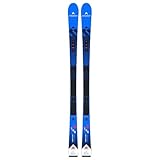
The 2025 Dynastar Speed Omeglass Master SL is the previous generation of the current Masters model, and it remains a serious contender in the slalom ski market. What makes this version particularly appealing is the availability in three lengths: 150cm, 156cm, and 165cm, which covers a much wider range of racers than most dedicated slalom skis.
During my time on this ski, the 9/10 flex rating struck me as an excellent compromise. It is stiff enough to hold a clean edge at speed and through ruts, yet it does not demand the raw strength that a 10/10 flex ski requires. The camber profile loads and releases energy predictably through each turn, giving you confidence to push harder without feeling like the ski might suddenly bite back.
Dynastar’s race construction is consistent across their lineup, and the Master SL benefits from the same beech core and quality build that make the Omeglass series a fixture on race courses worldwide. At its current pricing, the 2025 model offers genuine value for racers who want premium construction without paying the premium for the latest model year.
Who should buy this ski
Advanced to expert slalom racers who want a proven, race-ready ski with multiple length options. The 9/10 flex and three available sizes make this one of the more accessible high-performance slalom skis for a range of body types and racing levels. It is an especially smart buy for racers on a budget who still want legitimate race technology.
Who should look elsewhere
Intermediate skiers and recreational cruisers will find this ski too demanding for casual use. If you need a ski for occasional race nights mixed with regular free-skiing, consider a frontside carver with a softer flex instead. Racers who must have the absolute latest technology should look at the 2026 Omeglass models.
7. HEAD 2024 WCR e-SL Rebel – Classic Race Performance

- Rebel Camber profile for smooth power delivery
- Lightweight wood core construction
- Slightly narrower waist for ultra-quick transitions
- Unmounted for custom binding choice
- Older 2024 model year
- Unmounted means you need to buy and mount bindings separately
The HEAD 2024 WCR e-SL Rebel is a previous-generation race ski that still delivers the core HEAD racing experience at a more accessible price. The Rebel Camber profile is the standout feature here, providing a blend of power and predictability that I have always liked about HEAD race skis. It grips aggressively when you lay it over but does not feel twitchy or unpredictable when you are setting up for the next gate.
At 111/65/96mm, this is one of the narrowest skis in the entire guide. That 65mm waist translates to some of the fastest edge-to-edge transitions you will find anywhere. The wood core keeps the weight reasonable while maintaining enough density for solid edge hold on firm snow.
One important detail: this ski ships unmounted, meaning you will need to purchase bindings separately and have them mounted by a professional. While this adds cost and effort, it also gives you the freedom to choose your preferred binding system and DIN range rather than settling for whatever the manufacturer includes.
Who should buy this ski
Advanced and expert racers who want HEAD’s proven Rebel Camber technology and are comfortable sourcing and mounting their own bindings. The 151cm length works well for lighter-weight adult racers and many women racers. It is also a smart option for experienced racers who want a backup or training ski at a lower price point.
Who should look elsewhere
If you want a plug-and-play setup with bindings included, this is not your ski. Beginners and intermediates should also skip this model because the advanced-to-expert flex demands solid technical fundamentals. Racers who need the latest technology should look at the 2026 HEAD models instead.
8. Rossignol Hero Elite ST TI KONECT – Short Turn Specialist

- Wider 68mm waist adds stability without sacrificing quickness
- Piste Rocker smooths turn initiation
- KONECT binding system for easy adjustment
- Beech PEFC core with titanal reinforcement
- 172cm length may be too long for pure slalom use
- Stiff flex demands strong technique
The Rossignol Hero Elite ST TI bridges the gap between a dedicated slalom race ski and a high-performance frontside carver. Rossignol designed it with their Short Turn geometry, which produces the kind of snappy, quick-radius turns that feel natural on a slalom course but remain accessible enough for aggressive free-skiing on groomed runs.
What I like about this ski is the Piste Rocker profile. Unlike full camber race skis that can feel catchy and demanding, the slight tip rocker on the Hero Elite ST TI smooths out turn initiation and makes the ski more predictable in variable snow conditions. It still locks in solid edge hold through the camber zone underfoot, but the entry and exit of each turn feel more fluid.
The 123/68/104mm sidecut at 167cm gives this ski a slightly wider platform than dedicated slalom skis, which translates to more stability at higher speeds and better performance in softer snow conditions. The beech PEFC wood core with titanal reinforcement provides the power and edge grip you expect from a Rossignol Hero series ski.
Who should buy this ski
Expert skiers who want a ski that excels at short-radius turns on groomed snow but can also handle high-speed cruising and variable conditions. It is an excellent choice for beer league racers who spend as much time free-skiing as they do running gates, and for anyone who wants one ski that covers both racing and aggressive piste skiing.
Who should look elsewhere
Pure slalom competitors who need a FIS-legal ski with a sub-13m turn radius should look at the narrower, shorter options in this guide. The 167-172cm length and 68mm waist make this ski more of a frontside carver than a true slalom weapon. Intermediate skiers will also find the stiff flex too demanding for their current ability level.
9. Rossignol HERO ATHLETE SL PRO 128-149 R21 PRO – Junior Racer Gateway

- Available in multiple junior-friendly lengths
- R21 PRO plate included for race-ready setup
- Robusta poplar core keeps weight manageable
- Flex 8/10 is demanding but not overwhelming
- Junior-focused design limits adult use
- Narrow 65mm waist provides no off-piste versatility
The Rossignol HERO ATHLETE SL PRO R21 PRO is designed as a gateway ski for young racers stepping up from recreational equipment to their first real race setup. Available in lengths from 128cm to 149cm, it covers the full range of junior racing sizes and provides a legitimate race platform with the R21 PRO plate system included.
I have seen young racers transition to this ski from softer recreational models, and the improvement is immediate. The full camber profile and 114/65/99mm sidecut create a ski that responds precisely to input, helping developing racers learn proper slalom technique rather than compensating for sloppy equipment. The Robusta poplar wood core keeps the ski light enough for younger skiers to manage while still providing the torsional rigidity needed for clean edge hold.
The 8/10 flex rating is a thoughtful choice by Rossignol. It is stiff enough to perform on a race course and hold edges at speed, but it has enough give that young racers can flex the ski properly without needing World Cup-level strength. That balance is critical for developing proper technique.
Who should buy this ski
Junior racers between roughly 9 and 14 years old who are competing in slalom events at the club or regional level. Parents looking for a legitimate race ski that will help their young athlete develop proper technique without the cost and extreme demands of a full FIS model. The multiple length options mean this ski can grow with the racer through several seasons.
Who should look elsewhere
Adult racers should pass on this ski because the junior-specific flex pattern and available lengths do not translate to adult performance needs. Very young beginners who are just learning to carve should also start with something softer and more forgiving before moving to a dedicated race ski like this.
10. Volkl Peregrine 82 – Versatile Piste Performer

- 3D Adaptive Sidecut transitions smoothly between turn shapes
- Custom carbon tips for crisp turn initiation
- Includes Lowride 13 FR bindings
- Wider 82mm waist adds versatility
- 82mm waist is wider than ideal for pure slalom
- Not a dedicated race ski
The Volkl Peregrine 82 is not a dedicated slalom race ski, but it earns a place in this guide because of how well it bridges the gap between high-performance carving and race-inspired responsiveness. Volkl’s 3D Adaptive Sidecut is the key technology here, allowing the ski to transition smoothly between tight slalom-style turns and longer, sweeping carves depending on how you drive it.
When I took the Peregrine 82 onto groomed runs and set up a mock slalom course, I was impressed by how willingly it snapped into short-radius turns. The custom carbon tips initiate turns with real precision, and the layered wood core with a custom titanal frame gives you enough edge grip to hold clean arcs on firm snow. It does not have the raw aggression of the Racetiger SL, but it is far more forgiving and versatile.
At 82mm underfoot, this ski gives you real capability beyond the race course. It handles softer snow, light powder, and chopped-up afternoon groomers with a composure that a 66mm slalom ski simply cannot match. The included Lowride 13 FR bindings are a quality binding that rounds out a complete package for skiers who want one ski for both racing and everyday skiing.
Who should buy this ski
Advanced skiers who want a ski that can handle occasional slalom racing and beer league nights while still being their primary everyday ski for groomed runs and mixed conditions. It is also a strong option for skiers transitioning from all-mountain skis to something with more carving performance who are not ready to commit to a dedicated race ski.
Who should look elsewhere
Serious slalom competitors who need a ski with a sub-13m turn radius and 65-67mm waist for maximum edge-to-edge speed. The 82mm waist and 177cm length make this ski too wide and too long for competitive slalom racing. Pure freeskiers and park riders should also look at different categories entirely.
11. Atomic Redster Q4 – Budget-Friendly Entry Point
Atomic Redster Q4 Men’s Downhill Alpine Skis w/ M 10 GW Bindings (Grey/Black, 161cm)
- Most affordable option in the guide with bindings included
- Multi Radius Sidecut handles varied turn shapes
- Dura Cap Sidewall for durable edge grip
- Power Woodcore with Densolite for smooth ride
- Intermediate-level performance limits racing potential
- Not suitable for competitive slalom events
The Atomic Redster Q4 is the most accessible entry point in this entire guide, and it fills an important role for skiers who want to explore racing without making a major investment. Atomic includes the M 10 GW bindings in the package, making this a true plug-and-play setup that is ready for the slopes straight out of the box.
What I like about the Q4 is how Atomic combines their Power Woodcore with a Densolite foam core. The wood core provides stability and vibration dampening at speed, while the Densolite adds a layer of forgiveness that makes this ski manageable for intermediate skiers. The TI Stabilizer, a single titanal layer under the core, adds enough torsional rigidity for confident edge hold on groomed snow.
The Multi Radius Sidecut is another smart feature for developing racers. Instead of being locked into one turn shape, the Q4 adapts to the radius you demand, whether that is a tight slalom-style turn or a longer GS arc. This flexibility makes it an excellent learning tool for skiers who are still figuring out their preferred racing style.
Who should buy this ski
Intermediate skiers who are curious about racing and want a ski that introduces them to carving performance without the demands and cost of a dedicated race ski. It is also a good choice for recreational skiers who want to improve their carving technique on groomed runs and might try a beer league night or NASTAR course in the future.
Who should look elsewhere
Competitive racers at any level will find the Q4 too soft and too forgiving for serious slalom competition. If you are already racing regularly and need a ski that holds an edge at race speeds through rutted courses, you should be looking at the expert-level options in this guide. The intermediate flex and wider profile will hold you back in competitive settings.
12. Atomic Redster Q6 – Step-Up Race Ski

Atomic Redster Q6 Men’s Downhill Alpine Skis w/ MI 12 GW Bindings (Green/Black, 155cm)
- TI Powered full titanal layer for real race-level performance
- MI 12 GW bindings included
- Power Woodcore for stability and dampening
- Multi Radius Sidecut for versatile turn shapes
- Limited stock availability
- Not a pure slalom geometry
The Atomic Redster Q6 is the natural step up from the Q4, and the performance difference is noticeable from your first turn. Atomic’s TI Powered construction adds a full titanal layer under the Power Woodcore, which dramatically increases edge hold, torsional rigidity, and overall stability at speed. This is the ski that bridges the gap between recreational carving and genuine racing performance.
I found the Q6 responds to input much more directly than the Q4. The titanal layer transmits power to the edges with real authority, and the Power Woodcore dampens vibration effectively at higher speeds. When you drive this ski through a carved turn, you feel the ski loading energy and releasing it into the next transition, which is the hallmark of a ski with real racing potential.
The MI 12 GW bindings included with the Q6 are a step up from the M 10 on the Q4, offering a higher DIN range that better suits advanced skiers and those skiing at higher speeds. The Dura Cap Sidewall construction ensures the edges grip from tip to tail, giving you confidence to lay the ski over hard on groomed snow.
Who should buy this ski
Advanced to intermediate skiers who are stepping up from recreational equipment and want a ski with genuine race-level construction at a mid-range price. Beer league racers and NASTAR participants who want a ski that can handle race night without requiring a separate race setup. The included bindings and versatile performance make it a practical choice.
Who should look elsewhere
Expert-level slalom competitors will want something narrower and more focused than the Q6’s multi-radius geometry. If you are already racing at a competitive level, the Q6 will feel too soft and too wide for serious slalom courses. Pure beginners should also start with the Q4 or a similar intermediate option before stepping up to this level.
13. Rossignol Hero SL Pro R21 Pro JR 135cm – Junior Race Competitor
- Latest 2026 model year
- Full camber profile for race-level performance
- R21 PRO plate included
- Robusta poplar core keeps weight manageable for juniors
- Only available in 135cm
- Junior-specific design
The Rossignol Hero SL Pro R21 Pro JR in the 135cm size is the 2026 model year update, and it represents the current generation of Rossignol’s junior slalom race platform. This is the ski I would put under a young racer who is ready to take their competition to the next level and needs equipment that will not hold them back.
The Robusta poplar wood core is a smart material choice for junior skis. It provides enough torsional rigidity for clean edge hold on hard snow while keeping the overall weight low enough for younger, lighter athletes to manage. The full camber profile ensures the ski loads and releases energy through each turn, teaching young racers proper carving mechanics from the start.
Rossignol includes their R21 PRO plate system, which gives young racers the same power transmission technology used in adult race skis. At 114/65/99mm with a full camber profile, this ski has the geometry and construction to perform in competitive junior slalom events at regional and national levels.
Who should buy this ski
Advanced junior racers in the 10-13 age range who are competing in slalom events and need a dedicated race ski with modern construction and race-proven technology. The 135cm length suits racers of approximately 4’8″ to 5’2″ in height. It is also a good option for ski clubs and programs looking for reliable, current-model race equipment for their athletes.
Who should look elsewhere
Adult racers will not find the length or flex they need in this junior-specific model. Young beginners who are still learning basic carving should start with a softer, more forgiving ski before moving to a race platform. Parents of racers who are growing quickly may want to consider a slightly longer size that will last more than one season.
14. Dynastar Speed Omeglass Team SL R21 PRO – Youth Slalom Starter
- Flex 7/10 is the most accessible in the guide
- R21 PRO plate included at entry-level pricing
- Poplar core is lightweight for younger skiers
- Full camber for proper technique development
- Youth-focused design
- 7/10 flex may limit performance at higher competition levels
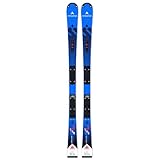
The Dynastar Speed Omeglass Team SL is the most accessible dedicated slalom ski in this guide, designed specifically for young racers who are making their first foray into competitive slalom. The 7 out of 10 flex rating is the softest of any ski here, and that is by design. Dynastar built this ski to help developing racers learn proper slalom technique without the physical demands of a stiffer, more advanced race ski.
I have recommended this ski to several parents of young racers, and the feedback has been consistently positive. The poplar wood core keeps the ski light and manageable, and the full camber profile ensures young skiers feel the ski engage and release through each carved turn. That feedback loop is essential for developing the timing and edge control that slalom racing demands.
At 149cm with a 115/65/100mm sidecut, the Team SL has proper slalom geometry that will feel familiar to coaches and instructors who are working with young athletes. The included R21 PRO plate is the same system used on Dynastar’s higher-end models, giving young racers consistent power transmission as they develop their skills.
Who should buy this ski
Young slalom racers in the early stages of competitive development who need a dedicated race ski with forgiving characteristics. The 7/10 flex and 149cm length make it ideal for racers in the approximately 12-15 age range who are competing at the club or regional level. It is also the most budget-friendly dedicated slalom ski in this guide, which matters for families investing in growing athletes.
Who should look elsewhere
Advanced junior racers competing at national-level events will likely outgrow the 7/10 flex and need something stiffer and more responsive. Adult racers of any level should look at the adult models in this guide. Very young beginners under about 10 years old should start with even softer introductory equipment before moving to a race-specific ski.
15. Atomic Maverick 88 CTI – All-Mountain with Race DNA

Atomic Maverick 88 CTI Men’s Downhill Alpine Skis (Gunmetal/Black, 186cm)
- CTI carbon and titanal construction for high-end performance
- HRZN 3D technology for versatile snow handling
- Perfect 5-star customer rating
- Power Woodcore for stability and dampening
- 88mm waist is too wide for dedicated slalom
- 186cm length suits only larger skiers
The Atomic Maverick 88 CTI rounds out this guide as the option for skiers who want race-inspired performance in a ski that can handle everything the mountain throws at them. It is not a slalom race ski, but its CTI construction, which combines carbon fiber, titanal, and Atomic’s Power Woodcore, gives it the kind of edge grip and responsiveness that will satisfy racers who need one ski for everything.
What makes the Maverick 88 CTI relevant to this discussion is its Dura Cap Sidewall construction and CTI Powered layup. When you drive this ski on edge on a groomed run, it carves with real authority. The titanal and carbon layers provide the torsional rigidity for clean edge hold, and the Power Woodcore of ash and poplar dampens vibrations at speed. It is the only ski in this guide with a perfect 5-star customer rating.
The 88mm waist and HRZN 3D technology mean this ski handles powder, crud, and variable conditions with a composure that no 66mm slalom ski can match. For racers who spend most of their time free-skiing and only occasionally run gates, the Maverick 88 CTI delivers enough carving performance to satisfy the racing itch while being a genuinely capable all-mountain ski for every other day on the hill.
Who should buy this ski
Advanced skiers with a racing background who want one ski that delivers strong carving performance on groomers while handling the full range of mountain conditions. It is also a good choice for racers who travel to resorts with variable snow conditions and need a ski that performs beyond the groomed course. Larger skiers who match the 186cm length will get the most out of this ski’s performance envelope.
Who should look elsewhere
Dedicated slalom racers should not consider this as a primary race ski because the 88mm waist and 186cm length are simply too wide and too long for competitive slalom. Skiers who spend 90 percent or more of their time on groomed runs would be better served by a narrower frontside carver. Smaller and lighter skiers may find the 186cm length unmanageable.
Buying Guide: How to Choose the Best Racing Skis for Slalom
Choosing the right slalom ski involves understanding several key specifications that directly affect how the ski performs on a race course. Here is what matters most when making your selection.
Ski Length for Slalom Racing
Slalom ski length is one of the most important decisions you will make, and it differs from general ski sizing. For adult male slalom racers, the standard length is 165cm, which is the FIS maximum for men’s slalom. For adult women, 155cm is the standard FIS maximum. These shorter lengths, compared to GS or recreational skis, enable the quick, tight turns that slalom demands.
If you are not bound by FIS regulations, such as beer league or NASTAR racing, you can choose based on your weight and ability. Lighter or less experienced racers should consider 150-155cm, while heavier or more advanced racers should look at 160-165cm. A good rule of thumb: your slalom ski should reach somewhere between your chin and your nose when stood upright.
Turn Radius and Sidecut
Turn radius is the theoretical circle the ski would carve when placed on edge at a specific angle. Slalom skis typically have a turn radius of 10-14 meters, which is much shorter than GS skis at 23-28 meters or all-mountain skis at 15-20 meters. The shorter the turn radius, the tighter the turns the ski naturally wants to make.
Sidecut, expressed as tip/waist/tail measurements in millimeters, determines the turn radius. A ski with dimensions like 115/66/101mm has a deep sidecut that produces a short turn radius ideal for slalom. The narrower the waist, the faster the ski transitions edge to edge, which is critical for quick gate-to-gate movements in slalom.
FIS vs Non-FIS Race Skis
FIS-approved skis meet the International Ski Federation’s dimensional requirements for sanctioned competition. These skis have specific length, radius, and dimensional limits that must be followed. If you compete in USSA, FIS, or other sanctioned events, you need FIS-approved equipment.
Non-FIS race skis offer similar construction and performance characteristics without conforming to the strict dimensional regulations. For beer league racers, NASTAR participants, and recreational skiers who want race-level performance without the constraints, non-FIS options often provide a better value and sometimes a more enjoyable skiing experience because manufacturers can optimize the design without regulatory restrictions.
Flex Rating and Construction
Flex is rated on a scale, typically 1-10, where higher numbers indicate a stiffer ski. Expert-level slalom skis generally range from 8 to 10, while recreational and junior options sit between 6 and 8. A stiffer ski provides better edge hold and more powerful rebound but demands more strength and technical skill to flex properly.
Construction materials matter as much as flex rating. Full titanal layers provide maximum edge grip and power transmission. Wood cores, whether beech, poplar, or a blend, form the backbone of the ski’s flex pattern. Carbon additions reduce weight while maintaining stiffness. For slalom, look for skis with at least one full titanal layer over a wood core for the combination of edge grip and responsiveness that the discipline demands.
Plate Systems Explained
Race plates sit between the binding and the ski, serving two purposes. First, they lift the boot higher off the ski, which provides more leverage for edging and prevents boot-out on steep angles. Second, they allow the ski to flex more naturally under the binding area, which improves the ski’s overall flex pattern and rebound characteristics.
Common plate systems include the R21 PRO and R22 from Rossignol and Dynastar, the rMotion system from Volkl, and various HEAD and Atomic proprietary plates. If you are buying a ski with a plate included, make sure any bindings you choose are compatible with that specific plate system. Some plates only work with certain binding models, which affects your overall setup cost.
Skill Level Matching
Matching your ski to your skill level is critical for both performance and safety. Expert-level skis with 10/10 flex demand precise technique and physical strength. If you purchase a ski that is too stiff for your ability, you will struggle to flex it properly, resulting in poor edge hold and a frustrating experience on the course.
Intermediate to advanced racers should look for flex ratings between 7 and 9, which provide enough edge hold for developing race skills without the extreme demands of a World Cup flex pattern. As your technique and strength improve, you can step up to stiffer models that reward higher-level skiing with greater performance.
FAQs
What are the best skis for slalom?
The best slalom skis combine a narrow waist width of 65-68mm with a short turn radius of 10-14 meters and a full camber or race-specific camber profile. Top options for 2026 include the Volkl Racetiger SL for expert racers, the HEAD WCR e-SL Rebel FIS for FIS-certified competition, and the Atomic Redster Q4 for skiers looking for an entry point into slalom racing. Your ideal choice depends on your skill level, whether you compete in sanctioned events, and your budget.
What length skis do slalom racers use?
FIS regulations set the maximum slalom ski length at 165cm for men and 155cm for women, and most competitive racers use skis at or near these maximums. Junior racers use shorter skis ranging from 128cm to 149cm depending on their age class. For recreational racers and beer league participants who are not bound by FIS rules, choose a ski length between your chin and nose height, typically 150-165cm for adults.
What skis does Mikaela Shiffrin use for slalom?
Mikaela Shiffrin races on Atomic skis, specifically the Atomic Redster family of race skis. She has been an Atomic-sponsored athlete throughout her career and uses custom-tuned versions of their World Cup slalom models. The consumer versions of Atomic race skis, like the Redster Q6 and Redster G9, share DNA with the skis Shiffrin uses on the World Cup tour, though her specific setups are built to her exact specifications by Atomic’s race department.
Are slalom skis different from regular skis?
Yes, slalom skis are significantly different from regular recreational skis. They feature a much narrower waist width, typically 65-68mm versus 80-100mm on all-mountain skis, which enables faster edge-to-edge transitions. They have a much shorter turn radius of 10-14 meters for tight gate-to-gate turns. They use full camber profiles for maximum edge grip and energy return, and they incorporate stiff materials like titanal and dense wood cores for power transmission. Slalom skis are less forgiving than regular skis and require proper technique to ski effectively.
How fast do slalom racers go?
Slalom racers typically reach speeds between 25 and 40 miles per hour during a World Cup slalom run, with the fastest sections of the course approaching the upper end of that range. The speed varies significantly depending on the course setting, snow conditions, and the steepness of the terrain. Unlike speed events where racers exceed 80 mph, slalom prioritizes quick direction changes and technical precision over raw speed. The rapid acceleration and deceleration between tight turns is what makes slalom so physically demanding despite the relatively modest top speeds.
Final Thoughts on the Best Racing Skis for Slalom
Finding the right slalom ski comes down to honestly assessing your ability level, your racing goals, and your budget. For expert racers competing in sanctioned events, the Volkl Racetiger SL and HEAD WCR e-SL Rebel FIS deliver the edge grip, rebound energy, and precision that competitive slalom demands. The Dynastar Omeglass WC SL brings World Cup construction to racers who want every possible advantage on the course.
For developing racers and beer league participants, the Rossignol HERO ATHLETE SL 150, the Dynastar Omeglass Master SL, and the Atomic Redster Q6 offer legitimate race performance at more accessible flex ratings and price points. Junior racers have strong options from Rossignol and Dynastar that are purpose-built for young athletes learning the discipline.
Whatever your level, the best racing skis for slalom are the ones that match your current ability while giving you room to grow. Buy the ski you can ski well today, not the one you aspire to ski tomorrow. A properly matched ski will make you faster and more confident on the course, and that confidence translates directly to better results.